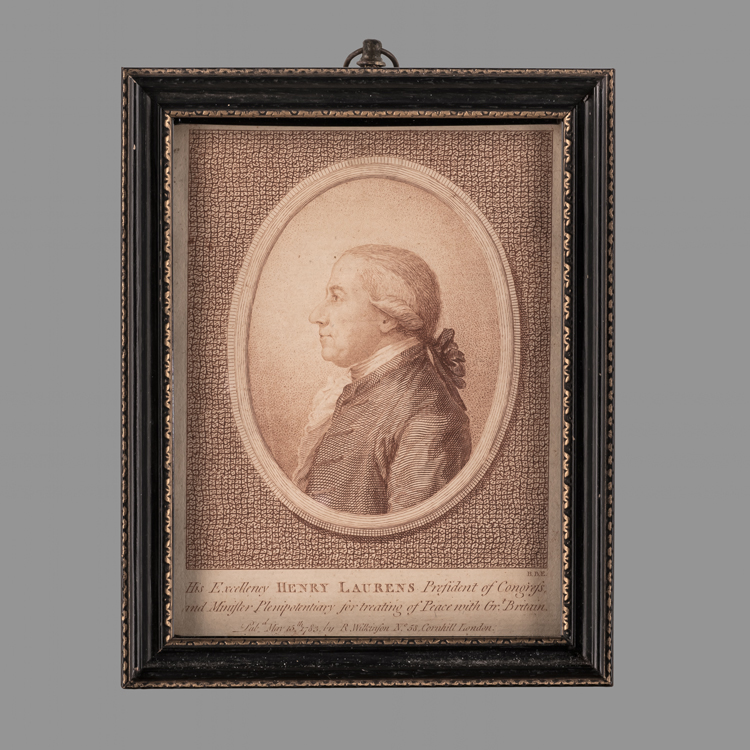
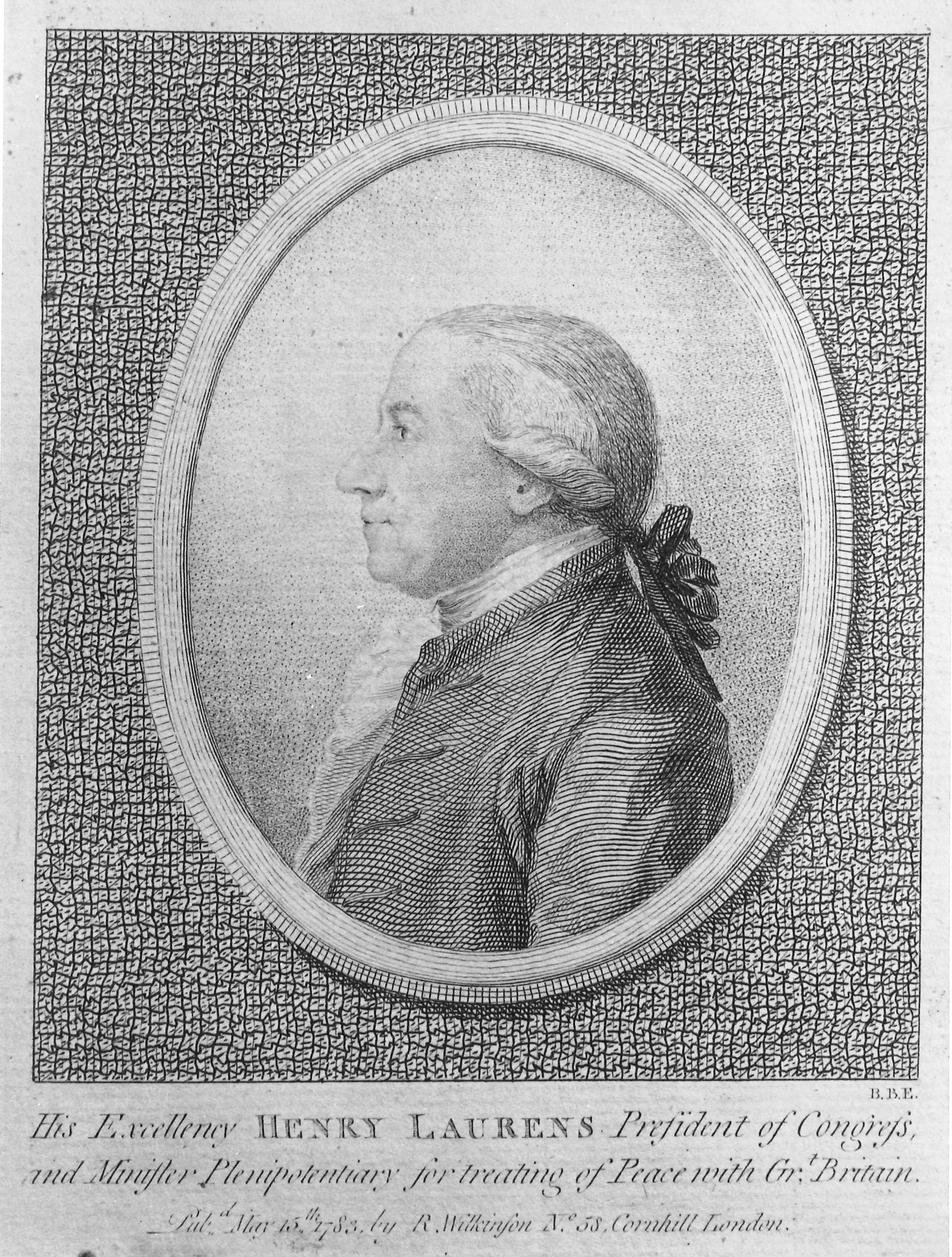
Henry Laurens (1724-1792)
Laruen’s grandparents were French Huguenot refuges who fled France in the late 17th century. They settled first in New York, and then in Charleston. He was educated in London and was a partner in the firm Austin and Lauren, the largest slave trading business in North America. In 1762 he purchased Mepkin Plantation, on the Cooper River above Charleston. Laurens owned more than 300 enslaved men and women. In a letter to his son John written during his imprisonment in London he recognized the irony of seeking freedom for his fellow Americans while also being a slave owner. Though his son John urged his father to manumit his slaves, he never did.
ARTIST: Pierre Eugene Du Simitiere (1736-1784) was a native of Switzerland who came to America in 1766. His early drawings included a rare view of Drayton Hall shortly after construction. He supported the American Revolution and produced a series of portraits of Revolutionary American leaders. In addition to Henry Laurens, his portraits included George Washington, William Henry Drayton, John Jay, Gouverneur Morris, Horatio Gates, and Baron von Steuben.
DESCRIPTION: Copperplate engraving on paper; 1/4 length portrait in profile of a man facing left. He wears a coat, vest, and ruffled shirt. His own hair is styled with a single side curl, a ponytail and a ribbon bow. The profile is set in a tromp l’oeil oval frame on a patterned background.
Based on an advertisement in the December 9-13, 1783 South Carolina Gazette & General Advertiser it was also available as a separate print. J. Miller of Charleston advertised that “received several elegant metzotinto [sic.] plates of Laurens.”