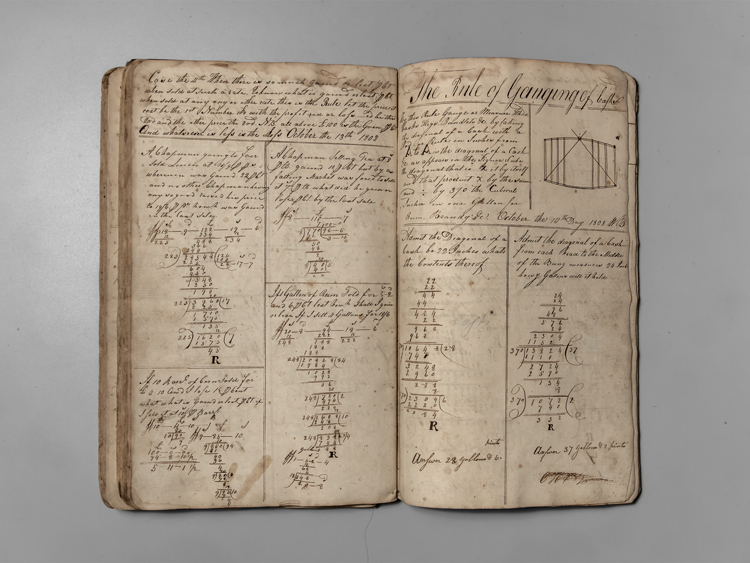
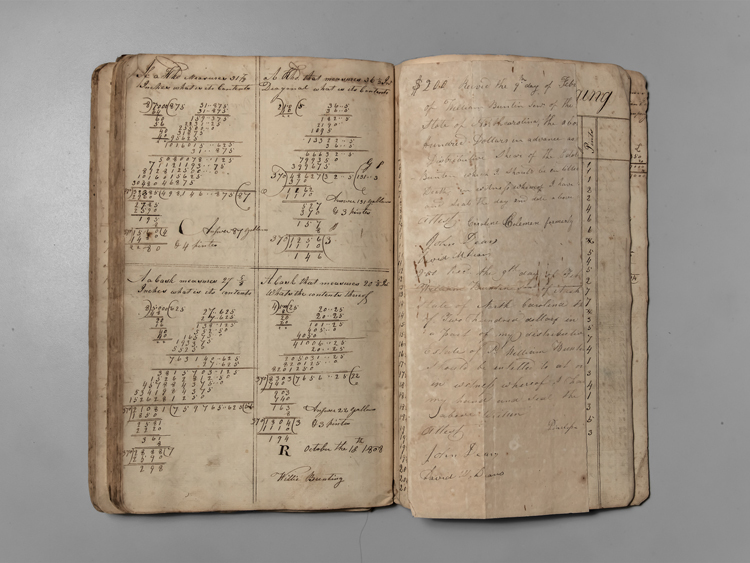
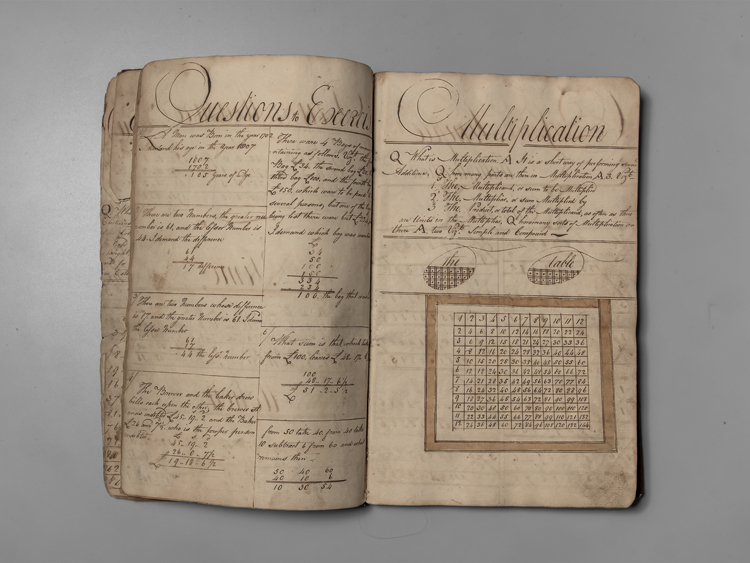
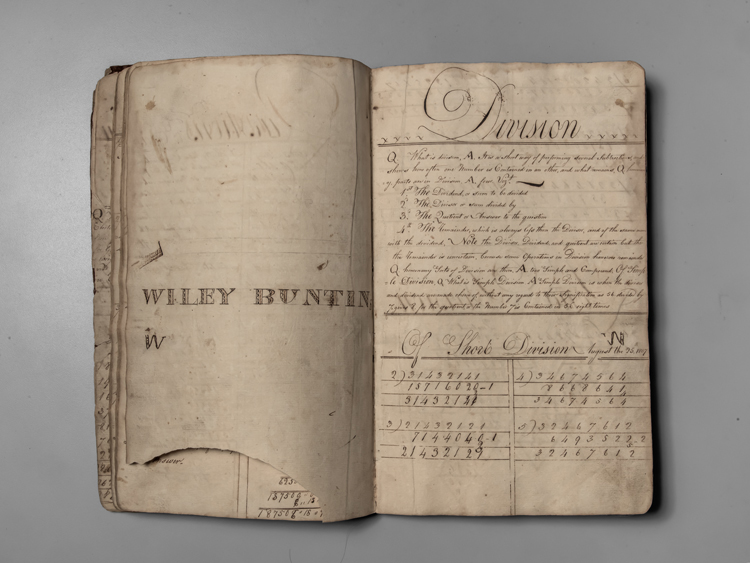
Cypher and record book
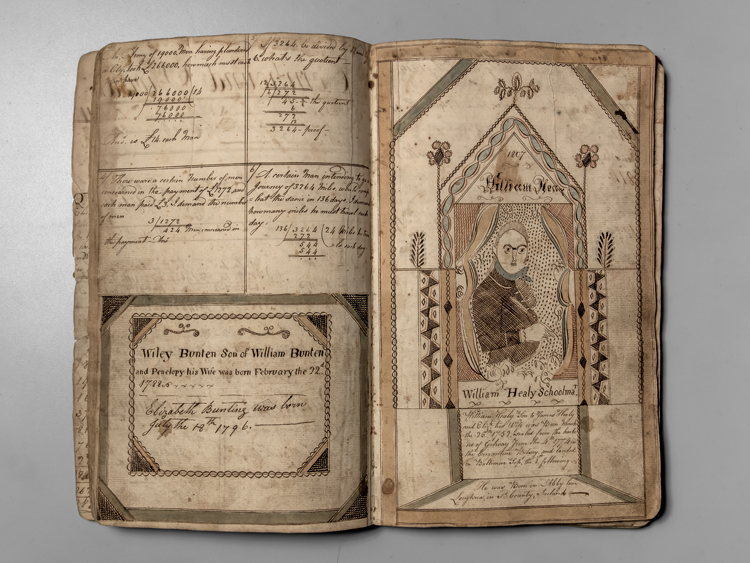
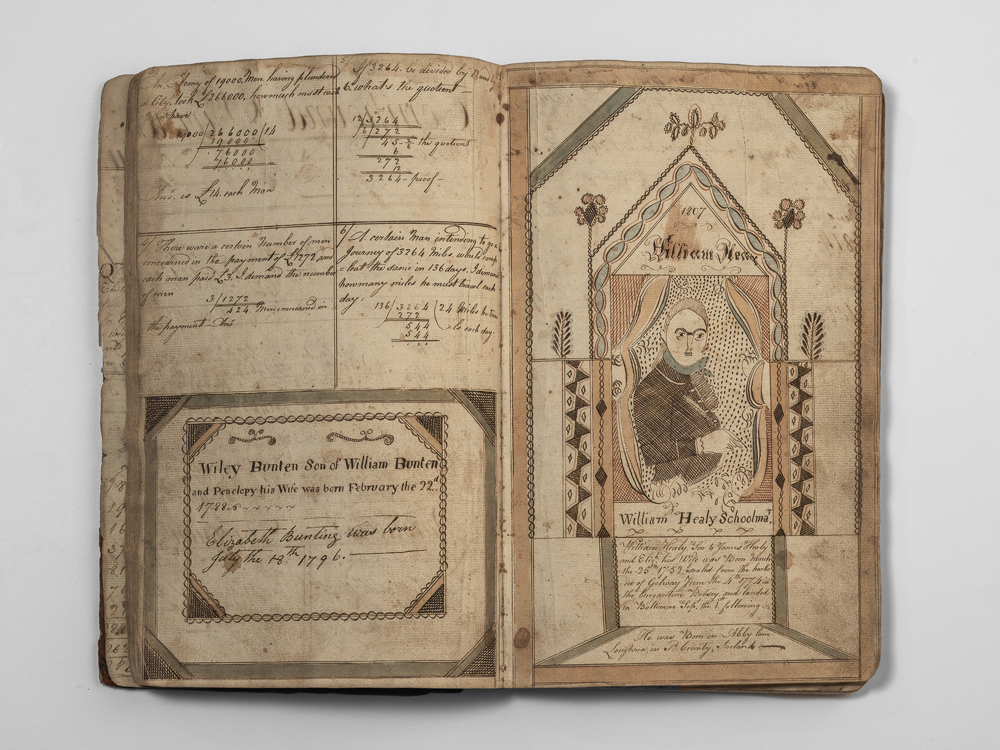
A decorative rectangular reserve on the bottom third of a page includes basic biographical information for Willie Bunting: “Wiley Bunten Son of William Bunten and Penelopy his Wife was born February the 22.d. 1788.” A different hand added his sister, “Elizabeth Bunting was born/ July the 18th 1796.”
Facing this page is a full-page illumination with stylized pen and ink portrait labeled “1807/ William Healy” over the biographical text: “William Healy Schoolmast / William Healy, son to James Healy and Elizh his wife was born March the 25th, 1752, sealed [sic] from the harbor of Galway June the 4th, 1774 in the brigantine Betsey, and landed in Baltimore Sept the 1st following /He was born in Abby lane Loughrea, in sd county, Ireland.”
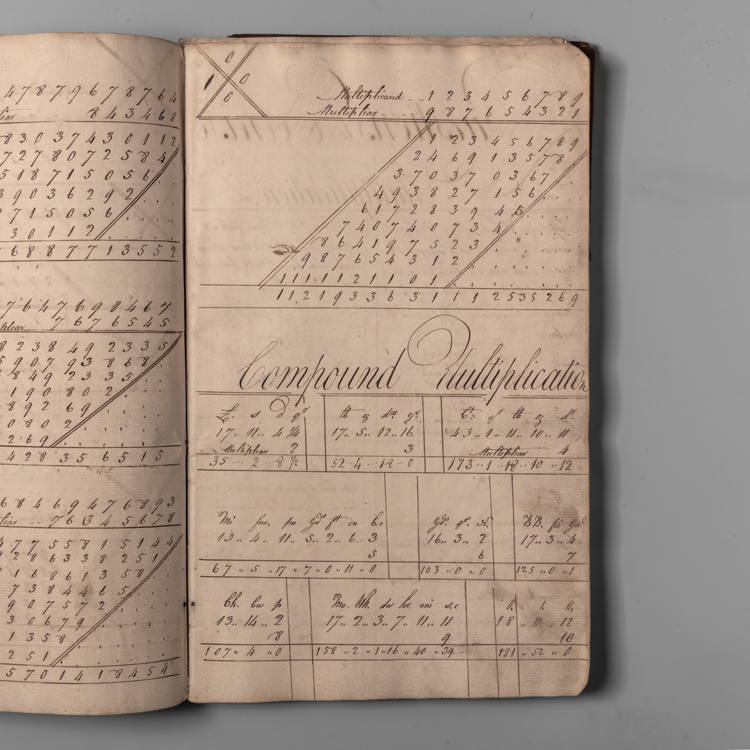
All these notations, seemingly more at home in a family bible or record book, are interspersed within a volume dedicated to the study of math and penmanship. Perhaps the most curious element in this book is found on the page between Willey’s own life information and that of his family: a pen and ink portrait of the schoolmaster William Healy within a fanciful, almost architectural setting. Below the portrait is a detailed account of Healy’s life and immigration: William Healy Schoolmast / William Healy, son to James Healy and Elizh his wife was born March the 25th, 1752, sealed [sic] from the harbor of Galway June the 4th, 1774 in the brigantine Betsey, and landed in Baltimore Sept the 1st following /He was born in Abby lane Loughrea, in sd county, Ireland.
Despite this incredible level of detail, the only portion of Healy’s narrative that has been confirmed thus far is the arrival of the Brigantine Betsey from Galway into Maryland on September 1, 1774 (it may have been into Annapolis rather than Baltimore). There is a William Healy listed in the 1790 census of Edgecombe County (which borders Nash County), but he is otherwise elusive in surviving records.
Thanks to research by Dr. Wade Mahon, we know that a schoolmaster by the name of William Healy operated an “English grammar and writing school” in Dublin. Healy was referenced as a schoolmaster at No. 12 Anglesea Street in a marriage announcement from October 1774 (Dublin Gazette, October 11, 1774). Eight years later, he advertised his school at the same location in the Dublin Evening Post on (August 3, 1782), and offers that “Arithmetic, Book-keeping, Geography, Geometry, Trigonometry, Gauging, Surveying, Navigation, Mensuration, and other branches of the Mathematics, will be taught in the most complete and extensive manner.”
Both dates (October 1774 and August 1782) should eliminate this Healy as the teacher in Nash County given the details in the cypher book biography. However, uncertainty around the marriage notice from 1774 (it was curiously retracted in the next issue) and the possibility of his return to Ireland during the American Revolution leave this as an open line for further inquiry.
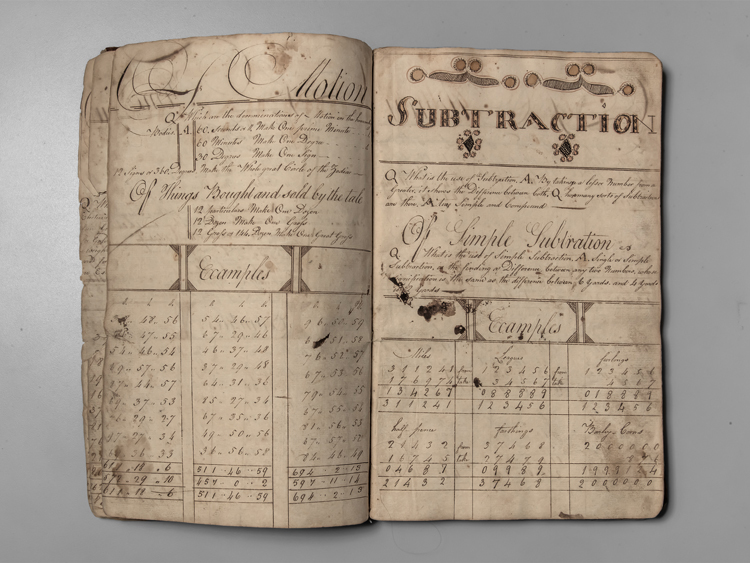
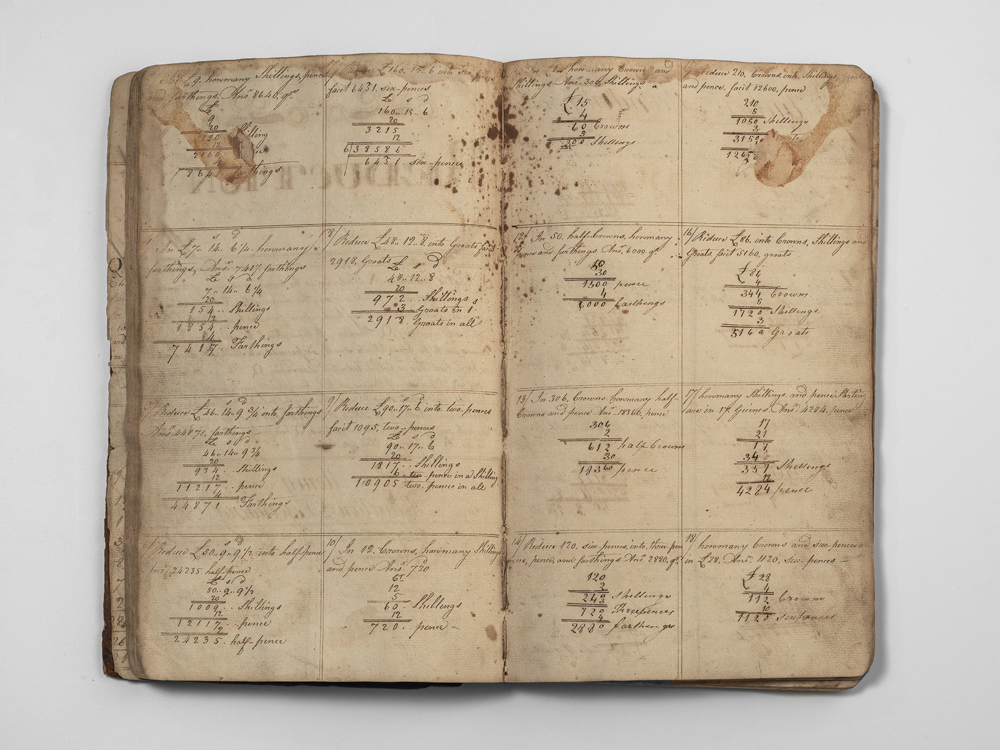
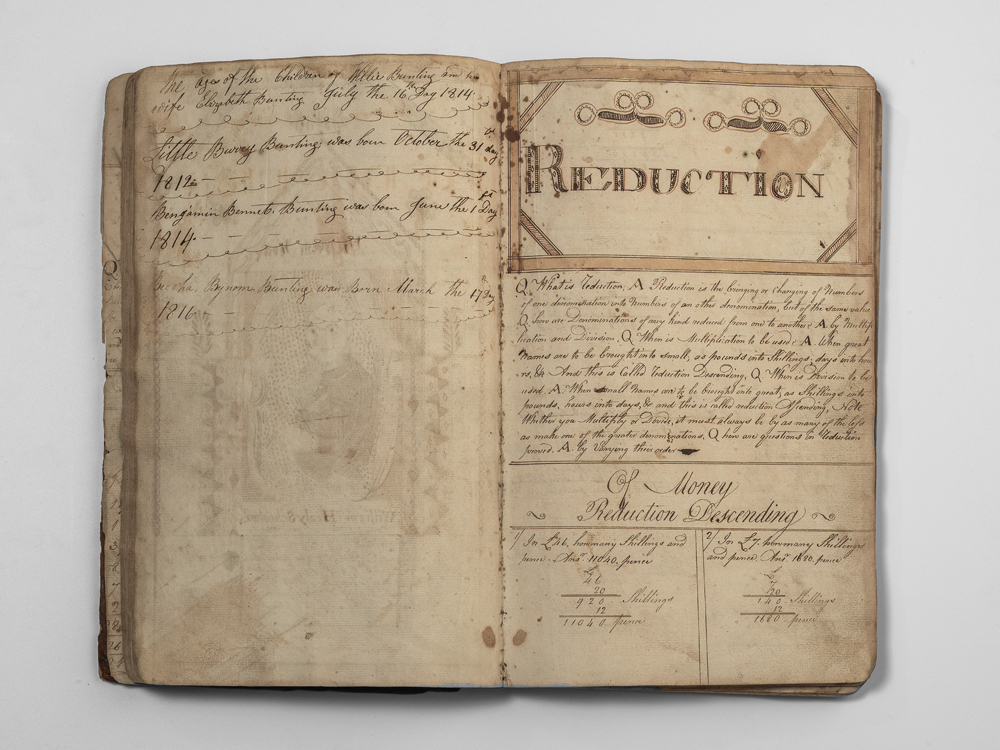
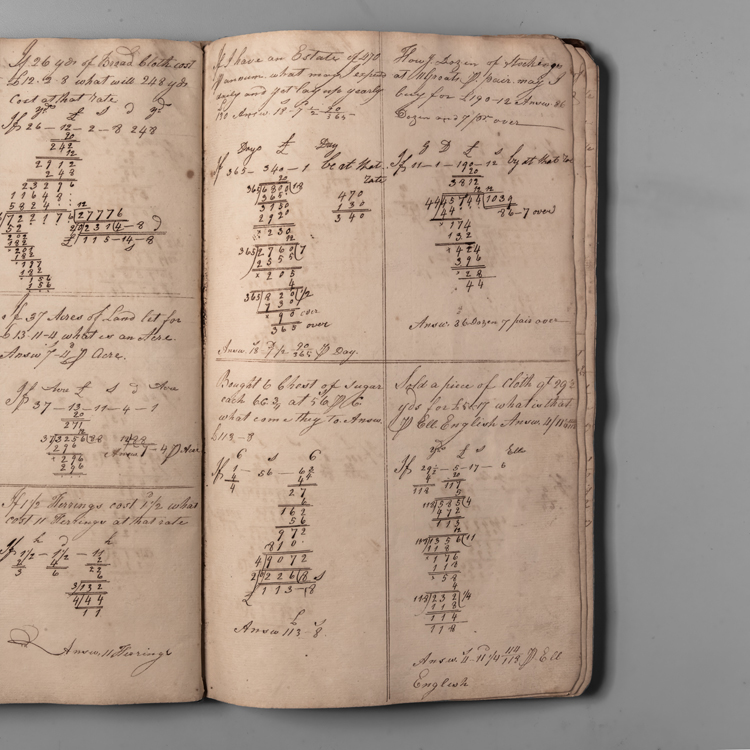
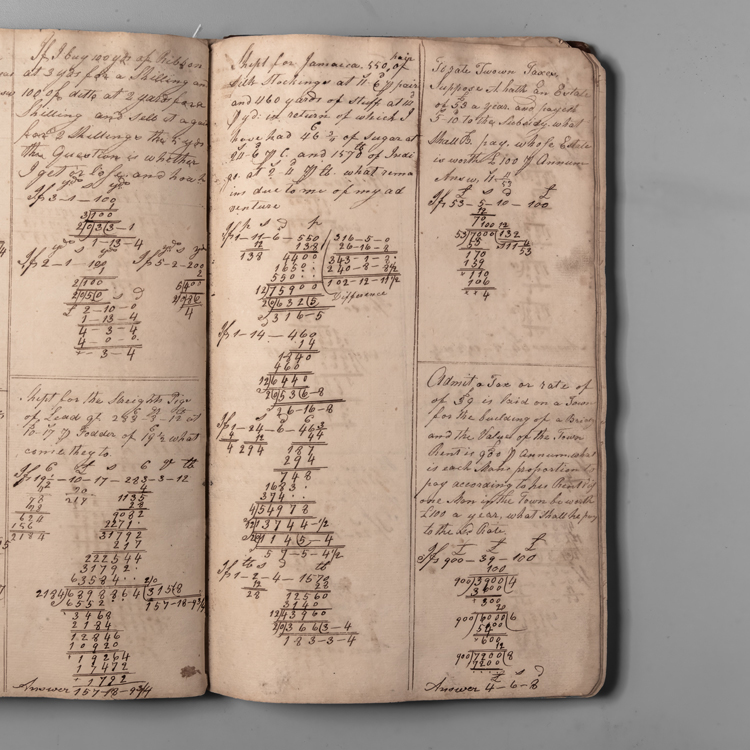
As schoolmaster, Healy instructed his young pupil in both mathematics and penmanship. The cypher book is evidence of both aspects of this educational experience. However, whether Healy or Bunting’s hands (or a combination of the two) is behind the book’s elaborate page titles, flourishes, and the portrait of Healy, remains unclear.
Willie Bunting is comparably well documented. Although likely named for his father, William, his name is consistently written as Willie or Wiley. The surname is spelled both with and without the final “g.”
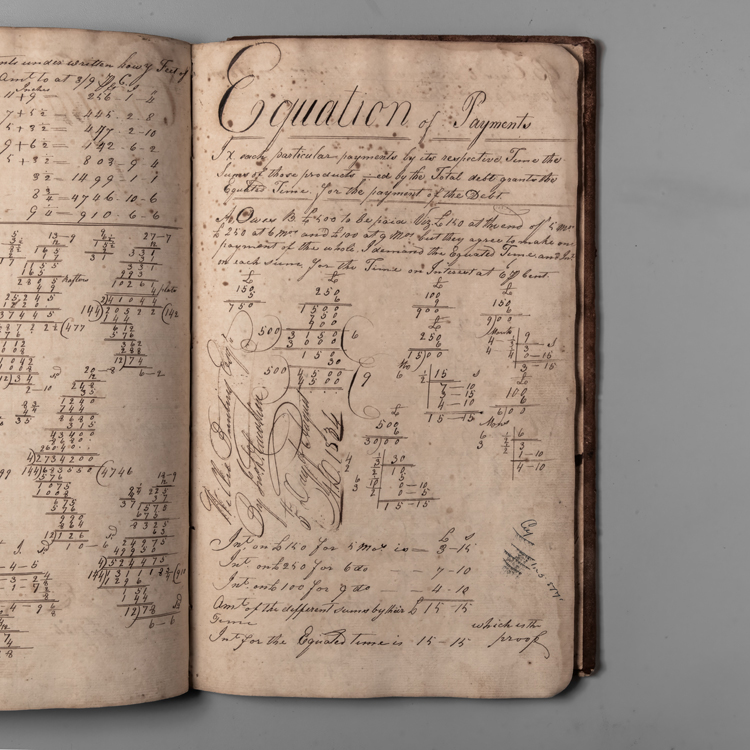
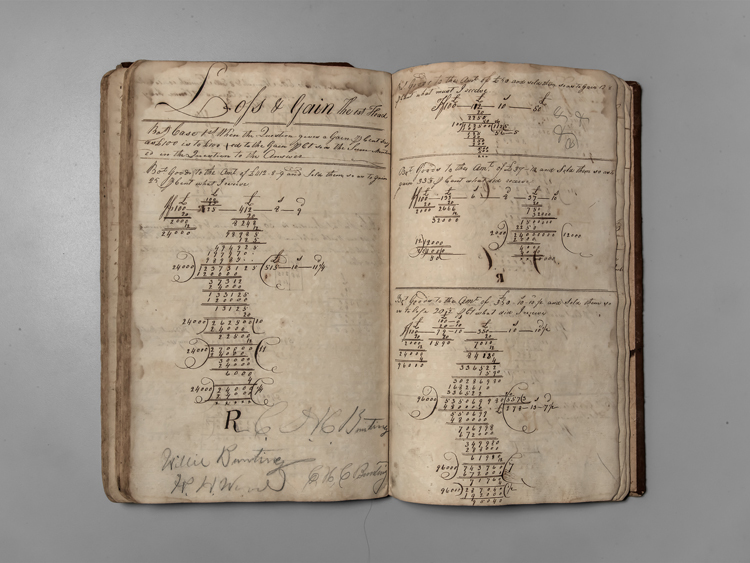
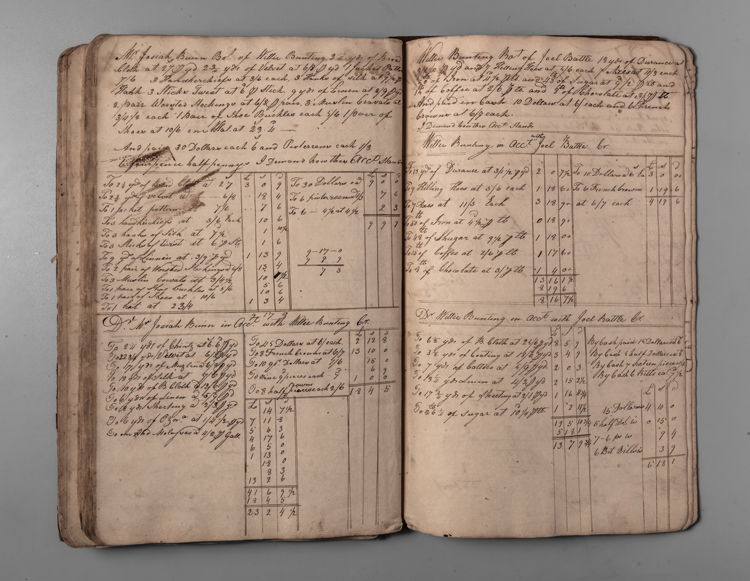
2025 MESDA Summer Institute fellow Sarah Brokenborough considered how the cypher book prepared Bunting for his life as a plantation owner and enslaver. For example, Bunting learned how to calculate interest on debt using the “equation for payments”. From probate records, we know that he directly applied this calculation to purchase on credit a young enslaved man, Henry, from his father’s estate in December 1834. Perhaps not coincidentally, Bunting signed his name next to “the equation for payments” earlier that same year. The final pages of the book include a series of accounts with local elites and merchants, including Joel Battle, one of the founders of the Rocky Mount Cotton Mill.
The cypher book remained in the family for at least 100 years. In 1907, it was the focus of a local interest story in “The News and Observer” from Raleigh, North Carolina (June 8, 1907). It was in the possession of his grandson, W.R. Wood. At an unknown date, it left the family before it was offered for sale in 2024.
Sarah Brokenborough, “Deciphering An Early American Cypher Book,” unpublished manuscript, MESDA Summer Institute, 2025
Wade Mahon, “Irish Schools and Schoolmasters in Dublin and Vicinity, 1750-1800,” 2018