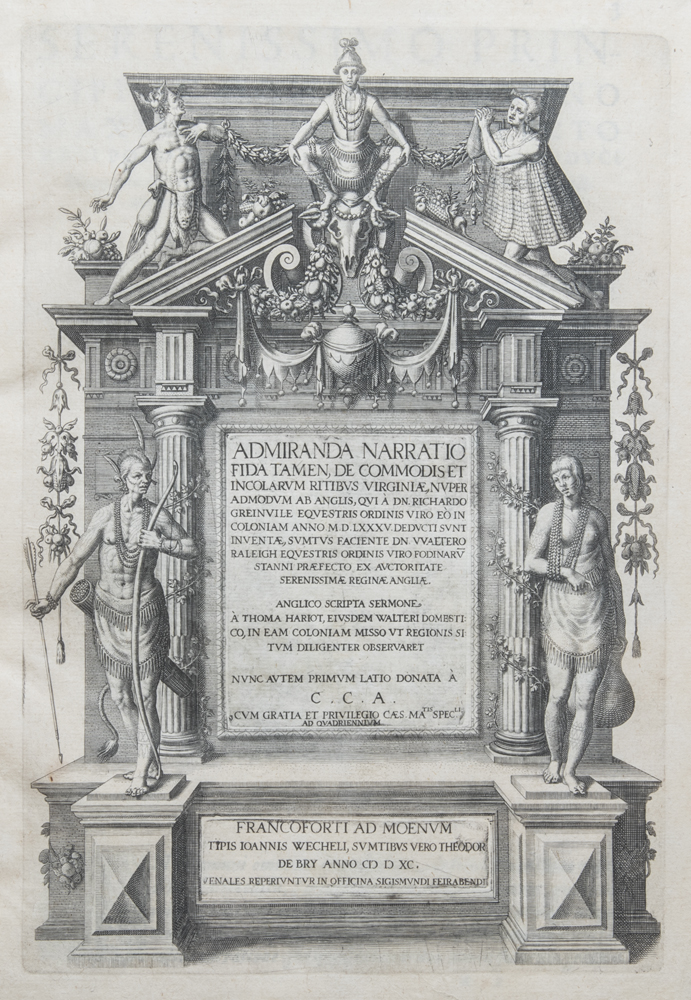
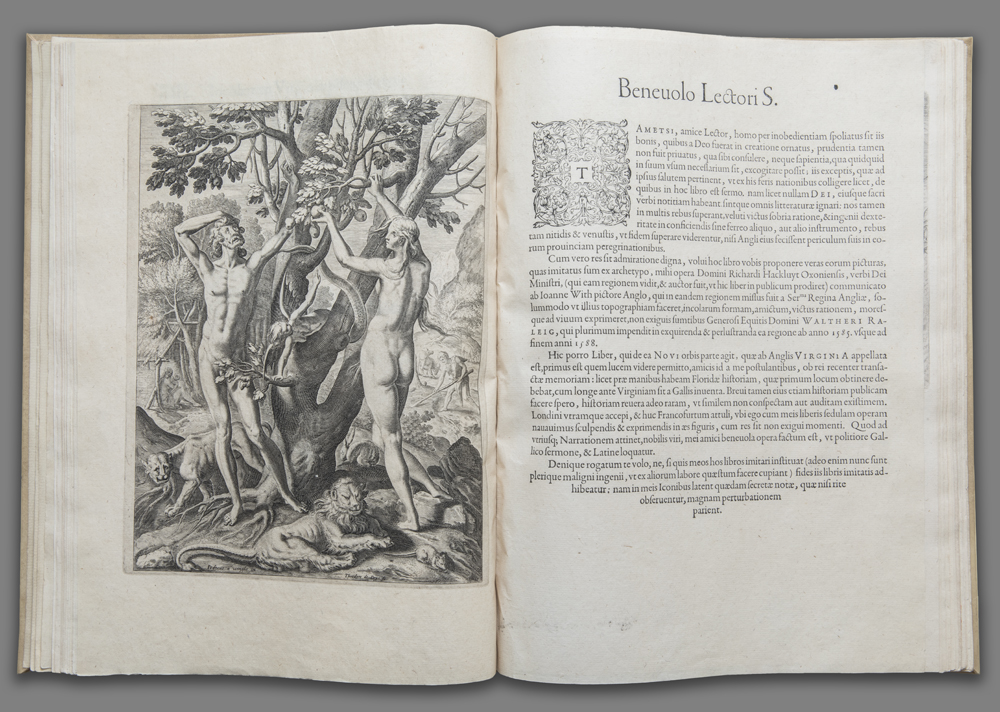
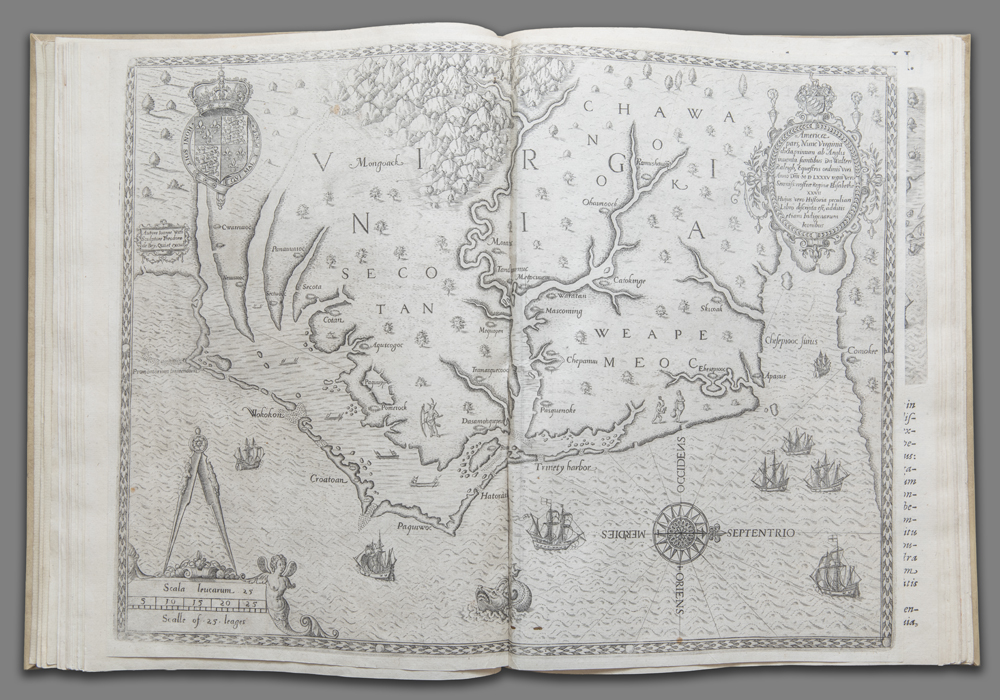
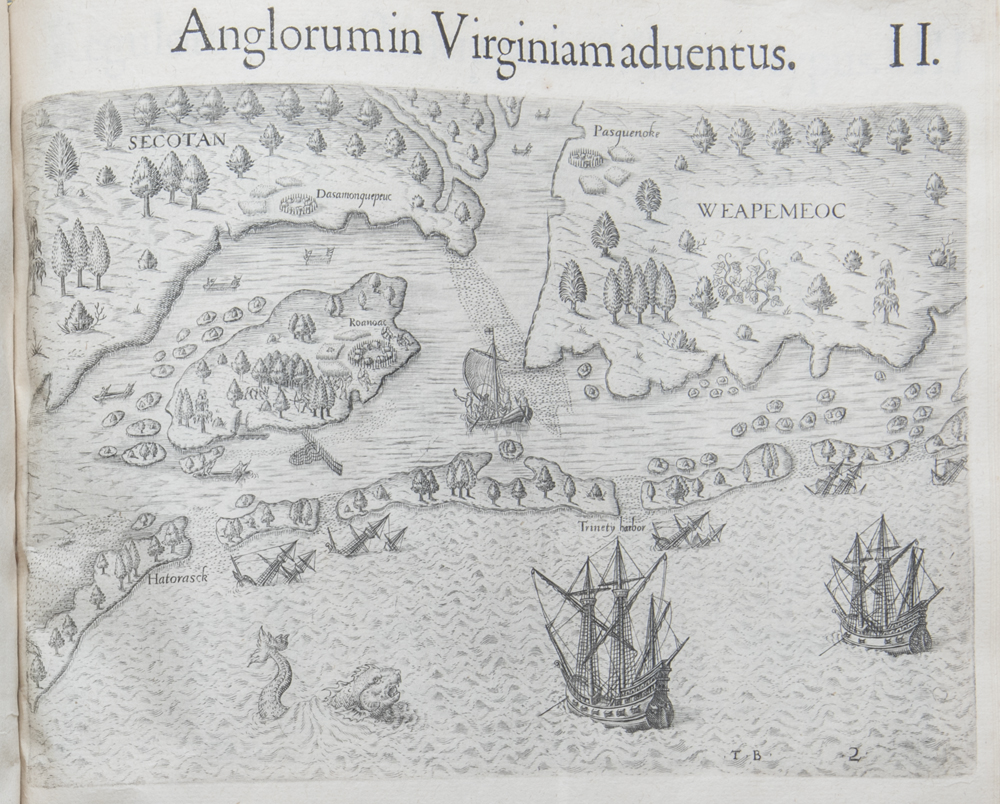
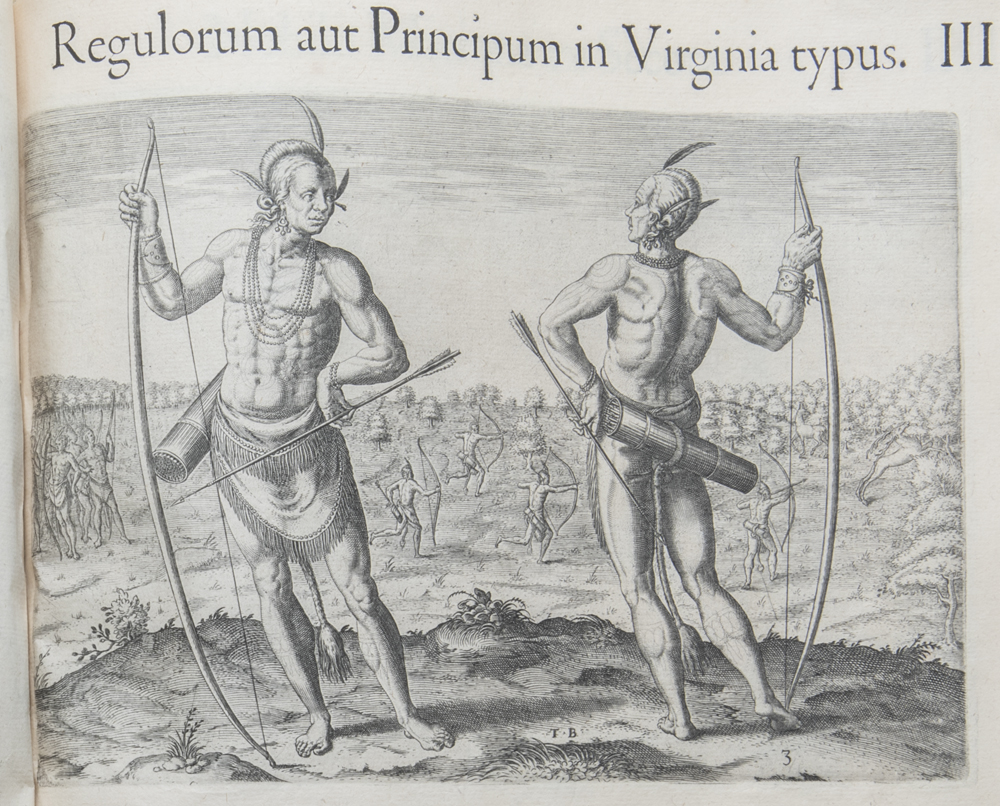
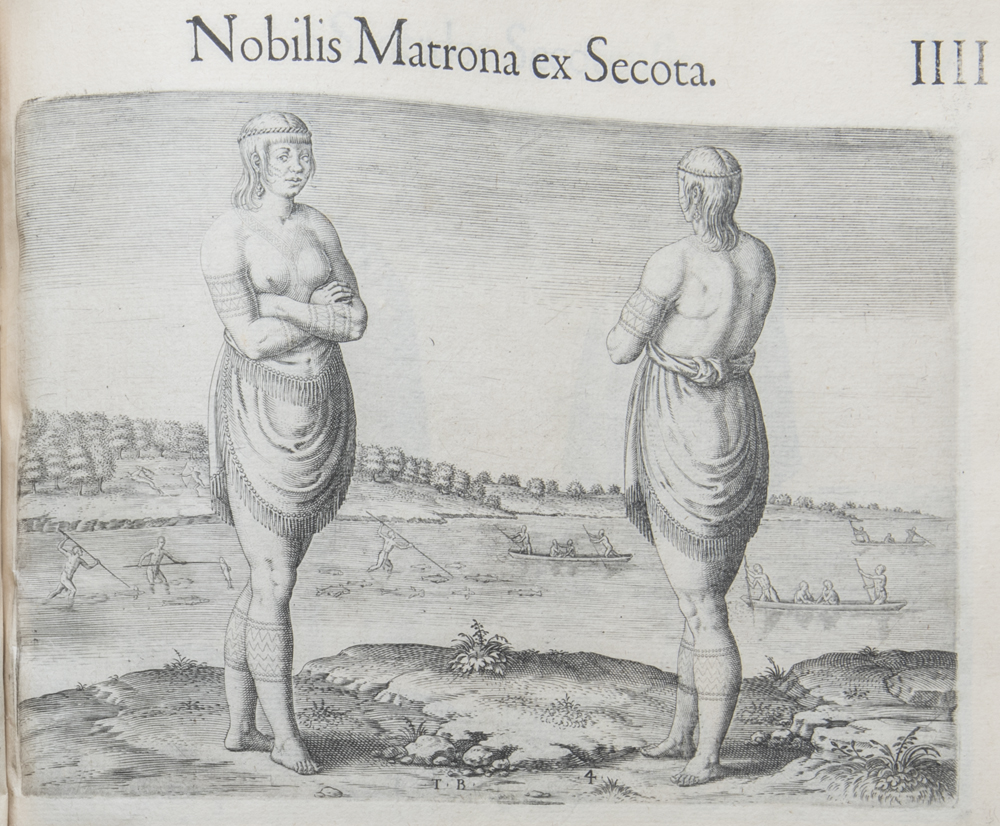
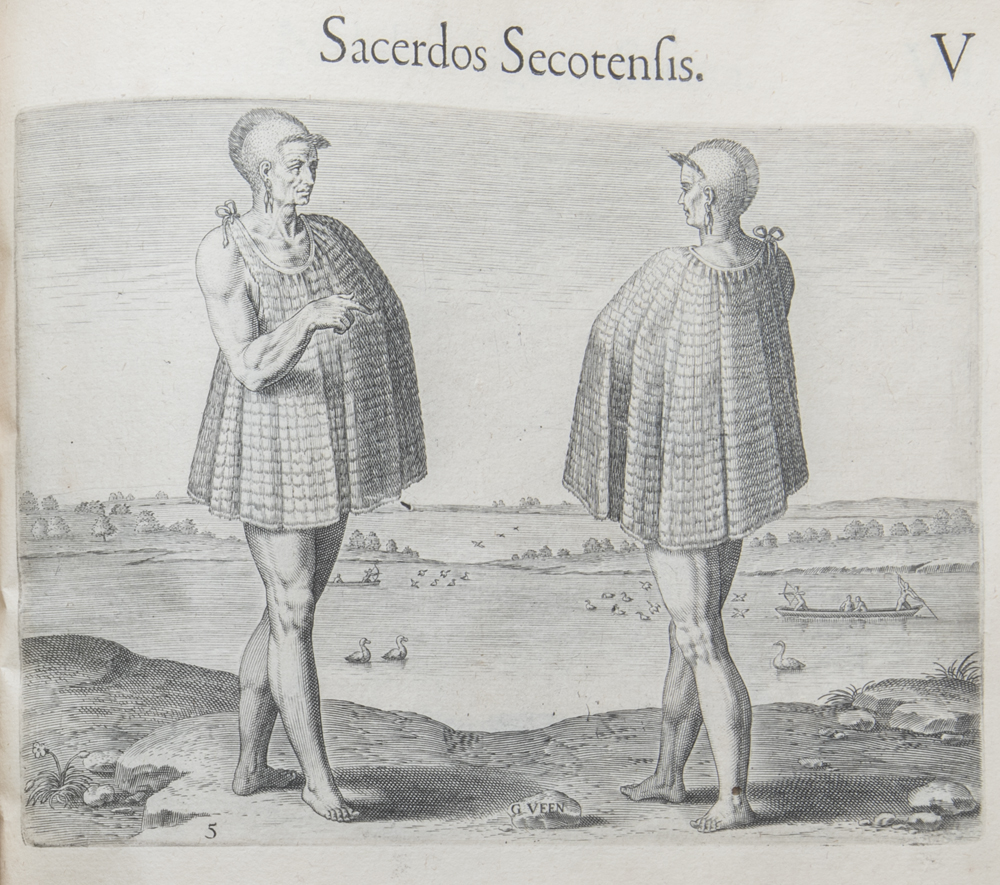
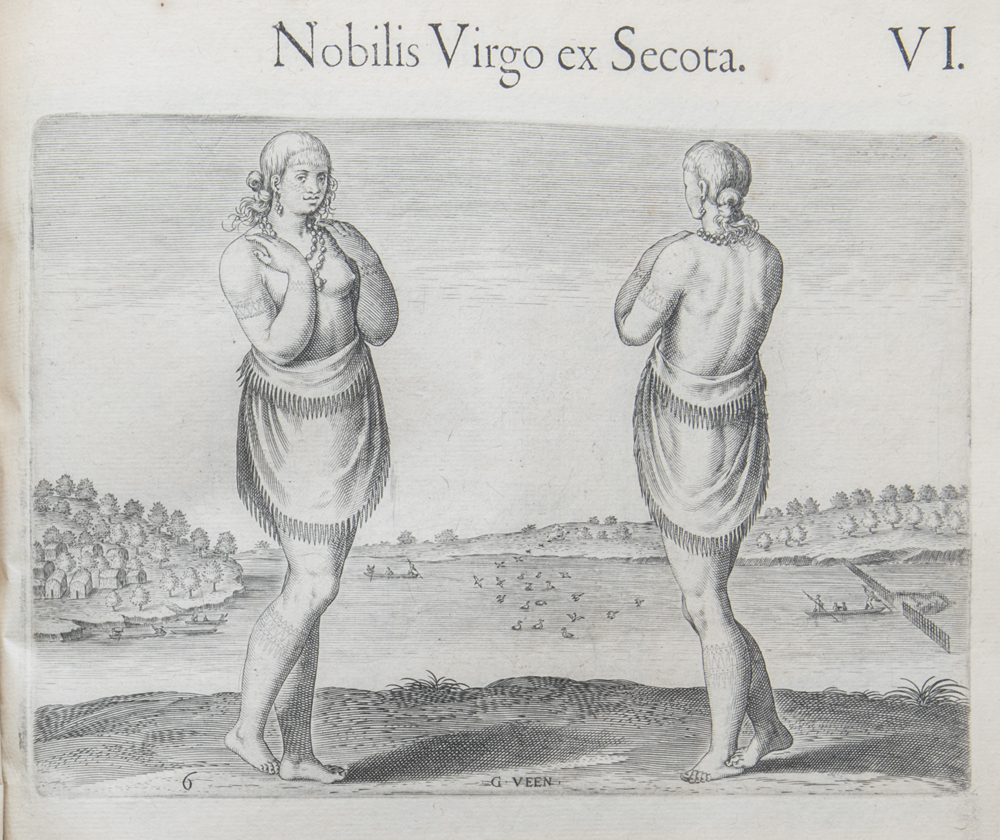
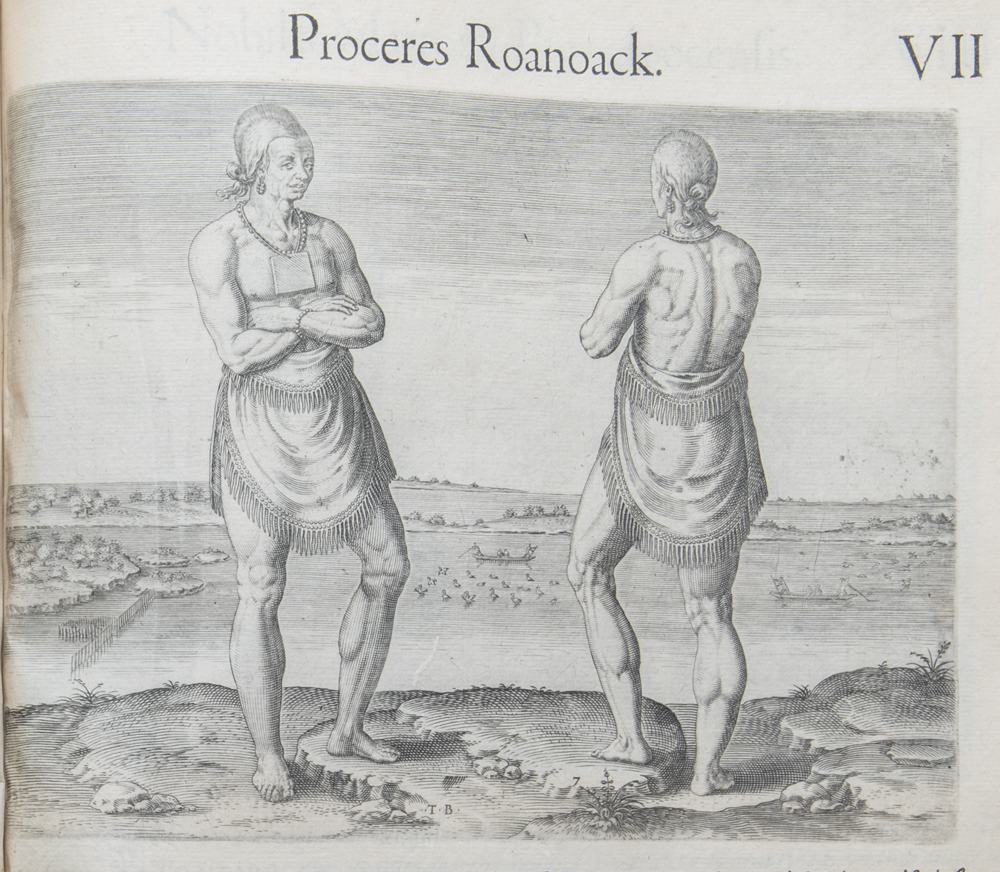
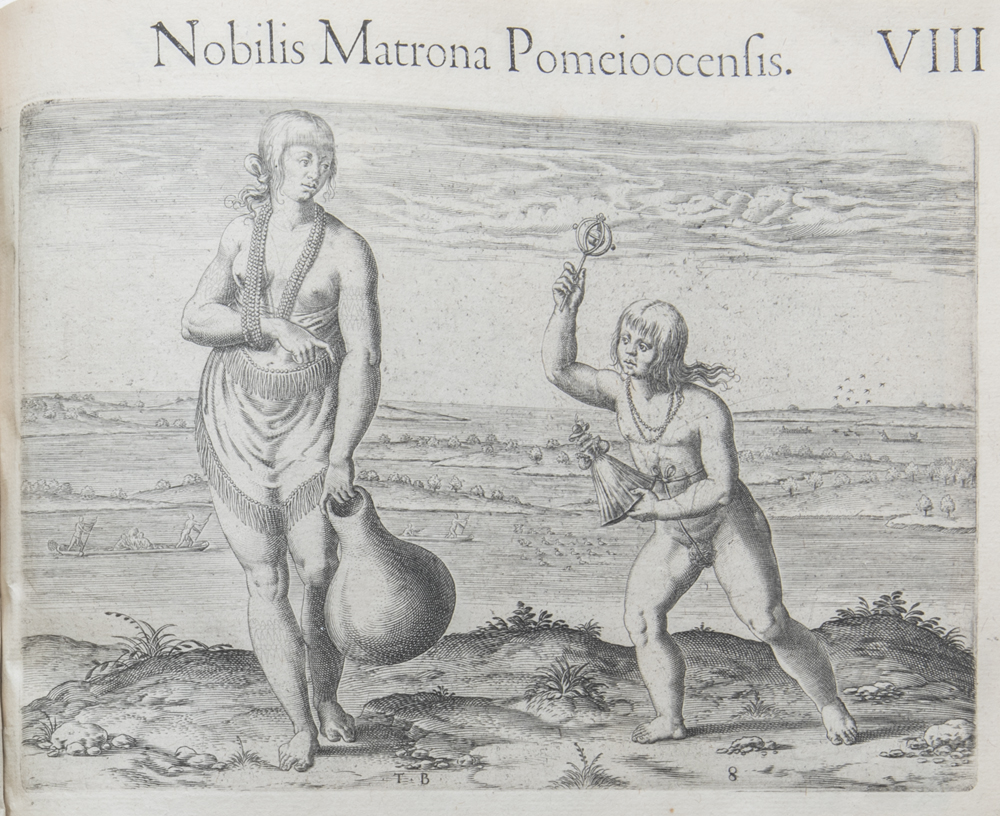
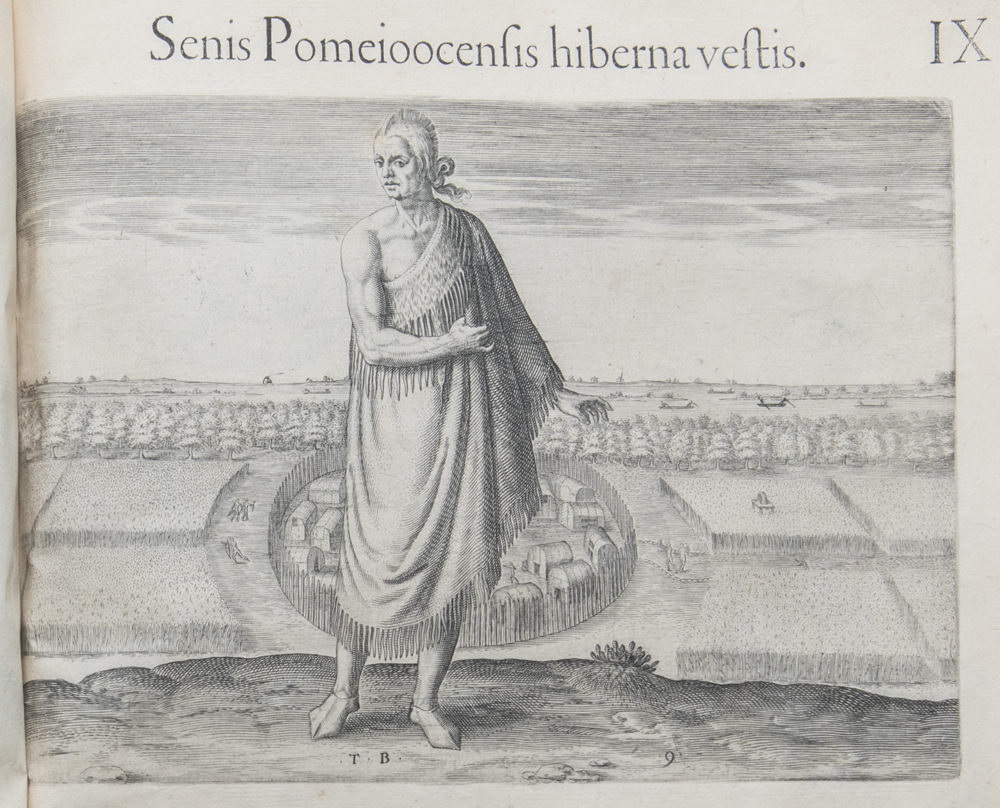
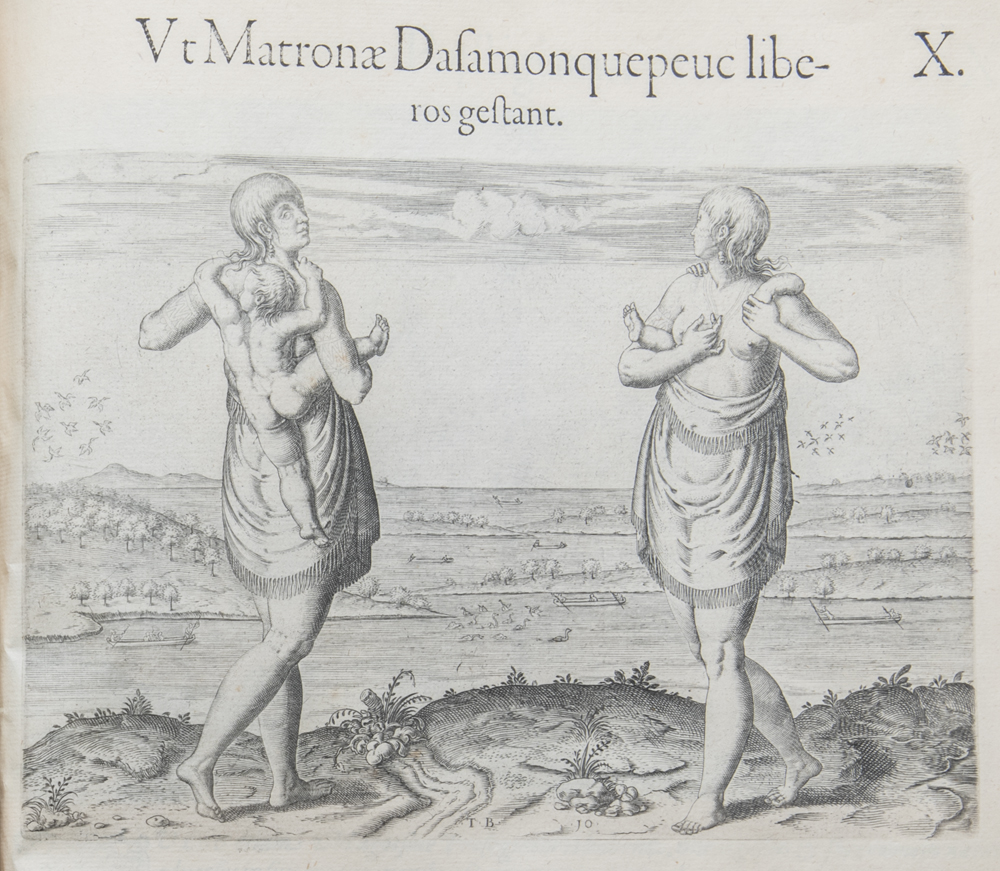
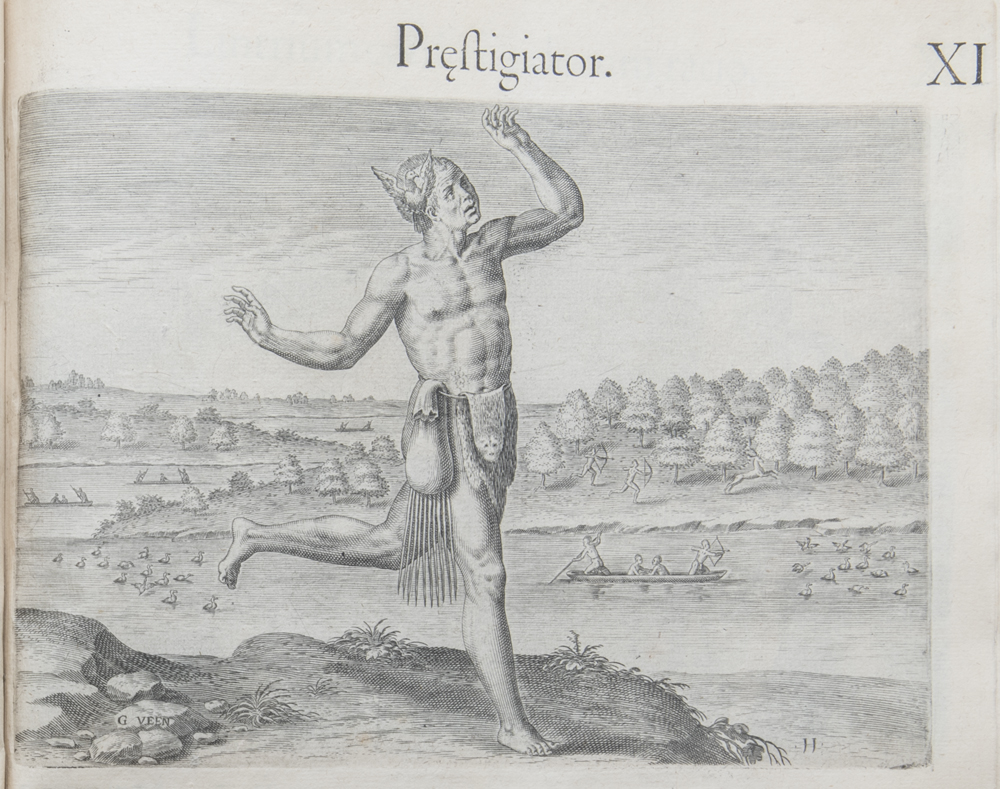
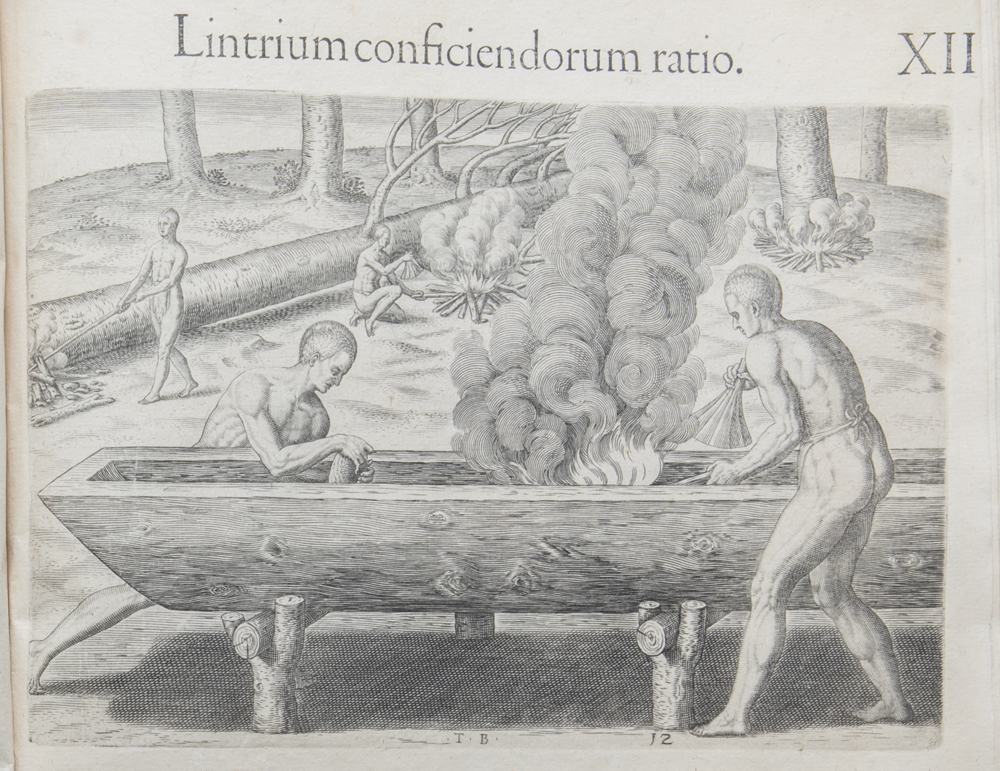
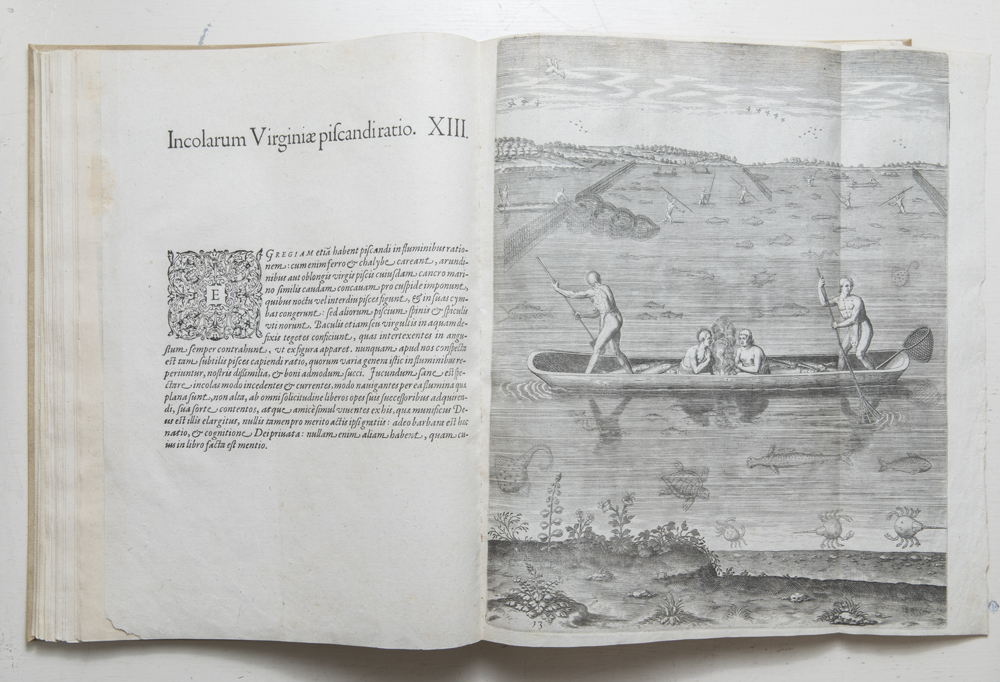
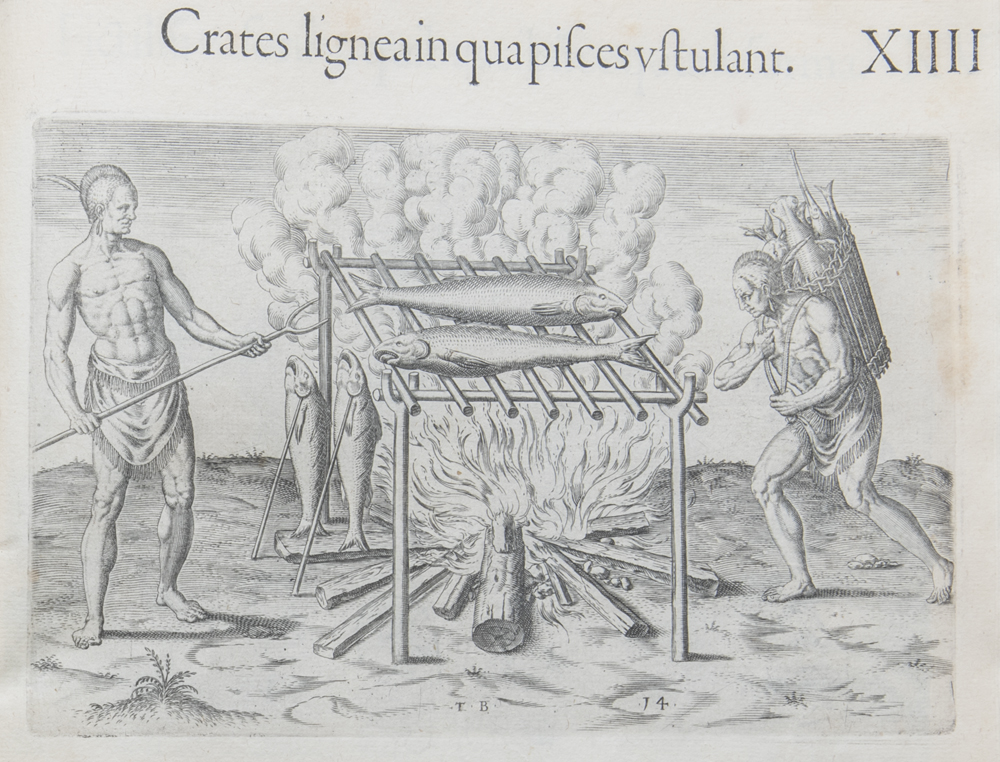
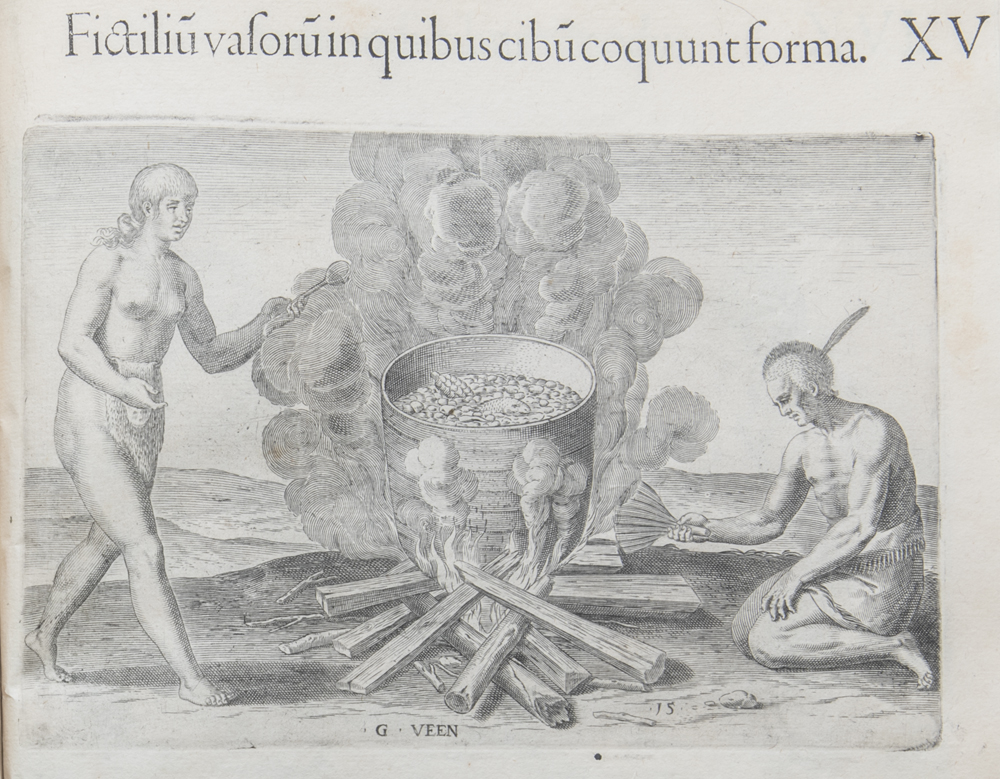
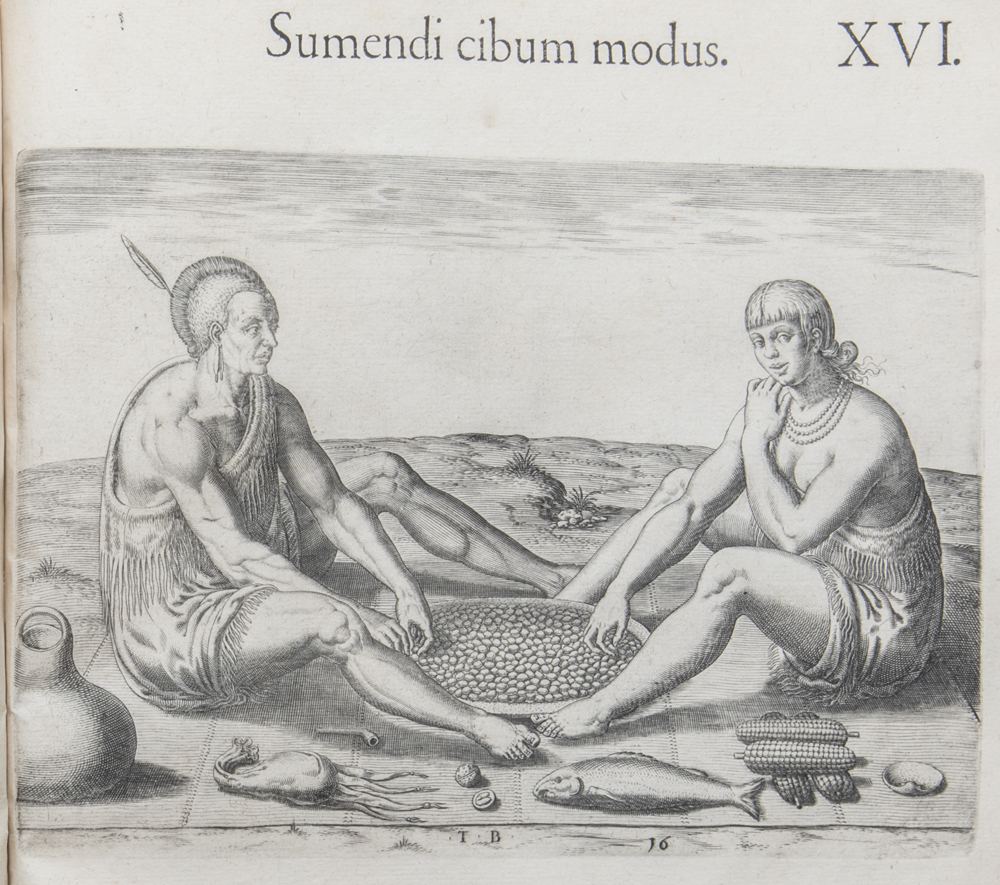
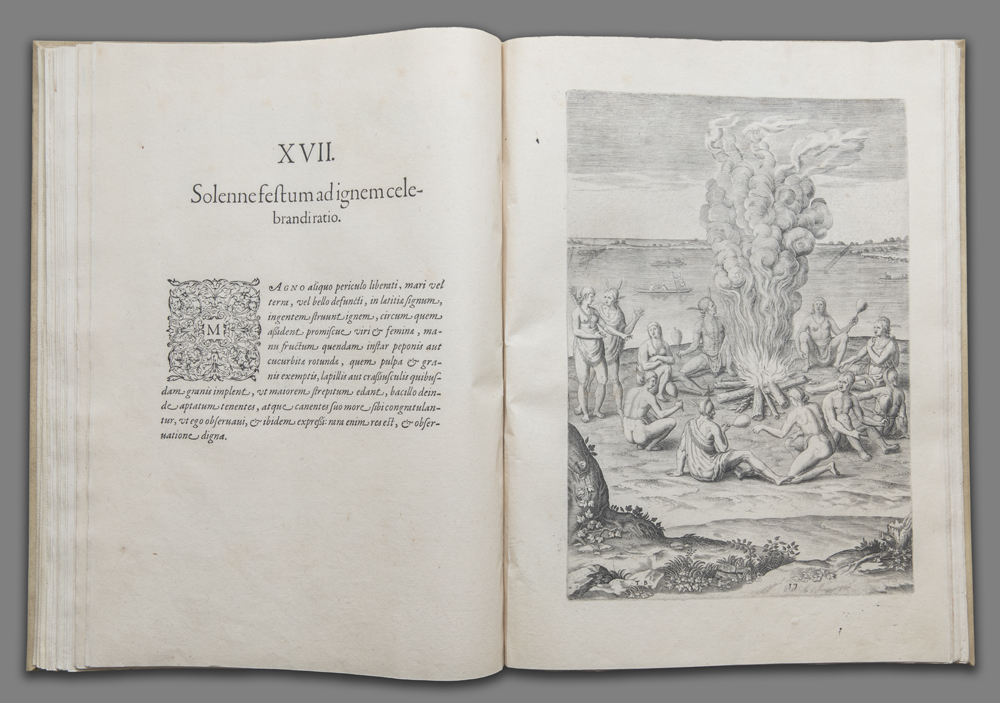
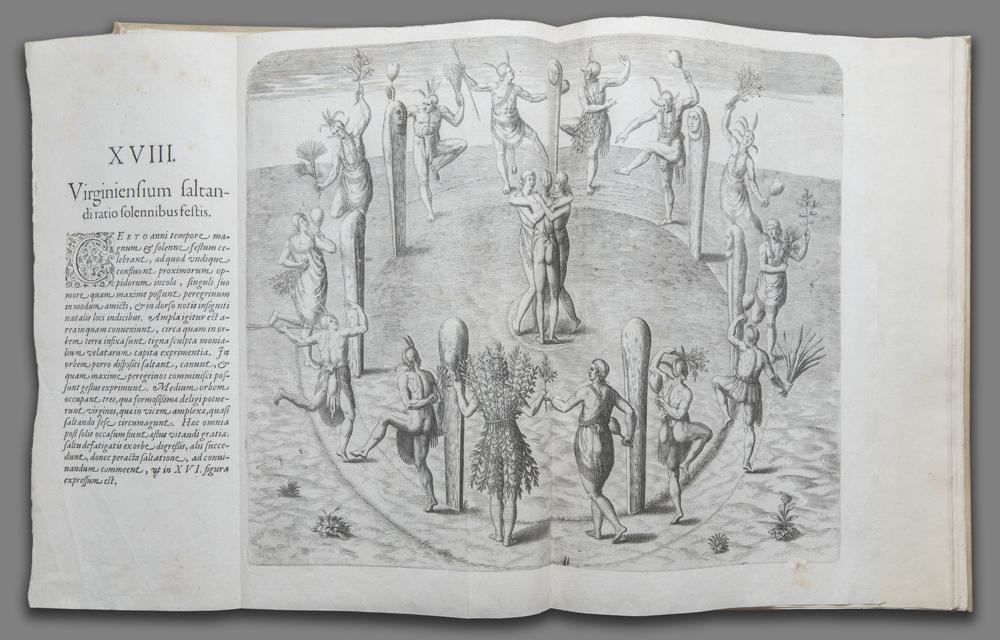
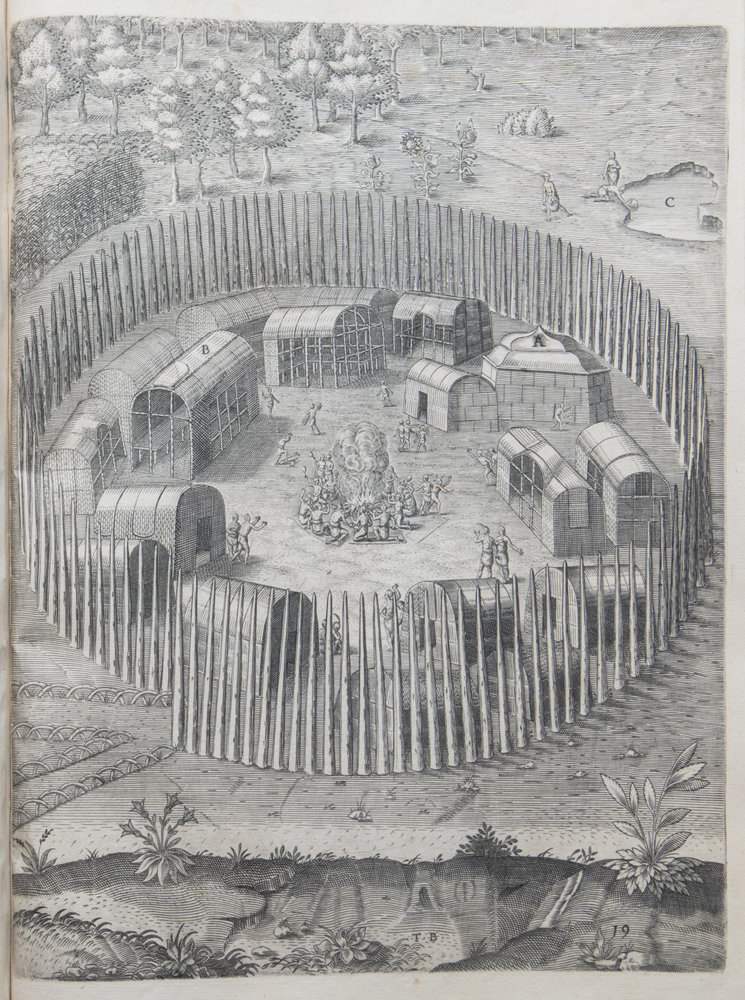
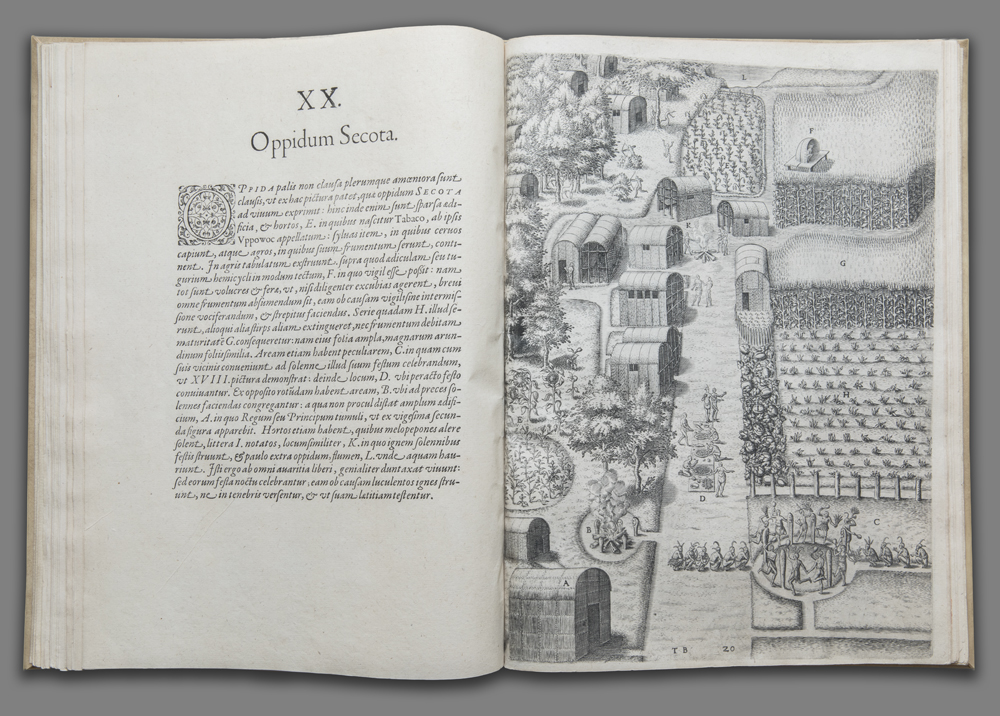
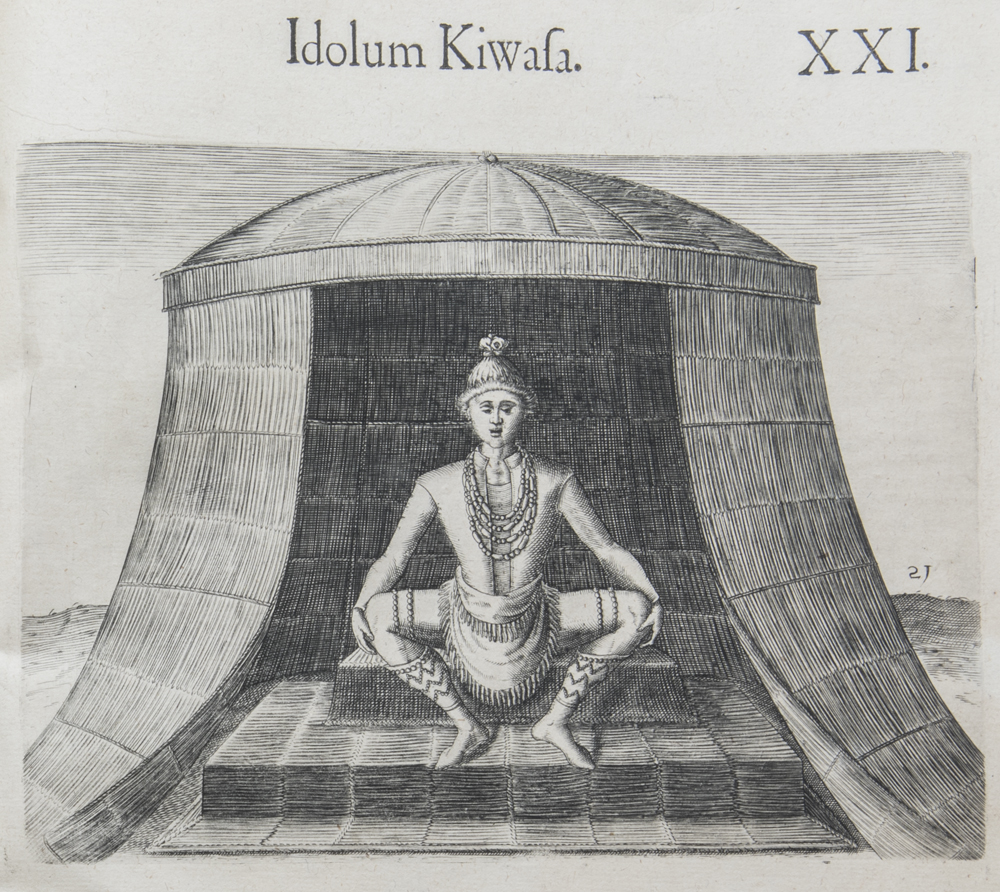
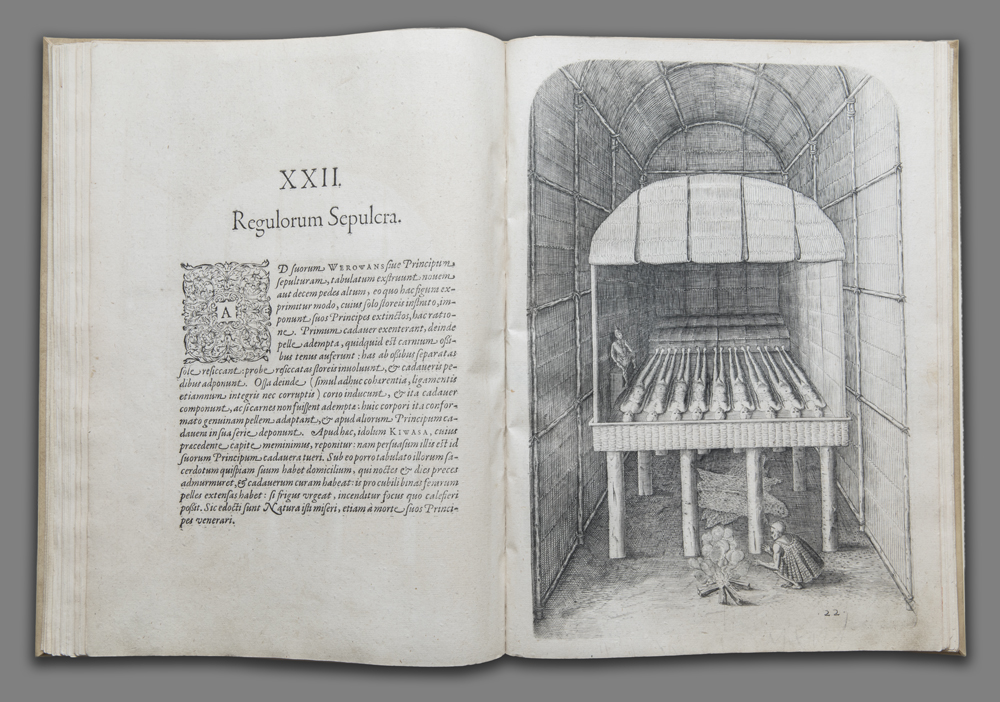
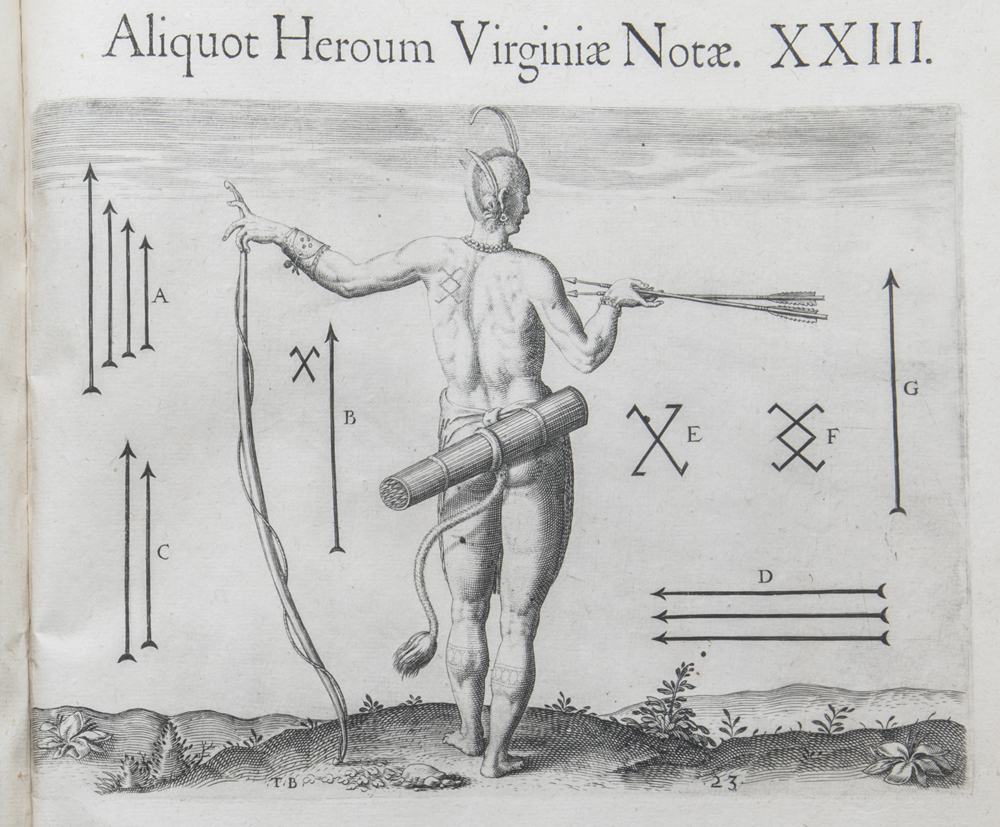
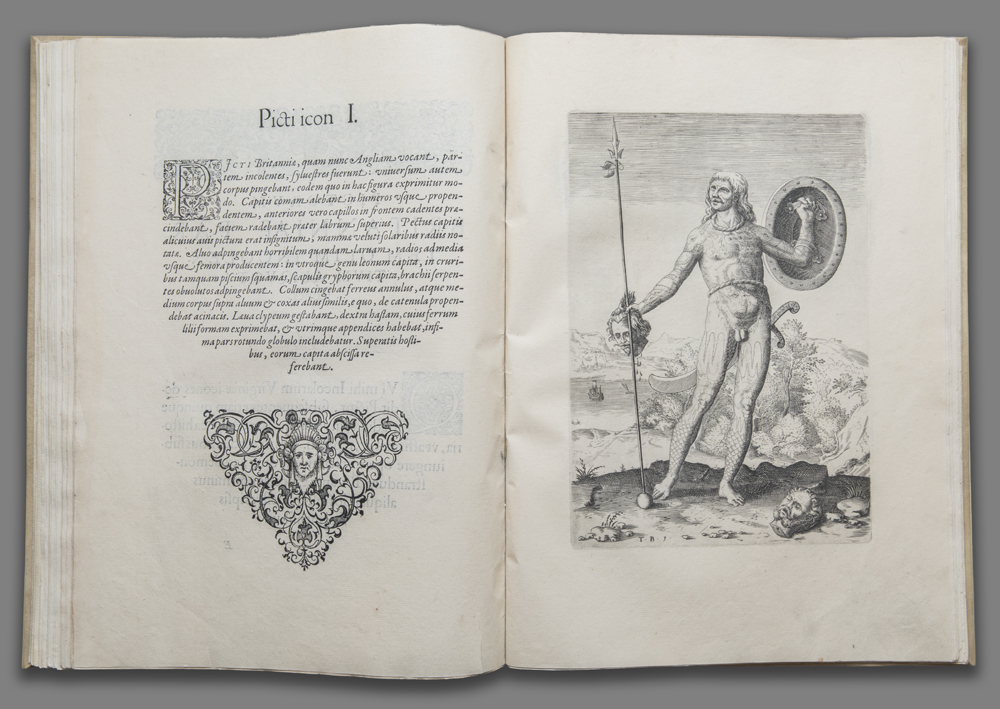
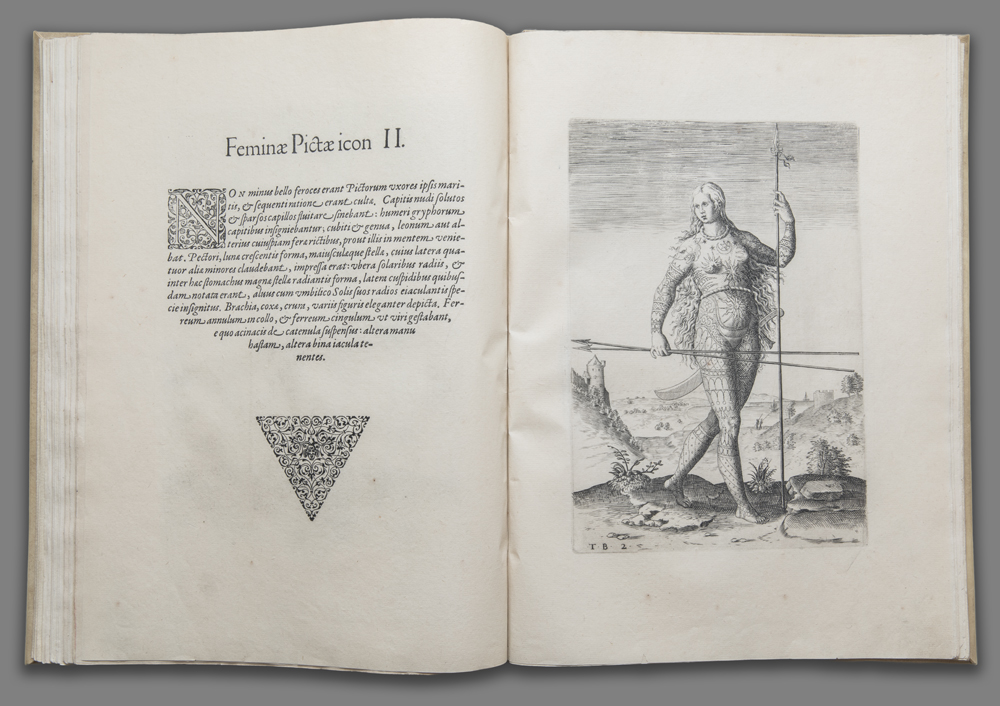
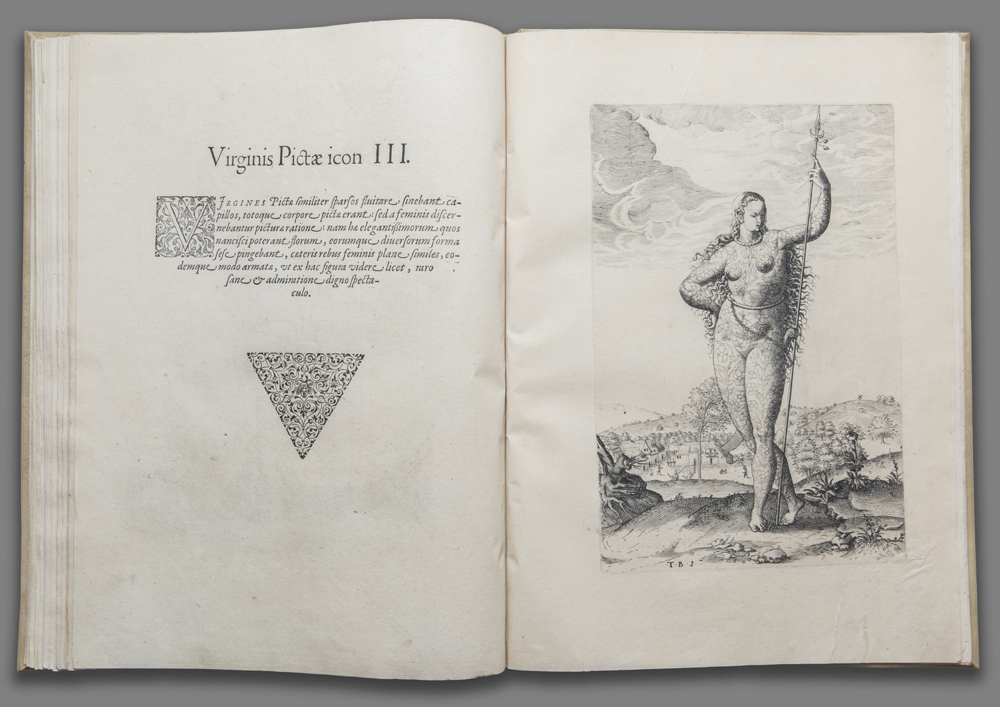
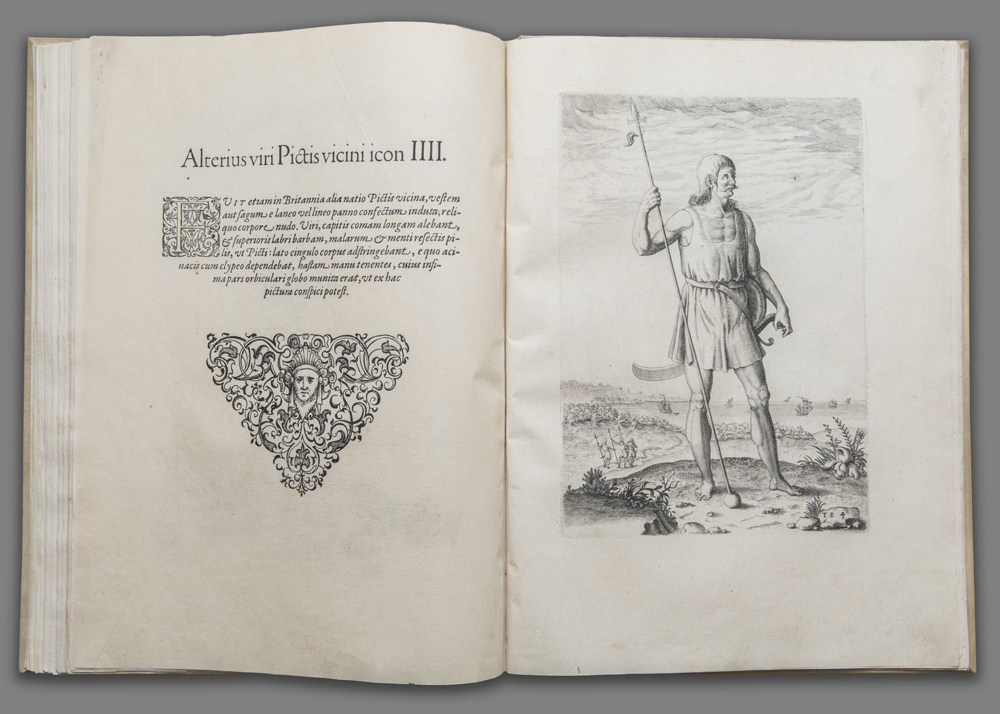
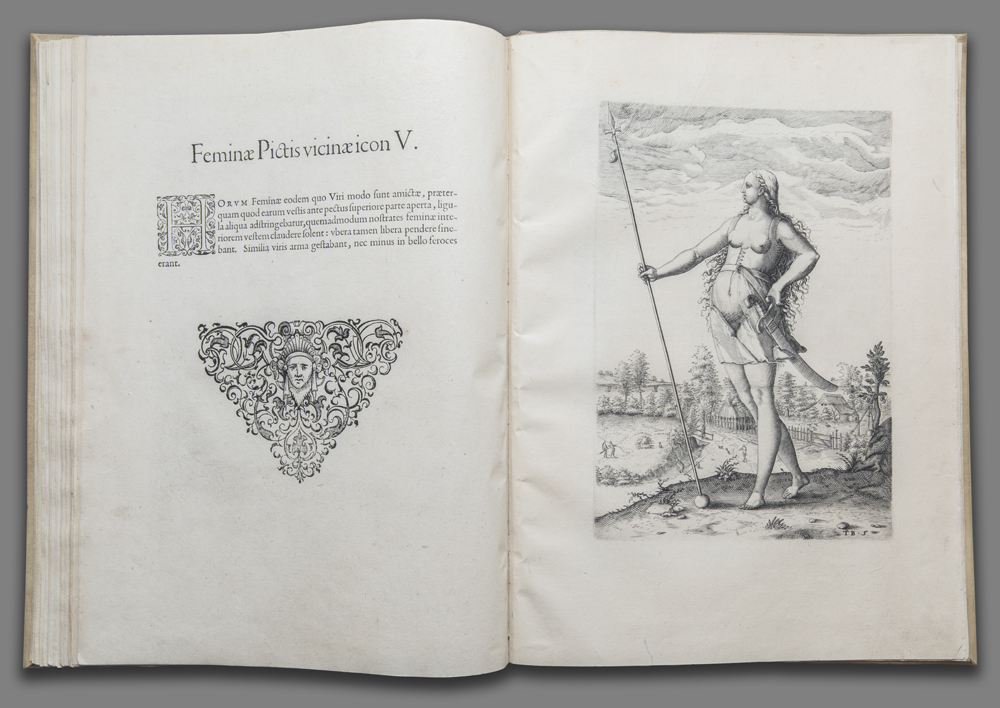
In 1584 Sir Walter Raleigh had identified Roanoke Island as a suitable place to establish a settlement on what would become the Carolina coast. An expedition under the leadership of Sir Richard Grenville landed at what is now Roanoke Island in July 1585. The party included mathematician and navigator Thomas Harriot and John White, a skilled artist. Harriot and White made several excursions into the region,venturing as far as the Albemarle and Pamlico Sounds and the Chowan and Roanoke Rivers, mapping the area and recording the natural resources as well as images of the villages of Pomeioc, Aquascoqok and Secotan and the customs of the indigenous inhabitants of the region. Following their return to England in the summer of 1586 Harriot wrote “A briefe and true report of the new found land of Virginia,” which was published in 1590 by Theodore De Bry in Frankfort, Germany, and illustrated with engravings based (and embellished) upon John White’s sketches and watercolors. White’s original works are now in the collection of The British Museum.
John White returned to the Outer Banks in 1587, having been appointed Governor of the colony by Sir Walter Raleigh. They found no survivors of the earlier settlement but set about repairing the cottages and fort that remained. White had brought a different group of settlers this time that included families, among whom was his daughter Elinor White Dare who gave birth to a daughter, Virginia Dare, in August of that year. White left the small colony in September to return to England for fresh aid and supplies. Facing many difficulties upon his arrival in England, he was unable to return to the colony until 1590 when he found the settlement abandoned. He was forced to return to England with no hope of locating any survivors of what has become known as “The Lost Colony.”