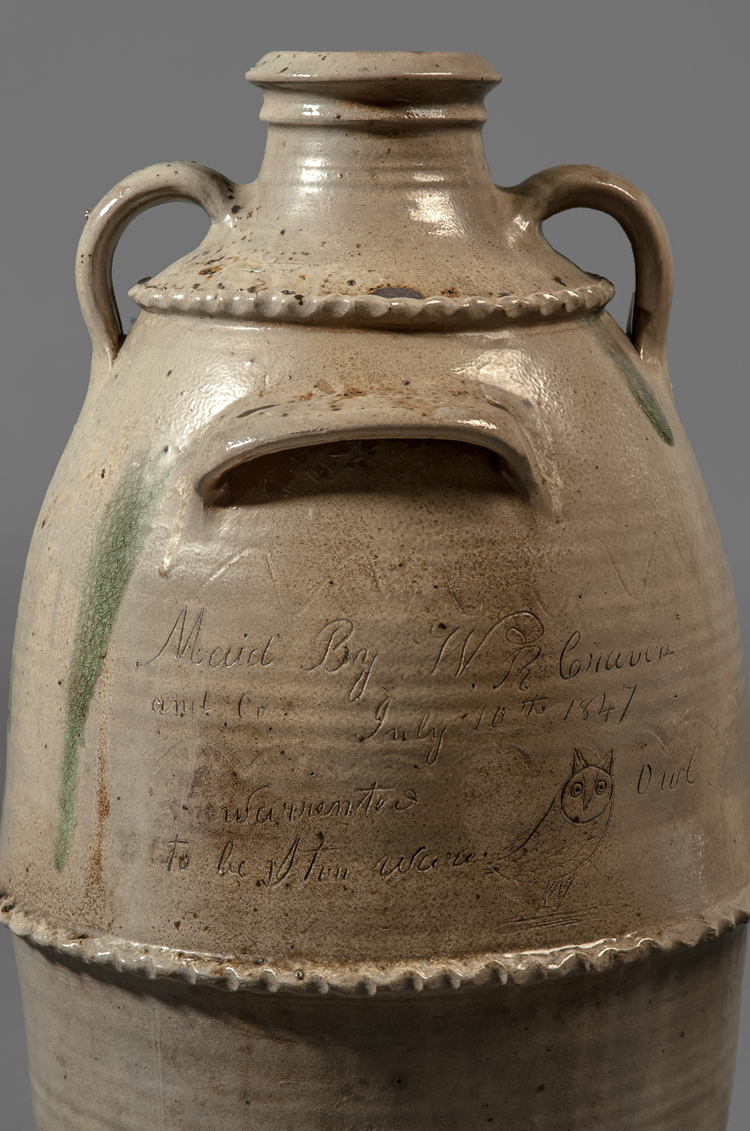
Water Cooler
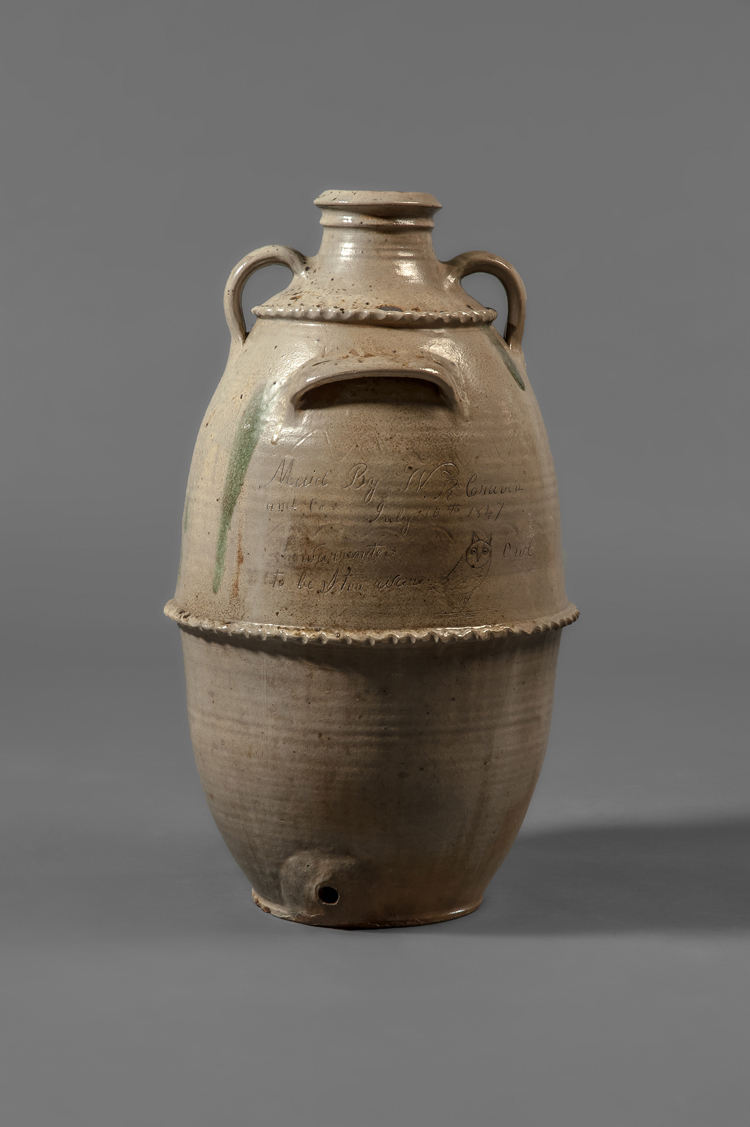
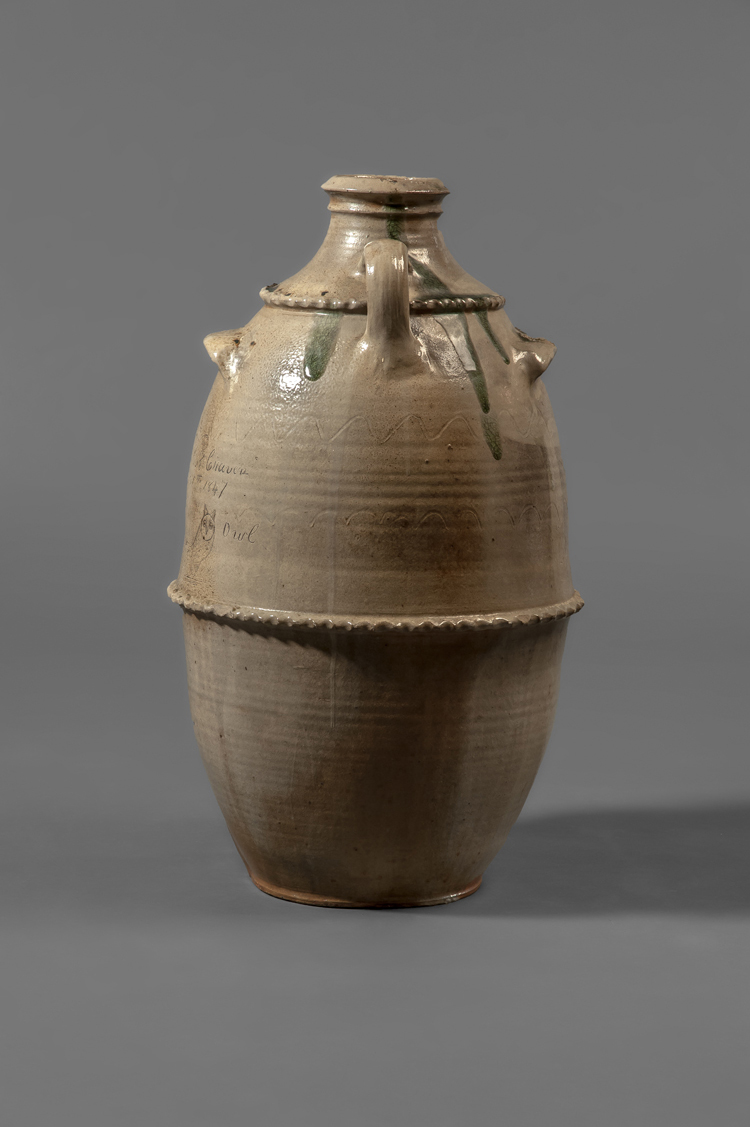
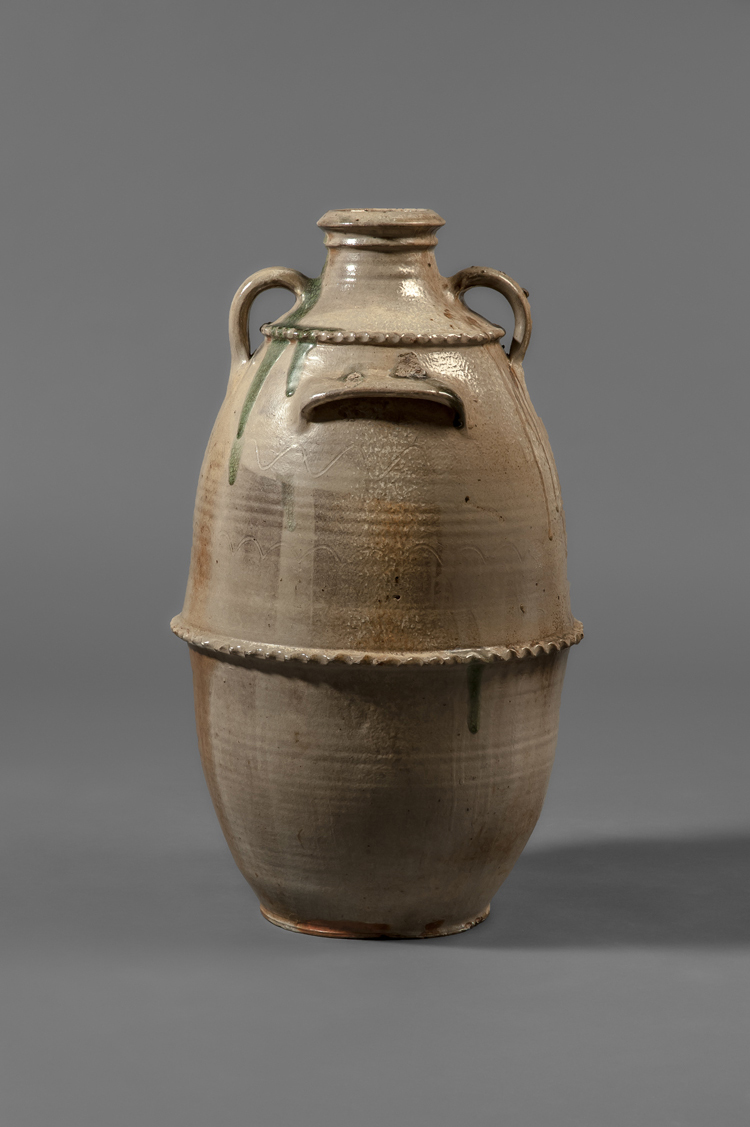
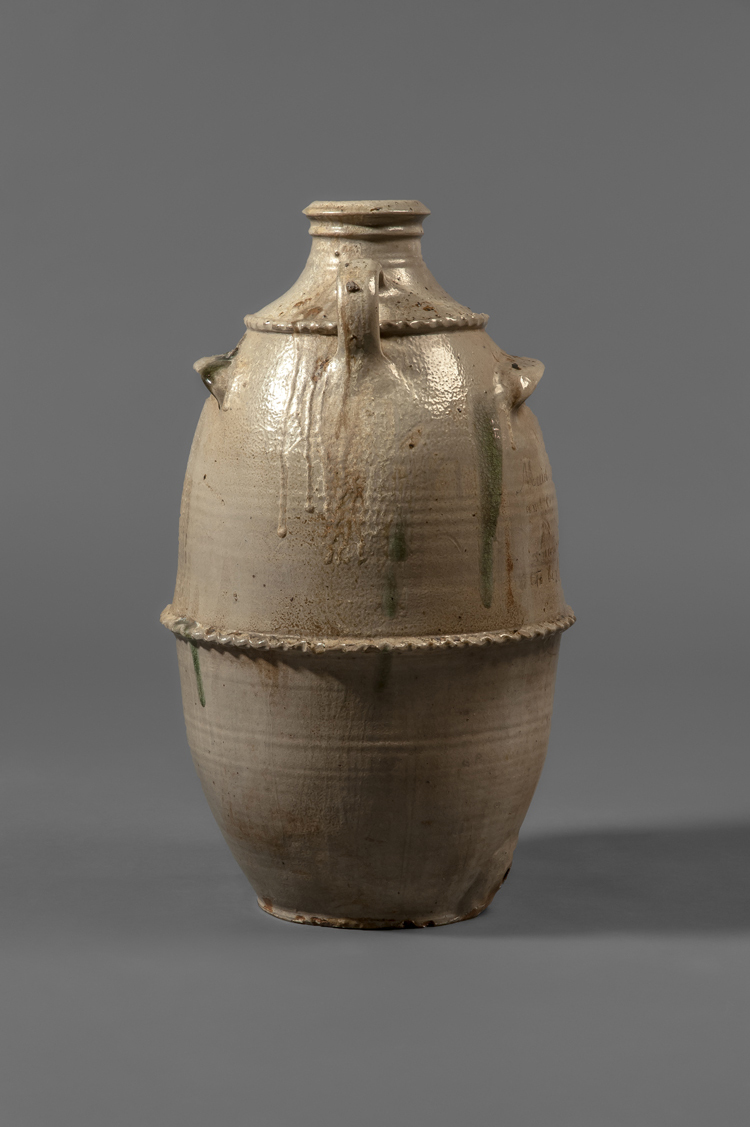
Salt glazing was a technique used by stoneware potters to create a glassy surface. When the pottery kiln reached over 2000 degrees Fahrenheit, salt was introduced into the kiln, creating a vapor. This vapor adhered to the silica in the clay, forming a glassy appearance on the pottery. Because of the high temperature at which the pottery was fired, the clay often became non-porous, or vitrified. This, combined with the salt glazing, meant that potters did not have to apply a glaze to the interior of the vessel. It could hold liquids and not seep, unlike earthenware storage vessels.
MAKER: By 1840 Thomas Craven (1775-1857) and many of his family members had migrated from Randolph County, North Carolina, to Henderson County, Tennessee, including the maker of this water cooler, Thomas’s son William R. Craven (1800-after 1880). William was born in North Carolina but moved with his family to Tennessee in the late 1830s. Three pottery kilns excavated in Henderson County revealed connections with the Craven family and specifically shed light on the development of William R. Craven’s work. Most interesting are the sherds recovered from the kiln sites that have the same crimped band resembling a pie crust. William R. Craven left Tennessee between 1850 and 1860 to move to Denton County, Texas, where he died some time after 1880.
Scarborough, Quincy. “The Craven Family of Southern Folk Potters.” Fayetteville, NC: The Quincy Scarborough Companies, 2005.
Smith, Samuel D. and Stephen T. Rogers. “Tennessee Potteries, Pots, and Potters – 1790s to 1950. Vols. I & II.” N. P.: Tennessee Department of Environment and Conservation, 2011.