The Manigault Plantation
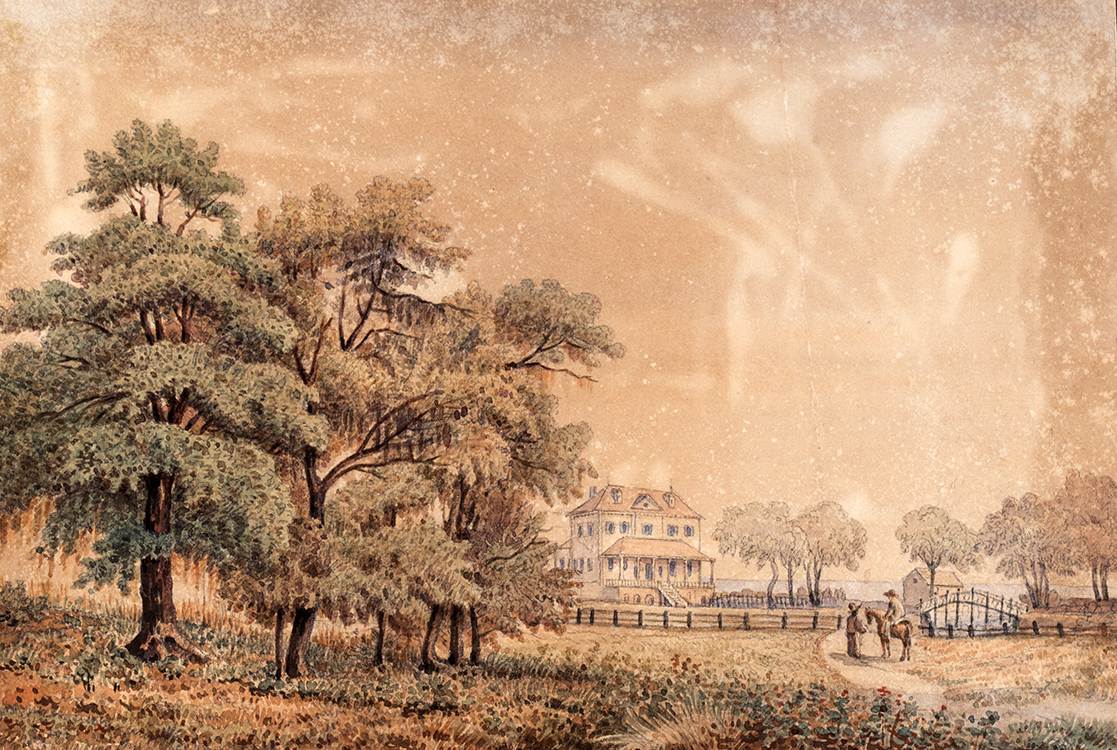
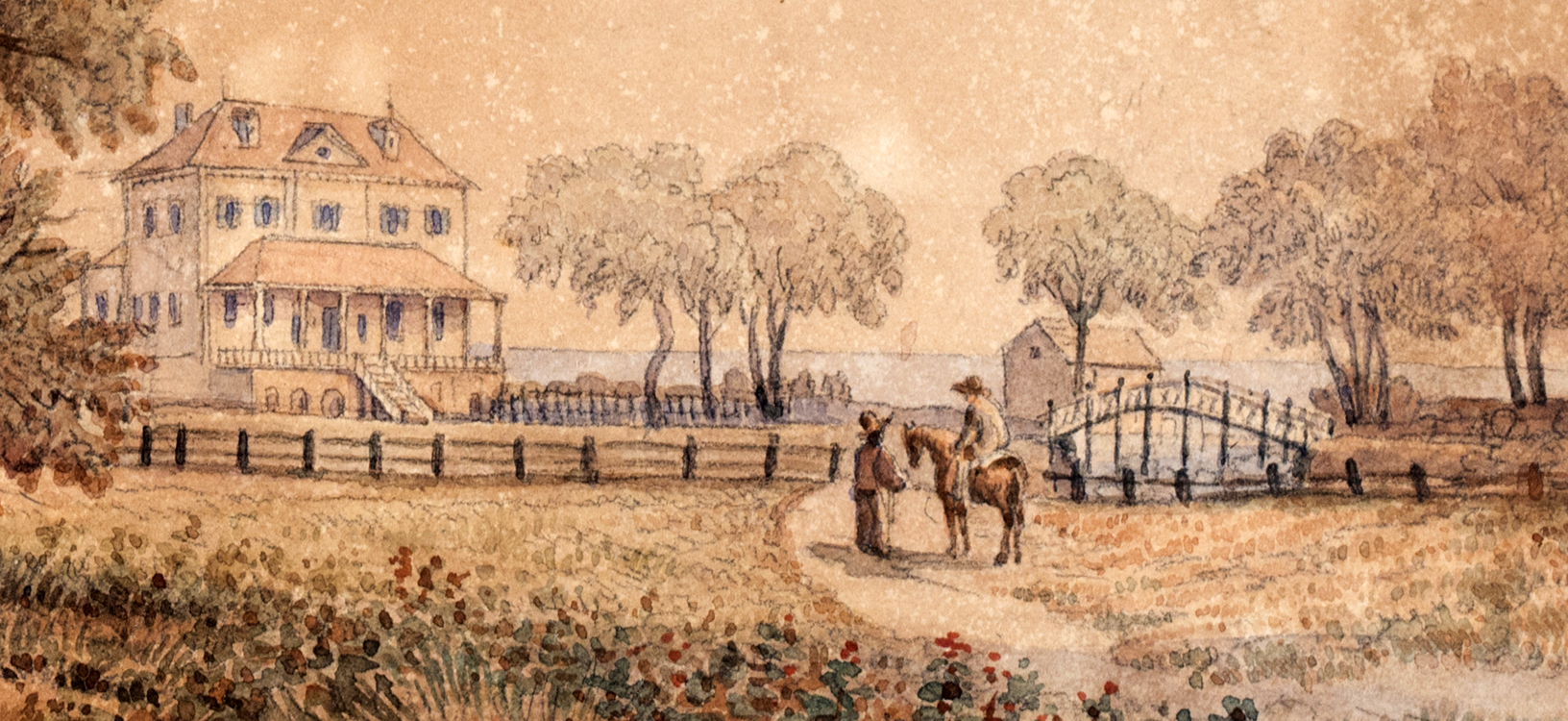
This house style, a frame two-story central hall structure with its chimneys on the rear elevation was apparently popular in the Carolina low country. Whitehall, from which MESDA has architectural woodwork, had the same plan. (acc. 0000.21) It was essentially a country version of the Charleston single house.
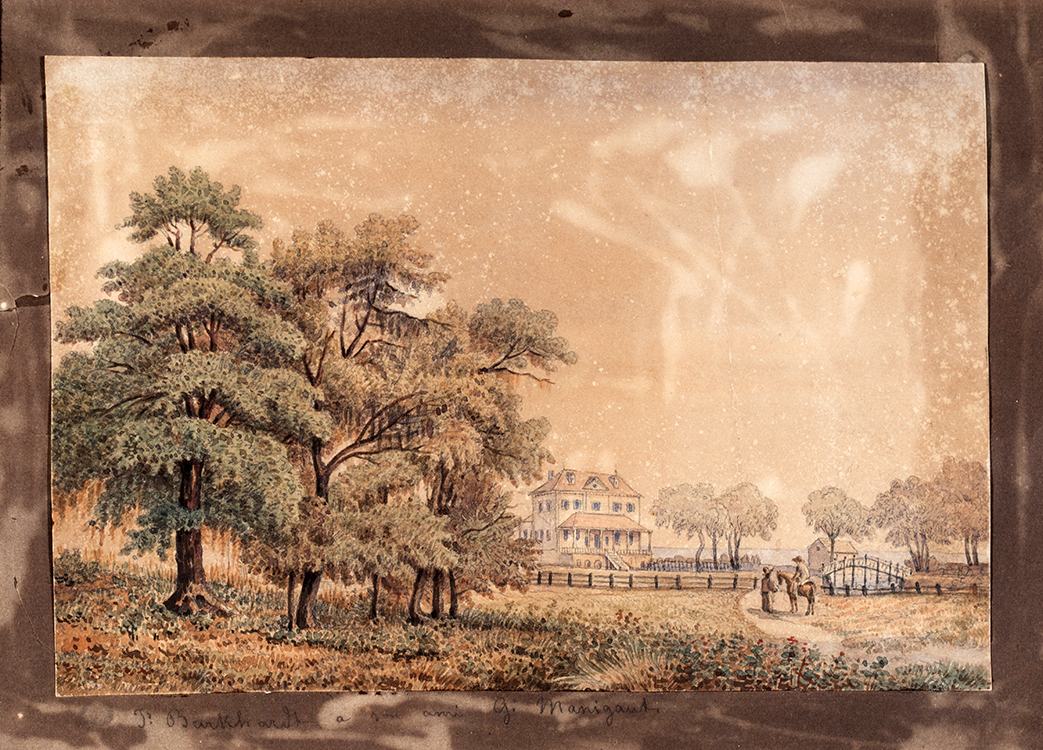
ARTIST: Jacques Burkhardt (d. 1867) studied in Munich and Rome where he was associated with Louis Agassiz (1807-1873), the naturalist responsible for formulating the ice age theory. There is no evidence that Burkhardt came to this country before 1846. He is known to have painted landscapes on window shades when first coming to America. Once in America, Burkhardt again associated himself again with Agassiz and illustrated many of his scientific articles. Biographies of Agassiz note that Burkhardt accompanied the Agassiz family to Charleston during the winters of 1851 and 1852. There, Agassiz would likely have been in close contact with Gabriel Manigault who was curator of the natural history collection at the College of Charleston.
A signed watercolor of the William Ravenel house by Burkhardt dated 1853 is also known.
DESCRIPTION: Watercolor on paper of a plantation with an inscription at the base of the painting. The house is a white frame two-story central hall structure with its chimneys on the rear elevation. A fence runs in front of the house with a bridge to the right in the background, indicating an inlet of water. An outbuilding stands behind some trees standing behind the bridge. Several large trees are located in the left foreground, along with some moss, grass and other foliage. A path leads to the house, and two men, one mounted upon a horse, the other standing below him are talking to one another. A body of water is in the background.
A signed watercolor of the William Ravenel house by also by Burkhardt is dated 1853 and was likely done during the winter of 1852-53.