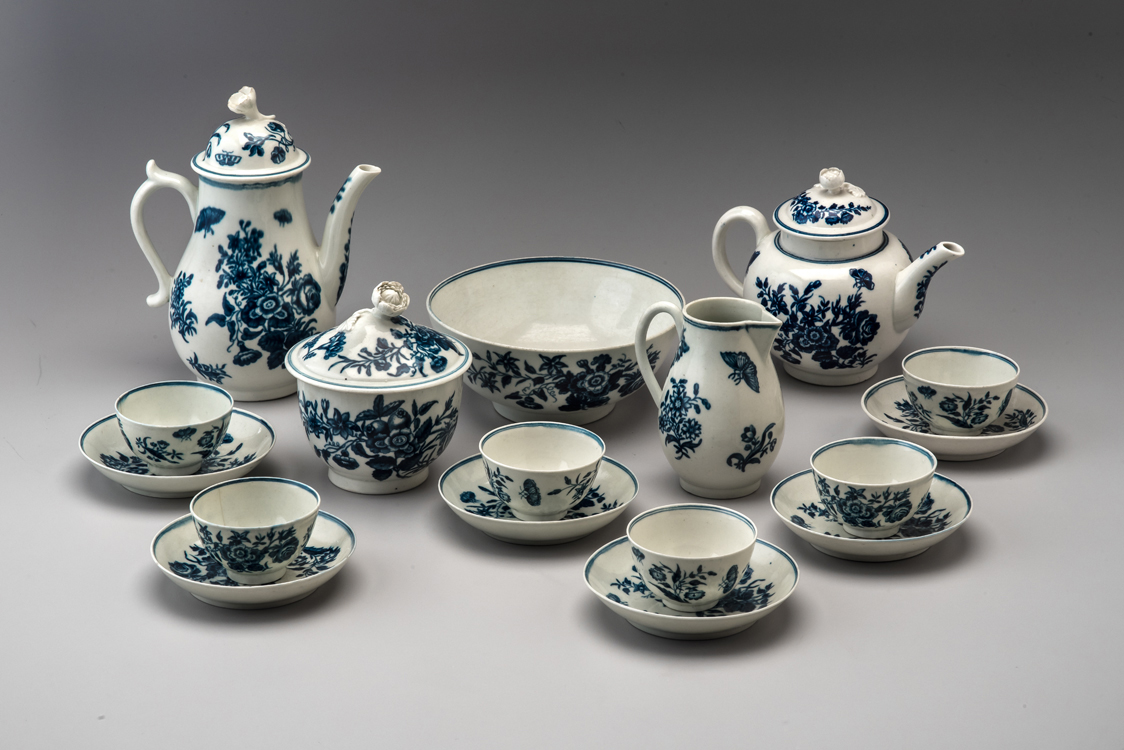
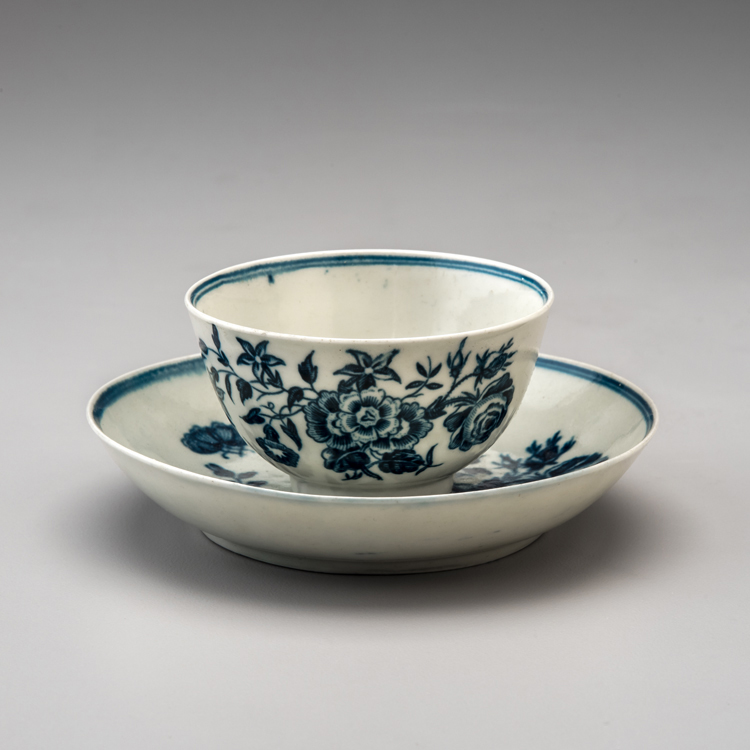
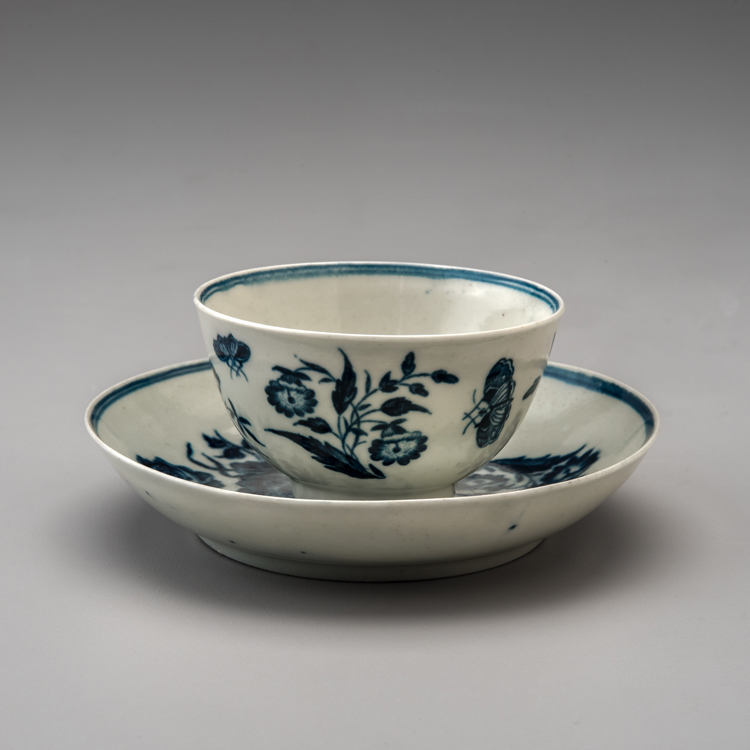
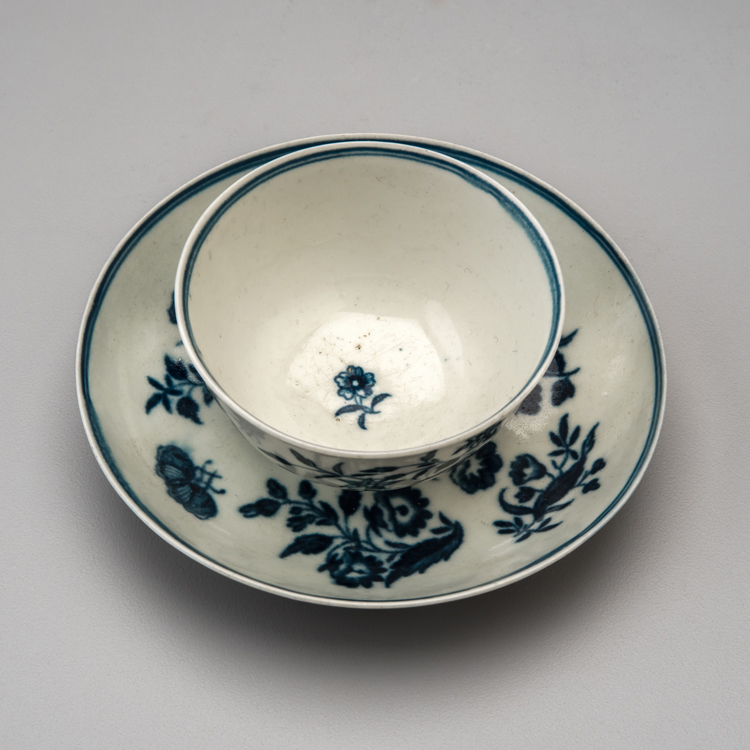
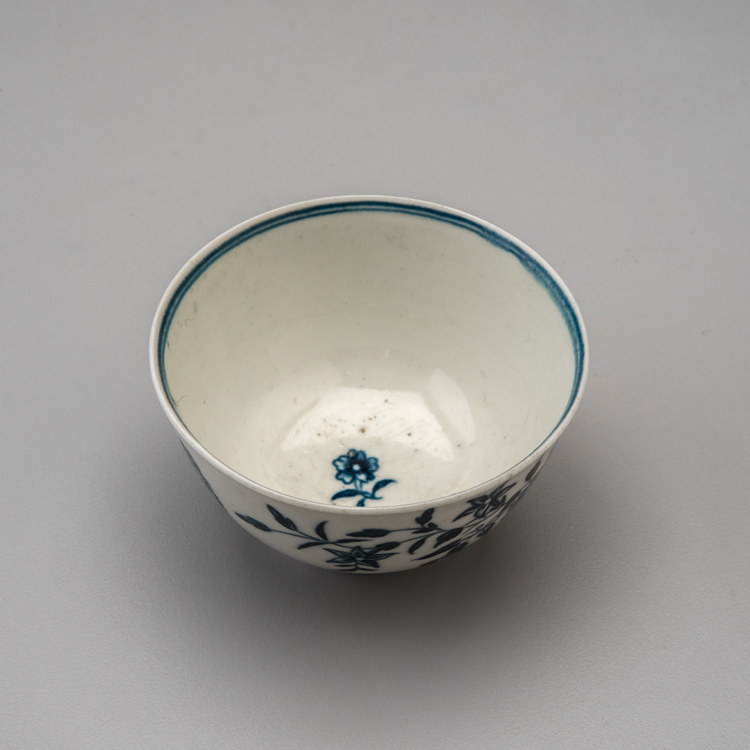
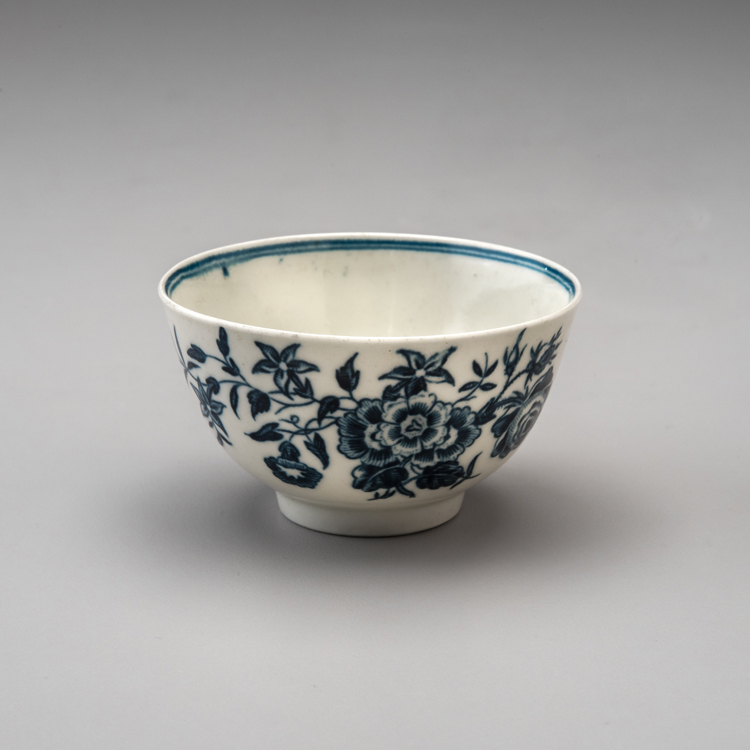
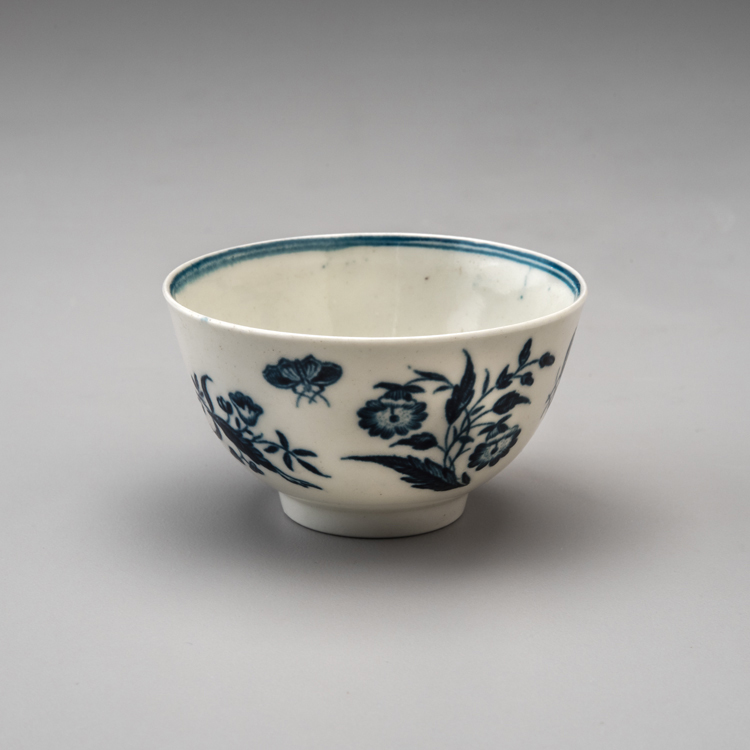
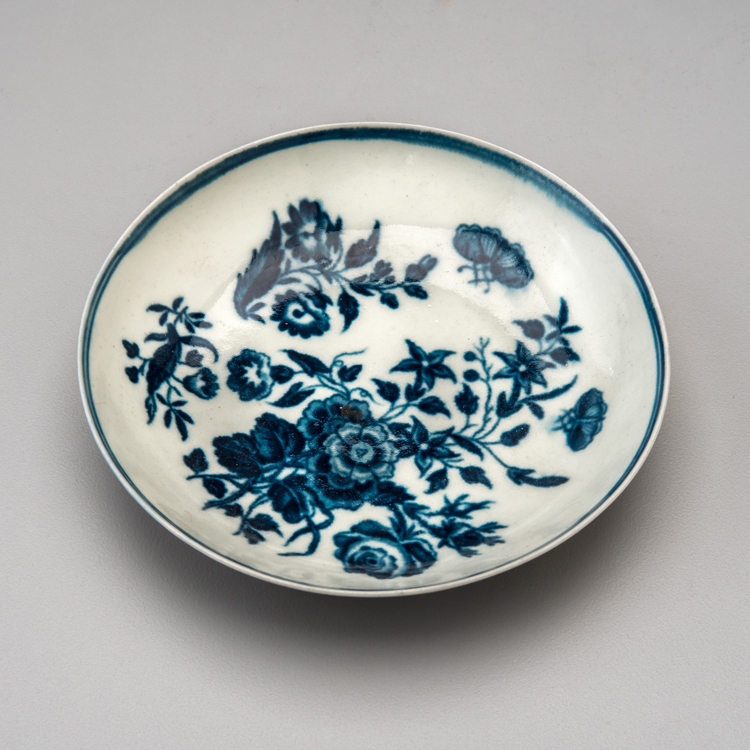
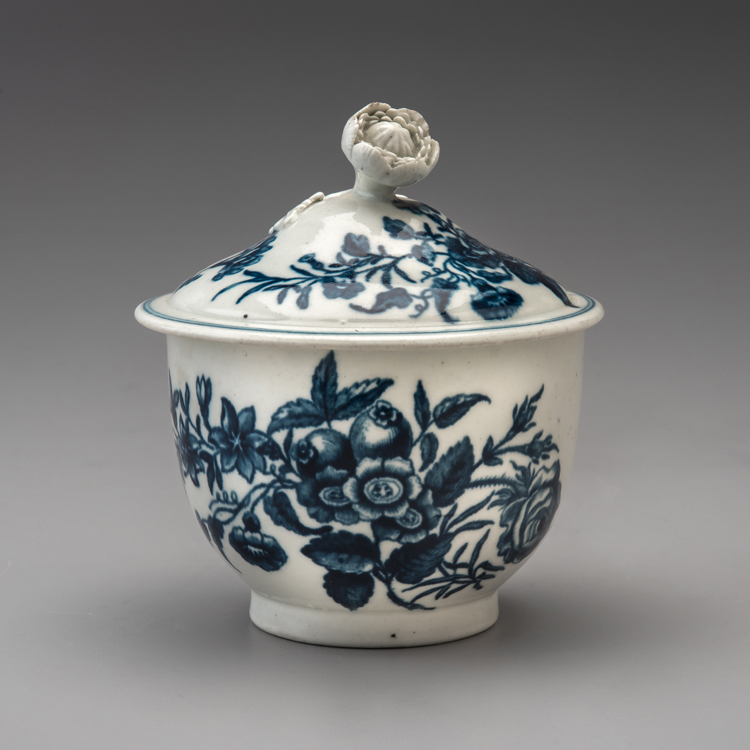
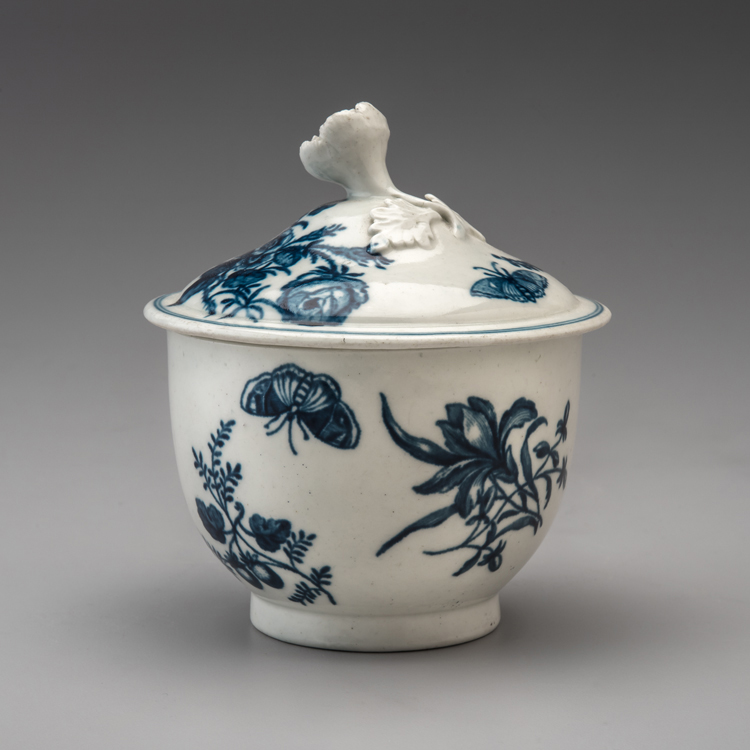
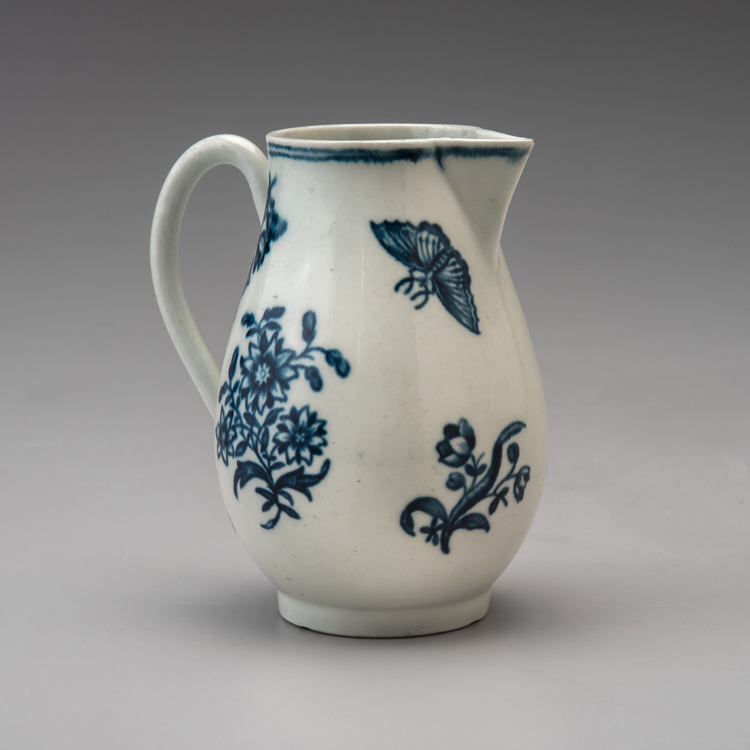
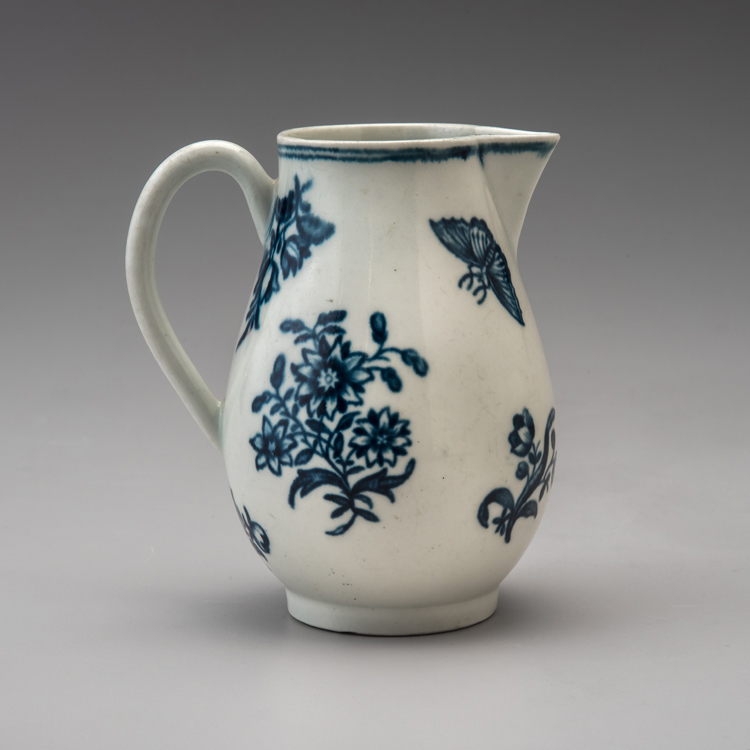
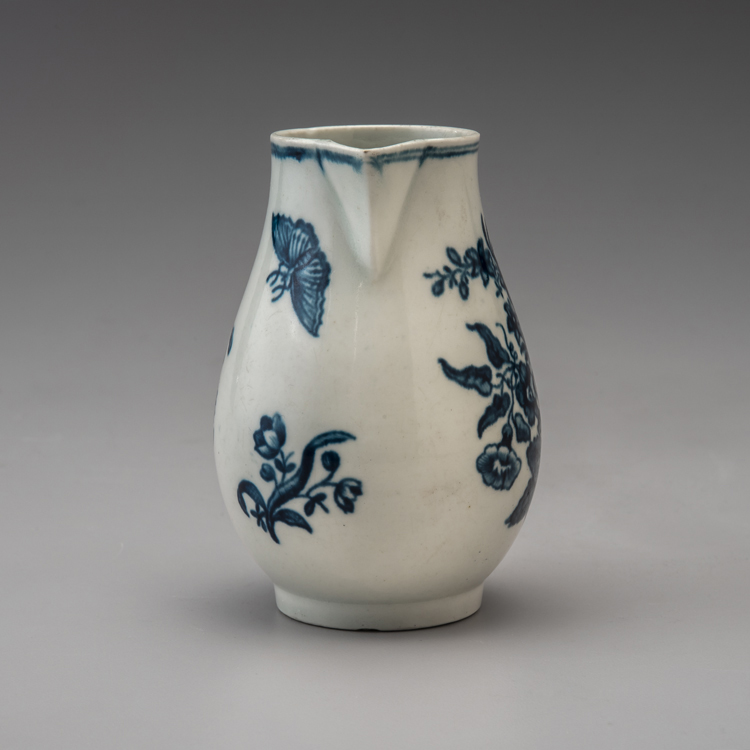
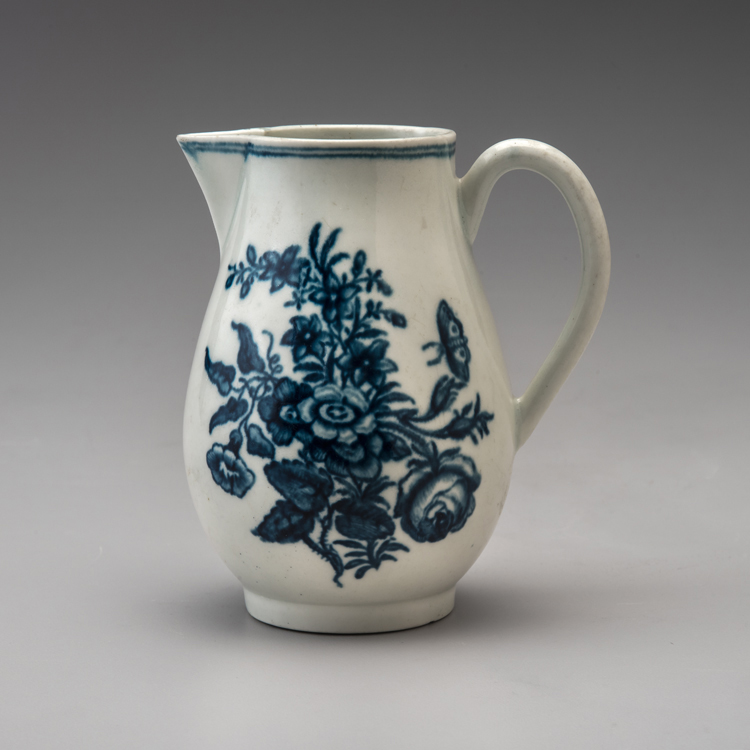
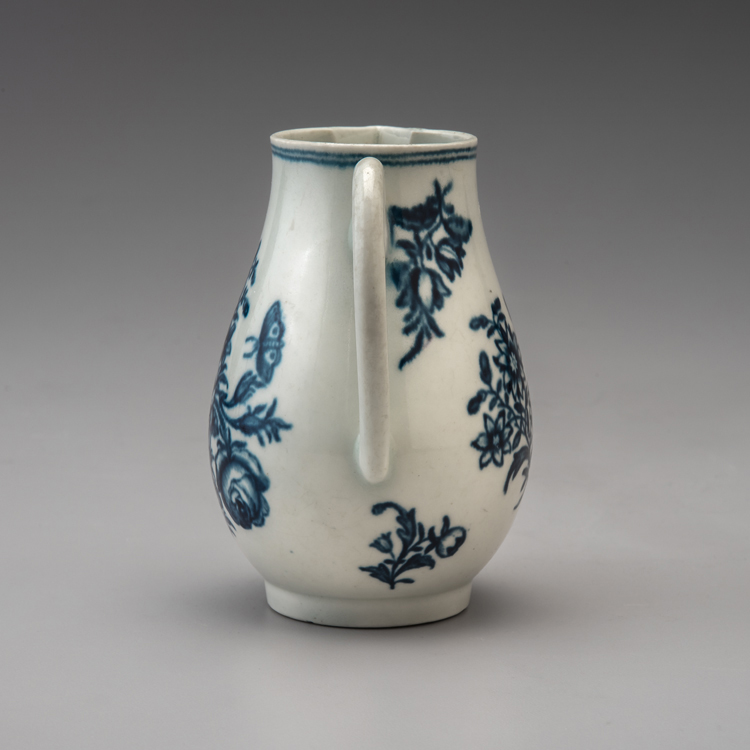
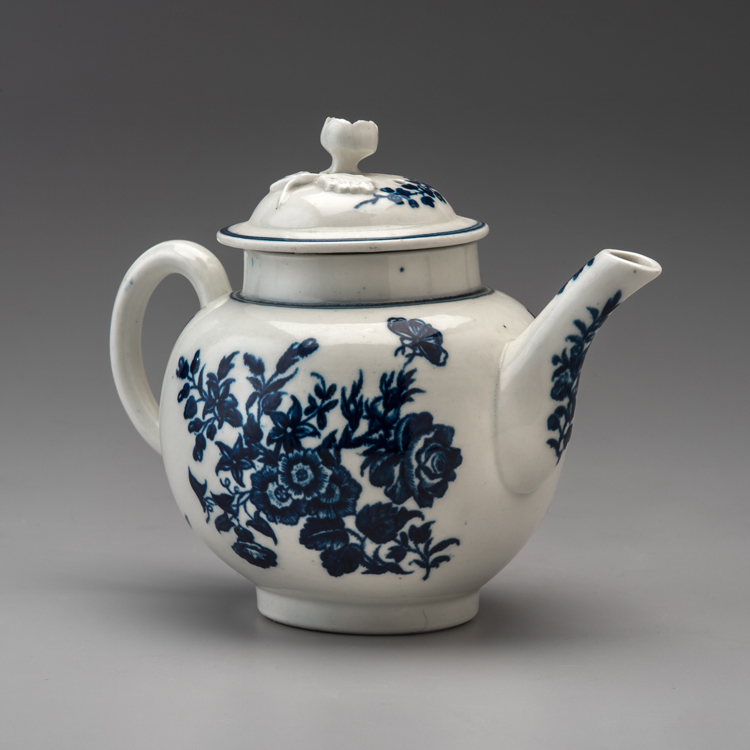
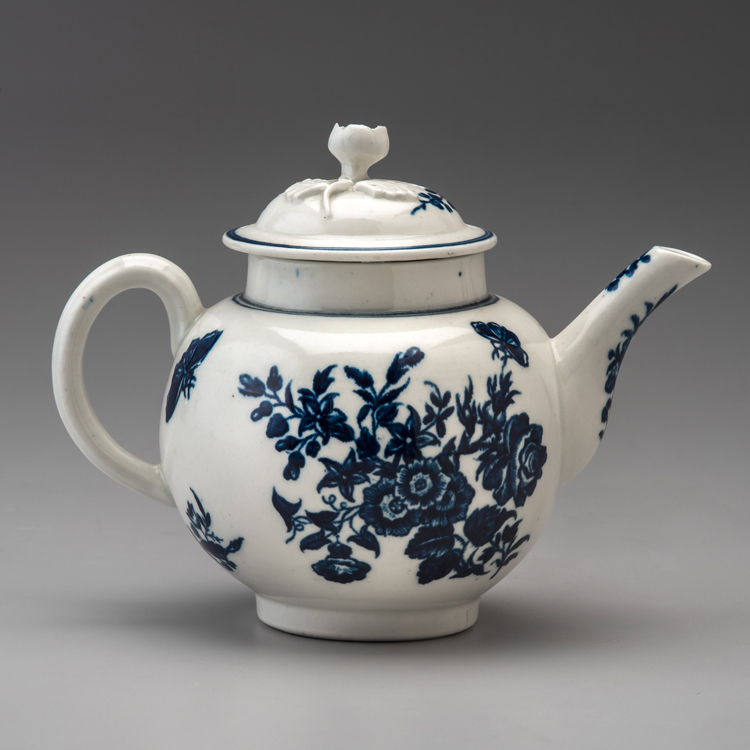
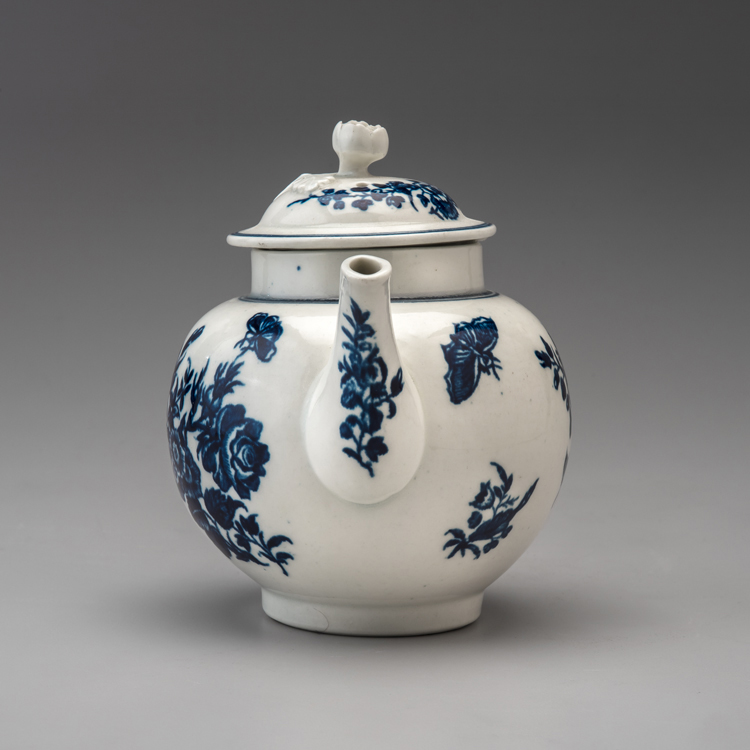
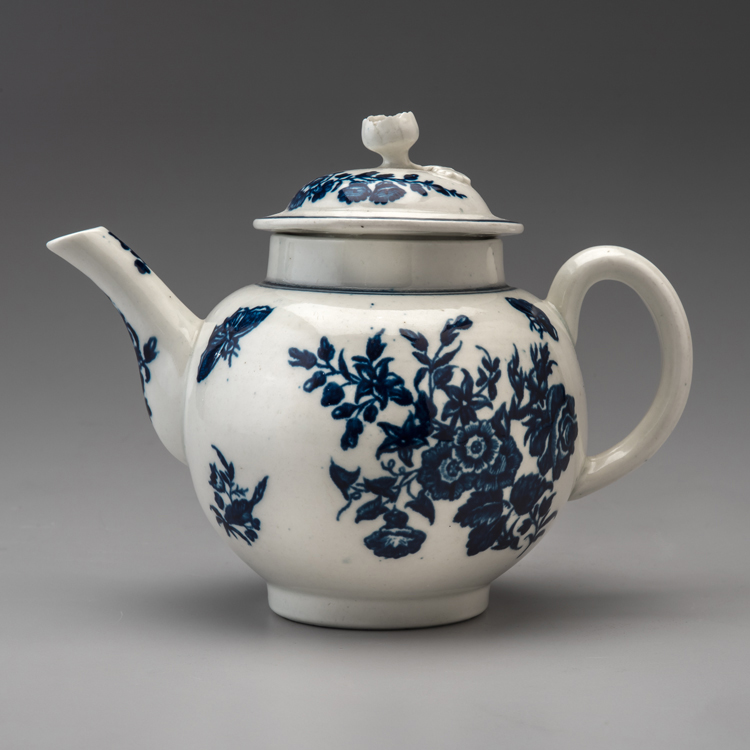
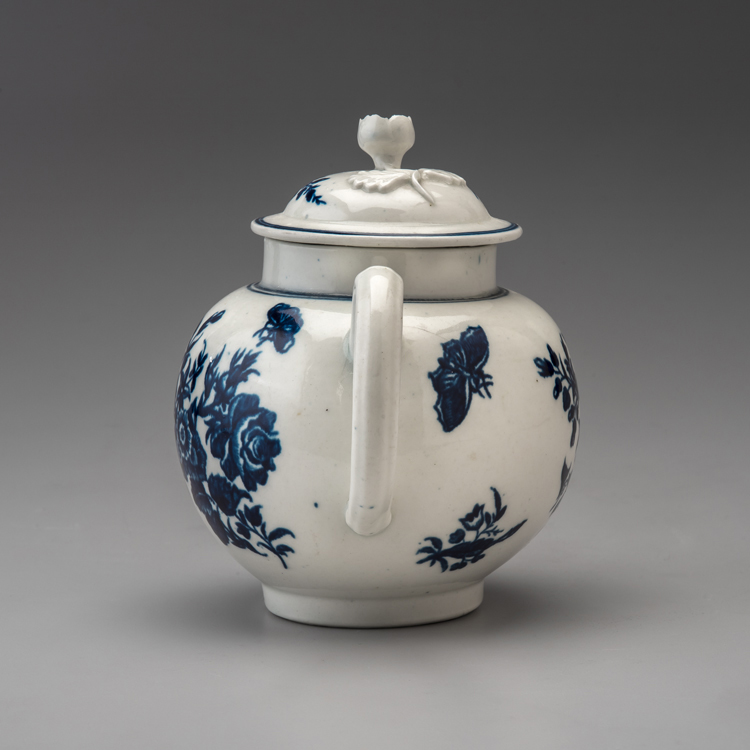
Tea Service
FACTORY: Originally named “The Worcester Tonquin Manufactory,” the company was formed in 1751, and a warehouse was opened in London by March 1753. The early years of the factory are known as the “Dr. Wall” period, referring to Dr. John Wall one of the original partners. The first manufactory was located at Warmstry House, near Worcester Cathedral on the Severn River. Earlier theories that Dr. Wall had invented the porcelain process used at the factory have been discarded. Probably the Worcester Porcelain Company was a continuation and/or expansion of the previously established Bristol China Works of Benjamin Lund.
TECHNIQUE: Although the factory made polychrome and printed ceramics, the blue and white underglaze was used on a large portion of their works. To form the pigment, oxide of cobalt was fused to glass, then crushed and mixed with oil and turpentine. This mixture was brushed or printed on the unglazed pot, appearing black in color. After applying a coat of glaze, the pot is fired at high temperature, during which the black color turns to cobalt blue.
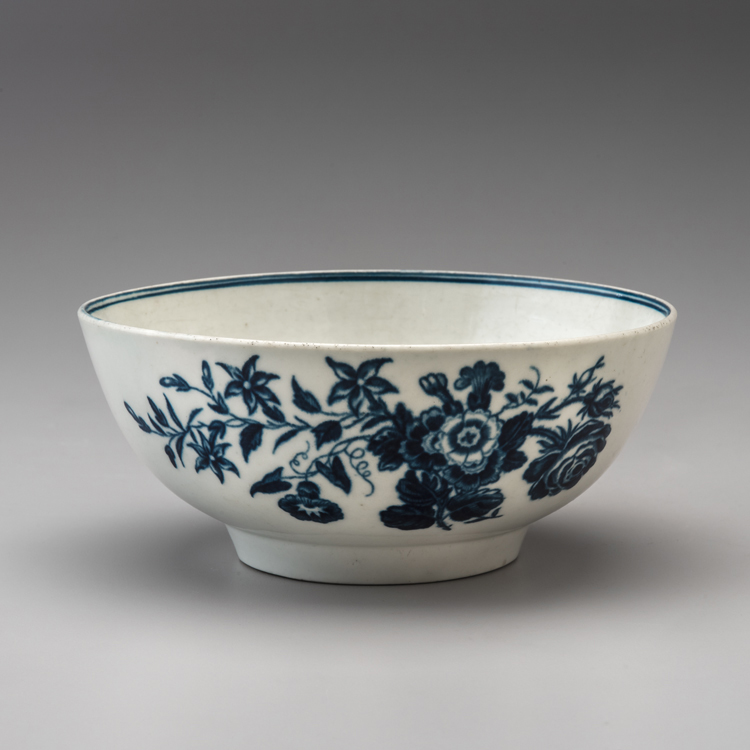
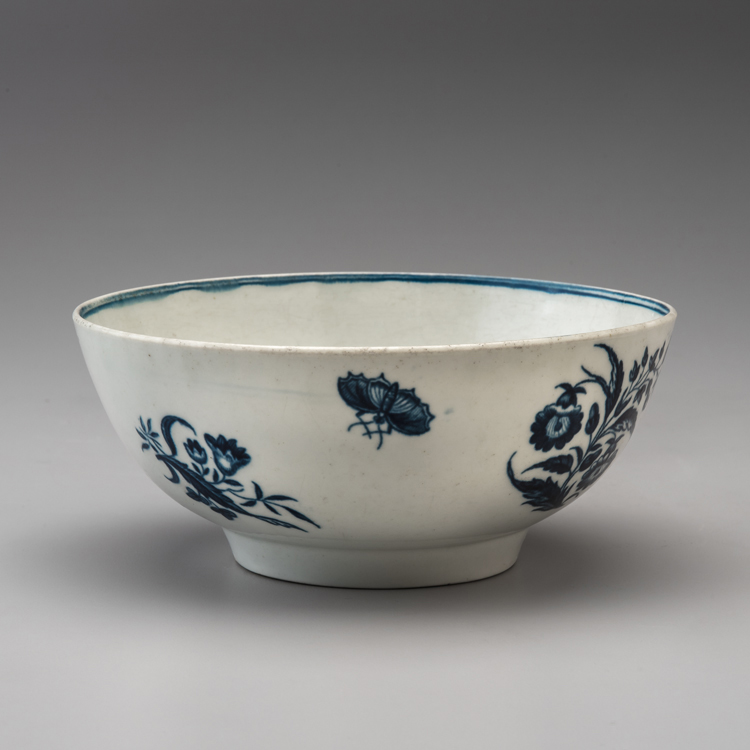
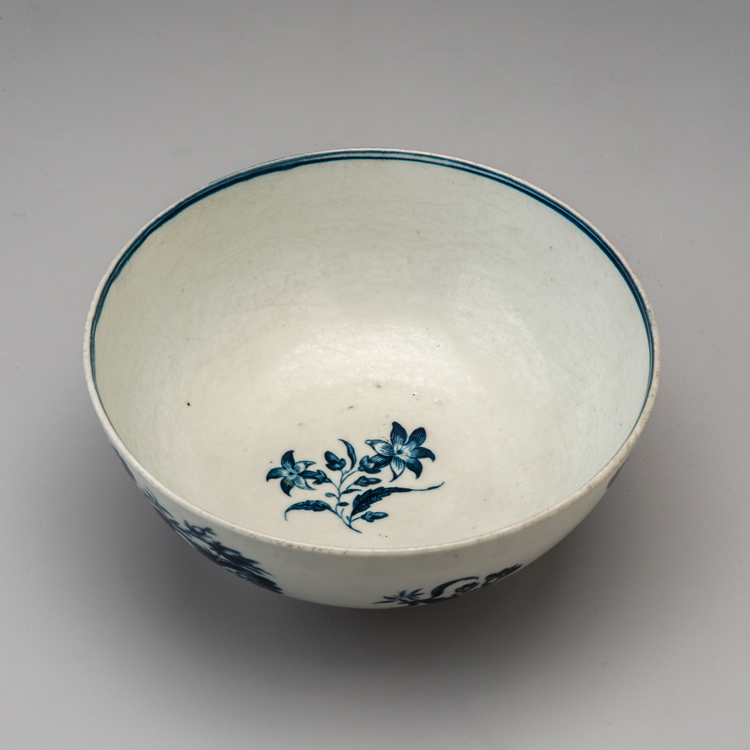
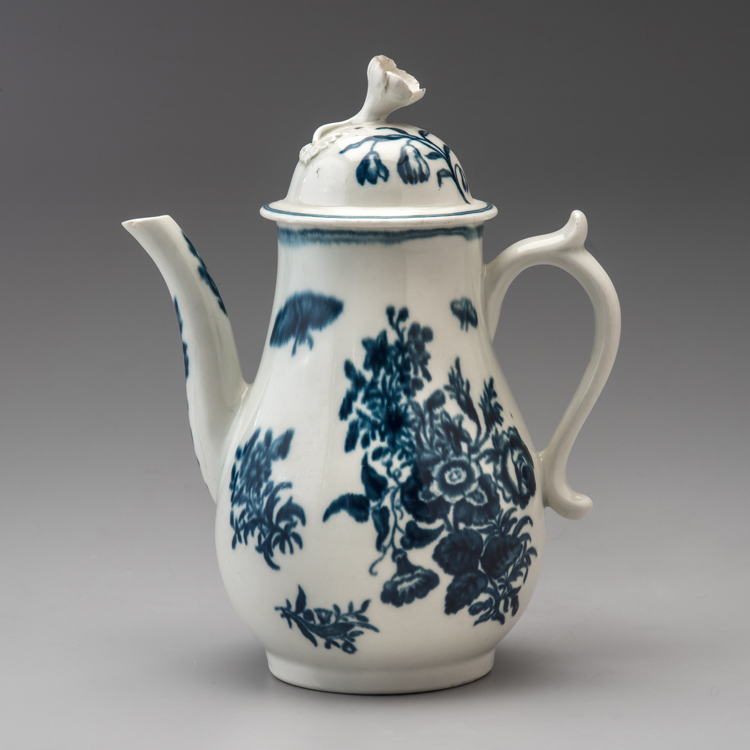
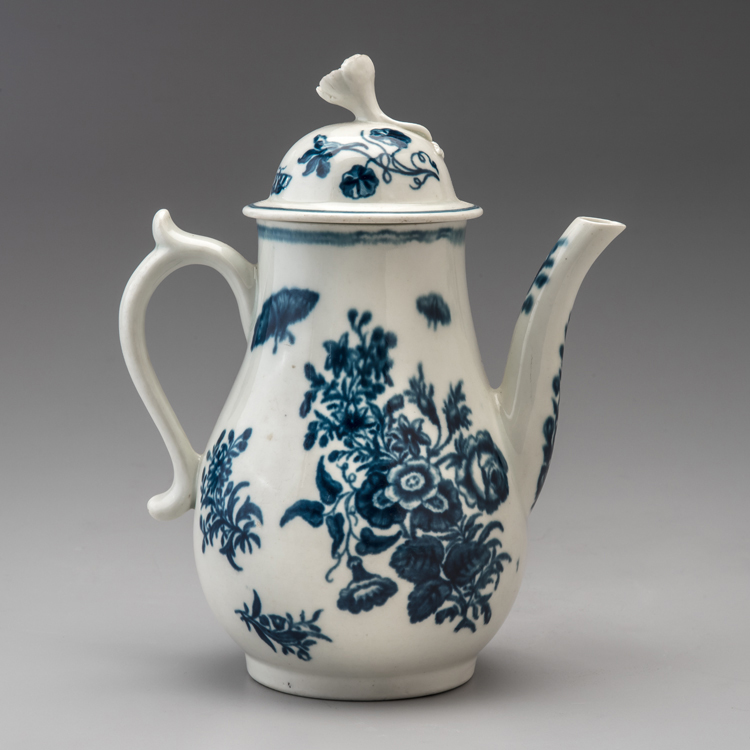
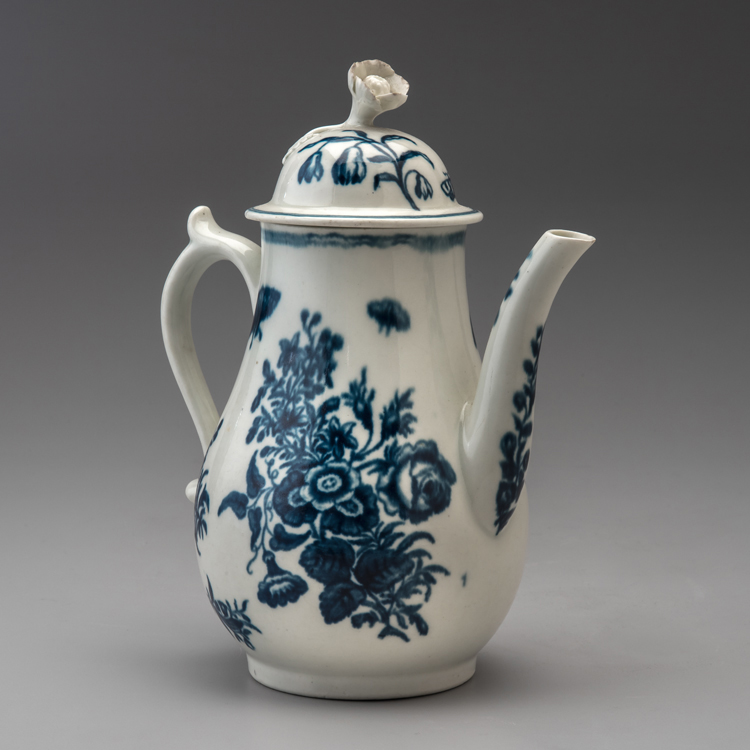
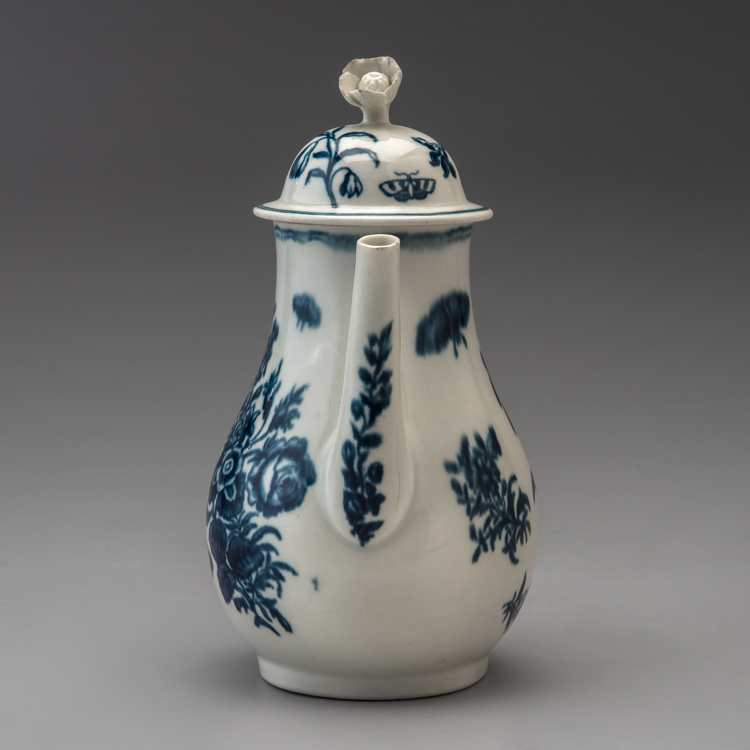
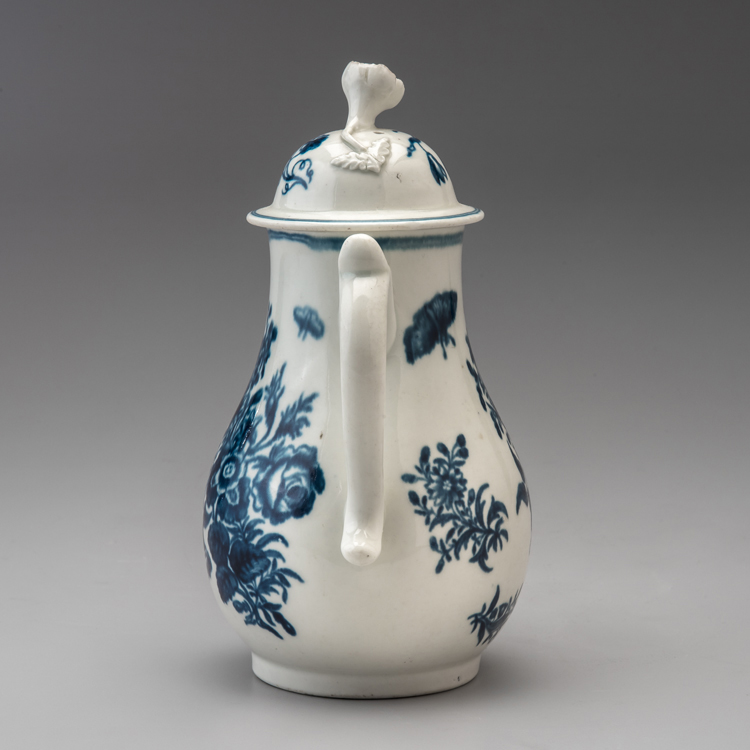
DESIGN: Worcester blue painters used three design sources. Chinese comprise the largest group. The second largest group features European flowers in the manner of Meissen flower painting. A third more rare group includes bird subjects. Our set is decorated with European flowers.