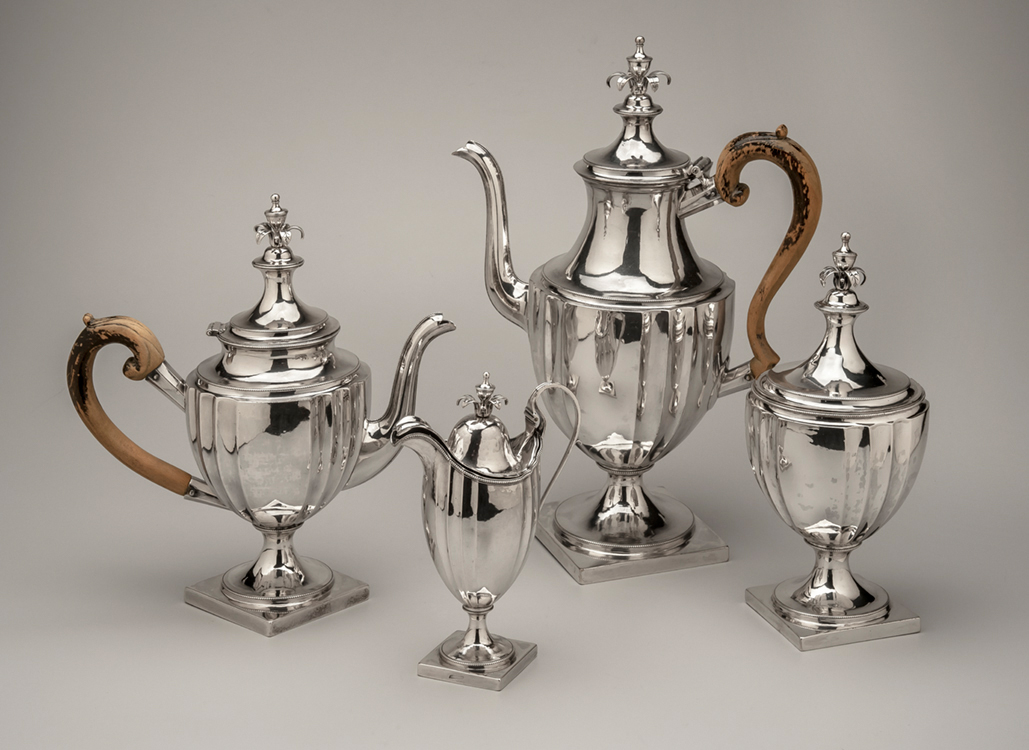
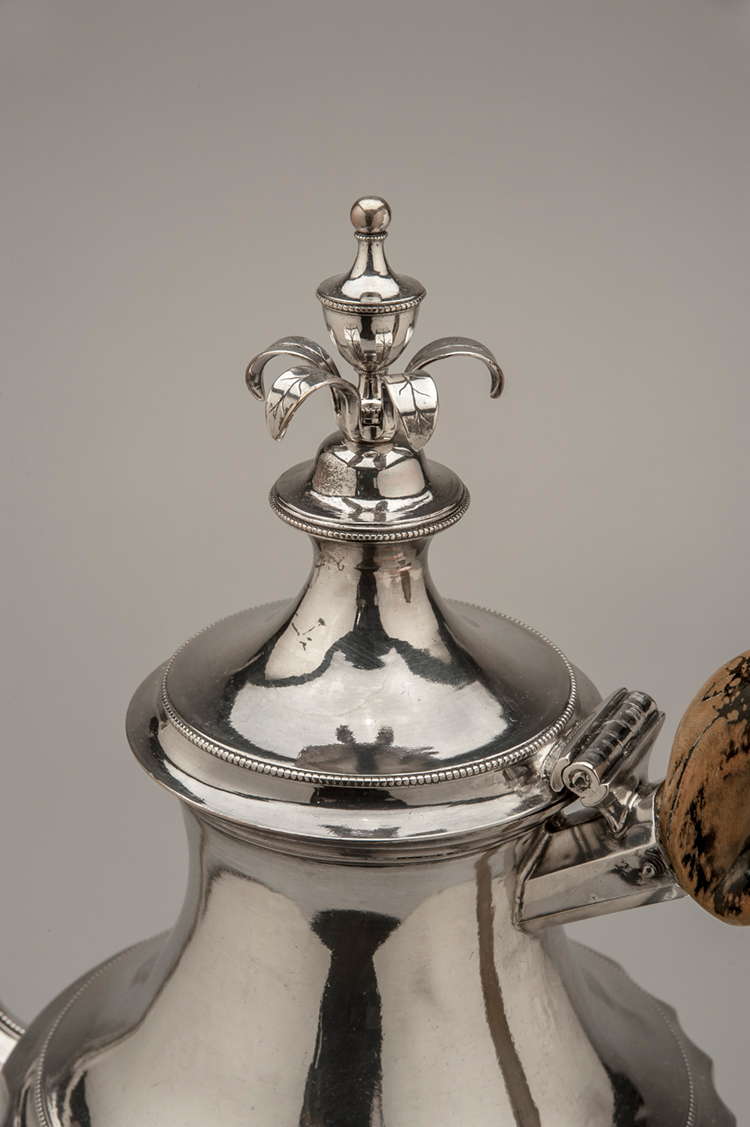
Tea Service
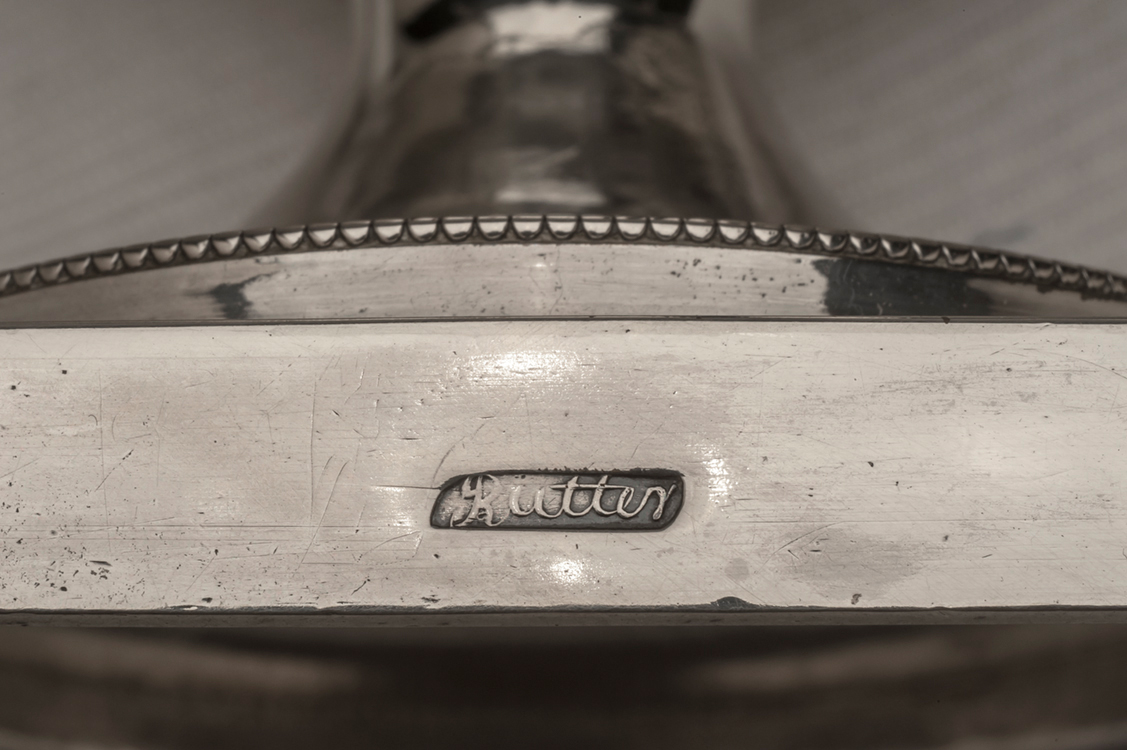
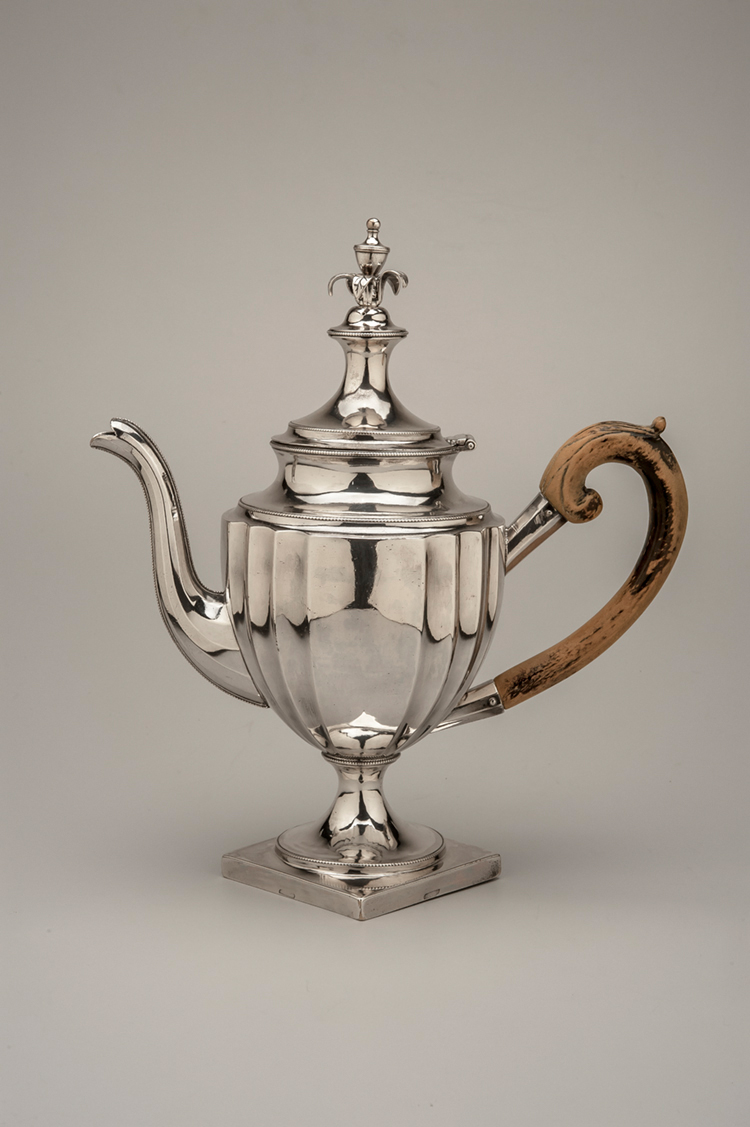
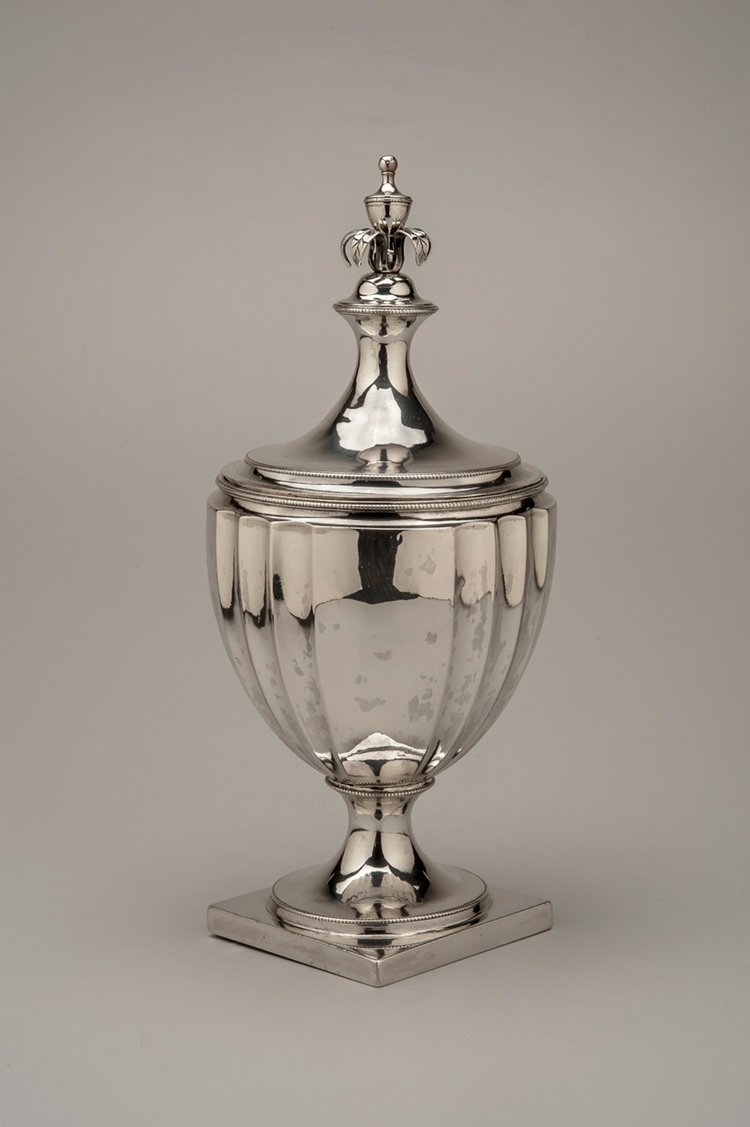
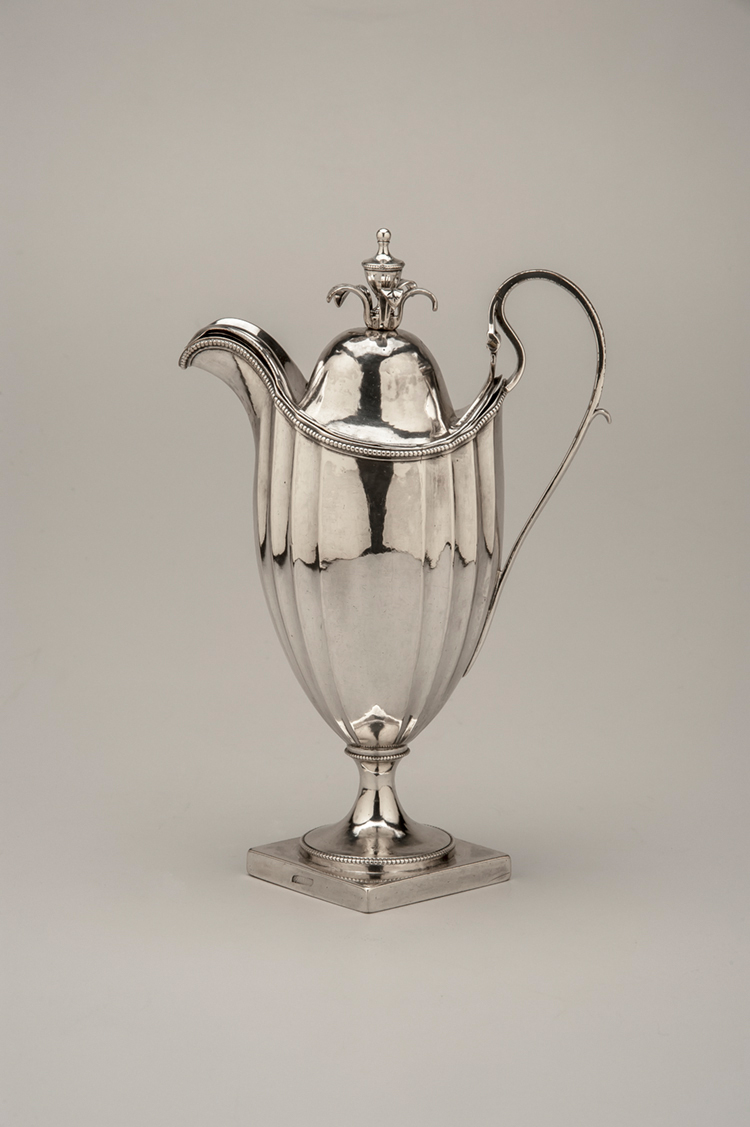
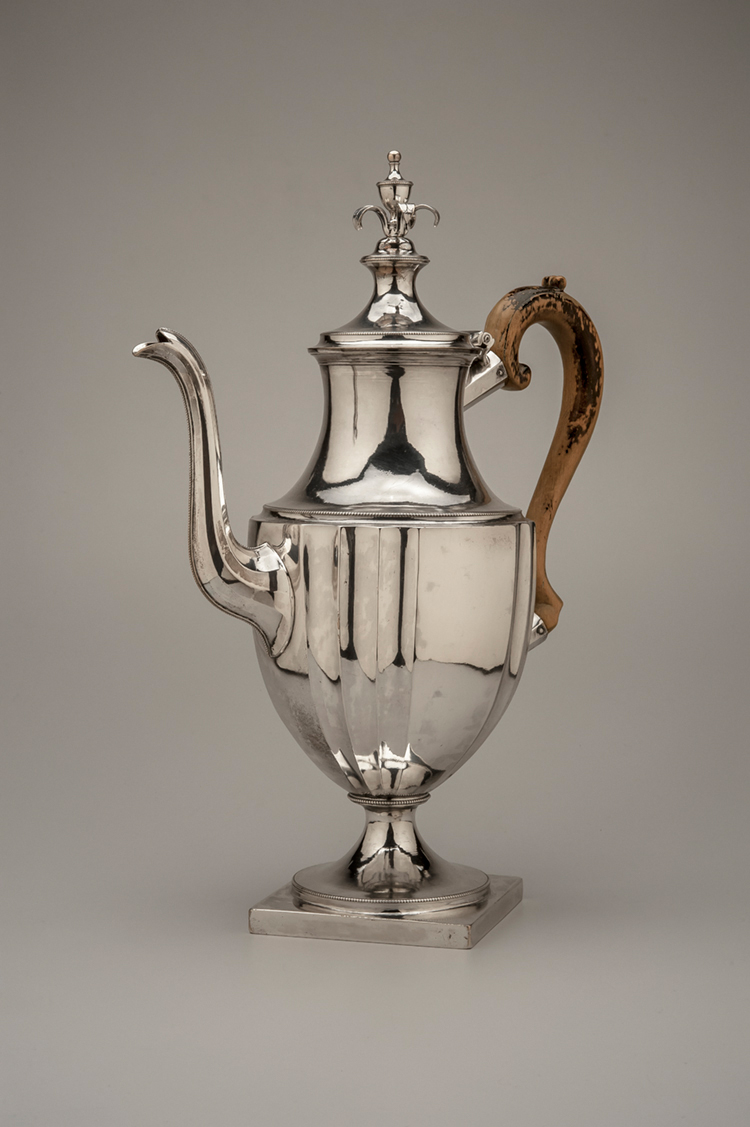
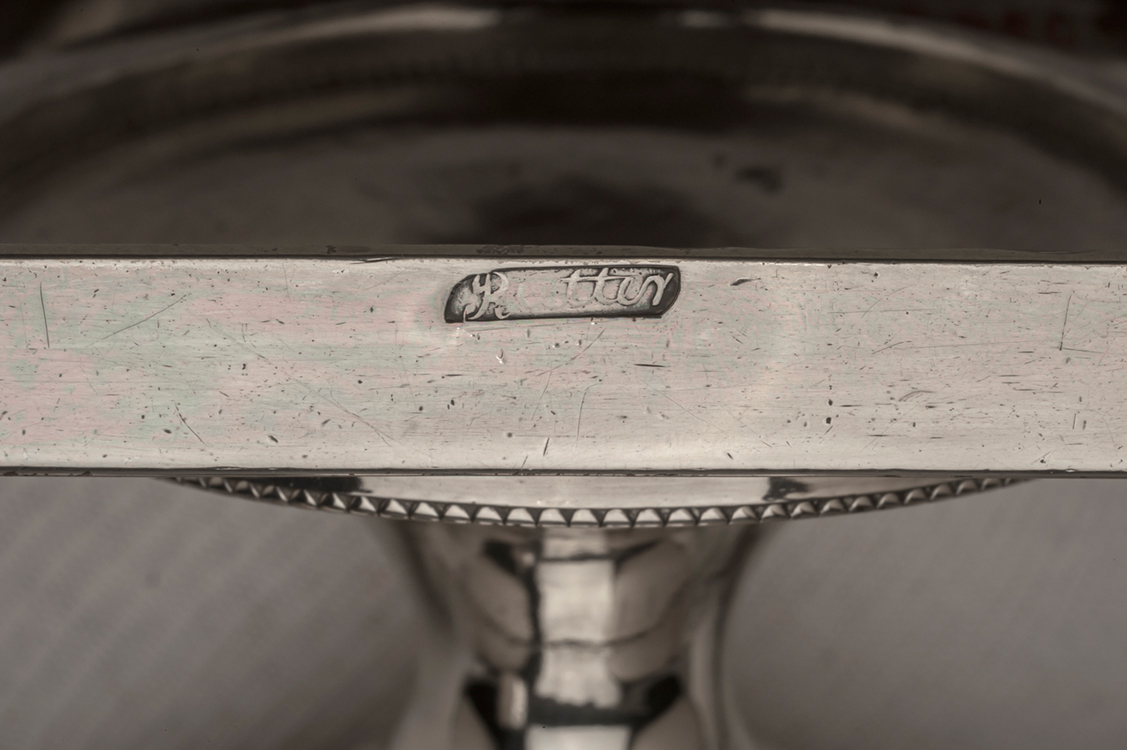
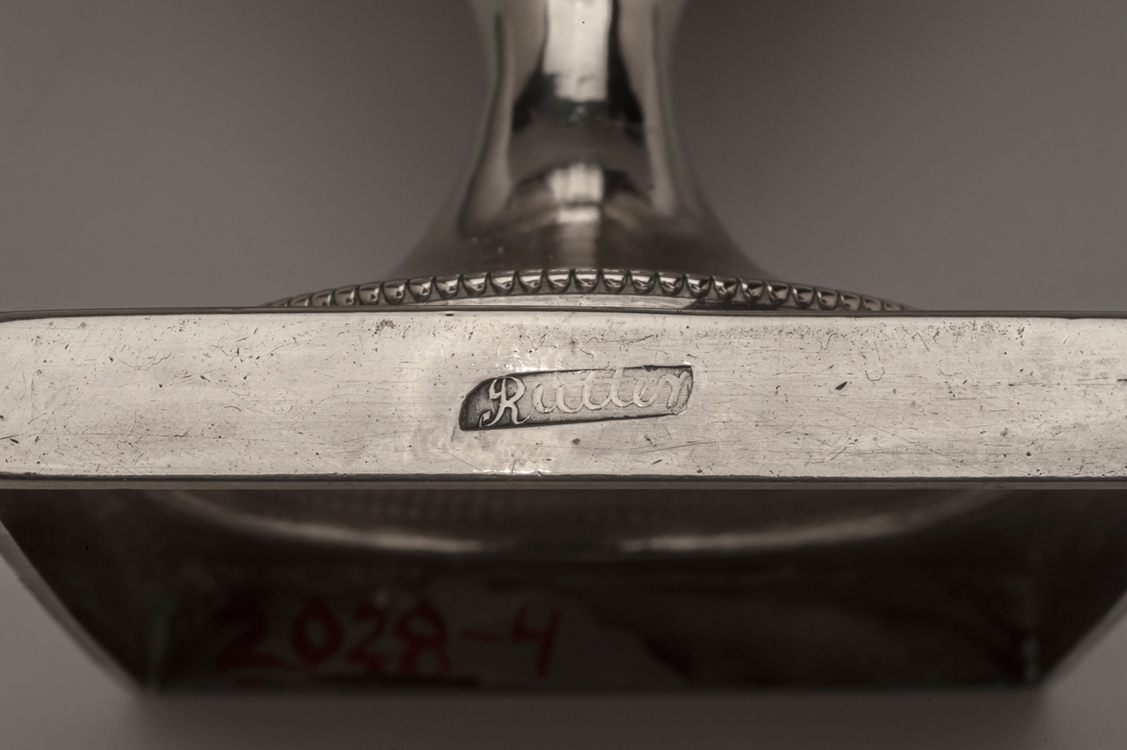
MARK: Coffeepot struck twice on faces of the base with script “Rutter” in an intaglio, rounded-corner rectangle; teapot struck once with same mark on one face of the base, but inverted; cream pitcher features same mark, struck once on the face of the base; sugar bowl not marked.
MAKER: Richard Rutter is first listed as a gold and silversmith in the 1796 Baltimore Directory at 87 Baltimore Street. Two years prior to that listing, however, he ran a joint advertisement with Joseph Rice in the “Baltimore Daily Intelligencer” offering silver mounted swords and epaulets for sale. Rutter’s last listing in the Baltimore Directory occurs in 1798. See Jacob Hall Pleasants and Howard Sill, “Maryland Silversmiths, 1715-1830” (Baltimore, MD: Lord Baltimore Press, 1930).
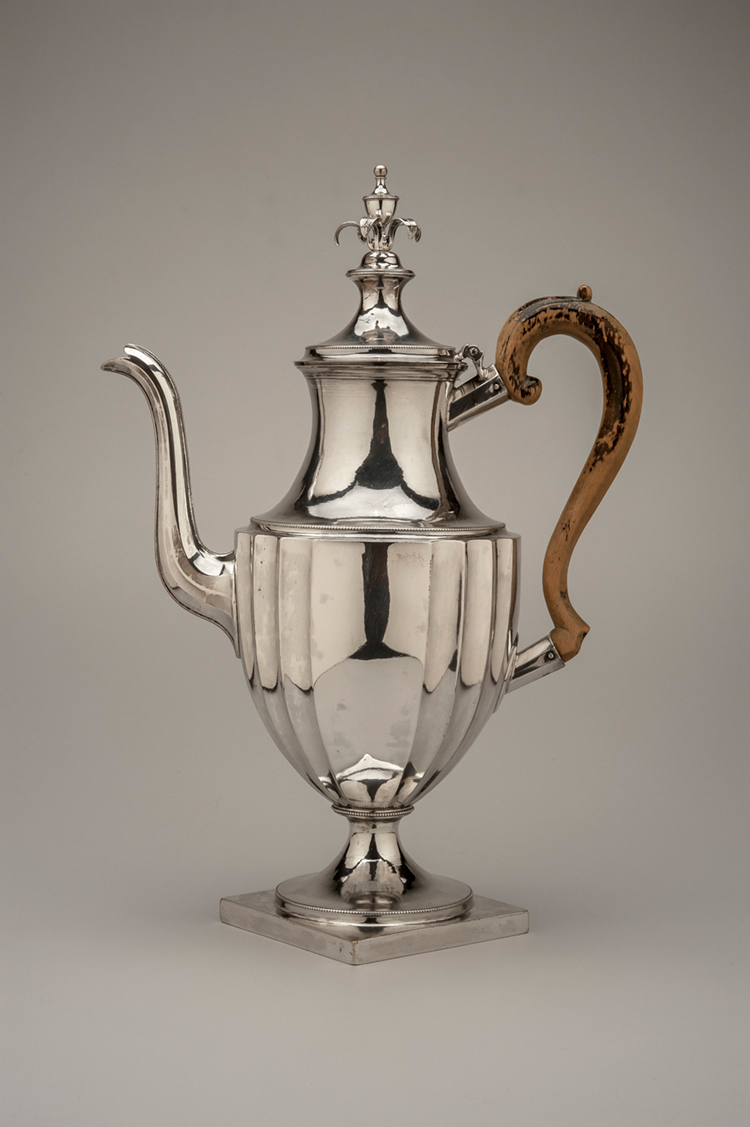
FORM: For most of the eighteenth century the accouterments for tea and coffee were acquired separately and did not necessarily match in style and shape. By the 1790s, all elements of a tea service (coffeepot, teapot, sugar bowl, waste bowl, and cream pitcher) were made somewhat uniformly in style, with the smaller pieces following the form of the coffee and teapots. In the eighteenth century, coffeepots were taller than teapots for two reasons: function and economics. They are taller in order to raise the spout higher from the bottom–as seen on the coffeepot in this service–to prevent the coffee grounds (which sink to the bottom) from being poured into teacups or bowls; conversely, tea leaves float and are less likely to flow out the spout when tea is poured. This difference in coffee/tea pot heights carried forward into the nineteenth century as tradition even after strainers and other means for preventing coffee grounds from pouring out the spout were made popular. The second factor, economics, was driven by the expense of tea in the seventeenth and eighteenth centuries. Tea was so expensive that only a small amount would be brewed at a time to prevent waste. In 1662 London, a pound of coffee cost between 4 and 7 shillings; around 1680 a pound of tea cost 11 to 12 shillings. The price of tea continued in the eighteenth century to rise higher than the price of coffee. See Wolfgang Schivelbusch, “Tastes of Paradise: A Social History of Spices, Stimulants, and Intoxicants” (New York: Pantheon Books, 1992), 83; Jane Pettigrew, “A Social History of Tea” (London: The National Trust, 2001), 140; and William H. Ukers, “The Romance of Tea: An Outline History of Tea and Tea-Drinking Through Sixteen Hundred Years” (London and New York: Knopf, 1936), 226, 226. All things considered, however, Charles Montgomery wrote an insightful summary of why we cannot be certain why coffeepots are larger than teapots in his book “A History of American Pewter” (New York: Knopf, 1936), 182-183.