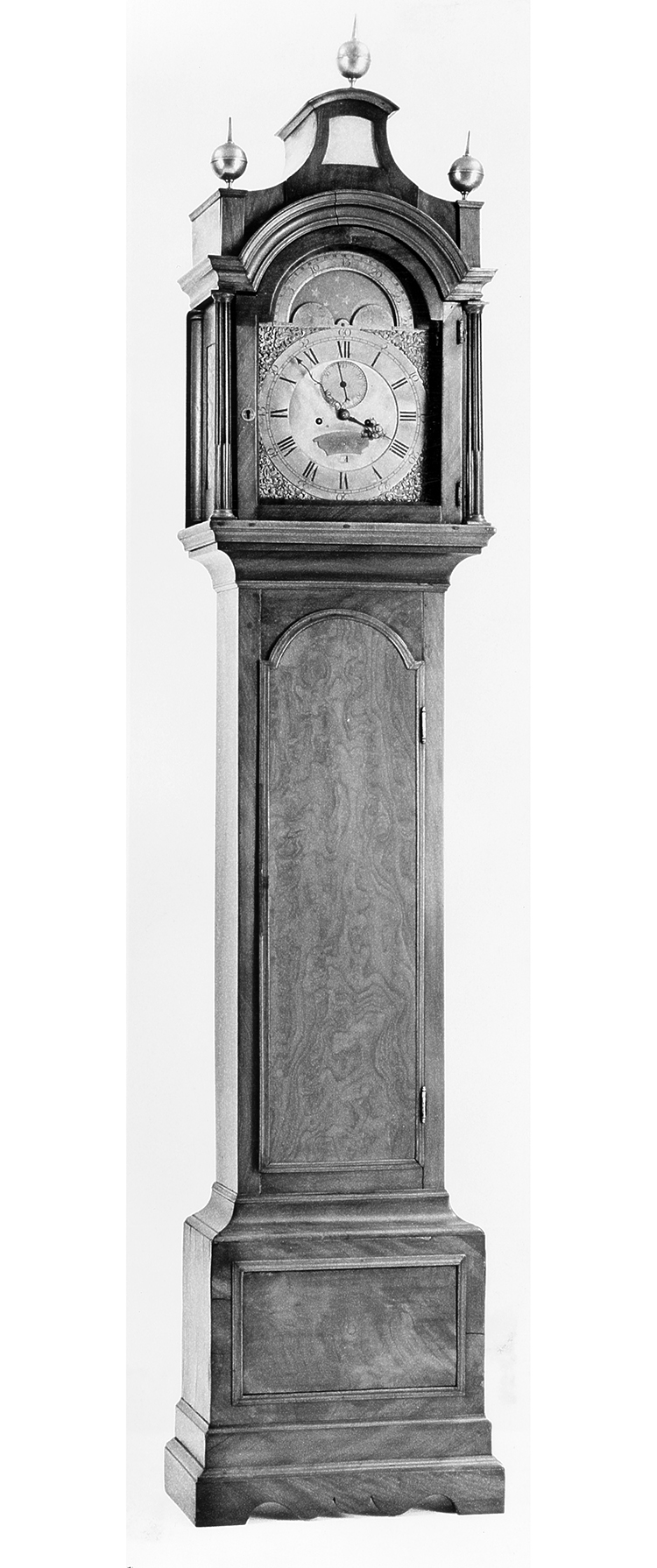
Tall-Case Clock
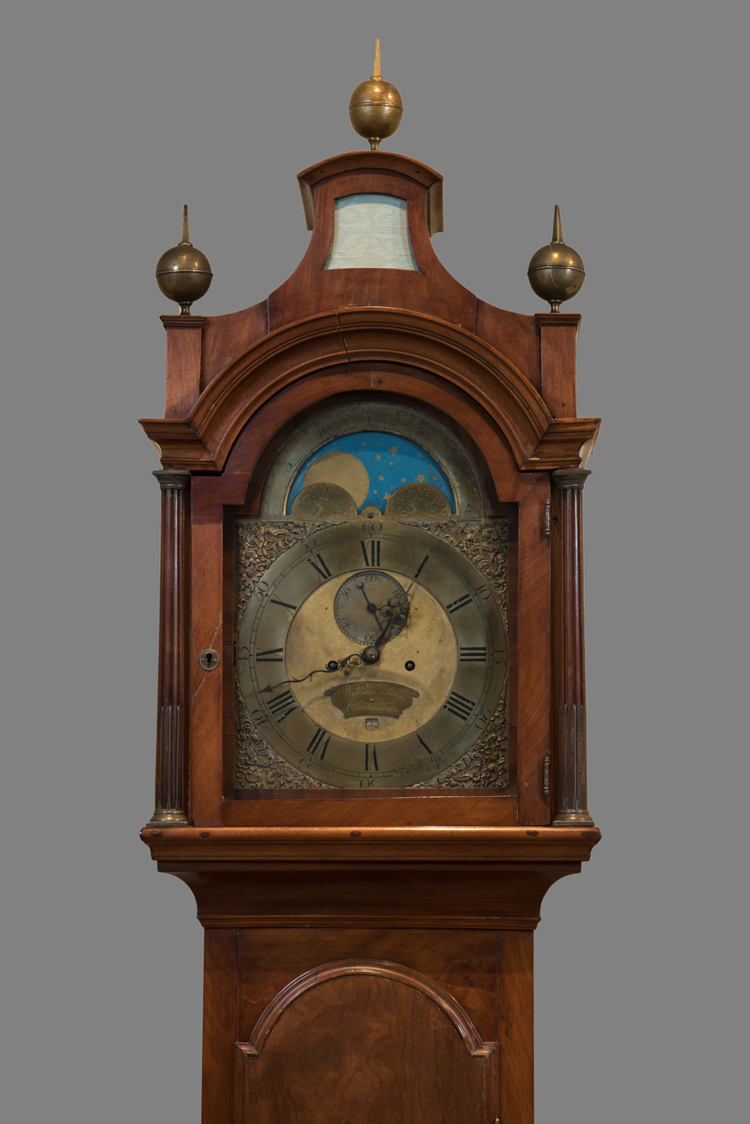
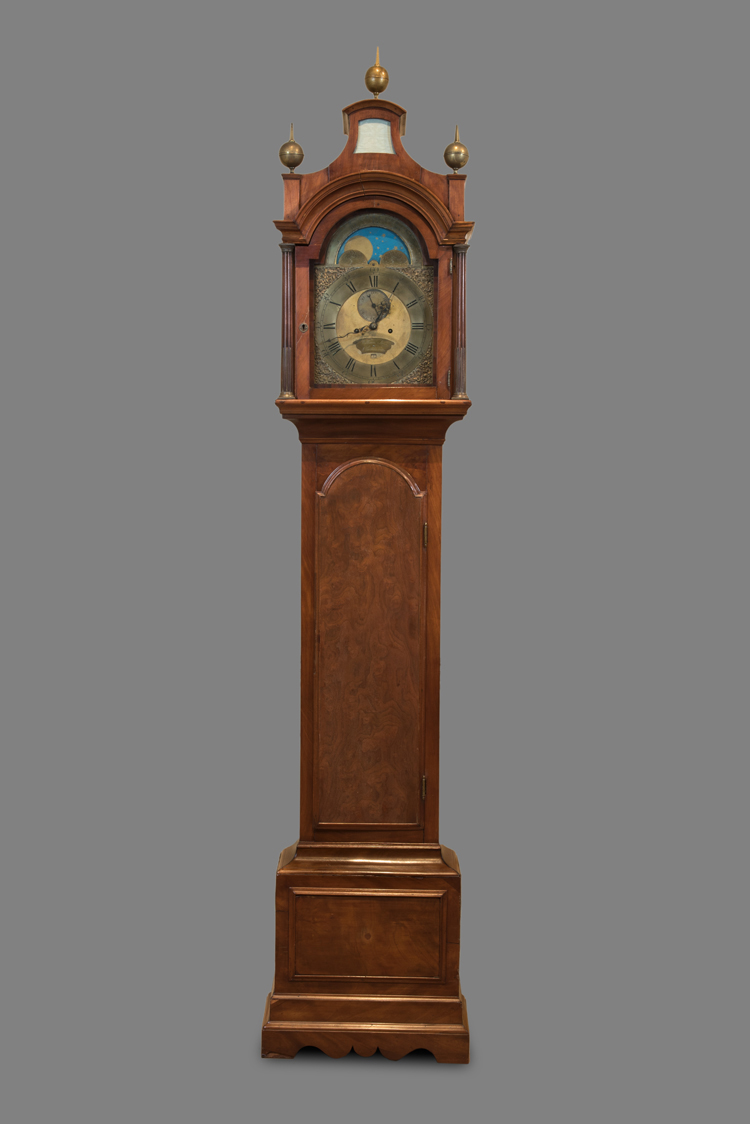
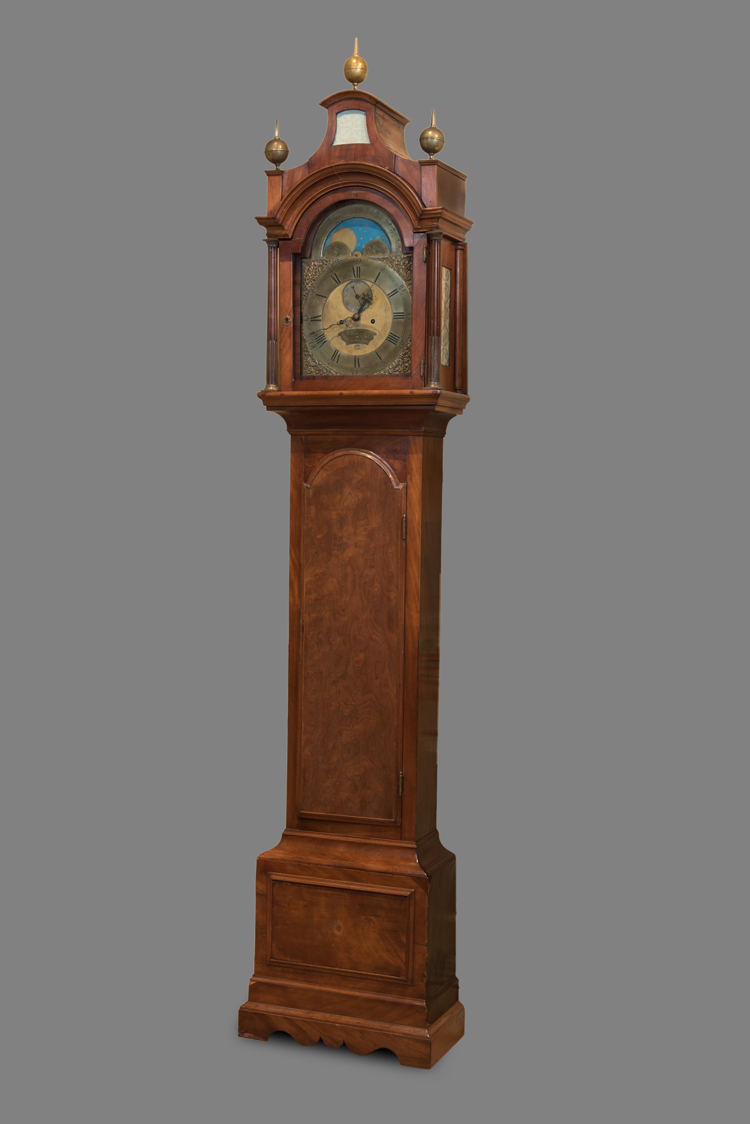
FORM: According to one study, on the eve of the American Revolution, roughly one in five Charleston households owned a tall-case clock. Clocks like this one were expensive luxury goods that often rivaled all but domestic slaves and livestock in value. Unlike consumers in other American cities, Charlestonians appear to have almost exclusively imported their clocks (works and cases) from London ready-made, as this clock was. To date not a single Charleston-made tall-case clock has been located.
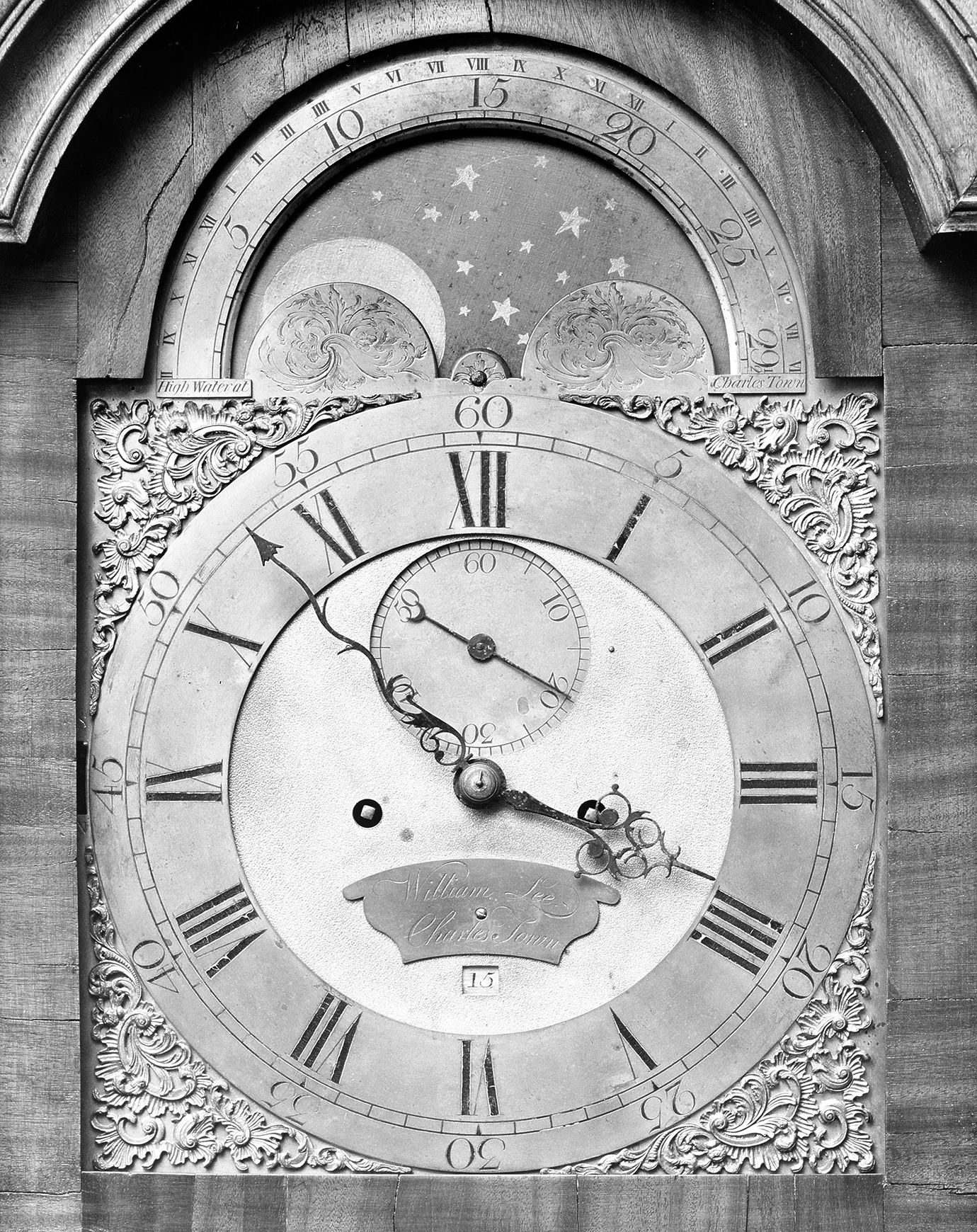
To suit Charleston consumers these imported clocks often included the city’s name on the dial and tidal charts for her harbor. The spelling of the city “Charles Town” suggests that this clock was imported before 1783 when the name was formally changed to “Charleston”.
CLOCKMAKER: William Lee, whose name is engraved on the clock’s dial, was typical of the merchants who imported, sold, and serviced, clocks. William Lee completed his apprenticeship in Charleston to Joshua Lockwood and began advertising in the Charleston newspapers in 1768. In the early 1770s his former master recommended him to the vestry at St. Michael’s Church as “a journeyman very capable of taking care of the clock” while he (Lockwood) was abroad in England. The vestry was apparently very satisfied with Lee, giving him the position permanently, as well as £20 more per year than they had been paying Lockwood.
In 1769 “William Lee, Clock and Watch-maker” married “Miss Anne Theus, Daughter of Mr. Jeremiah Theus.” Anne’s portrait, by her father, is in the MESDA collection (acc. 1179). William Lee died in 1804 leaving a sizeable estate worth more than $2,000.