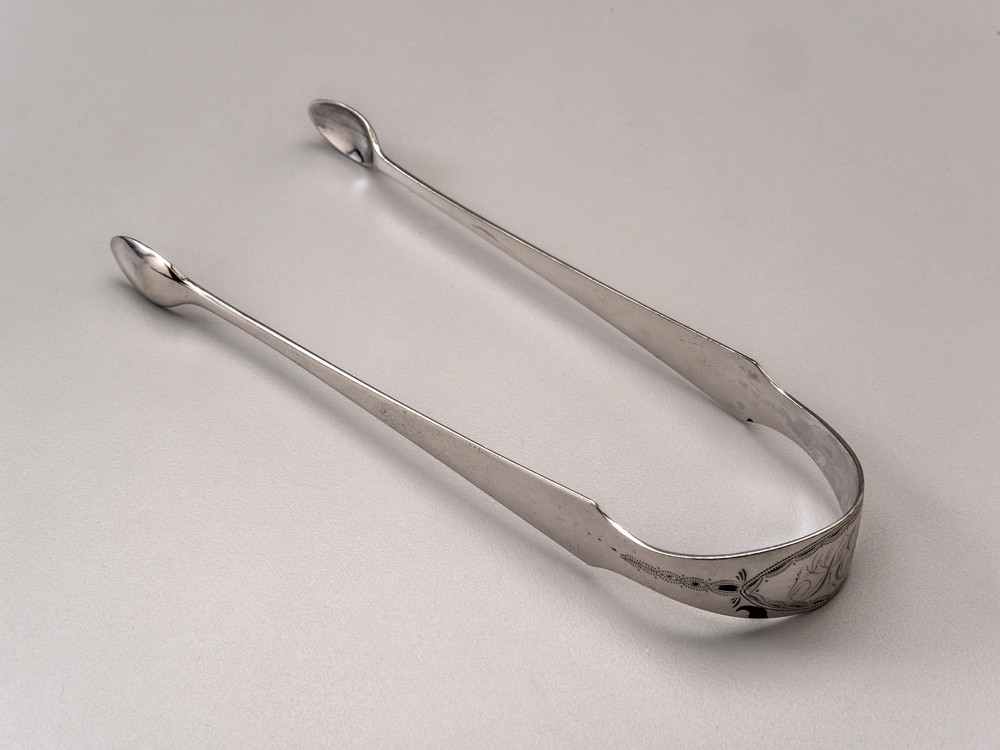
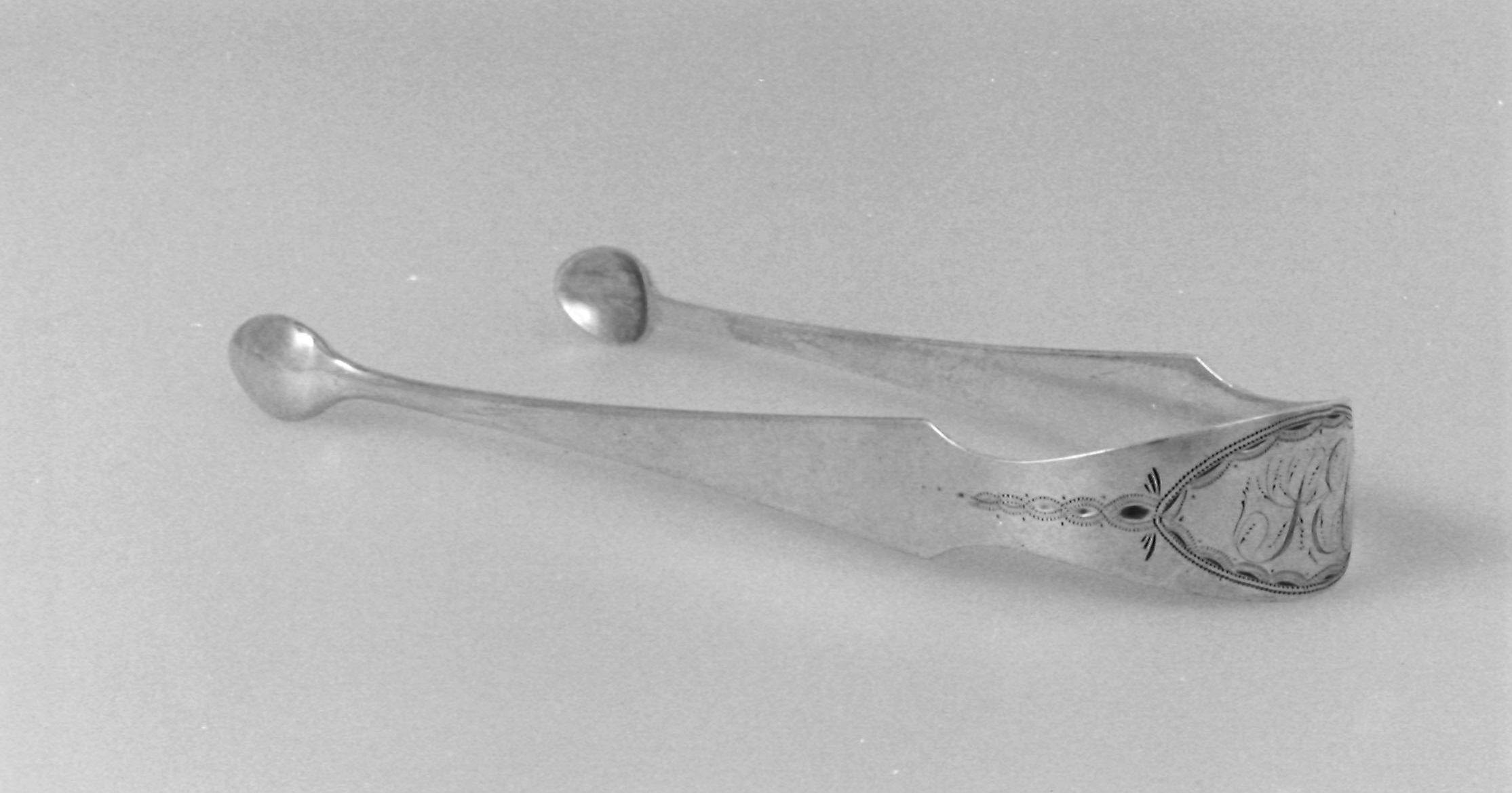
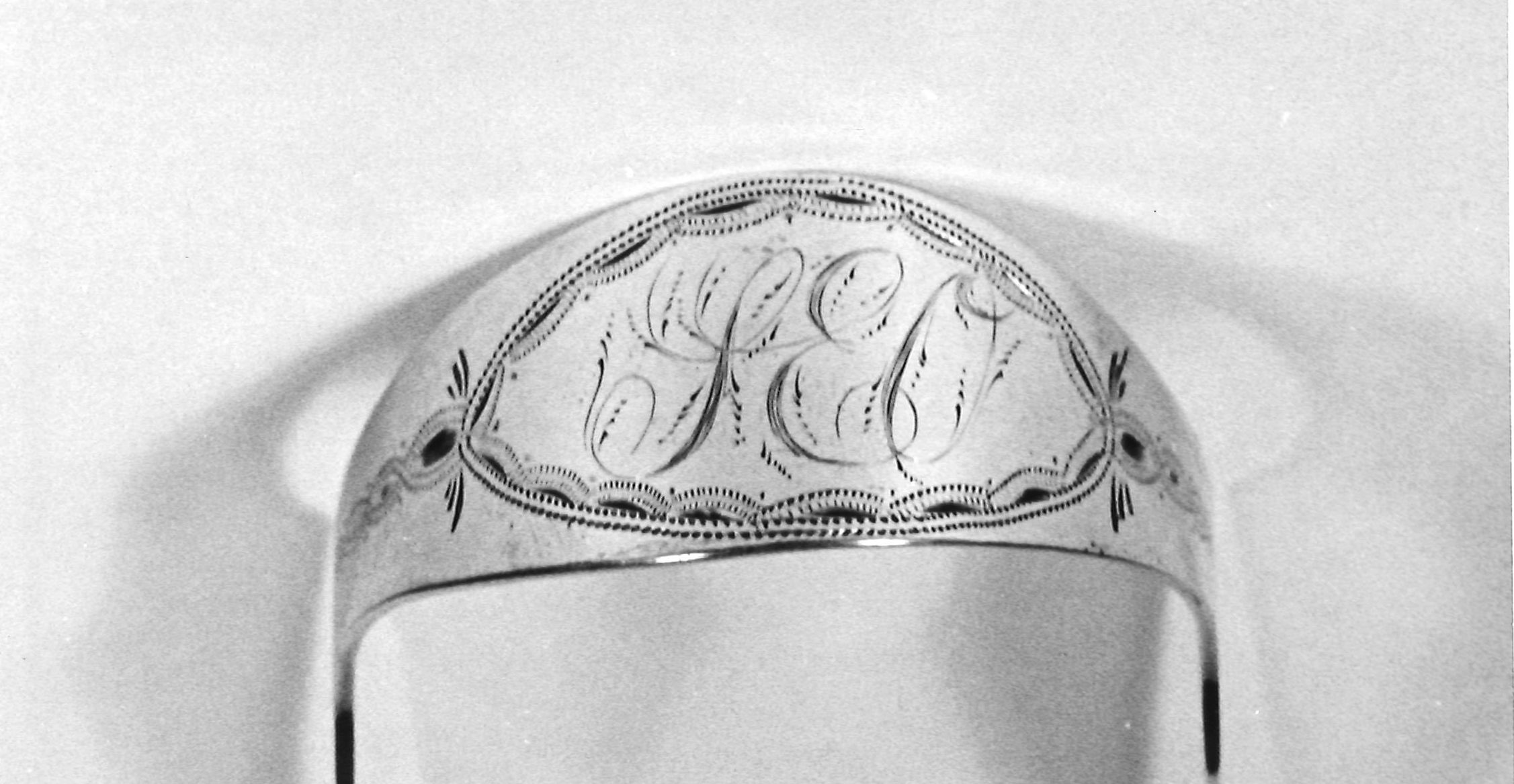
Sugar Tongs
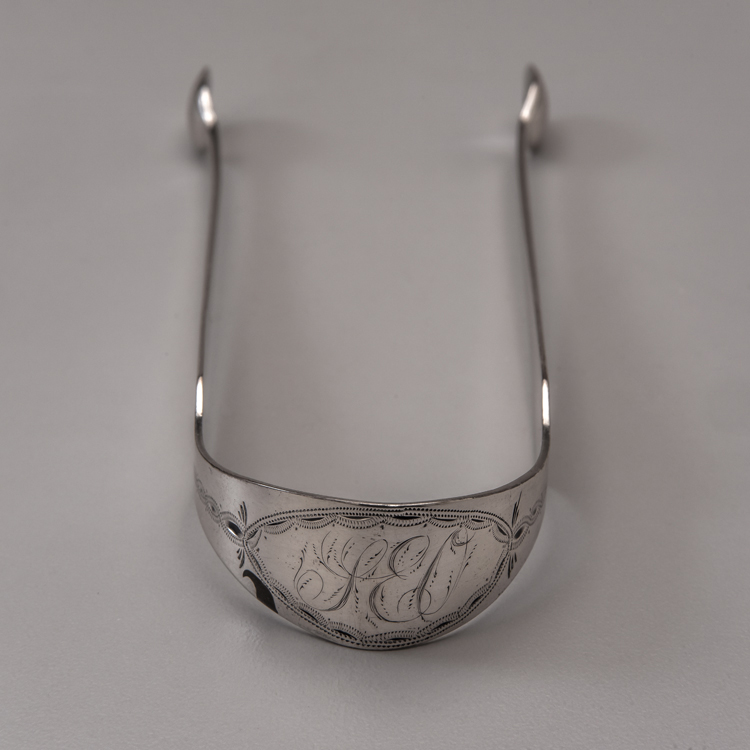
INSCRIPTION: Engraved on face of curved end, within a bright-cut oval, the intials “SEO” for Samuel Oliver (1781-1855) and his wife Elizabeth Gitting (b.c.1790).
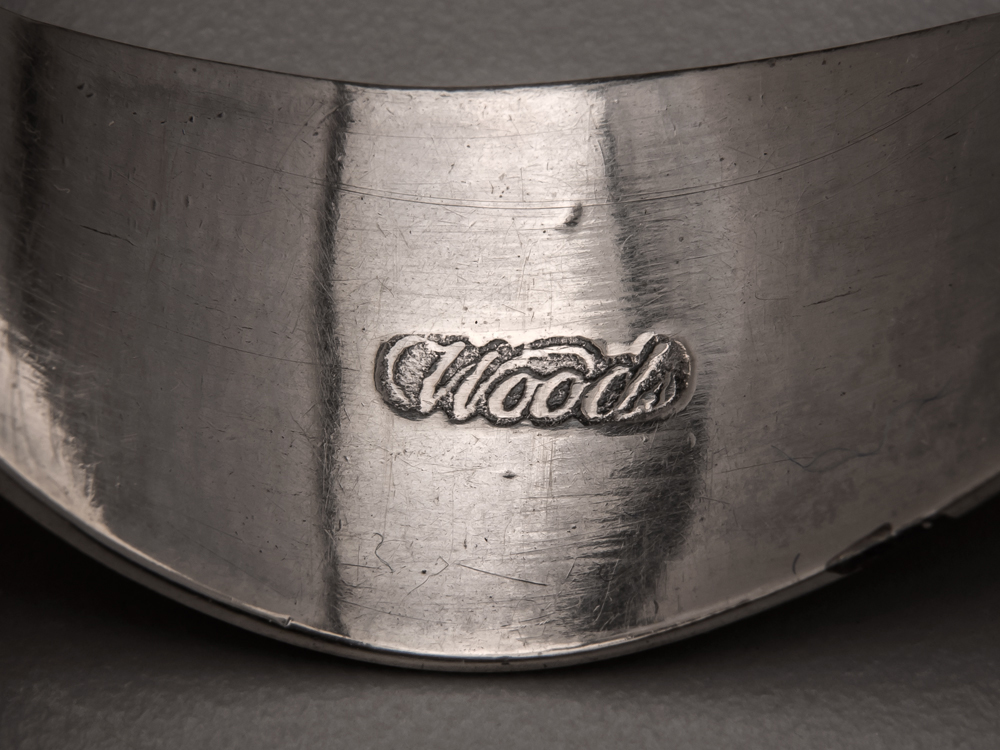
MARK: Struck on inside of curved end with intaglio script “Woods” in a conforming reserve.
MAKER: Freeman Woods (b.c.1766-1834) first worked in New York City prior to his move to New Bern, North Carolina; his name appears in the New York City directories from 1791 to 1794. On 27 December 1794 he advertised in New Bern, North Carolina, stating that he had commenced business two doors above William Lawrence’s store, where anything in the “above branch” might be had, particularly waiters, tankards, teapots, sugar dishes, milk pots, tablespoons, teaspoons, sugar tongs, and the like, in the newest fashions and at the shortest notice. Few facts about Woods’s family have been determined, but the Raleigh newspapers reported the death of “Mrs. Hannah Woods, wife of Mr. Freeman Woods,” which occurred in October 1811 in New Bern. The Newbern Spectator for 20 November 1834 contained a notice of Woods’s death at age sixty-eight. The notice stated that Freeman Woods was born in New Jersey and was a resident of New Bern for forty years. An inventory of his estate contained many items related to silversmithing and had a total value of $910.09. See George Barton Cutten and Mary Reynolds Peacock, “Silversmiths of North Carolina, 1696-1860”, 2nd rev. ed. (Raleigh: North Carolina Department of Cultural Resources, Division of Archives and History, 1984).
FORM: Sugar tongs were first introduced during the second quarter of the eighteenth century and were often shaped like scissors joined with a flat hinge. By the end of the century and into the next, however, tongs were cut from sheet silver and usually decorated with bright-cut engraving that bordered long, tapering arms that ended in oval, shell, acorn, or eagle claw tips.