Sugar Tongs
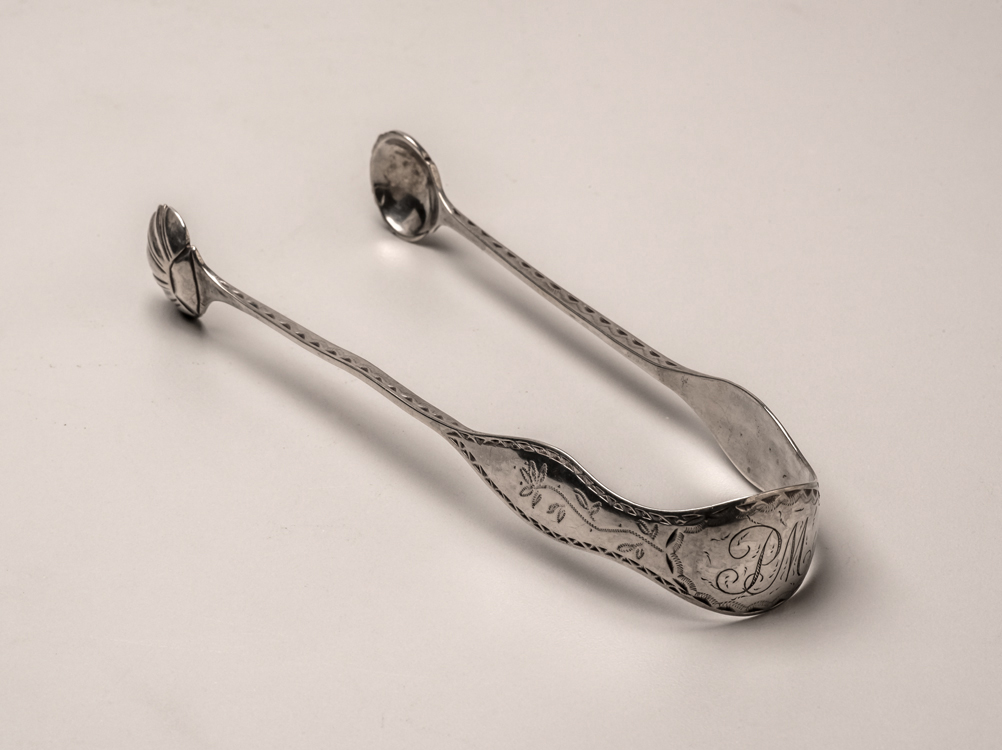
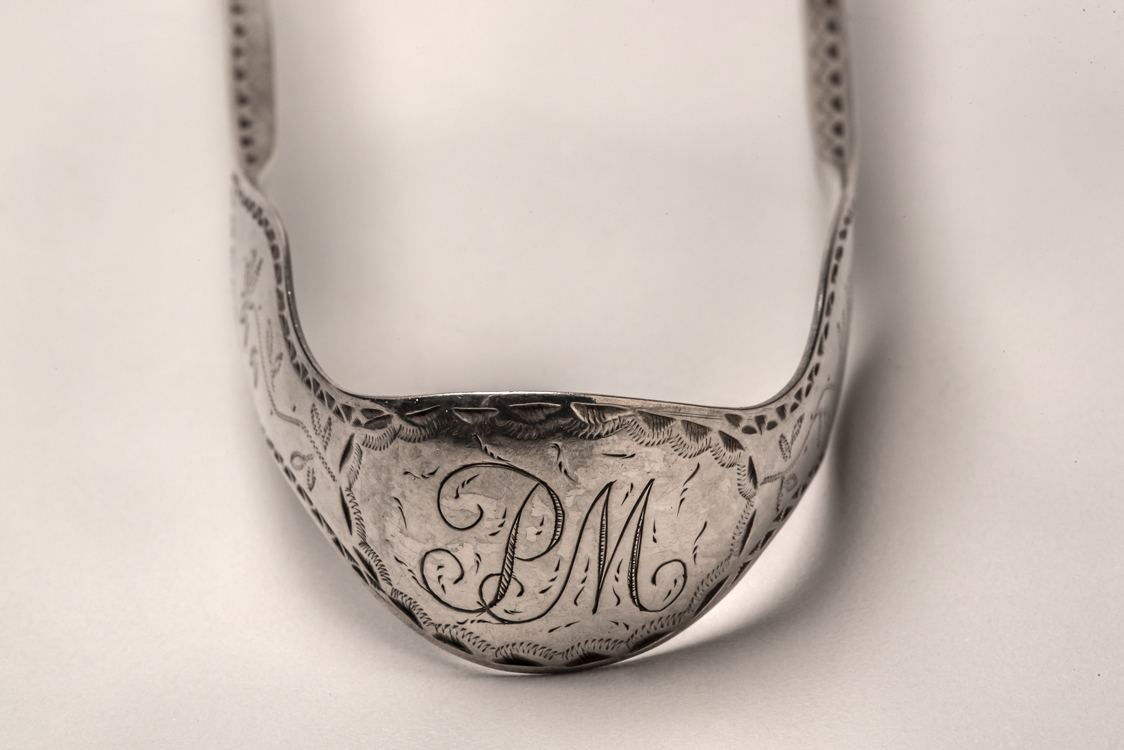
Engraved on the face of the curved end with the intitials “PM” (script).
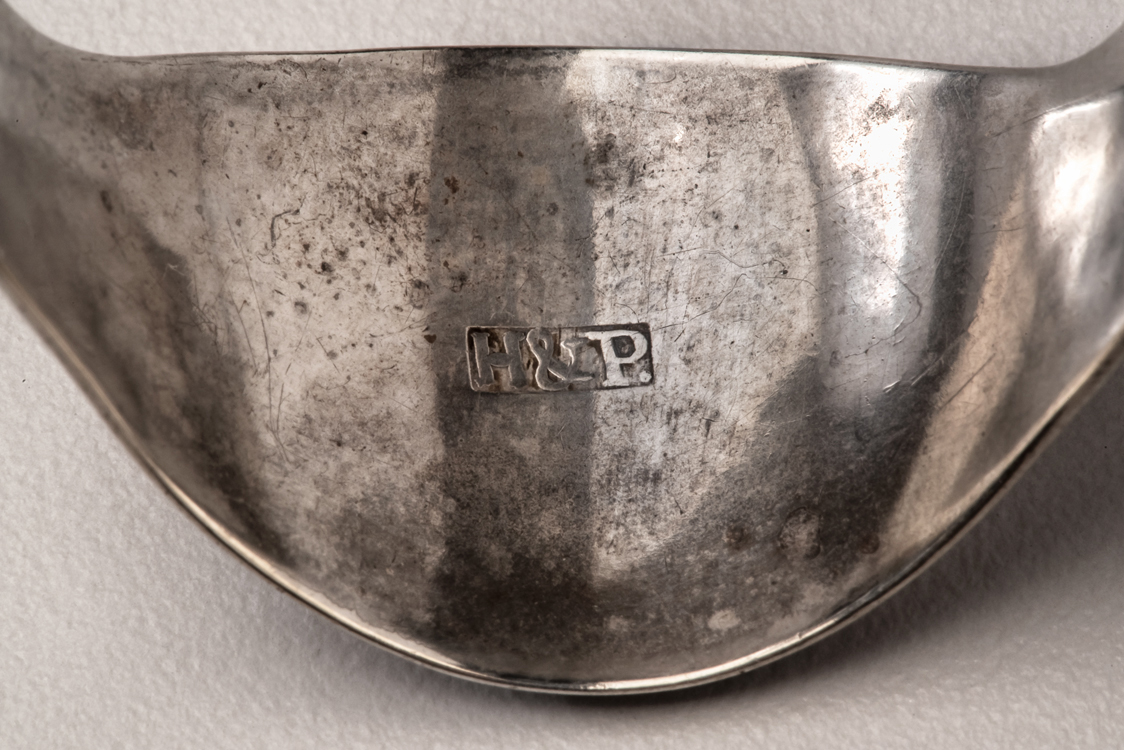
MARK: Struck on inside of curved end with an intaglio “H&P.” mark in a rectangle reserve.
MAKER: The partnership of Daniel Hartman (1782–1834) and William Phillips (1755–1836) operated a silversmith, watchmaker, and jewelry business in Winchester from 1802 until 1816.
Daniel Hartman was born in Reading, Berks Co., Pennsylvania to German-born parents. By the time he was twenty years old he had moved to Winchester and set up a partnership with William Phillips, who was nearly thirty years his elder. The age difference and the fact that Hartman’s name is listed first in the partnership suggests that the younger man brought most of the financial resources to their partnership. While the partnership was taxed just once for one enslaved worker, in 1811 for a man over the age of sixteen, Hartman’s personal property assessments and census records regularly included enslaved persons. In 1820 he had three slaves and owned ten by 1830. Hartman died intestate, and the appraisal of his estate in 1834 listed seven enslaved persons.
Contrasting Hartman’s Teutonic lineage, Phillips was born in Bath, England and trained as a silver buckle maker. He emigrated from England as an indentured servant, arriving in Virginia in December 1774 aboard the ship Carolina. Moving inland from his Virginia port of arrival, Phillips settled in Battletown (near modern-day Berryville, Frederick Co.), He joined the Continental Army for two enlistments to fight the British during the Revolution. He was first recorded in Winchester in 1787 and lived in the town until his death in 1836. Except for 1811, when he was partnered with Daniel Hartman, the Englishman Phillips was not taxed for any enslaved laborers during his career in Virginia and no mention was made to any enslaved persons in his census listings, his will, or in the appraisal of his personal estate in 1836.
FORM: Sugar tongs were first introduced during the second quarter of the eighteenth century and were often shaped like scissors joined with a flat hinge. By the end of the century and into the next, however, tongs were cut from sheet silver and usually decorated with bright-cut engraving that bordered long, tapering arms that ended in oval, shell, acorn, or eagle claw tips.