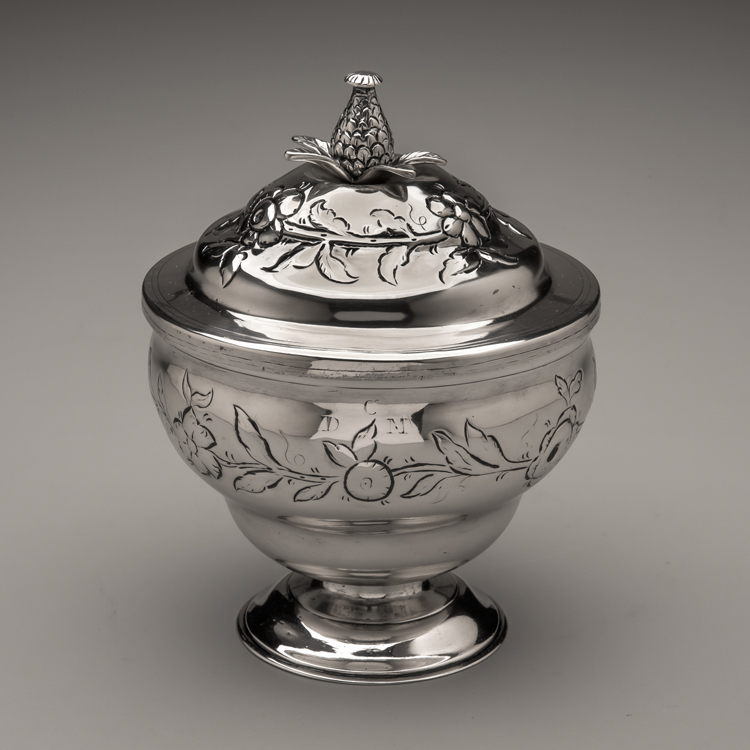
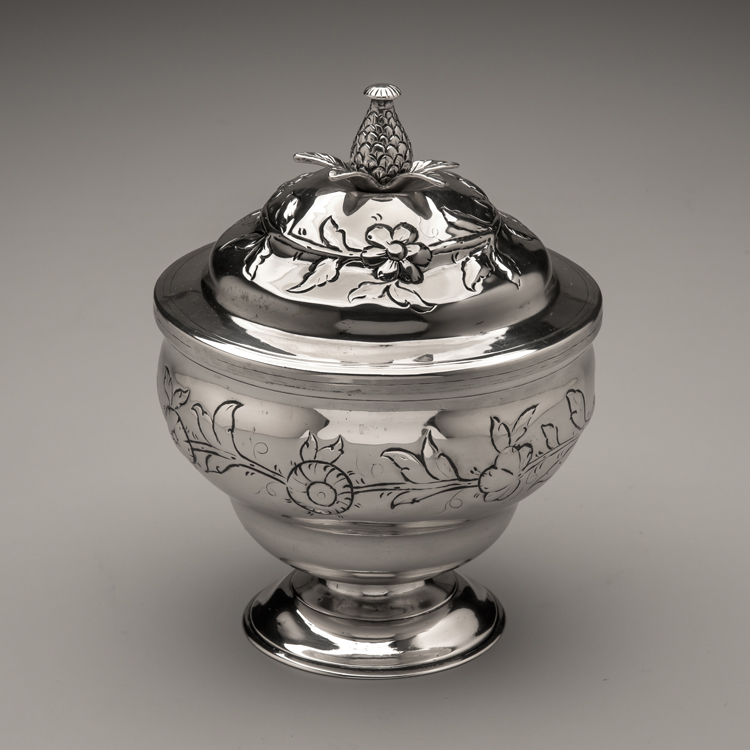
Sugar Bowl
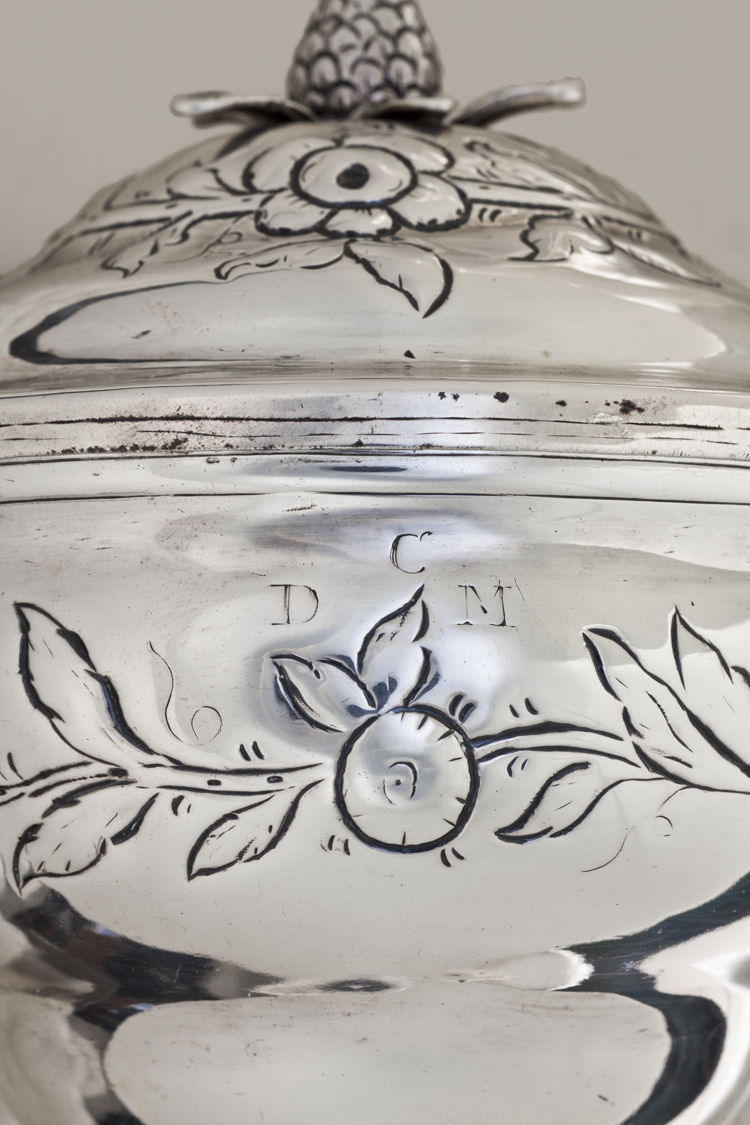
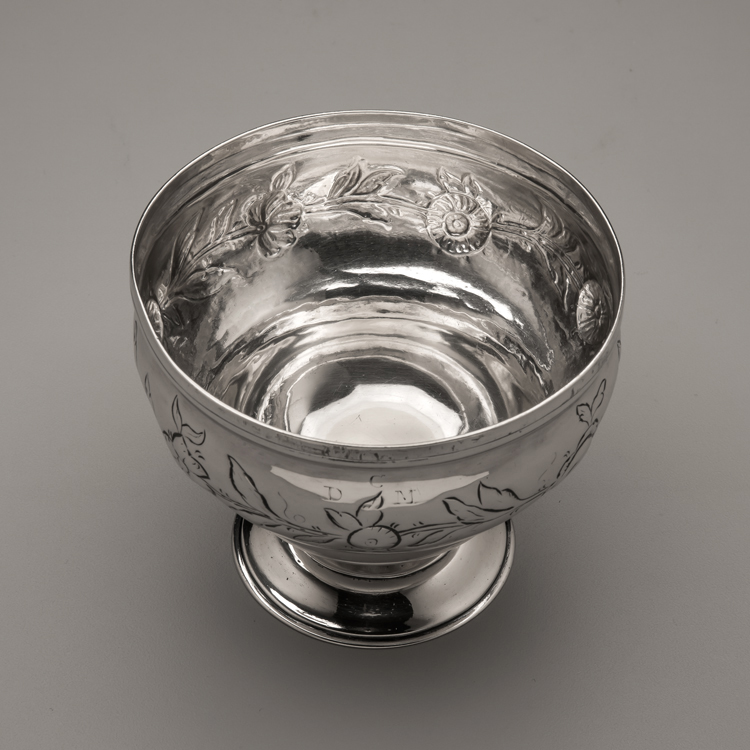
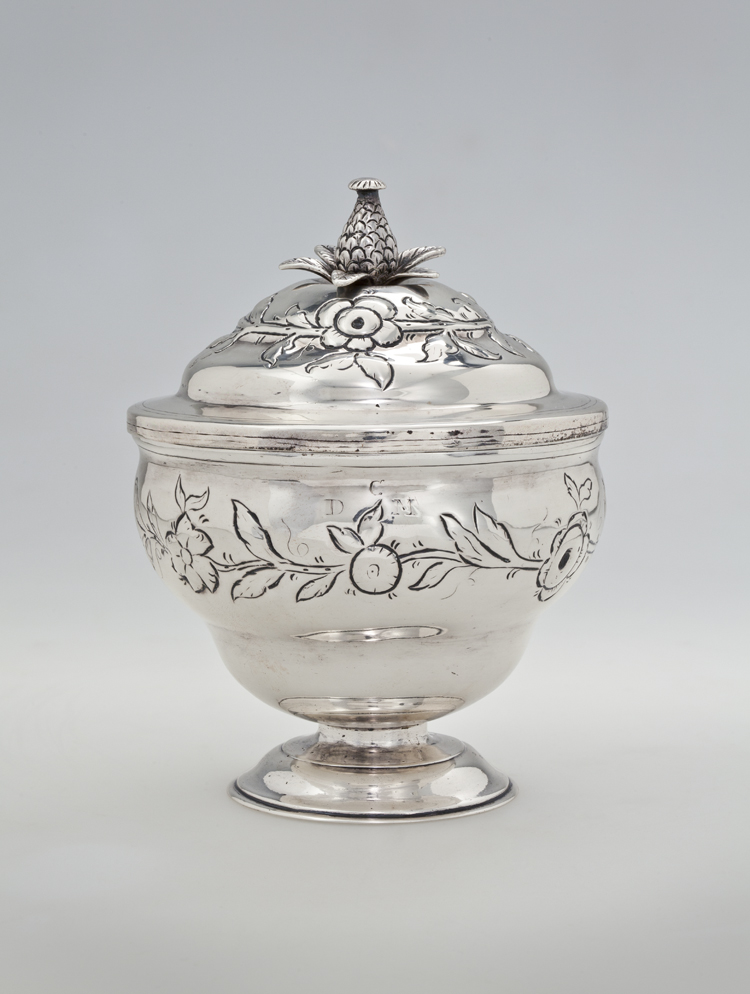
INSCRIPTION: Engraved on side of body below the rim with the initials “C / D • M” with the “C” centered over the pellet for Daniel Cannon (1726-1802) and his wife Mary Trusler Doughty Cannon (1723-1789).
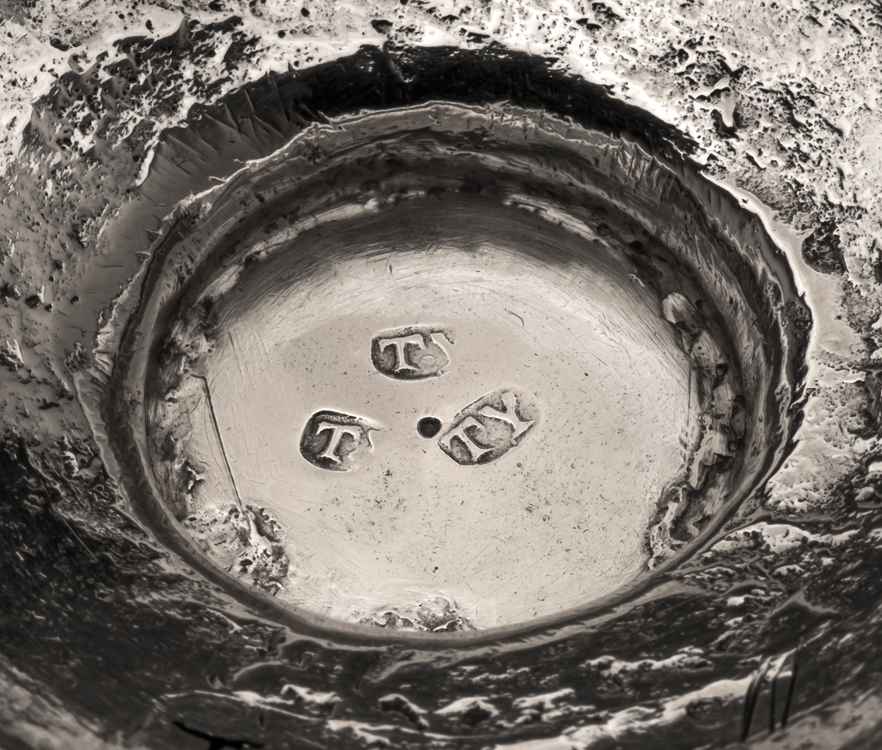
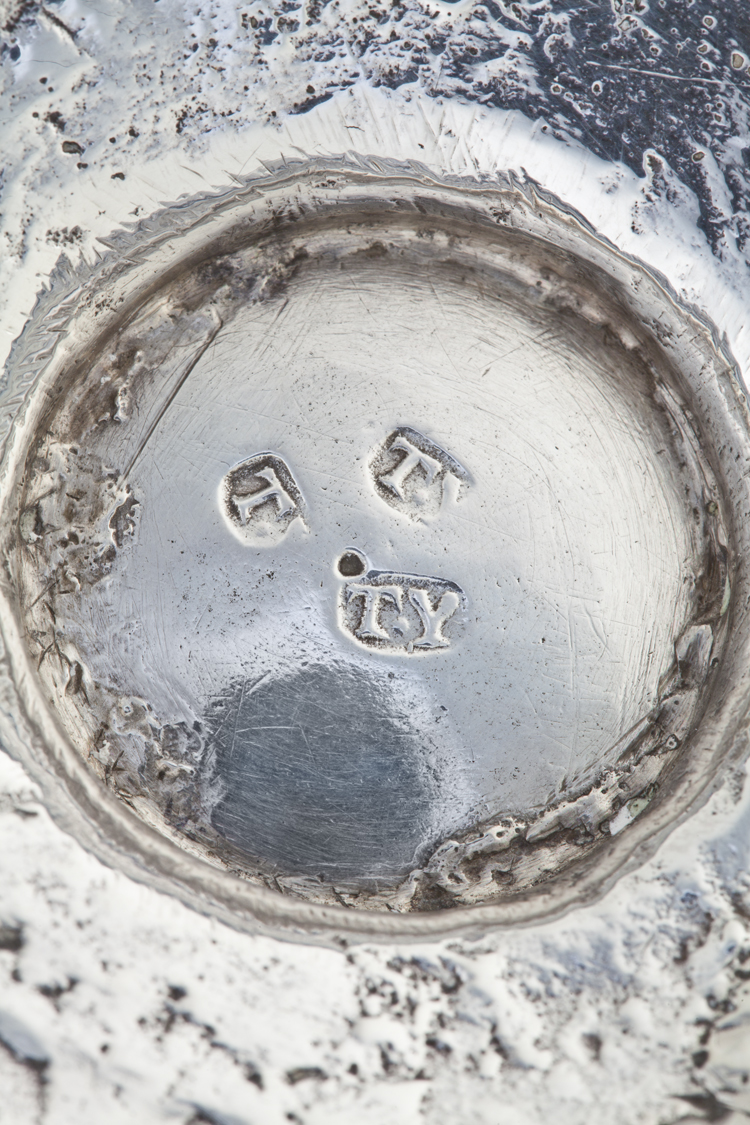
MARK: Struck three times on base with an intaglio “T•Y” mark in a rectangle.
MAKER: Thomas You (b.c.1730-d.c.1785) was born in South Carolina of Huguenot descent, most likely the son of Jacques (James/John) You (b.c.1690–d.1749) and Marie (Mary) Paitreau You (b.c.1690–d.1753) and younger brother of Charleston silversmith Daniel You (b.c.1715-1750). Thomas apprenticed with the Charleston jeweler and silversmith John Paul Grimke and first advertised his own Charleston silversmith shop in 1756. Advertisements for his shop appeared frequently afterward, alerting customers to his own work and products “just imported from London.” You’s advertisement in the South Carolina Gazette of 1 October 1764 sheds light on another of his talents: “Thomas You, At the Sign of the GOLDEN-CUP, in the Market-Square, HAS JUST IMPORTED… A Copper-plate view of St. Michael’s Church, Charles-Town, drawn by himself, and neatly engrav’d in London, which he well sell for CASH ONLY, and at a very moderate advance.” The following year he noted that he had finished engraving a plate of the “West Prospect of St. Philip’s Church. He further advertised that he would repair without cost any piece of silver made by him should it break. Thomas You’s silversmith’s shop may not have survived the American Revolution. Most documentation for him after 1775 points to various investments in land and property. See Gary Albert, “Scratching the Surface: Thomas You, Charleston Silversmith, Engraver, and Patriot,” MESDA Journal, Vol. 33 (2012), online: http://www.mesdajournal.org/2012/scratching-surface-thomas-you-charleston-silversmith-engraver-patriot/ (accessed 5 June 2017) and E. Milby Burton, “South Carolina Silversmiths 1690-1860” (Charleston, SC: Charleston Museum, 1967).
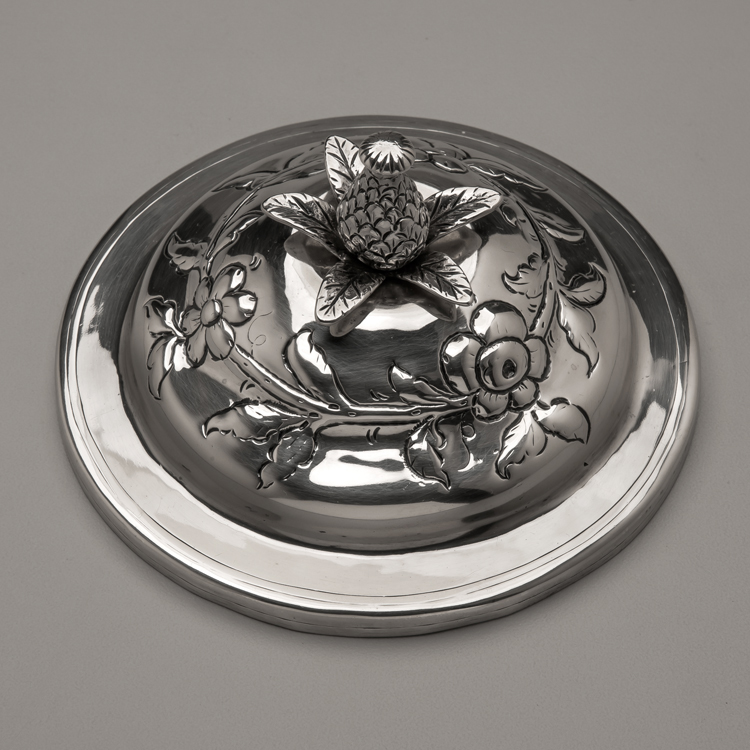
FORM: By the early eighteenth century, sugar was no longer prohibitively expensive and could be stored in covered dishes rather than in locked boxes. At the same time, the growing popularity of the tea ceremony placed a new importance on such accouterments as sugar bowls. The amount and type of decoration utilized on a sugar bowl reflected the amount of money the purchaser was willing to invest. Also, for most of the eighteenth century the accouterments of the tea ceremony were acquired separately and did not necessarily match in style and shape. By the 1790s, all elements of a tea service (coffeepot, teapot, sugar bowl, waste bowl, and cream pitcher) were made somewhat uniformly in style, with the smaller pieces following the form of the coffee and teapots.
The contents the Cannons’ house on Queen Street are documented by other pieces in MESDA’s collection: a pair of silver sauce boats (Acc. 3407.1-2) engraved with their initials, “DMC” and a chest of drawers (Acc. 2785). MESDA also documented a portrait of Mary (Trusler) Doughty Cannon (1723-1789) by Jeremiah Theus, now in the collection of the Dallas Museum of Art (DMA acc. 1988.80).