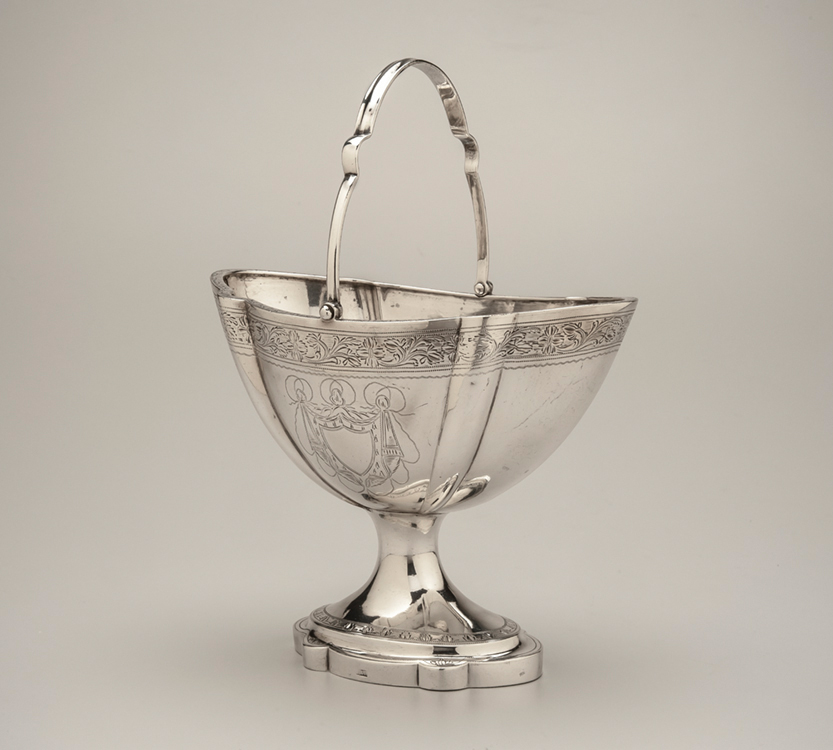
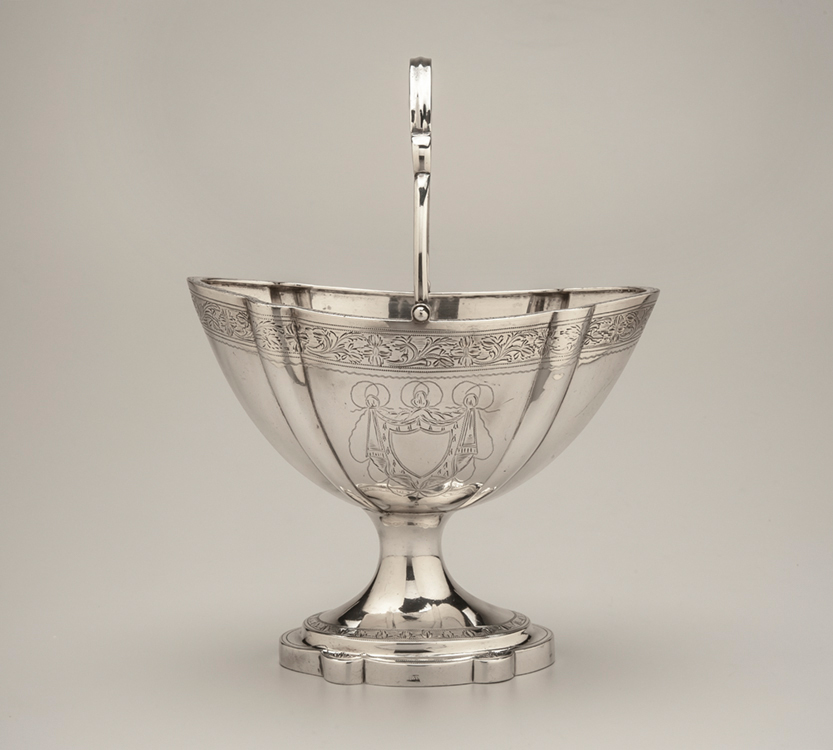
Sugar Basket
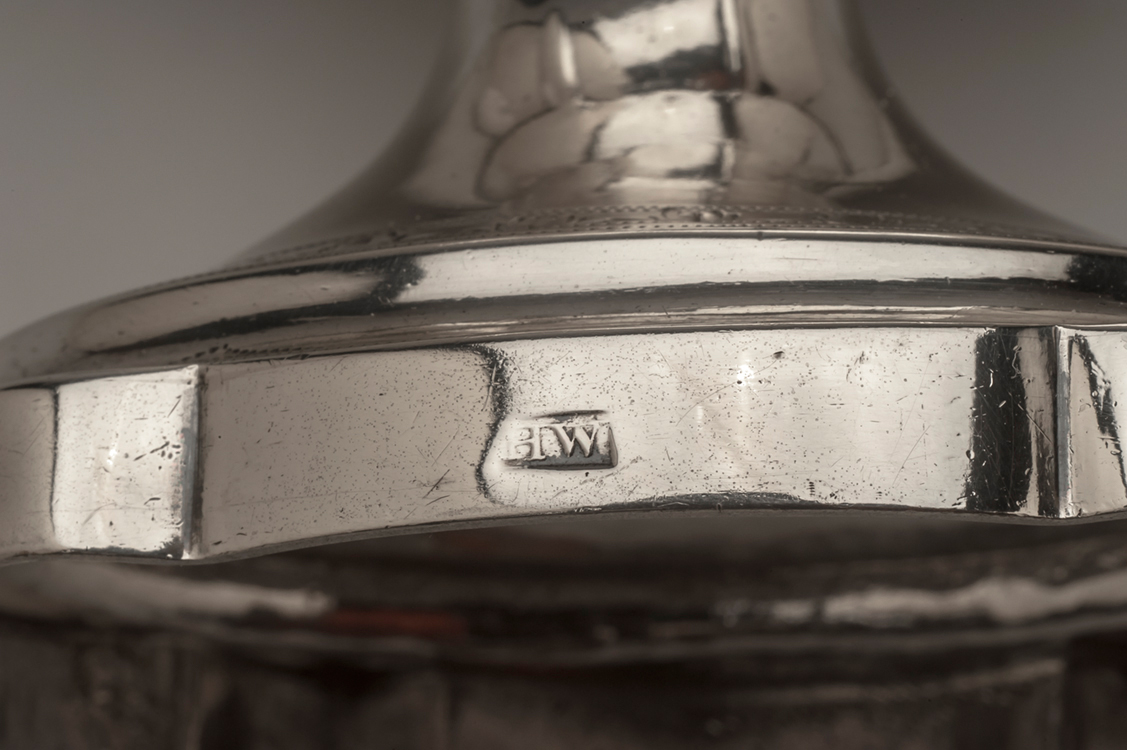
MARK: Struck twice on faces of the shaped base with an intaglio “HW” mark in a rectangular reserve.
MAKER: Henry Westermeyer was listed in Charleston’s 1790 city directory as a goldsmith at No. 23 Church Street. Neither his will nor his inventory have been located, so it is not known whether or for how long he remained in Charleston. Also unknown is if Henry was of any relation to Andrew Westermeyer (working ca. 1790-1807), who was listed as a silversmith at the same location (23 Church Street) in the 1794 directory. Andrew Westermeyer was British and had become a naturalized American citizen in 1787. See E. Milby Burton, “South Carolina Silversmiths 1690-1860” (Charleston, SC: Charleston Museum, 1967).
FORM: There were several eighteenth- and nineteenth-century variations of silver baskets meant for use at the table, each distinguished by the types of foodstuffs they was designed to hold. Sugar baskets were the smallest form, with bread baskets being the largest and fruit and cake baskets falling between. Sugar baskets were used to hold sugar for tea or sweetening foods. The form seems to have been unusual in American silver, where the sugar bowl was more popular.