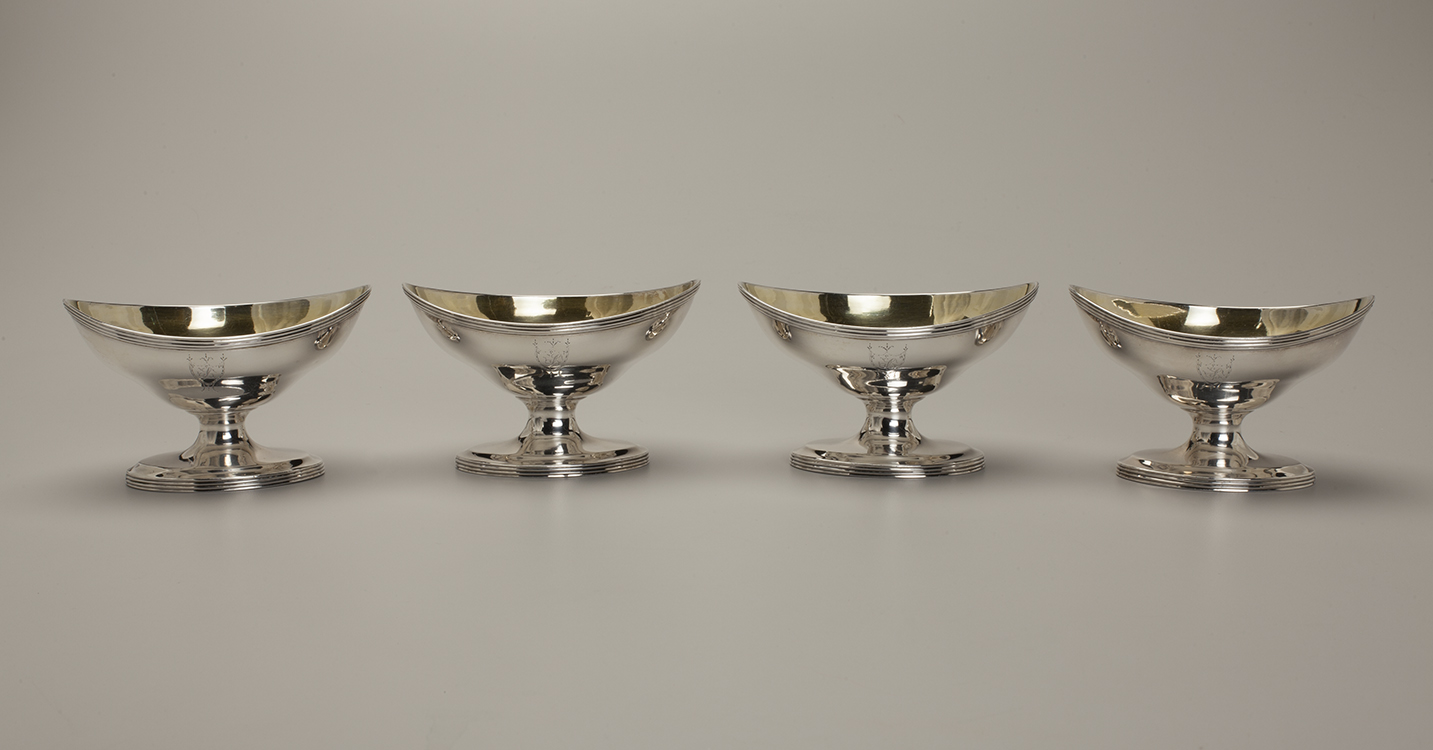
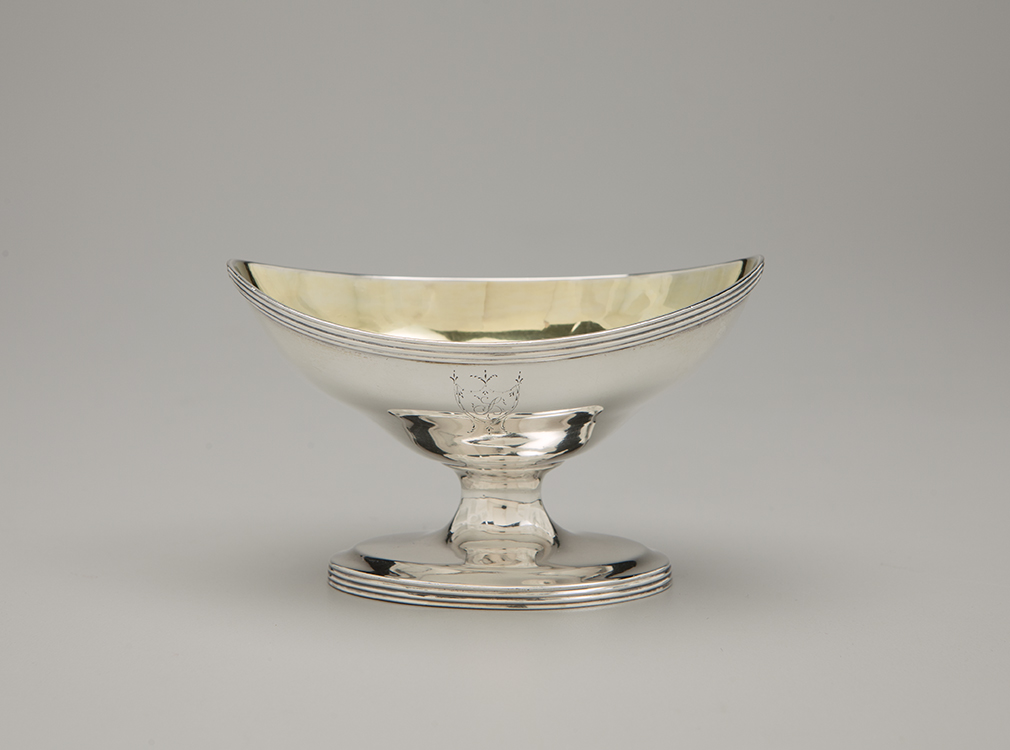
Set of Saltcellars
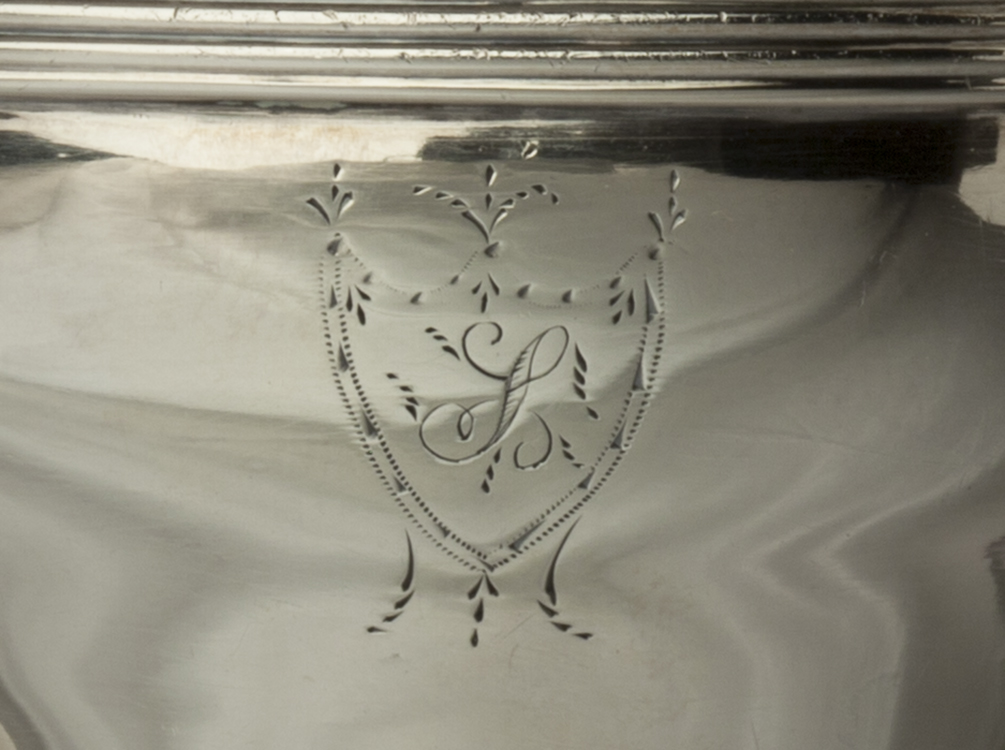
INSCRIPTION: Engraved on sides of bodies with a bright-cut shield and a script intial “S” for Thomas Littleton Savage (1760-1813) of Northampton Co., Virginia.
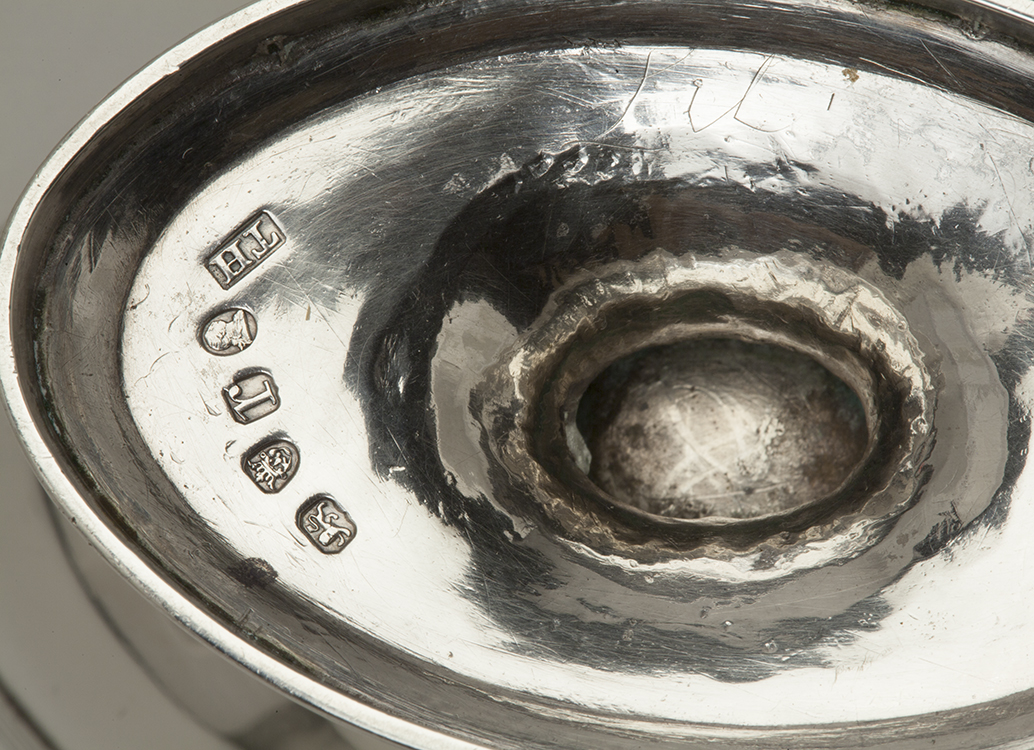
MARK: Struck on underside of base with “TH” maker’s mark (Thomas Holland), sterling standard mark (full-body lion facing left), London city mark (crowned leopard passant), date letter for 1792 (lowercase roman “r” in an oval shield), and English duty mark (profile of King George III). All are intaglio marks in oval or rectangular reserves.
MAKER: Silversmith Thomas Holland entered his mark with the London Assay Office in 1798. His shop was on Fleet Street in the Temple Bar District of London.
FORM: Salt was an expensive commodity before the eighteenth century and used ceremoniously, dispensed from elaborate containers. By about 1700 small salt containers designed to be used by an individual at his or her place at the table began to replace the great communal salts of medieval times. Early American salt containers were generally quite small and, befitting salt’s valued place on the table, often made of elaborately decorated silver. Because salt is extremely corrosive, most early saltcellars were open containers that could be easily emptied after each use. Glass inserts were increasingly used in the nineteenth century to protect the silver cellars. This remained true until the popularization of the salt shaker in the middle of the nineteenth century. The overall evolution from a communal form to an individualistic, personalized object reflects in part the vast changes taking place in American culture, which placed increasing emphasis on individuals and their place in society.