Ring Bottle
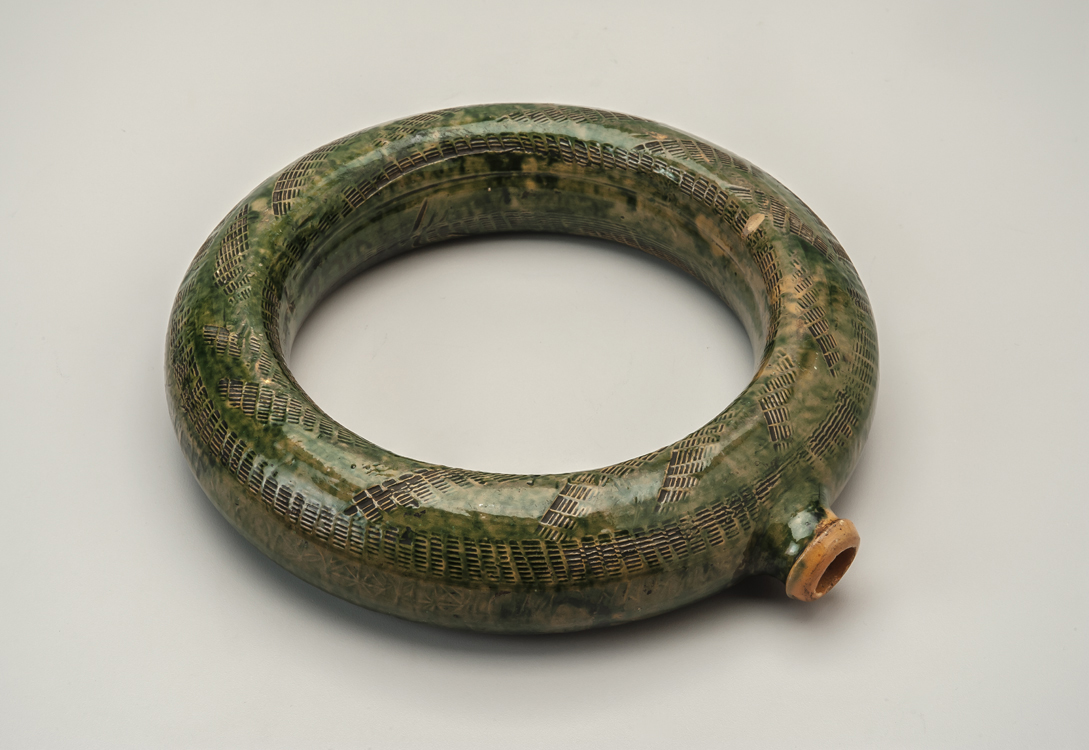
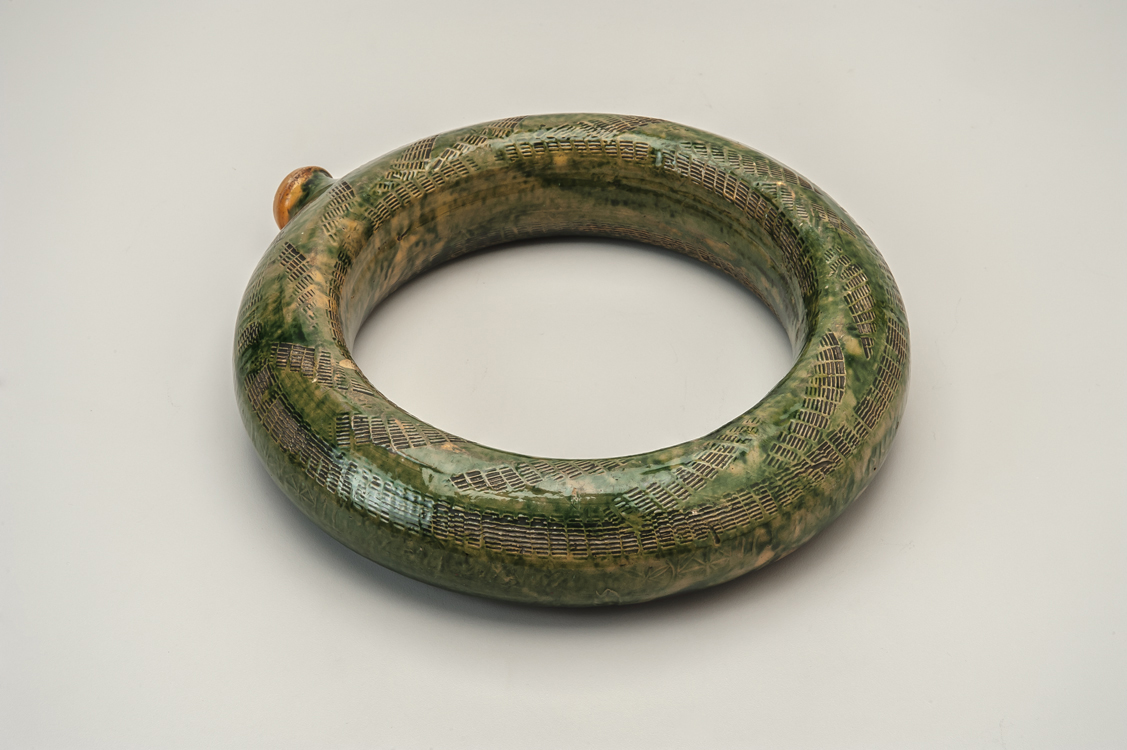
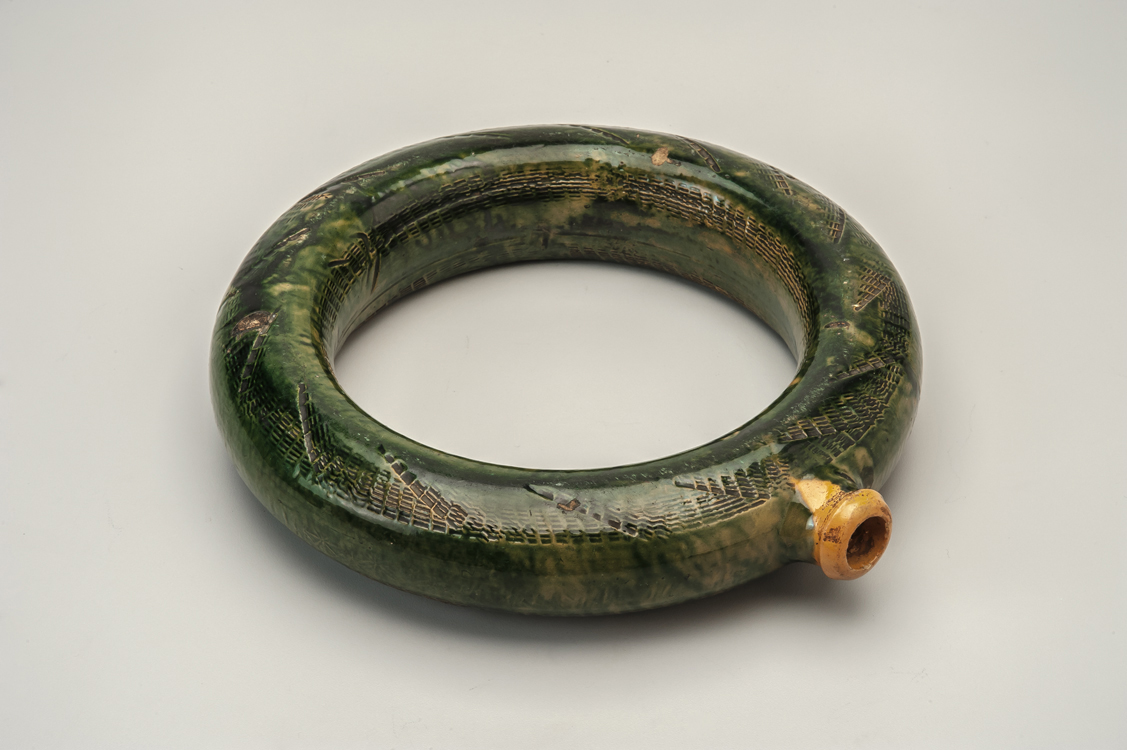
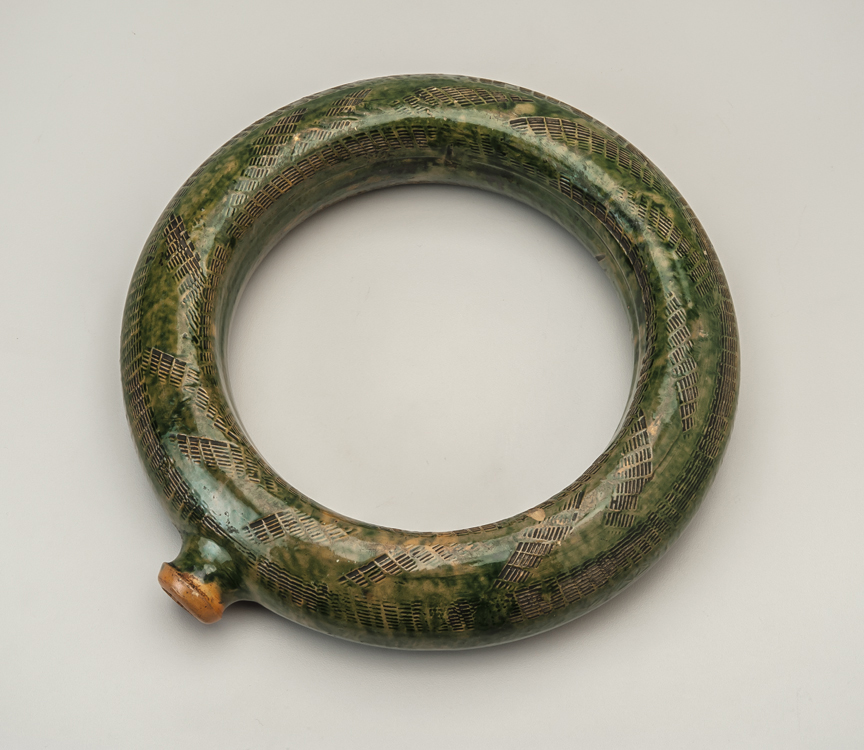
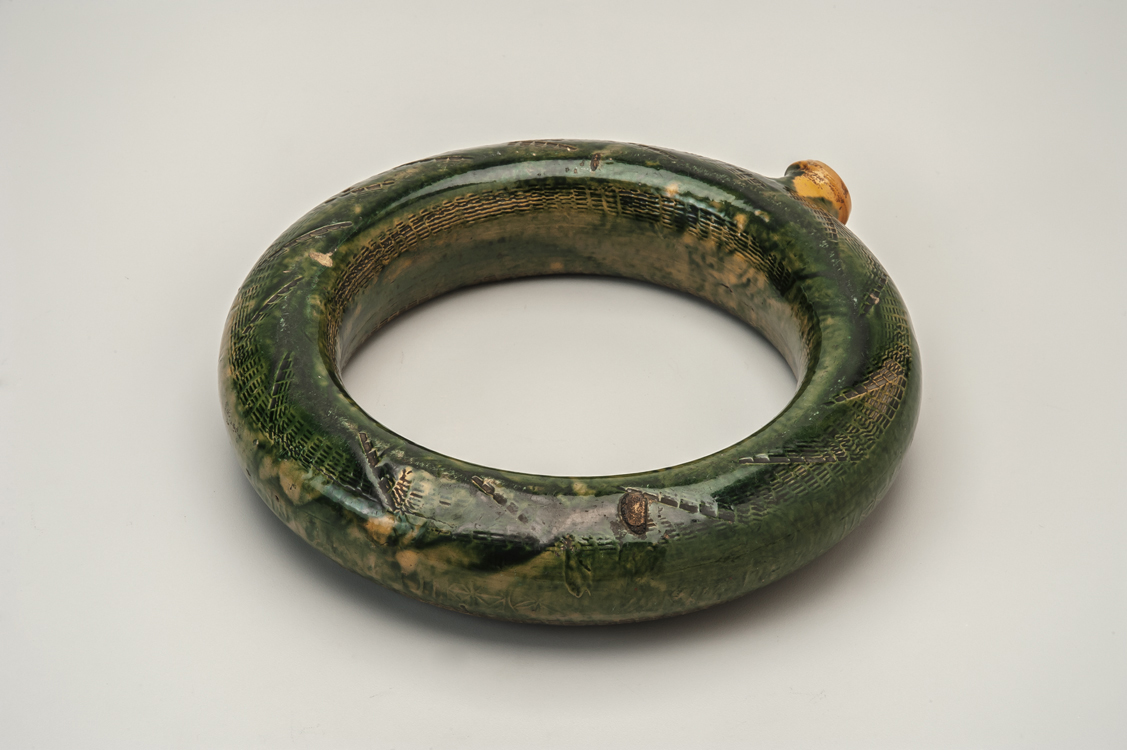
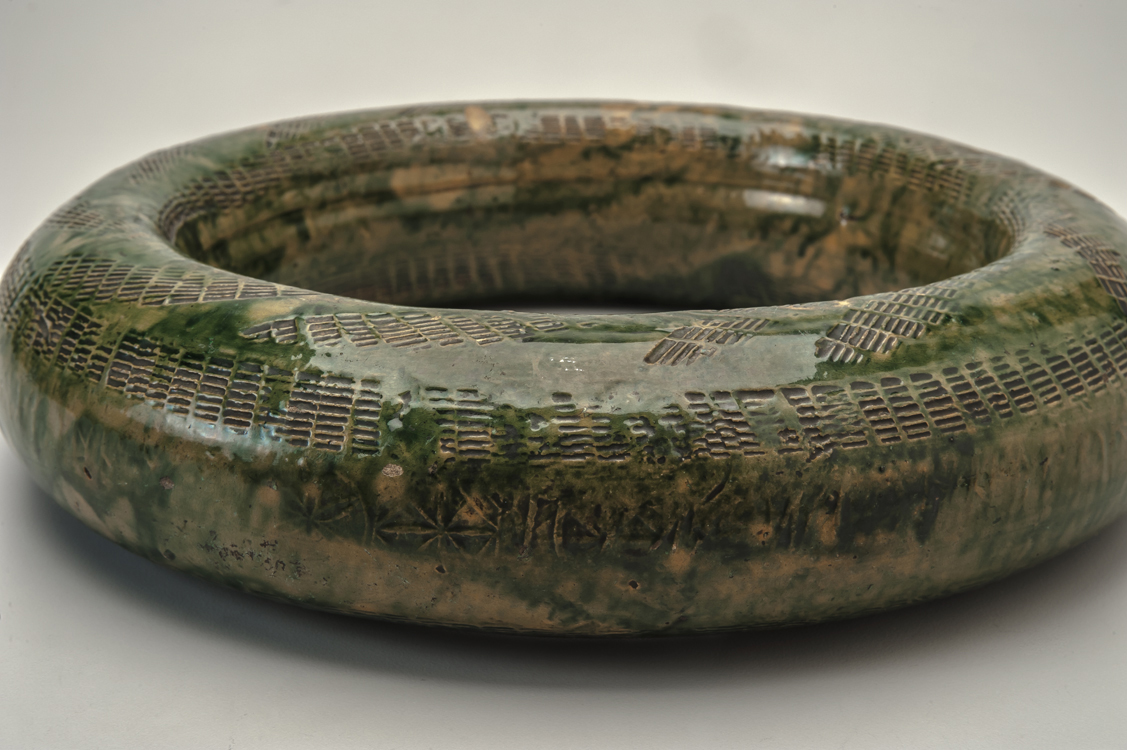
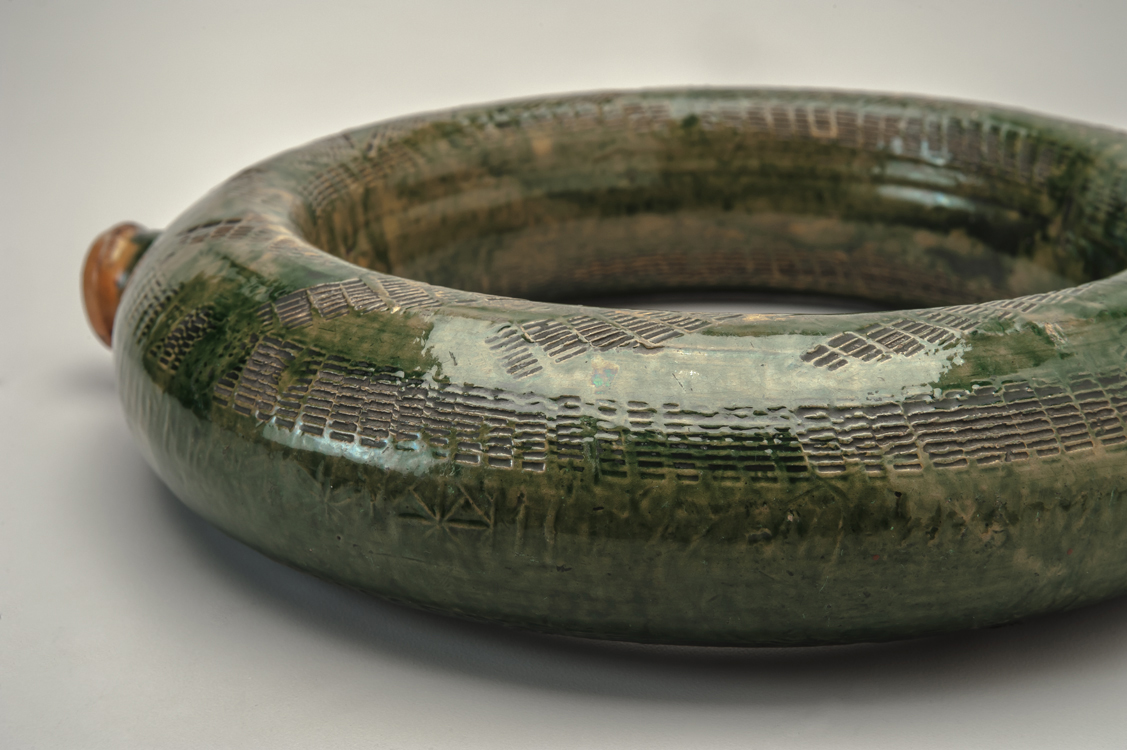
Thrown on a pottery wheel, a ring bottle is a uniquely made form. The potter makes a donut shape with the clay and then creates two walls on the interior and exterior. They are then folded on top of one another creating a hollow circle. After the clay dries slightly to what is called the “leather hard” stage, the circular shape is flipped over and trimmed to make a smooth, rounded edge mimicking the opposite side. The neck is thrown separately and applied to the side of the bottle. The impressed decoration on this example, created by a tread stamp and coggle wheel, was added while the clay was still soft.
MAKER: Christopher Alexander Haun was born in 1821 in Greene County, Tennessee. When he first started making pottery is uncertain, but the site where he produced wares had a pottery as early as the 1820s operated by the Kinser family. Christopher’s brother Lewis M. Haun probably worked with him and was listed in the 1860 census as a “master potter.” Christopher Haun was hanged in 1861 by the Confederate States of America after being found guilty of burning bridges in support of the Union Army in East Tennessee. Two letters written while he was imprisoned before being hanged reference Haun’s being a potter. He wrote to his wife, Elizabeth, “Have Bohannon, Hinshaw, or Low [all local potters] to finish off that ware…. Sell my shop tools, lead oven, glazing mill, clay mill and lathe which will be some help to you and the children” (West, 218).
Smith, Samuel D. and Stephen T. Rogers.” Tennessee Potteries, Pots, and Potters – 1790s to 1950, Vol. 1.” N.P.: Tennessee Department of Environment and Conservation, 2011.
West, Caroll Van, ed. “A History of Tennessee Arts: Creating Traditions, Expanding Horizons.” Knoxville: UT Press, 2004,