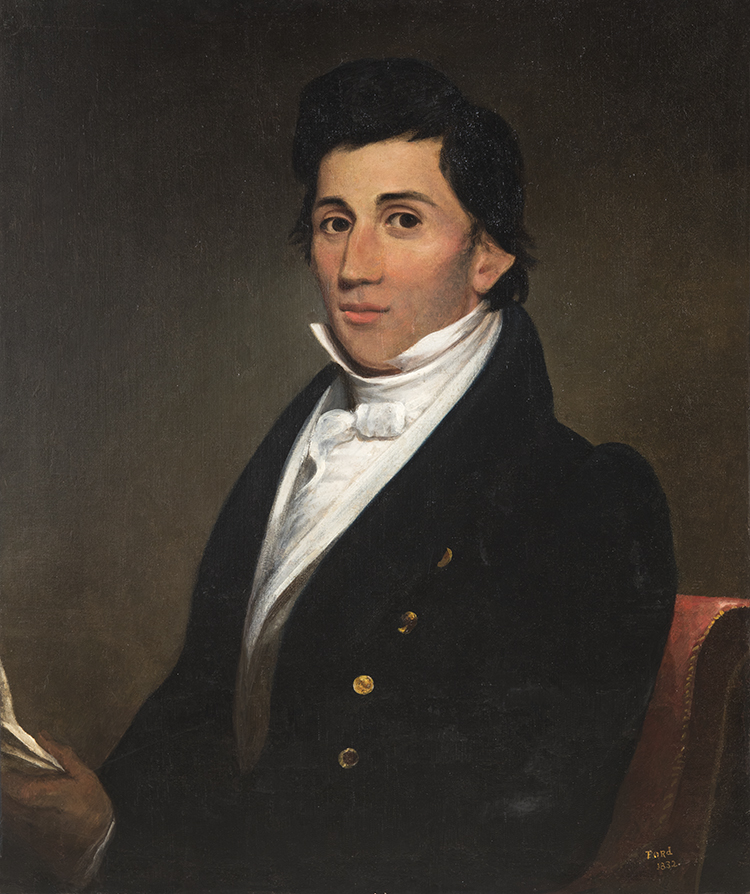
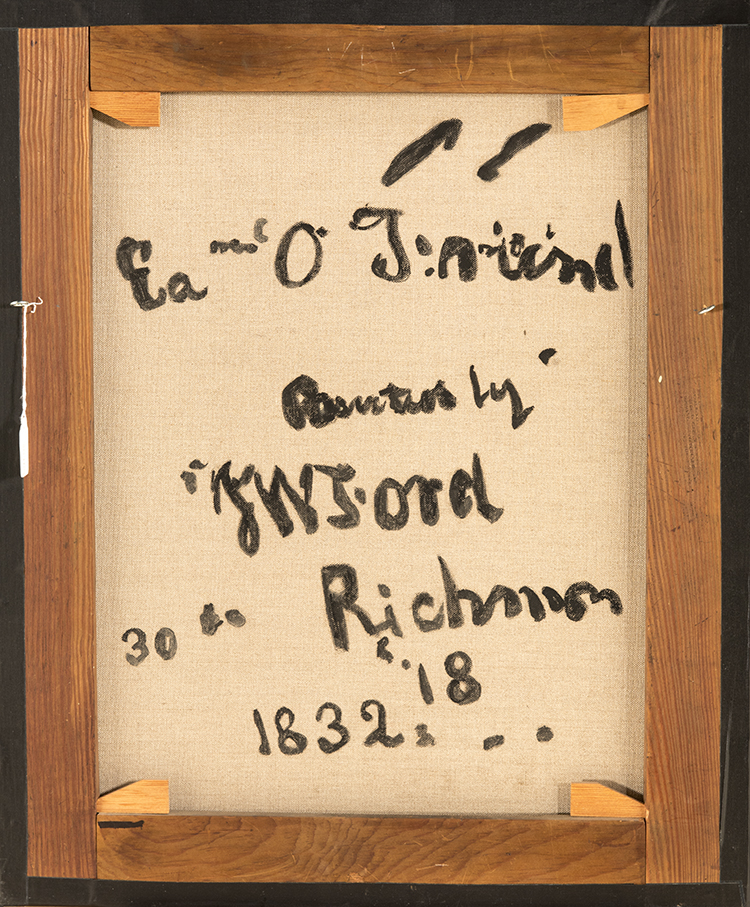
Portrait of Edward O. Friend
SITTER: Edward Osborne Friend (1800-1838) was the son of Joseph Friend (1768-1804) and Amelia Taylor Sherwin. He was an enslaver and owner of Belgrade plantation in Chesterfield County, Virginia. In an advertisement for the sale of the estate in 1844, Belgrade was described as “…in the neighborhood of the Coal Mines. This is one of the most desirable residences in Chesterfield. The farm contains about 400 acres, with ample supply of wood for fire and fencing – the land, originally good, has been very much improved by the use of clover and piaster. Much of this land is well adapted to the growth of herds grass and timothy and has produced them successfully for years past. The dwelling house is in perfect order, containing eight large rooms; all the outhouses for the accommodation of a large family of negroes, as well as stock of all kinds, are in good order.”
Edward Osborne Friend inherited Belgrade plantation from his grandfather and namesake, Edward Friend, upon his death in 1806. Through his grandfather’s estate he also inherited six enslaved individuals: Joe, Henry, young Judah, young Dilcey, Beck, and Olive.
On May 27, 1823, Edward married Eloisa Matilda Burfoot (1807-1873), who continued to occupy Belgrade until her remarriage.
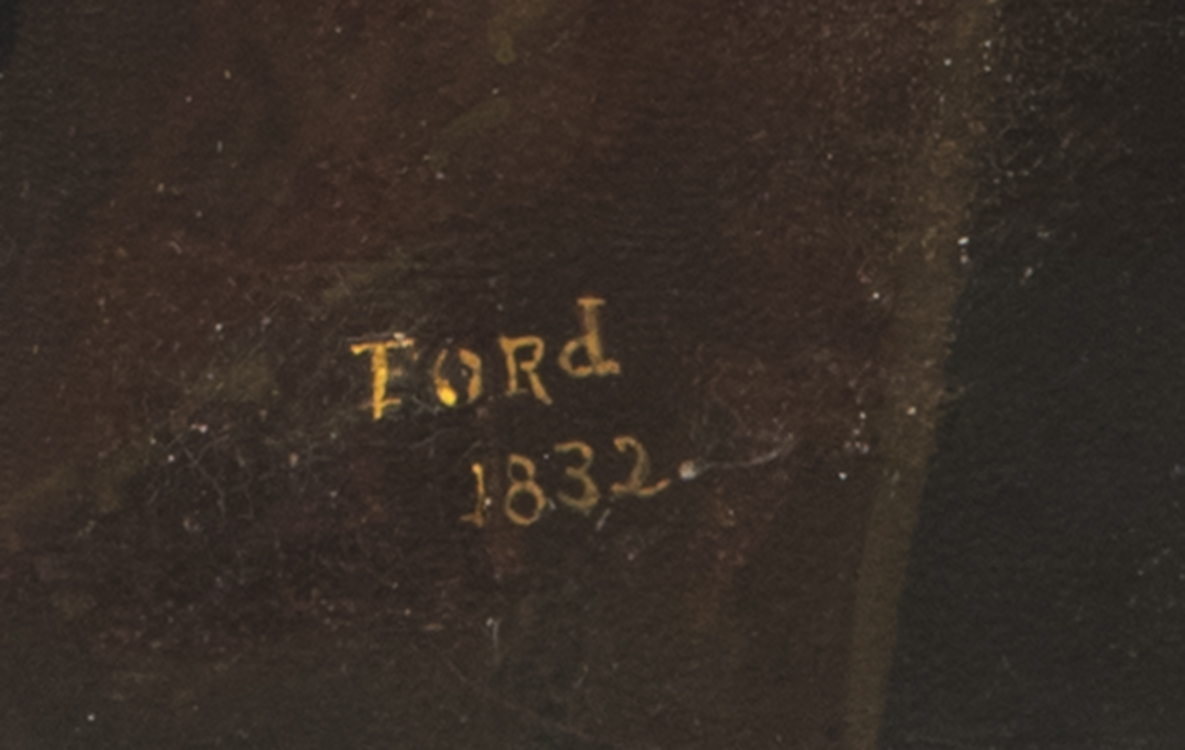
ARTIST: James Westhall Ford (ca. 1806-1868) was a Pennsylvania-born portrait painter who spent most of his working life in Virginia. He arrived in the Commonwealth in 1823 to paint a portrait of Thomas Jefferson’s daughter, Martha Jefferson Randolph. In September of 1823, Jefferson wrote a letter of support for Ford, noting that the artist had been in the neighborhood for “some weeks past” and that he had drawn two portraits for Jefferson, “both esteemed, but one of them particularly of President Monroe, is among the best likenesses which has been taken of him.” With Jefferson’s support, Ford secured commissions in Washington and elsewhere in Virginia as well as briefly in Raleigh, North Carolina. Ford returned to Philadelphia during the Civil War and died there in December 1868.
See: Barbara C. Batson, A Capital Collection: Virginia’s Artistic Inheritance, 2005
Ford’s papers are at the University of Virginia: Accession #6073, Special Collections, University of Virginia Library, Charlottesville, Va.