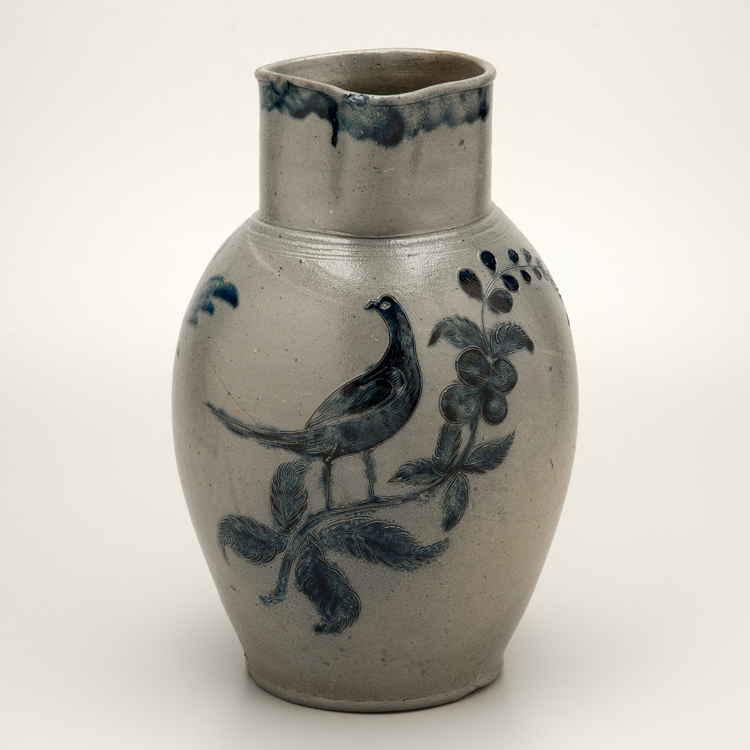
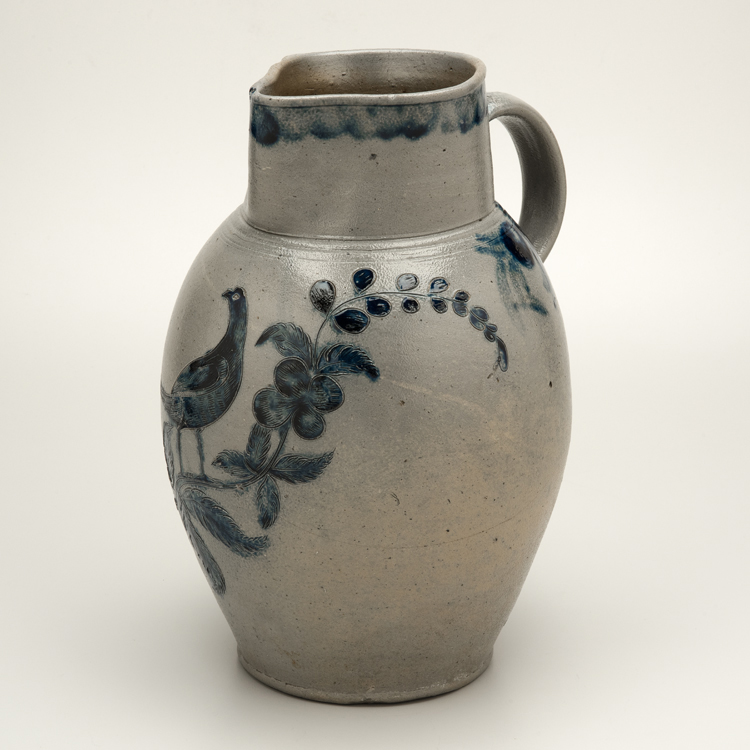
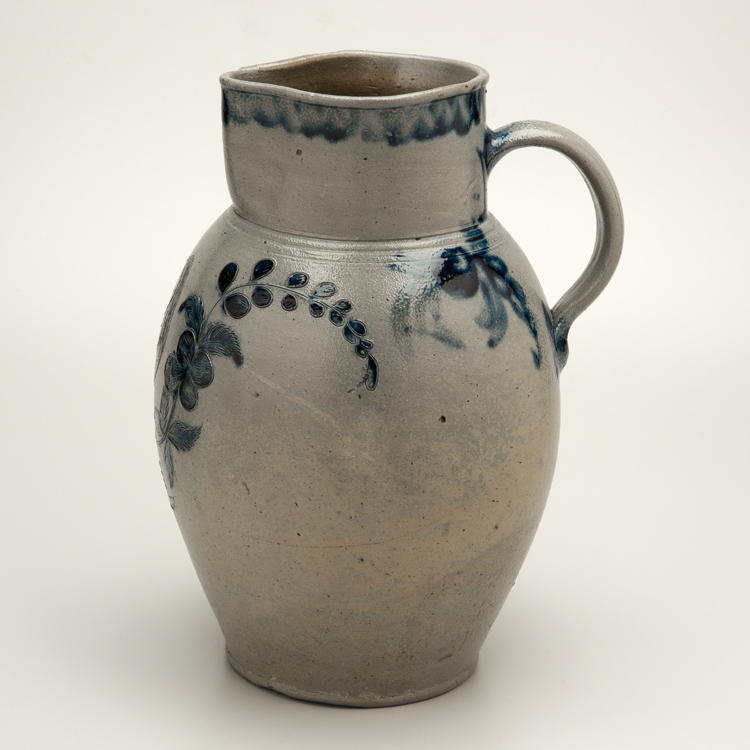
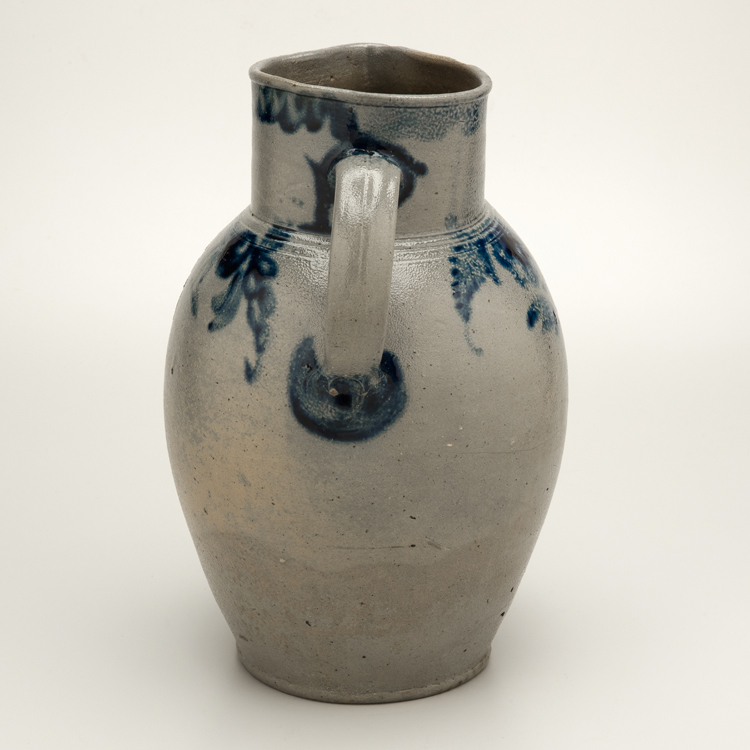
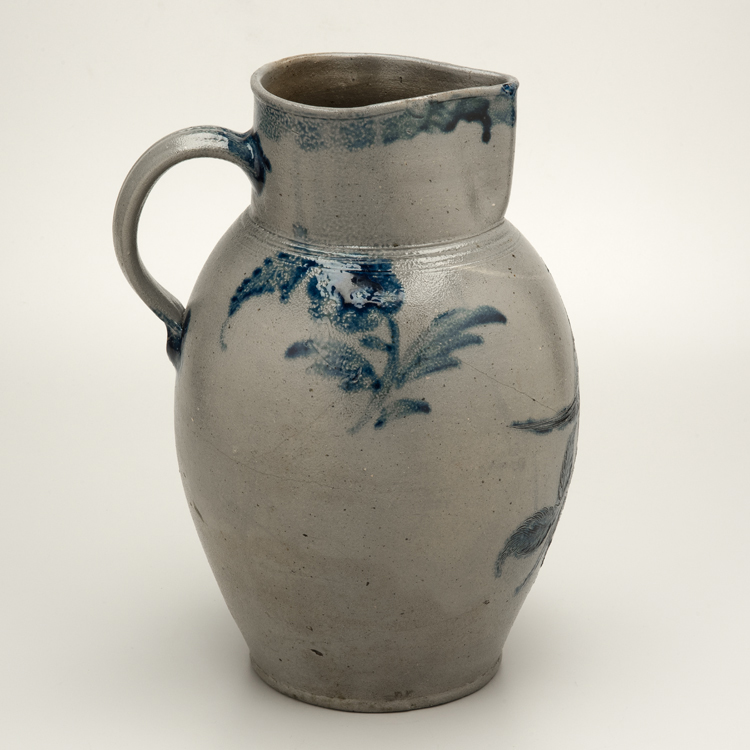
Pitcher
Salt glazing was a technique used by stoneware potters to create a glassy surface. When the pottery kiln reached over 2000 degrees Fahrenheit, salt was introduced to the kiln, creating a vapor. This vapor adhered to the silica in the clay, forming a glassy appearance on the pottery. Because of the high temperature at which the pottery was fired, the clay often became non-porous, or vitrified. This, combined with the salt glazing, meant that potters did not have to apply a glaze to the interior of the vessel. It could hold liquids and not seep, unlike earthenware storage vessels.
Zipp, Luke. “Henry Remmey & Son, Late of New York: A Rediscovery of a Master Potter’s Lost Years.” CERAMICS IN AMERICA (2004): 143-156.
Zipp, Luke. “Baltimore Stoneware.” ANTIQUES AND FINE ART (Summer 2006): 154-158.
Kille, John E. “Distinguishing Marks and Flowering Designs: Baltimore’s Utilitarian Stoneware Industry.” CERAMICS IN AMERICA (2005): 93-132.