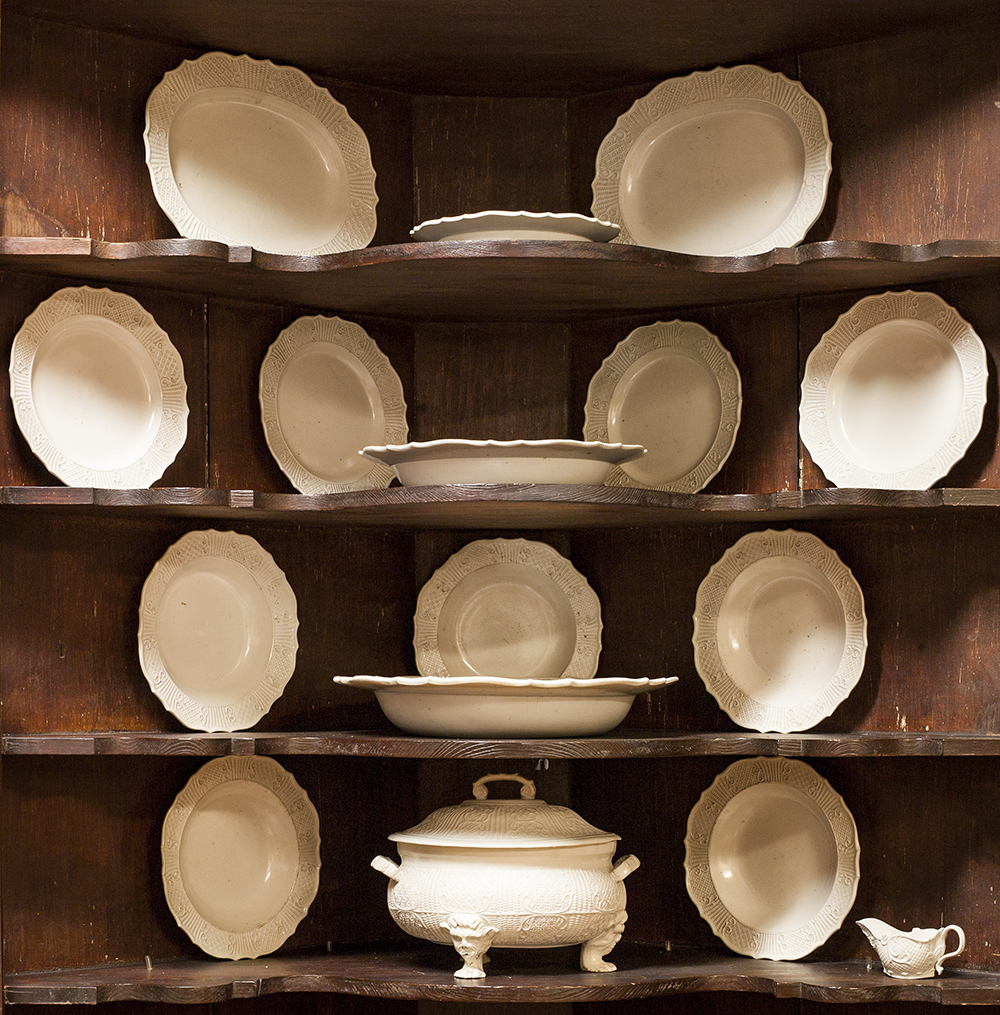
Partial dinner service
Place Made
Great Britain
Date Made
1760-1780
Medium
stoneware
Accession Number
1048.1 a-b
Description
DESCRIPTION: English salt-glazed stoneware tureen and cover, with three masked feet, and decorated with impressed diaper designs.
History
ENGLISH STONEWARE: Such white ware was first made by the Staffordshire potters at the close of the 17th century. The first period, before 1720, is marked by pressed and applied ornaments on thrown or turned vessels. From 1720 to 1740 the ware is identified by the addition of flint to the body, the work being fine and sharp. Colored enamels were employed for decorating the surface beginning about 1740. The period from 1760 to 1780 saw the introduction of metal dyes and moulds to form intricate designs on the surfaces of the stoneware pottery. Liquid clay, or slip, was poured into clay or plaster moulds in which the decorative designs had been engraved. This method ensured thinness of substance and delicacy and sharpness of relief. This gradually replaced the tin-enameled (delftware) pottery which chipped badly in use.
IMPORTATION: The first recorded appearance of this ware in America would seem to have been in 1724 in Boston. The burning of Corotoman, “King” Carter’s home in Virginia, in 1729 left fragments of second period (1720-1740) salt-glazed ware in its ruins. Moulded wares of the fourth period, such as are displayed here, were in general use throughout the eastern seaboard prior to the Revolutionary War, and fragments are found in excavations of this period. (Barber, Edwin Altee. Salt-Glazed Stoneware (New York: Doubleday, Page & Co., 1907).pp. 20-22; Hume, Ivor Noel. Here Lies Virginia. (New York: Alfred A. Knopf, 1963), pp. 137-8, 295-6.)
Credit Line
Purchase Fund