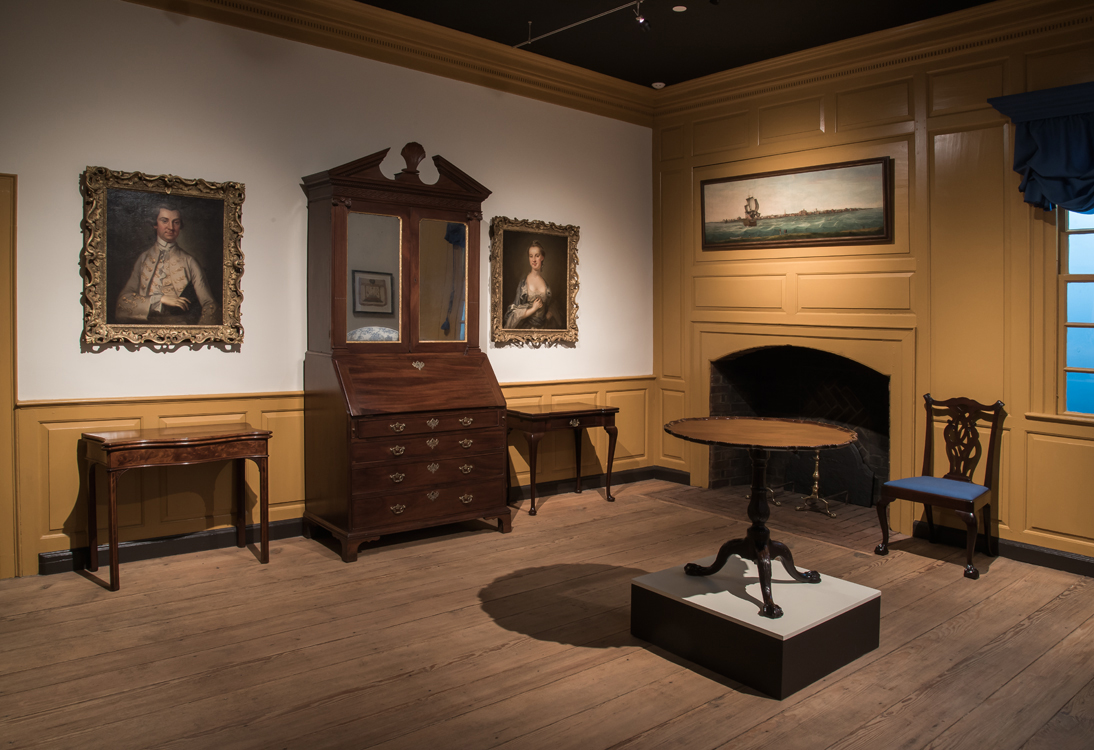
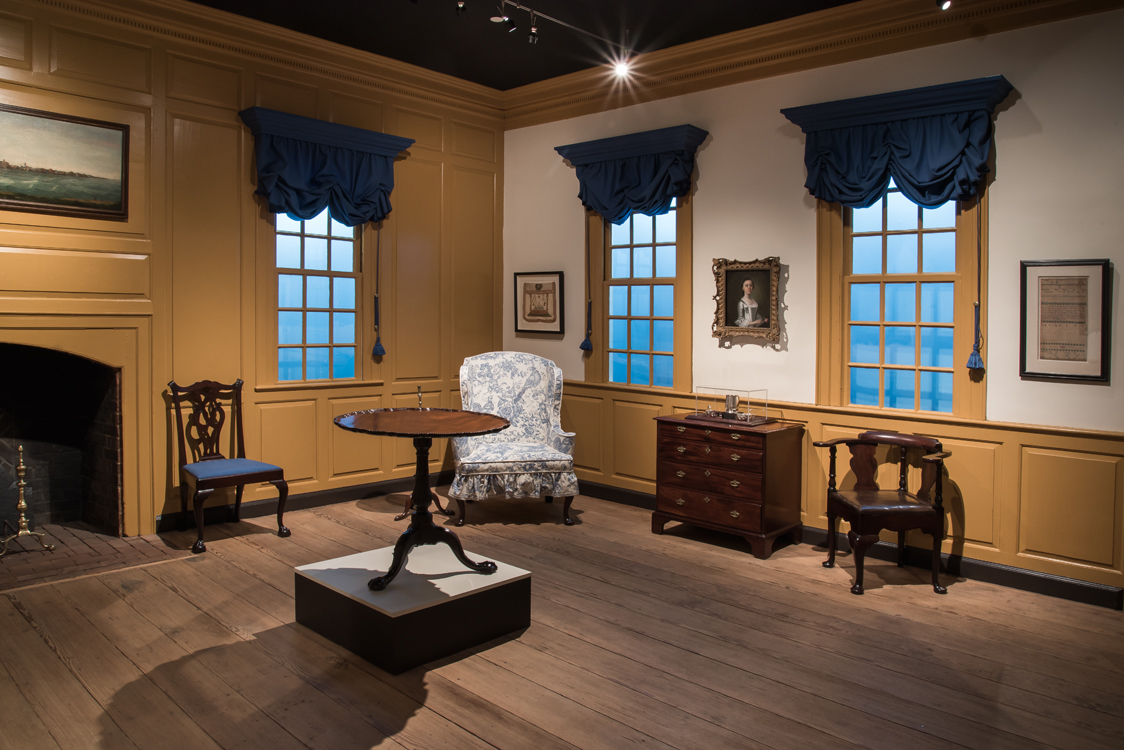
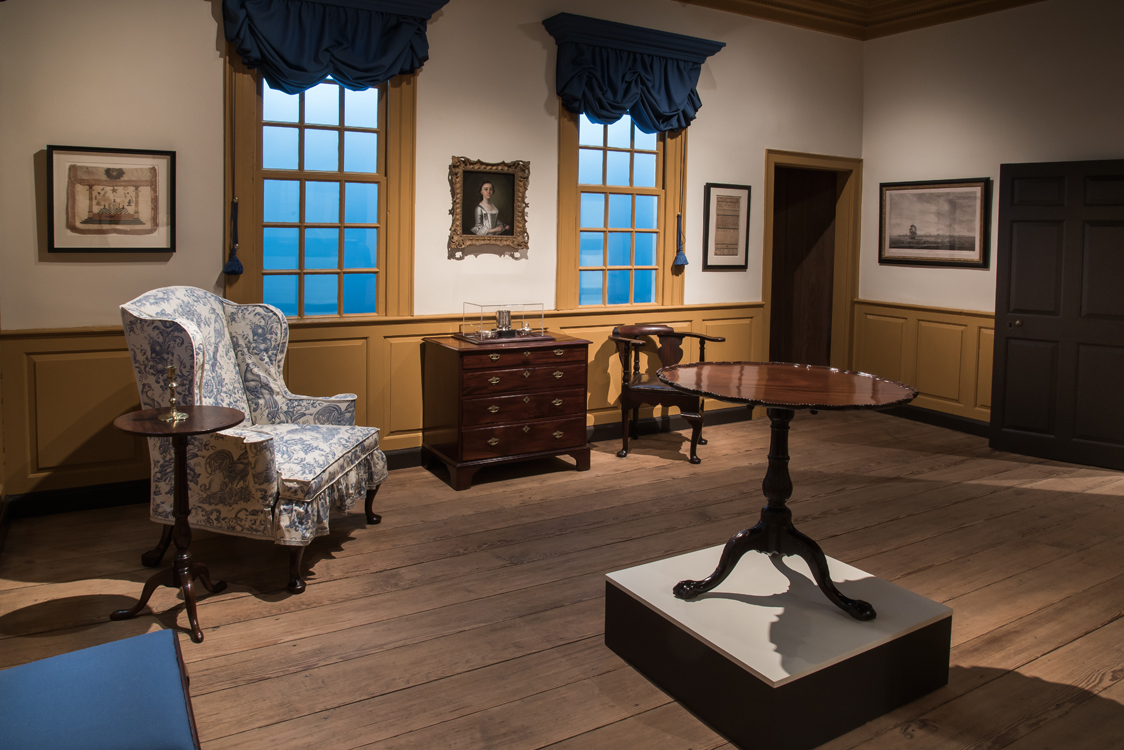
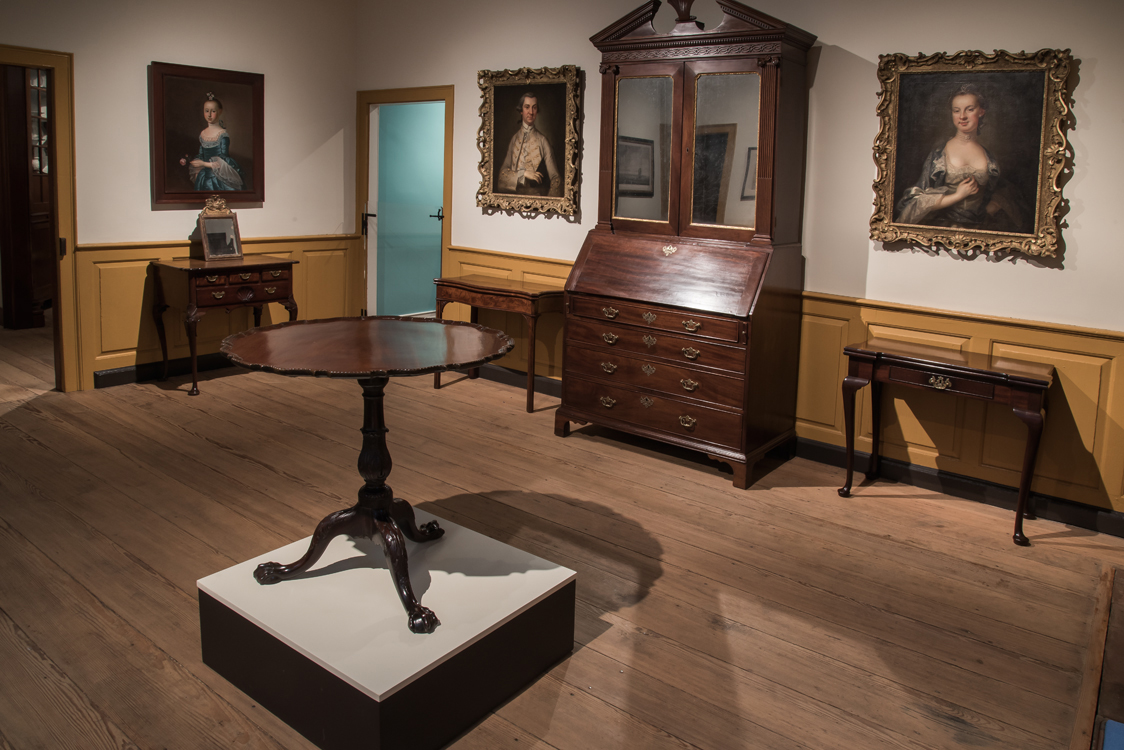
Parlor
The house was frame construction, five bays wide, and two-stories in height. The ground floor had four rooms and a center hall with staircase. The offset fireplace fed into a wide chimney stack that also served the other room on this side of the center hall. The chimneys were laid in Flemish bond.
George Little was a member of North Carolina’s colonial elite. His father was William Little (1691-1734), Chief Justice of North Carolina. His mother, Penelope (Gale) Little (1694-1734), was herself the daughter of another North Carolina Chief Justice, Christopher Gale (1679-1735). Both men profited handsomely in the waning years of proprietary rule.
George Little, the builder of this house, was primarily a planter, though he did serve in the American Revolution and as a justice of the peace for Hertford County. The 1790 census records that George Little, the builder of this house, owned thirty-six enslaved persons.
When the woodwork was installed in the museum in the 1960s it was painted a dark brown color based on the visible evidence at the time. In 2009 the paint analyst Susan Buck determined that the room’s original color had been a bright yellow ochre. We worked with Erika Sanchez-Goodwillie to mix handmade linseed oil paint based on Susan’s analysis. The closest commercial color match is Benjamin Moore 2160-20 “Turmeric.”
The house succumbed to arson in the 1960s.