Parlor
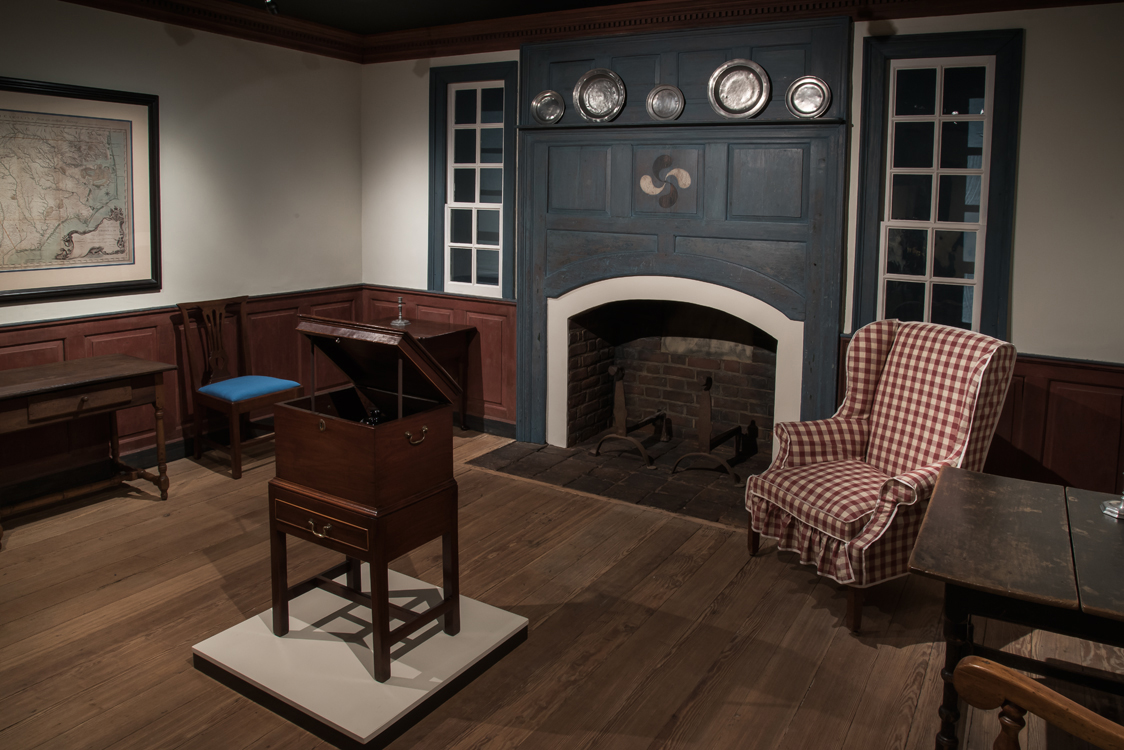
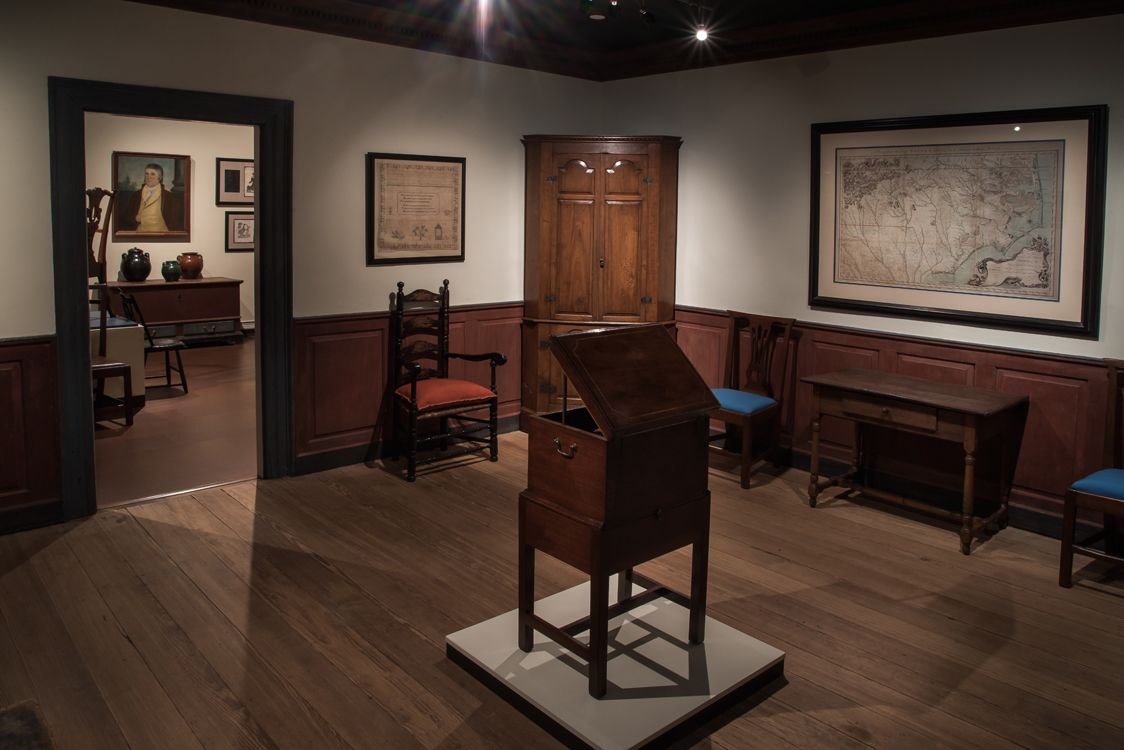
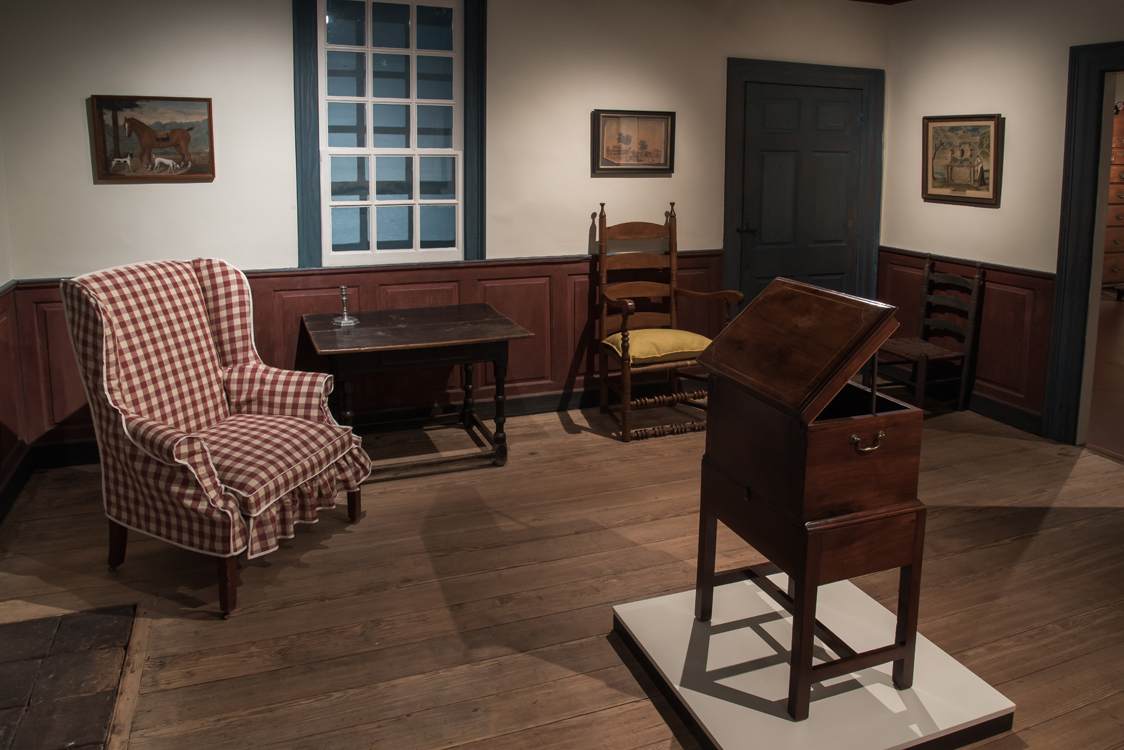
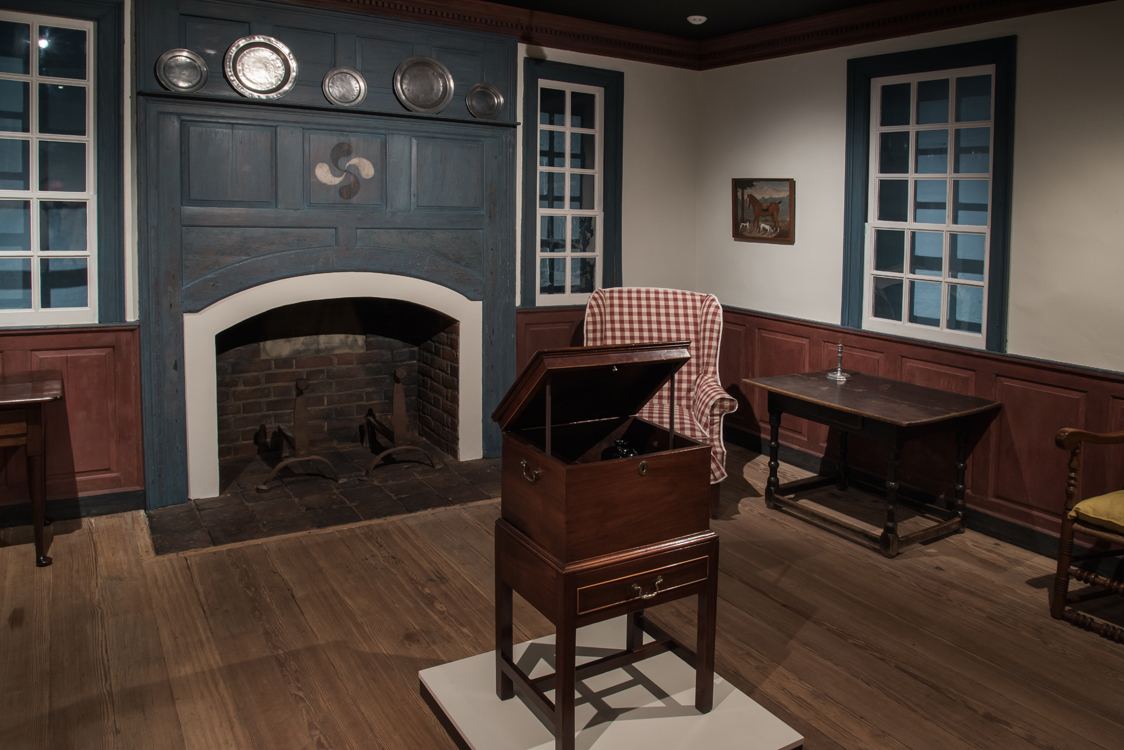
The house’s principal first-floor room, visitors entered this room directly from the outside. A gambrel roof provided the necessary headroom for a second story containing two additional chambers. The high quality of the parlor’s wainscot, cornice, and mantelpiece, were a reflection of Jones’s socioeconomic status as a successful, though not elite, planter.
At the time of his death in 1807 Jones owned ten slaves.
Frank L. Horton acquired this woodwork out of the house in 1958. The paint scheme in this room follows the evidence found at that time, including the decorative fylfot about the fireplace. In 2009 the paint analyst Susan Buck examined samples from this woodwork. Susan discovered that the room’s painted surfaces were left to weather and degrade repeatedly while in situ. When the room was installed at MESDA in the early 1960s it was essentially repainted. Buck determined that though the paint colors applied at that time were darker than they would have originally been, the overall decorative scheme, including the fylfot above the fireplace, were more or less reproduced faithfully.
Though the house was in poor condition at the time of Horton’s acquisition, as of 2018 it still stands.