Ladle
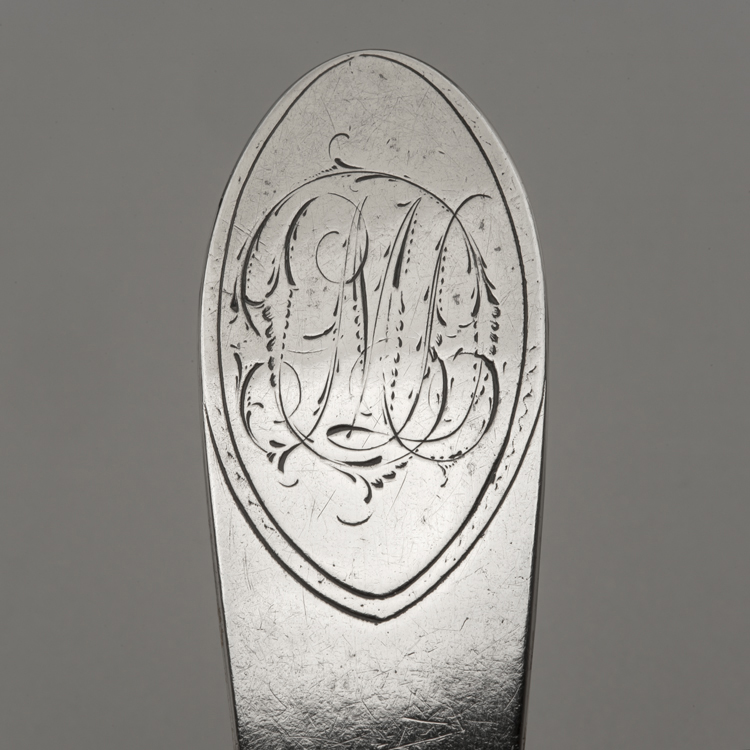
INSCRIPTION: Face of handle end engraved with an oval containing script initials “GML”.
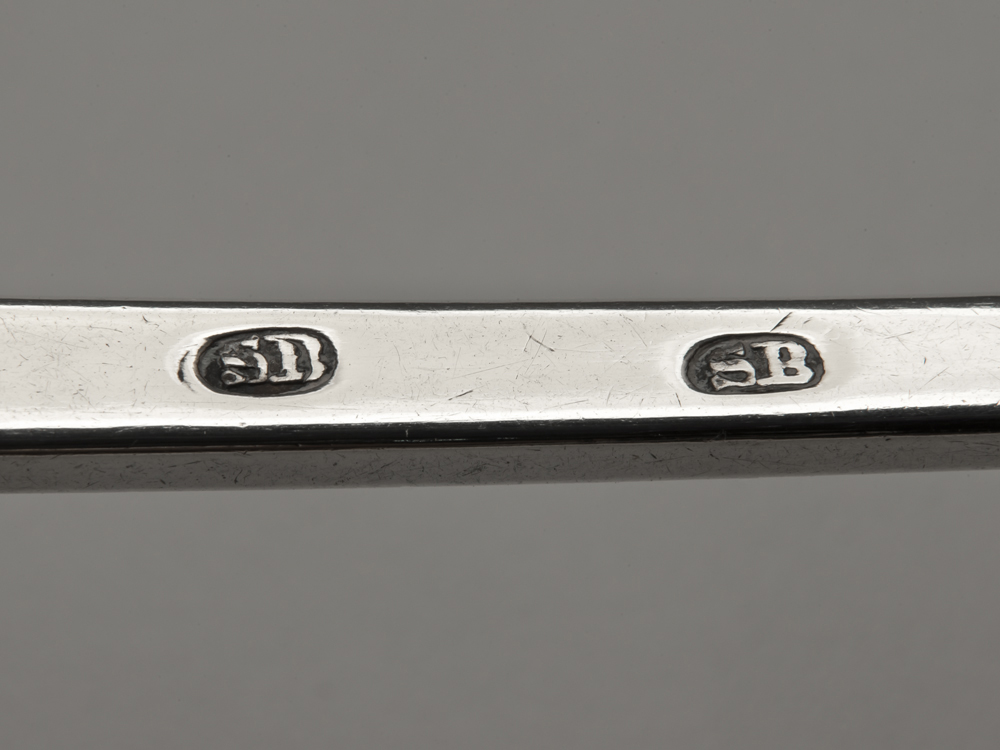
MARK: Struck twice on back of handle with oval intaglio “SB” mark.
MAKER: Standish Barry (1763-1844) worked in Baltimore as a silversmith from 1784 to 1810. Barry learned his trade as apprentice to David Evans of Baltimore. Barry first advertised himself as a watch- and clockmaker and engraver in 1784, but the next year he announced his work in gold and silver and partnership with Joseph Rice. This partnership dissolved in 1787, but Barry remained active in silver work until 1810 when he is listed as a merchant and from 1814 to 1823 as a grocer or sugar refiner. He had a long military career in the Maryland militia, earning the rank/title of colonel, and also served time as sheriff of Baltimore County. Barry is further credited with coining a three pence piece in 1790, which was unauthorized but circulated locally for some time. See J. Hall Pleasants and Howard Sill, “Maryland Silversmiths, 1715-1830” (Baltimore: Lord Baltimore Press, 1930): 94-98.
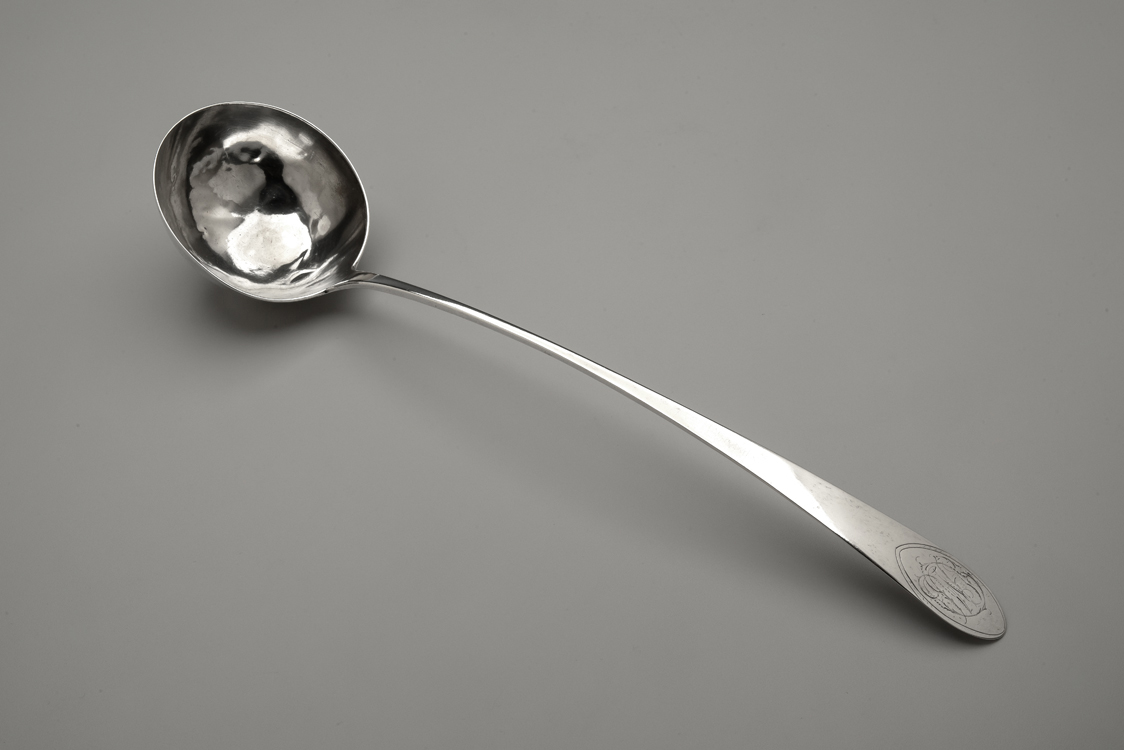
FORM: Large ladles were popular for serving punch. Most had plain hemispherical bowls such as this example, though a few had scalloped or shaped bowls. Bright-cut engraving is a technique normally associated with neoclassical silver.