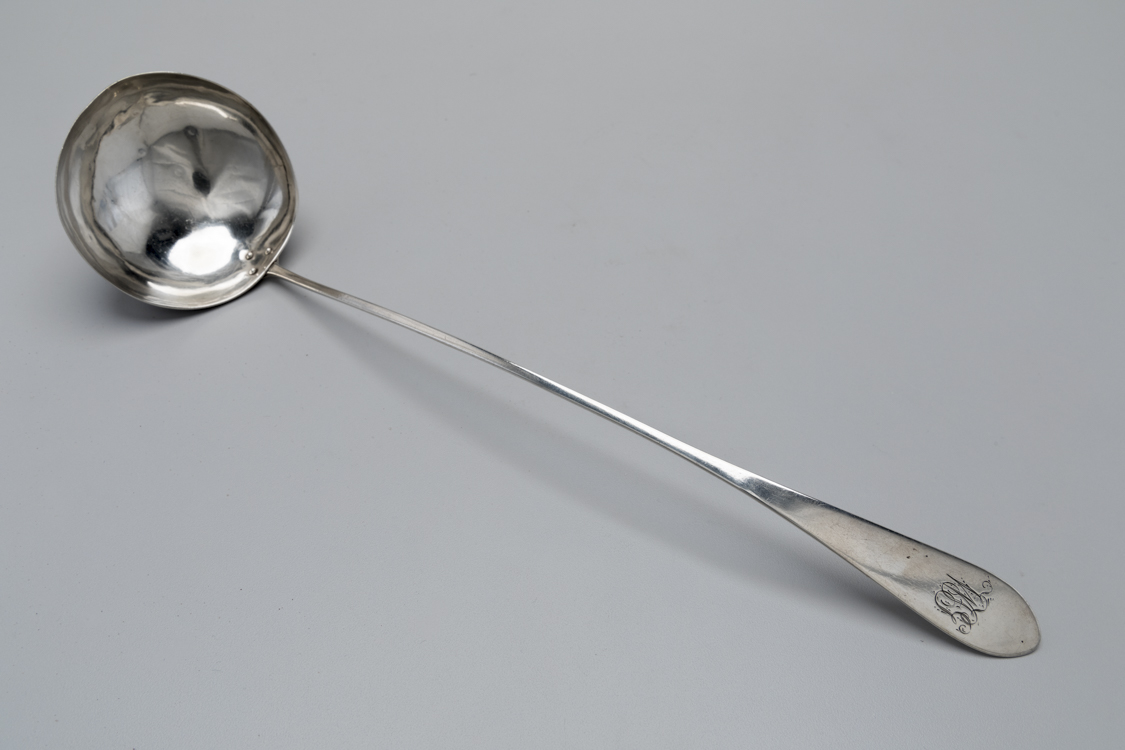
Ladle
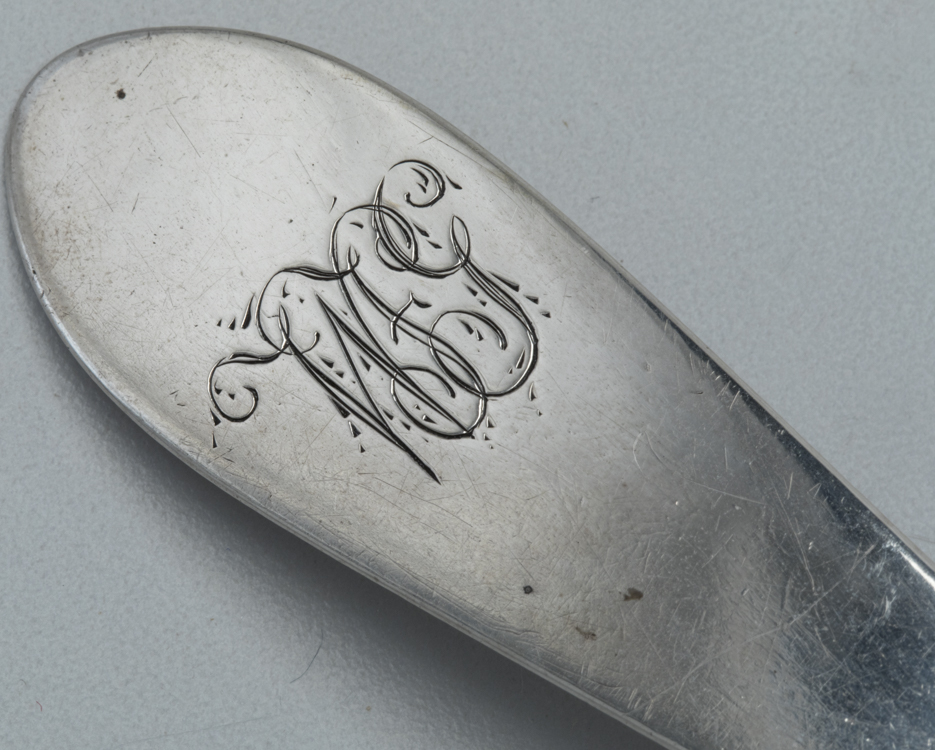
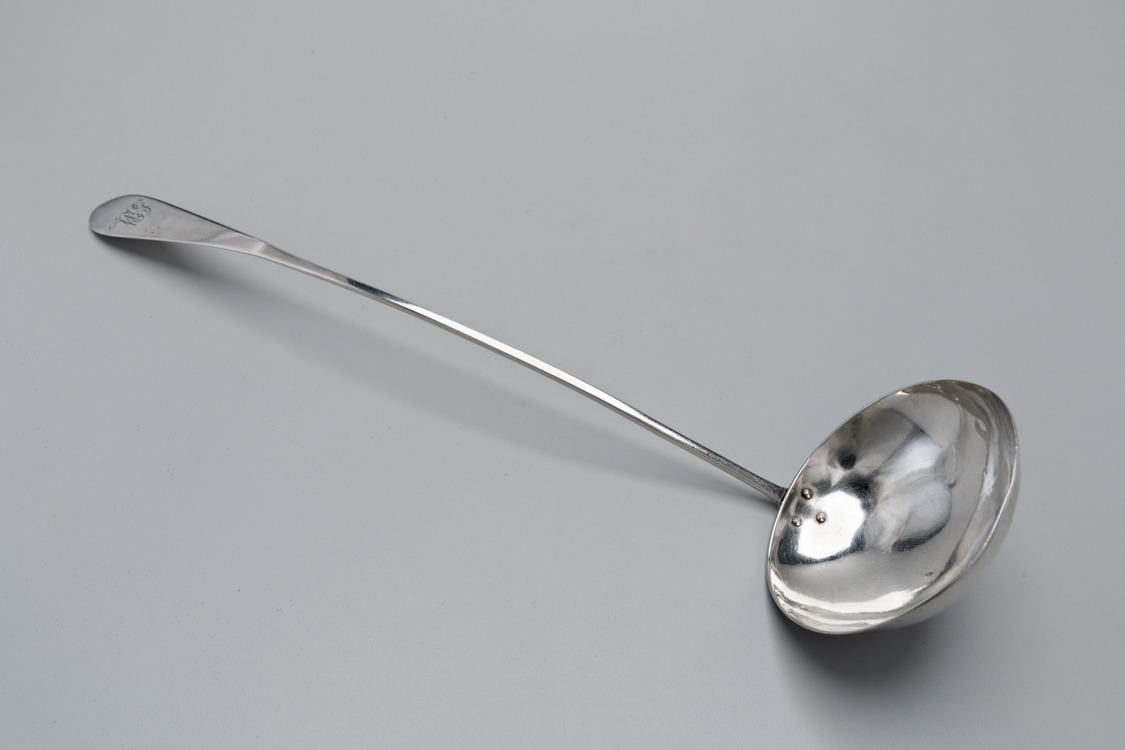
INSCRIPTION: Engraved on face of handle with the initials “WFG” in script letters.
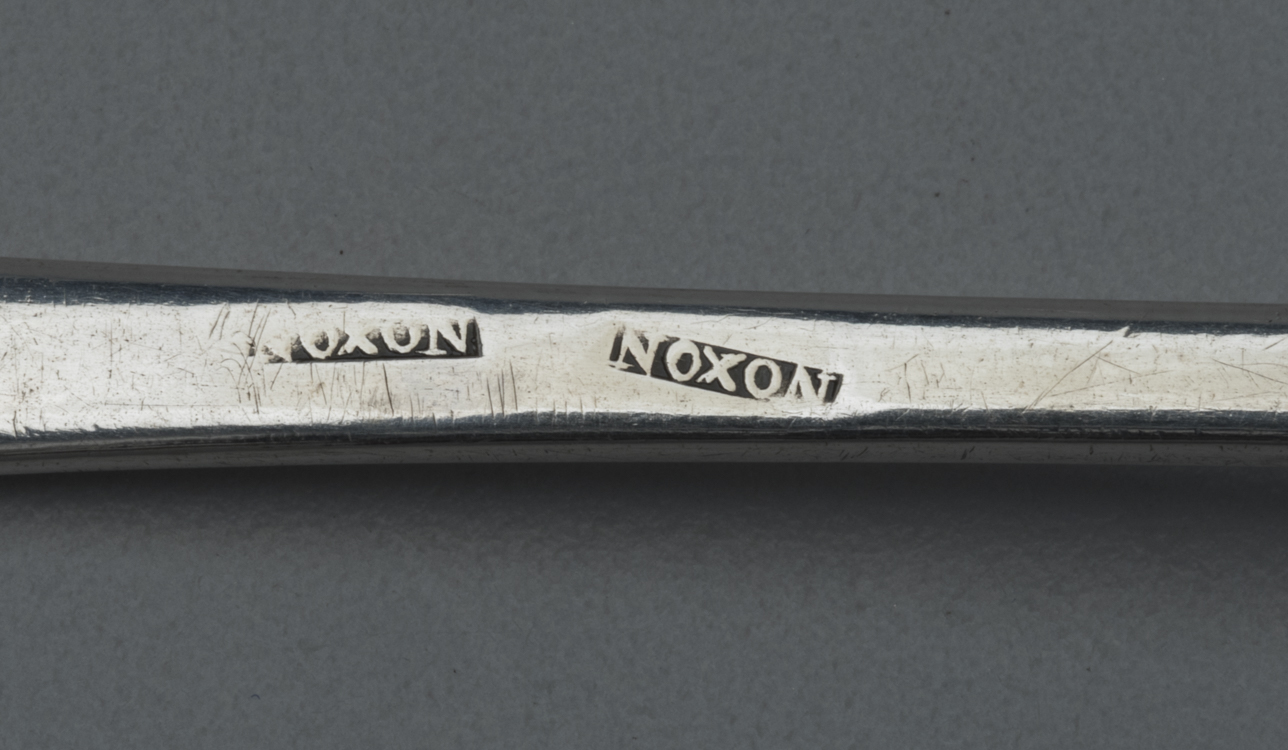
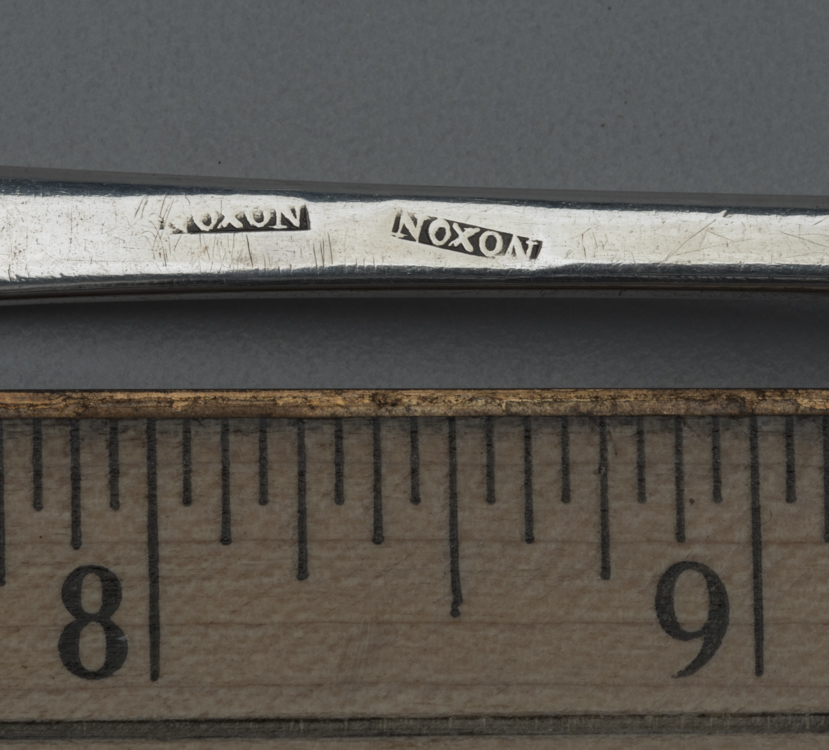
MARK: Struck twice on underside of handle with an intaglio “NOXON” mark in a rectangular reserve.
MAKER: Martin Noxon (1780-1814) was born in New York State in either Dutchess or Ontario counties. He most likely served an apprenticeship under silversmith Peter Van Brommel in Poughkeepsie, New York. Noxon moved to North Carolina sometime after 1802 and before February 1804, when he married Hannah Carpenter in Edenton, Chowan Co., North Carolina. He advertised in the 26 February 1806 Edenton Gazette, listing himself as a gold and silversmith selling such wares as “…Gold ear and finger Rings…Lockets and breast Pins, silver Table and Tea Spoons, Sugar Tongs, Salt Spoons, Thimbles, Scissar Chains…&c… .” He also sold and repaired watches and in 1809 advertised that he had “furnished himself with everything necessary for Repairing and Touching the Mariner’s Compass” (Edenton Gazette, 21 April 1809). The following year he took on 12-year-old Bonaparte Allen as a silversmith’s apprentice. A year later, Noxon further diversified, employing “a man at the Gun-Smith Business, who is a professed workman” (Edenton Gazette, 15 February 1811). In August 1814 Noxon appeared on the muster
rolls of the detached militia from Chowan County under Captain James Iredell. His military service was not long, as Noxon’s death was reported in the 9 Nov 1814 issue of the “Republican Herald” of Poughkeepsie, New York. See Michael L. Marshall, “Martin Noxon: Silversmith, Jeweler, Clock and Watchmaker of
Edenton, North Carolina,” Edenton Historical Commission, 2019; available online: https://ehcnc.org/wp-content/uploads/2019/01/Noxon-Silversmith.pdf (accessed 20 February 2023) and George Barton Cutten and Mary Reynolds Peacock, “Silversmiths of North Carolina, 1696-1860”, 2nd rev. ed. (Raleigh: North Carolina Department of Cultural Resources, Division of Archives and History, 1984).
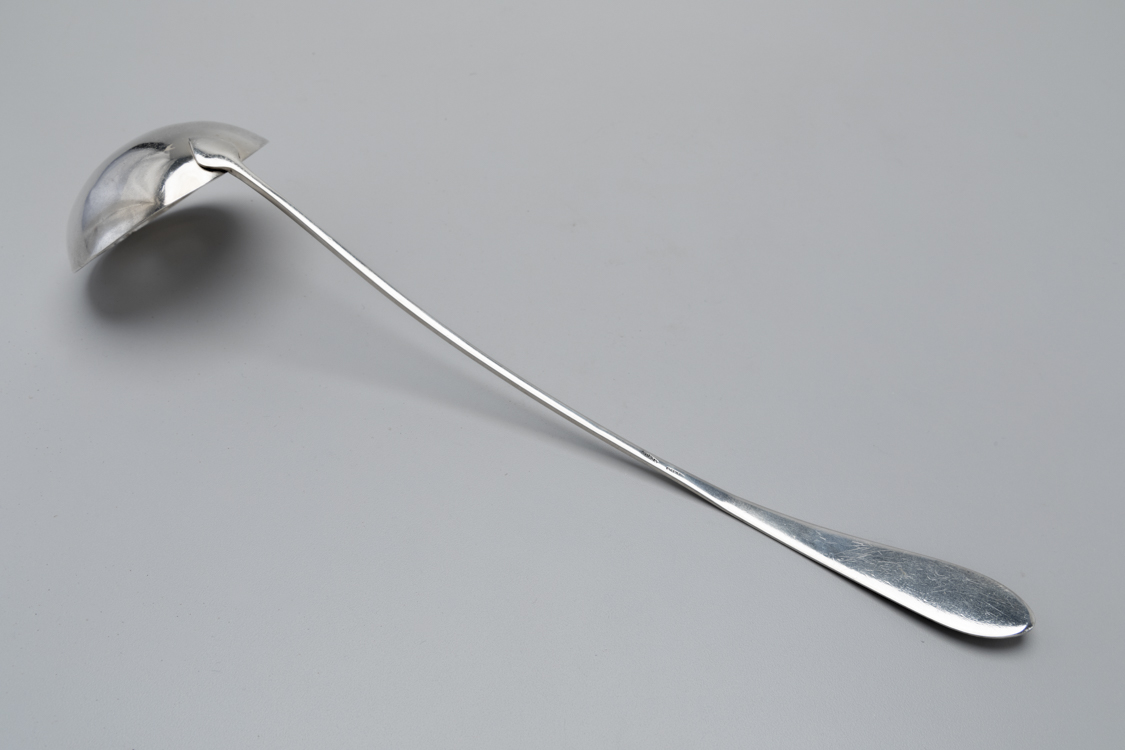
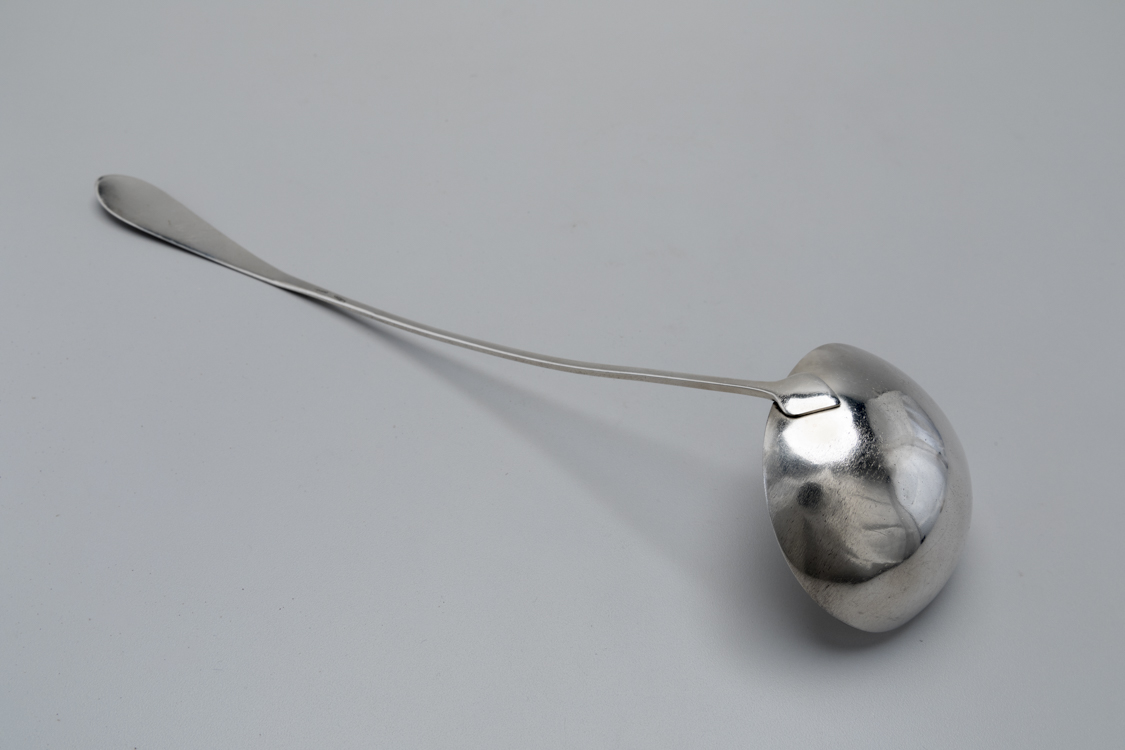
FORM: Large silver ladles were popular for serving punch or soup. Most had plain hemispherical bowls, others were round, and a few had scalloped or shaped bowls. Smaller ladles of silver were most often designated for serving sauces and gravy.