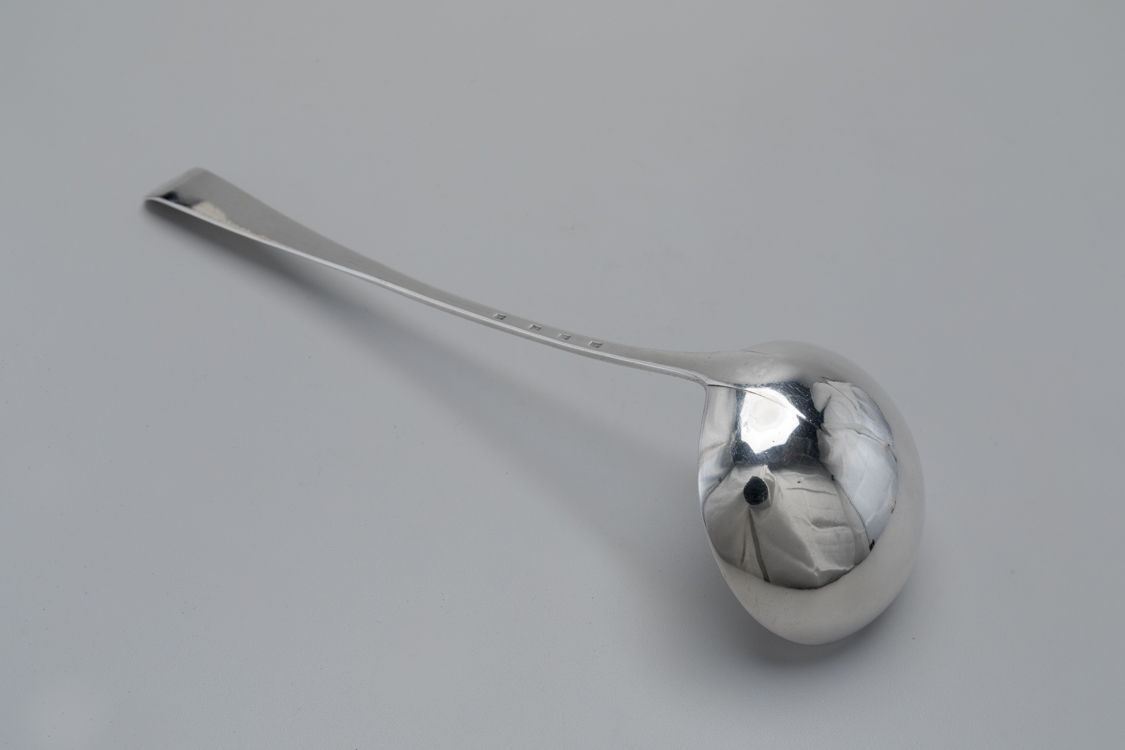
Ladle
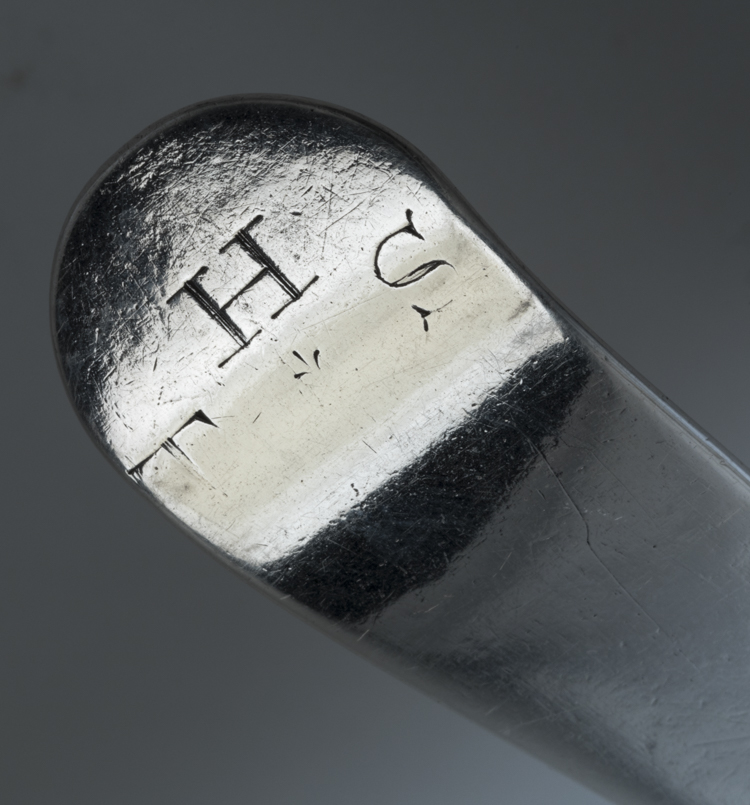
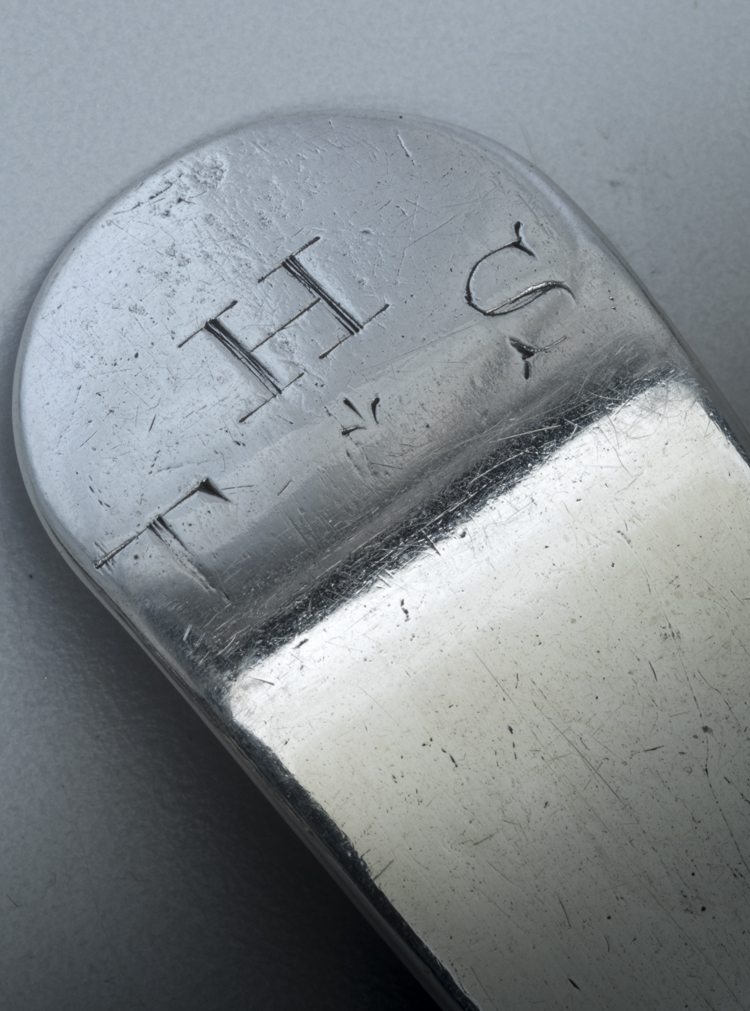
INSCRIPTION: Engraved on reverse of handle with an “H” over “T *S” for Thurmer Hoggard (1728-1779) and his wife Susannah Hancock (1730-1773) of Broad Creek Plantation, Princess Anne County, VA.
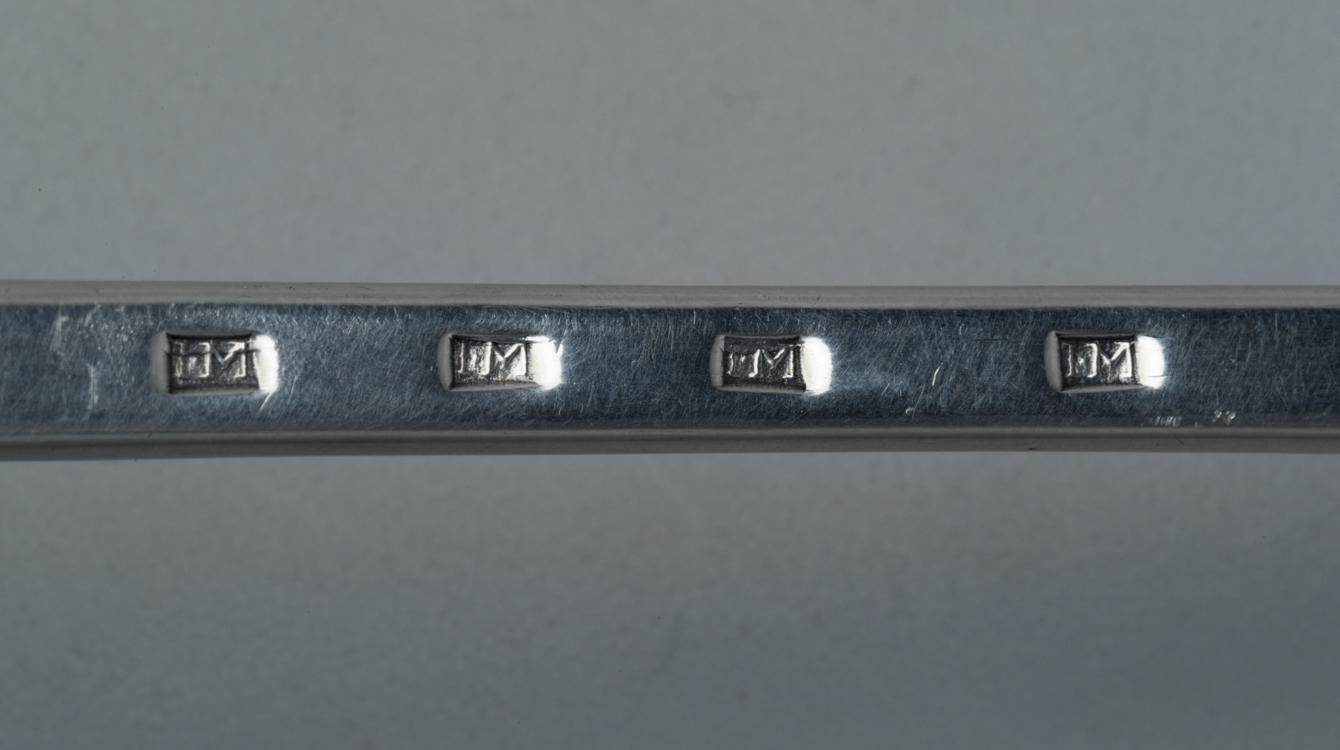
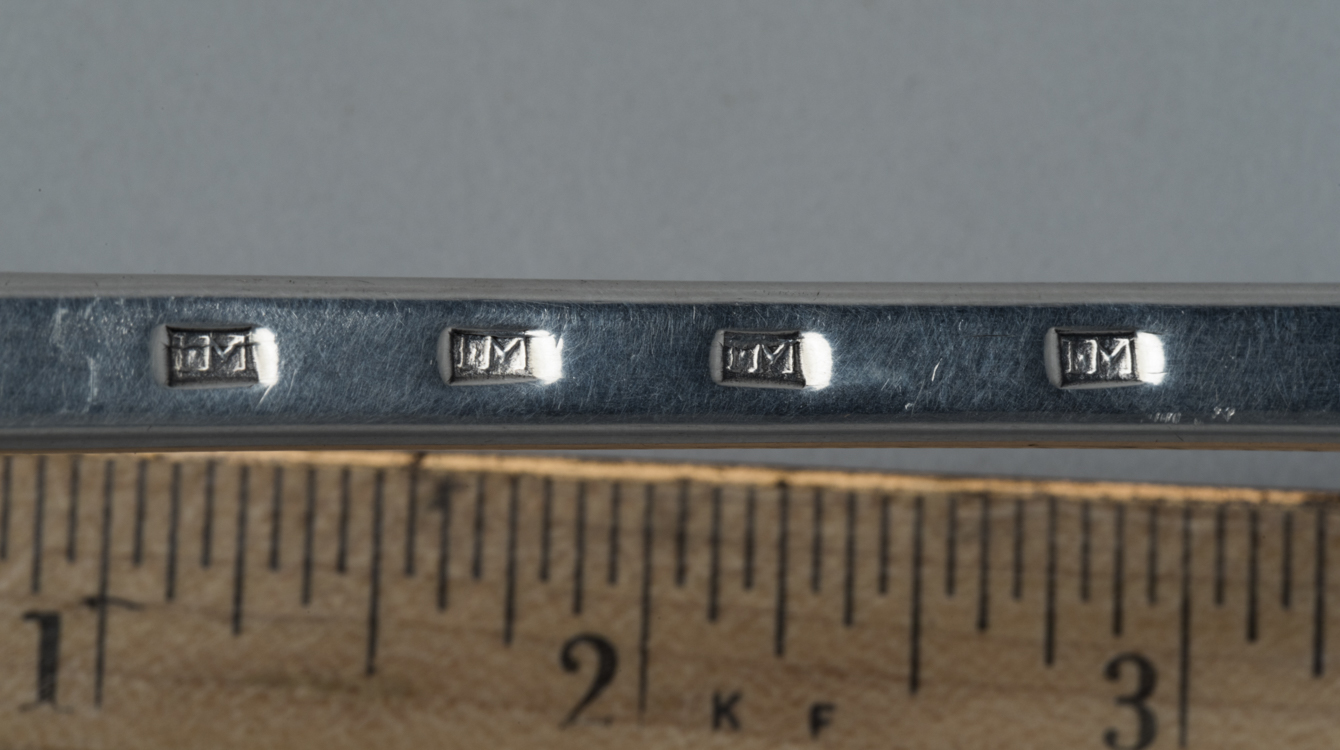
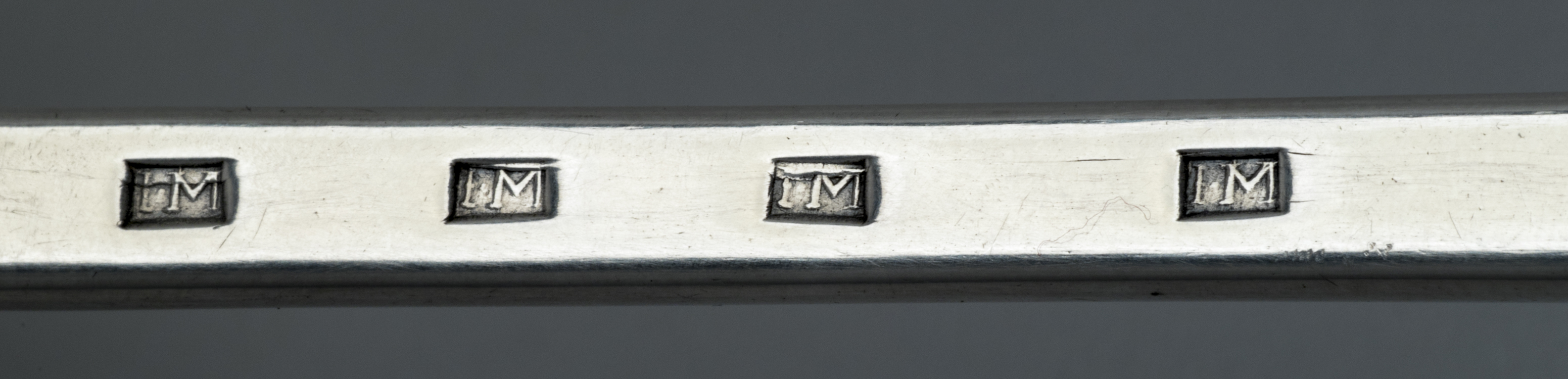
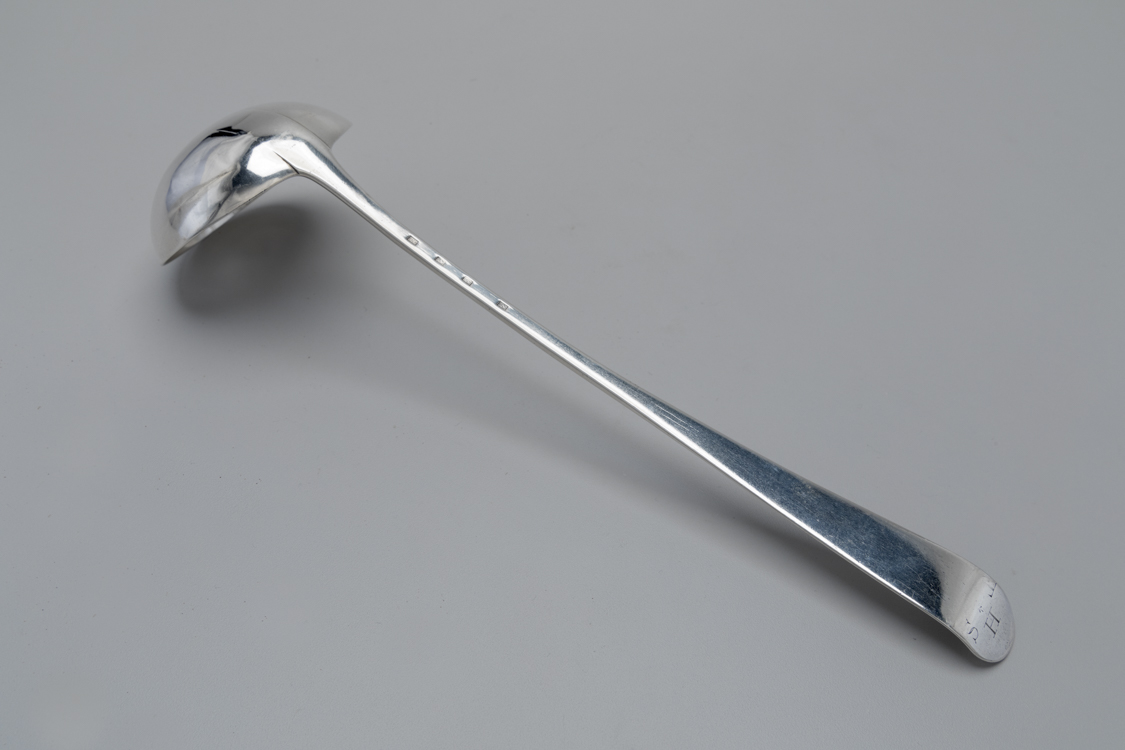
MARK: Struck four times on reverse of handle with an intaglio “I • M” mark in a rectangular reserve.
MAKER: The silversmith James Murphree (c.1730-1782) worked in Norfolk, Virginia from at least 1752, when he most likely completed his apprenticeship under John Jones, until relocating to nearby Nansemond County, Virginia after the British burned Norfolk in December 1775. Five years earlier, in 1770, Murphree took on nine-year-old apprentice James Gaskins (1761-1827), who would become a noted Norfolk silversmith after the Revolution. After evacuating Norfolk in 1775, Murphree is recorded living in Nansemond County for three years but does not appear to working as a silversmith, having married the well-to-do widow Susannah Archer Simms. He surfaces again in documents in 1781 when he and Susannah were living just east of Norfolk in Southampton County and Murphree was granted a license to operate an ordinary in Broad Water. He died a year later, probably a month or two after writing his will in April 1782. An inventory of his estate, recorded on 11 February 1783, listed eleven slaves, household furniture including five beds, and some personal silver items but no silversmithing tools. His parents and birth date are unknown, but he may have been the son of the James Murphree who owned 160 acres of land in Nansemond County in 1704. If the silversmith James Murphree completed his apprenticeship under Jones in 1752 at the traditional age of 21 years, he would have been born about 1731, making him about 50 years old at the time of death. See Catherine B. Hollan, “Virginia Silversmiths, Jewelers, Watch- and Clockmakers, 1607-1860: Their Lives and Marks” (McLean, VA: Hollan Press, 2010). See also Christine D. Minter, “James Murphree: Virginia Silversmith,” Journal of Early Southern Decorative Arts, Vol. III, No. 1 (May 1977): 1-10.
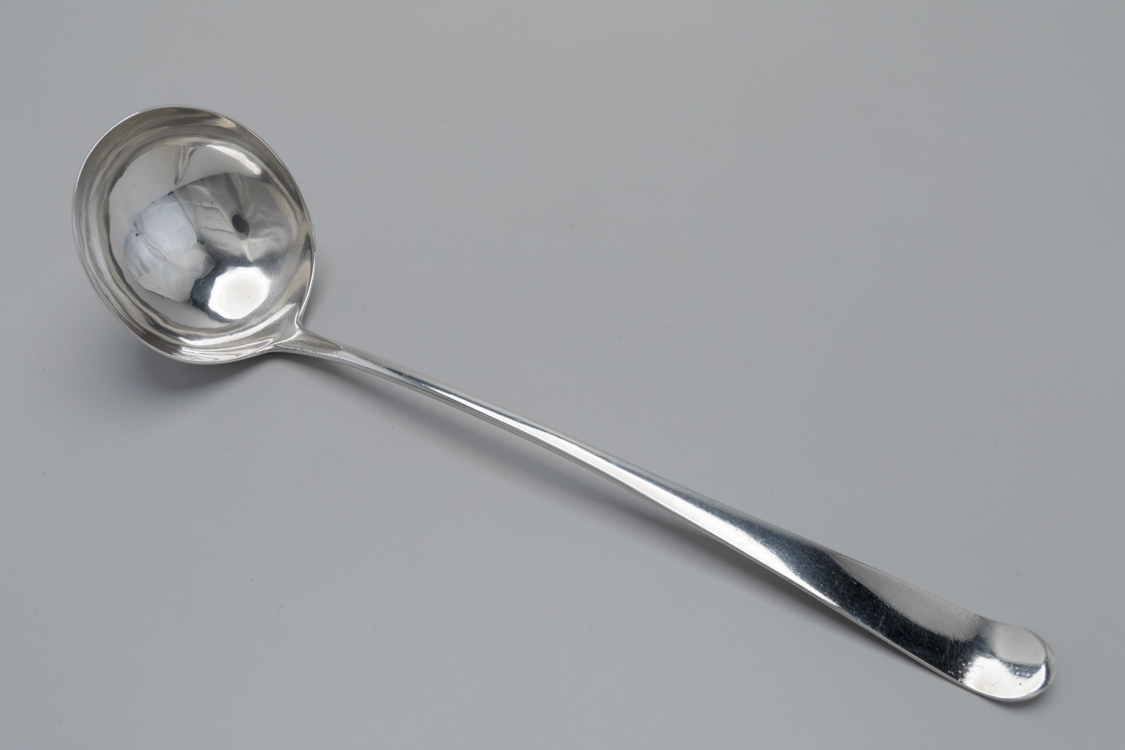
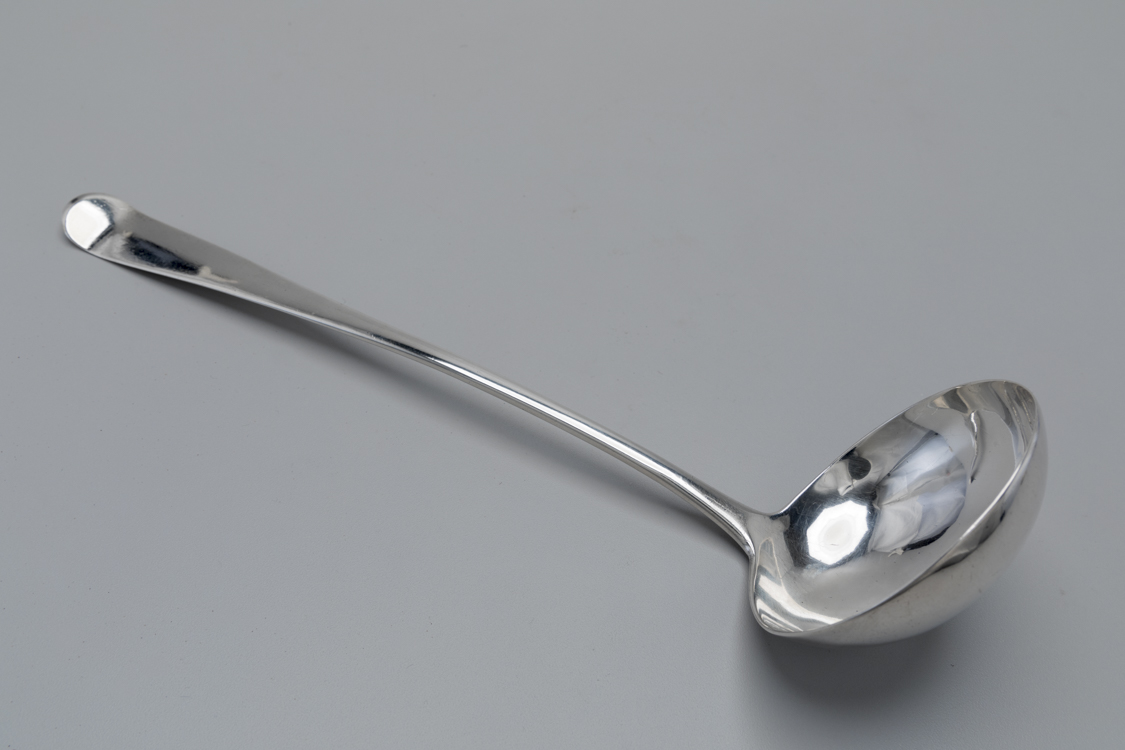
FORM: Large silver ladles were popular for serving punch or soup. Most had plain hemispherical bowls, others were round, and a few had scalloped or shaped bowls. Smaller ladles of silver were most often designated for serving sauces and gravy.