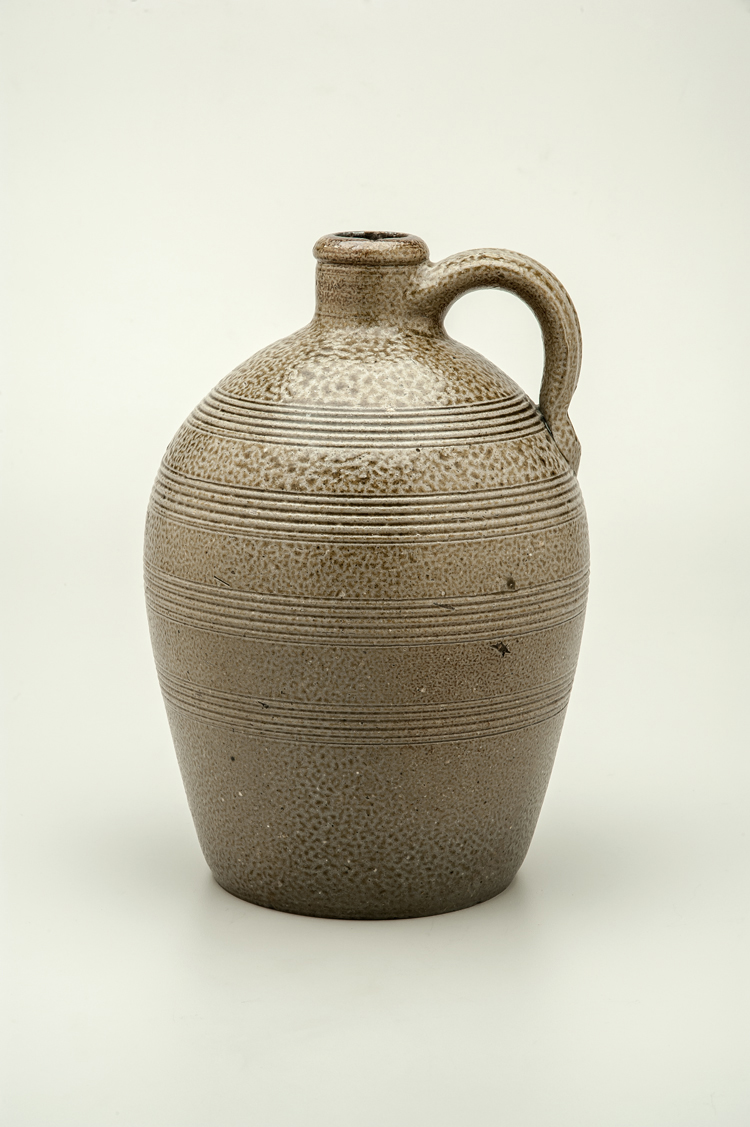
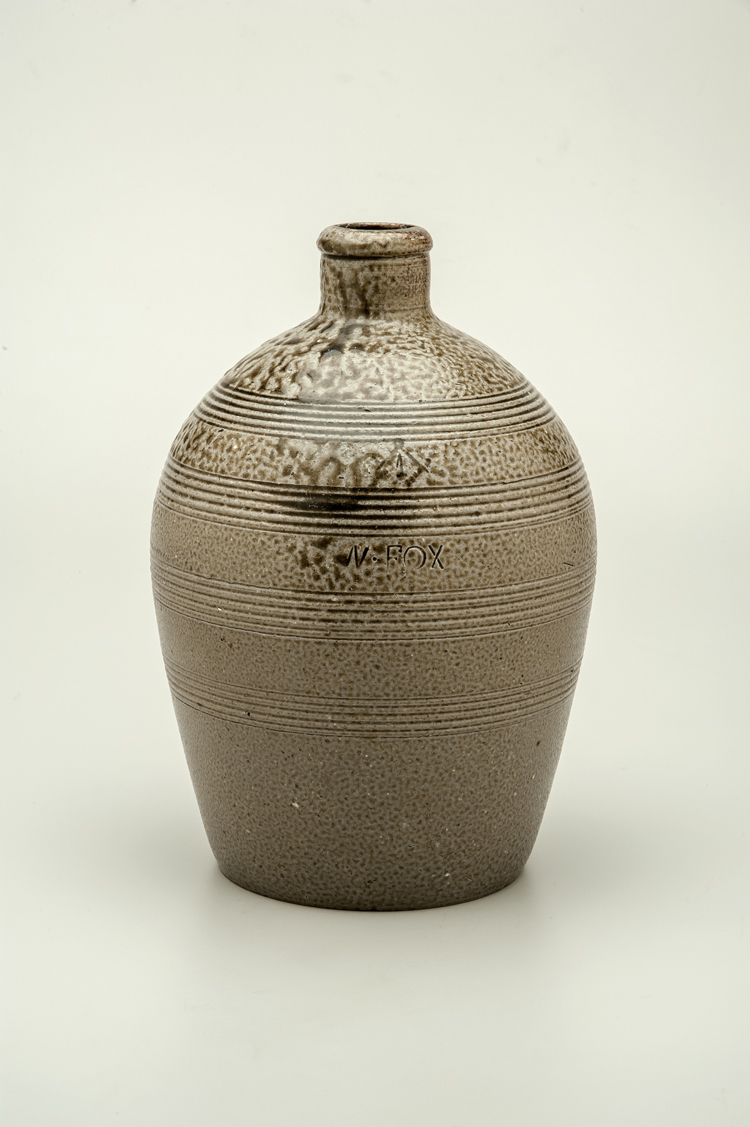
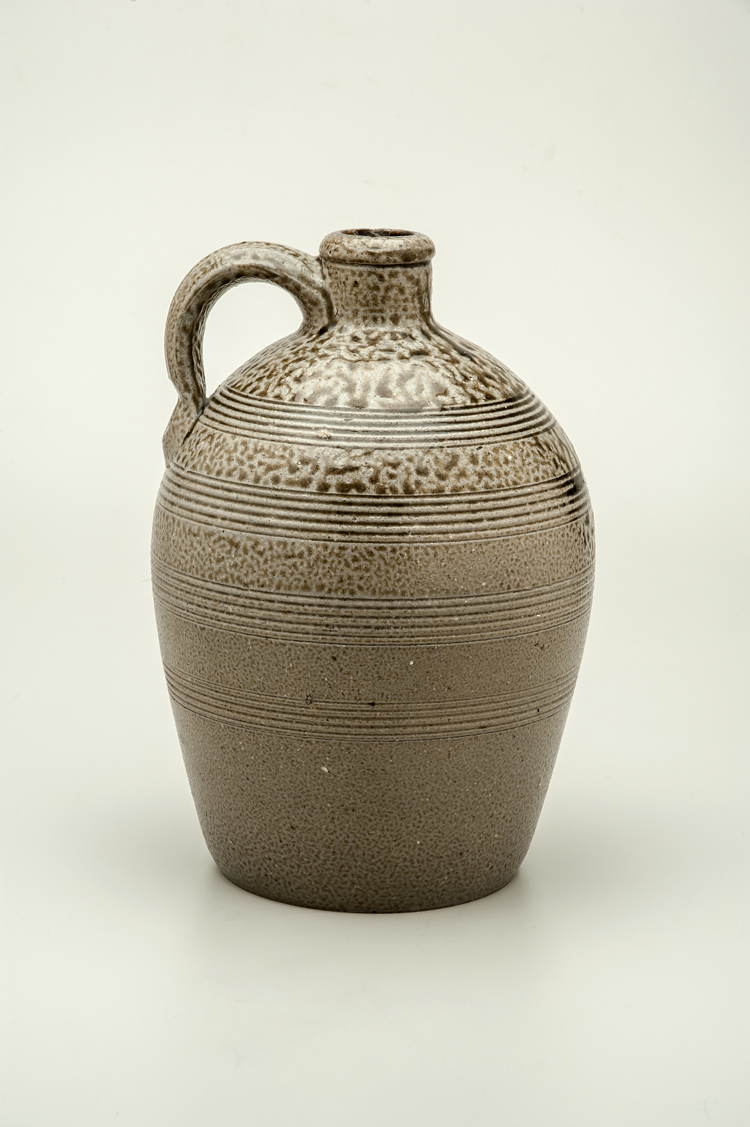
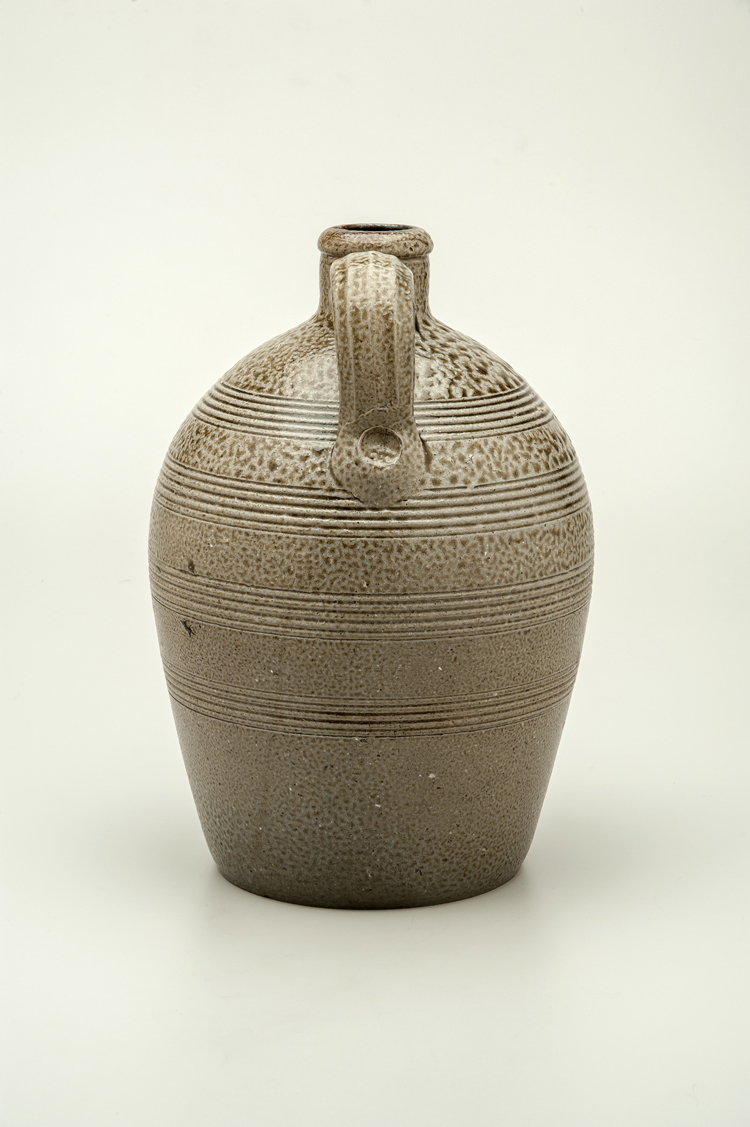
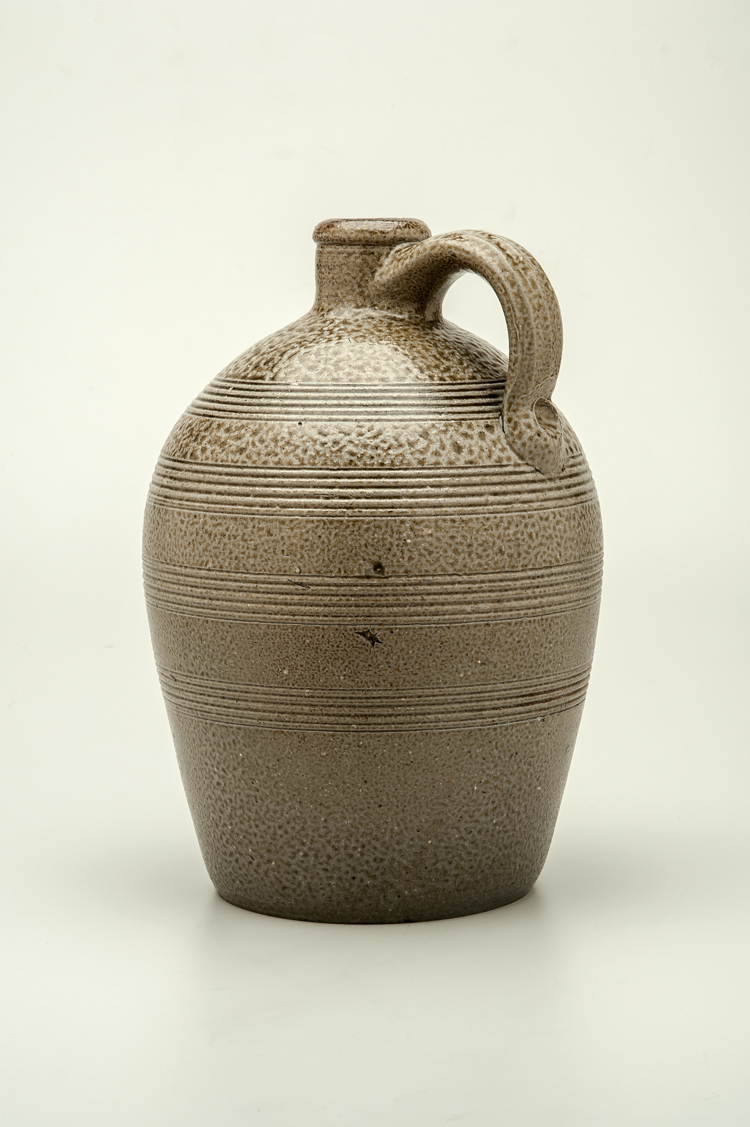
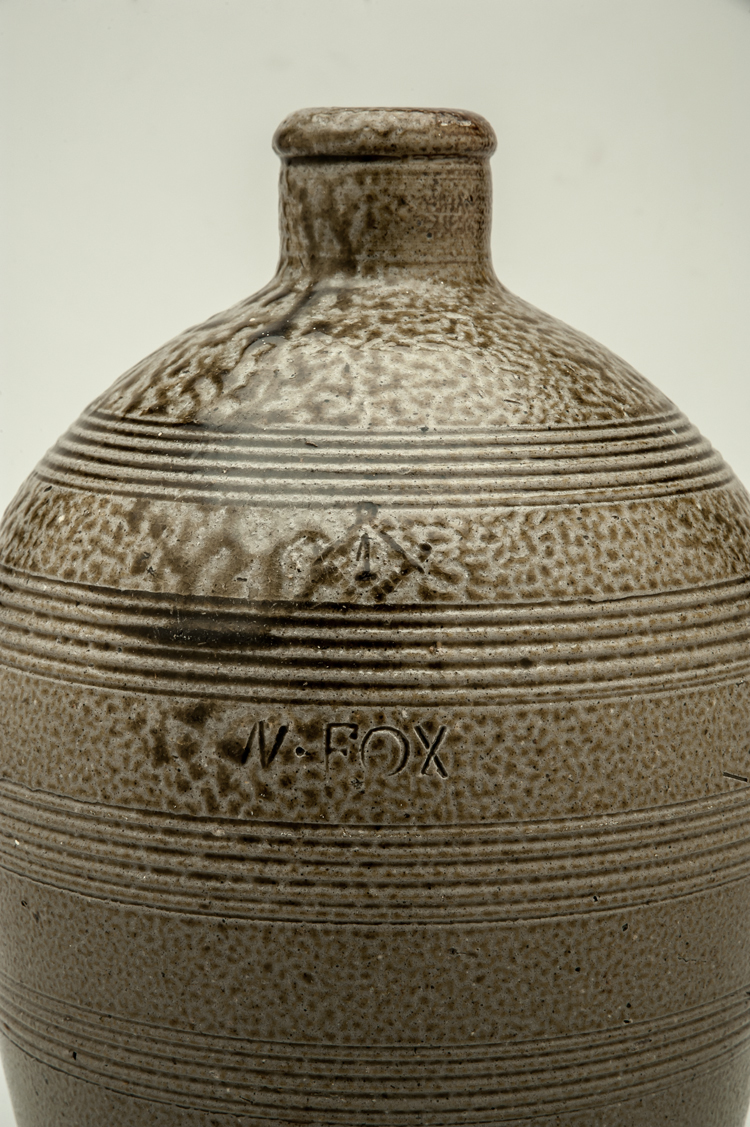
Jug
Salt glazing was a technique used by stoneware potters to create a glassy surface. When the pottery kiln reached over 2000 degrees Fahrenheit, salt was introduced into the kiln, creating a vapor. This vapor adhered to the silica in the clay, forming a glassy appearance on the pottery. Because of the the high temperature at which the pottery was fired, the clay often became non-porous, or vitrified. This, combined with the salt glazing, meant that potters did not have to apply a glaze to the interior of the vessel. It could hold liquids and not seep, unlike earthenware storage vessels.
MAKER: Nicholas Fox (1797-1858) and his family migrated from Bucks County, Pennsylvania, to Chatham County, North Carolina, in the late 18th century. Fox and other family members became established potters in the area and trained other potters, most notably Nathaniel H. Dixon and John and Henry Vestal. Through his sister’s marriage to the potter Anderson Craven of Randolph County, Fox was also closely connected to the Cravens, another of Piedmont North Carolina’s most prominent potting families.
Zug, Charles G. Turners and Burners: The Folk Potters of North Carolina. Chapel Hill: UNC Press, 1986.