Jar
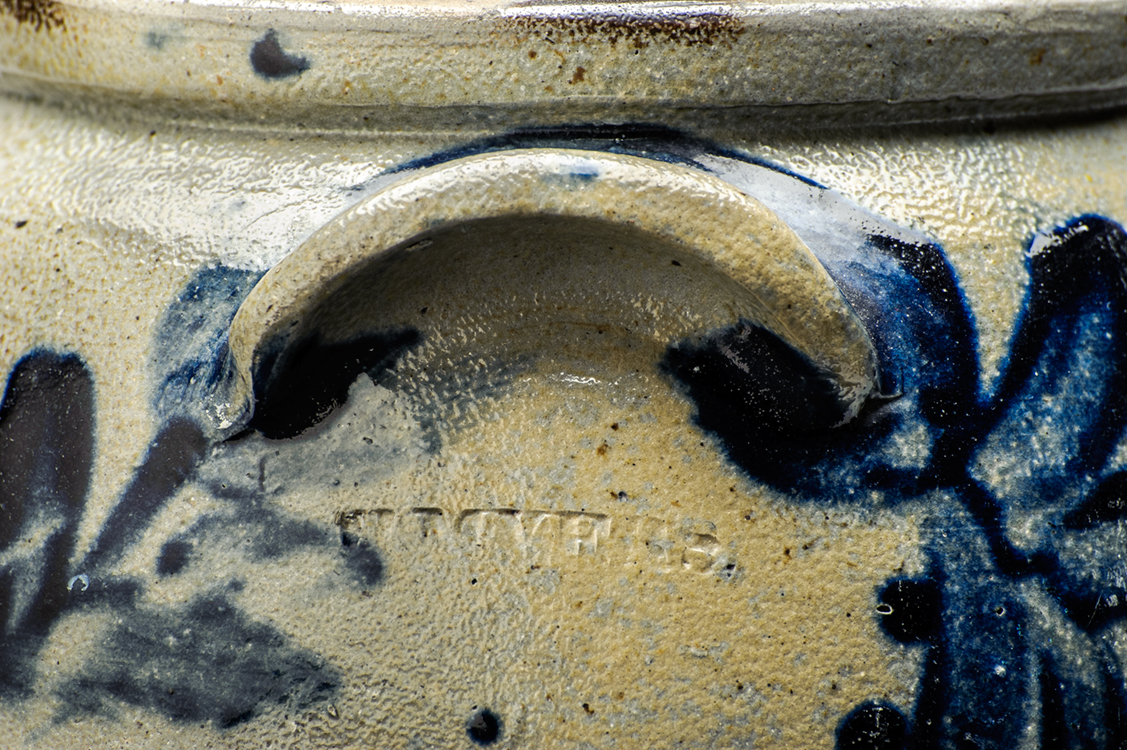
Salt glazing is a technique used by stoneware potters to create the glassy surface. When the pottery kiln reached over 2000 degrees Fahrenheit, salt was introduced to the kiln, creating a vapor. This vapor adhered to the silica in the clay, forming a glass. From the high temperature, the clay is often non-porous, or vitrified. This, combined with the salt glazing, allowed the potters to not have to apply a glaze to the interior of the vessel. It could hold liquids and not seep, unlike earthenware storage vessels.
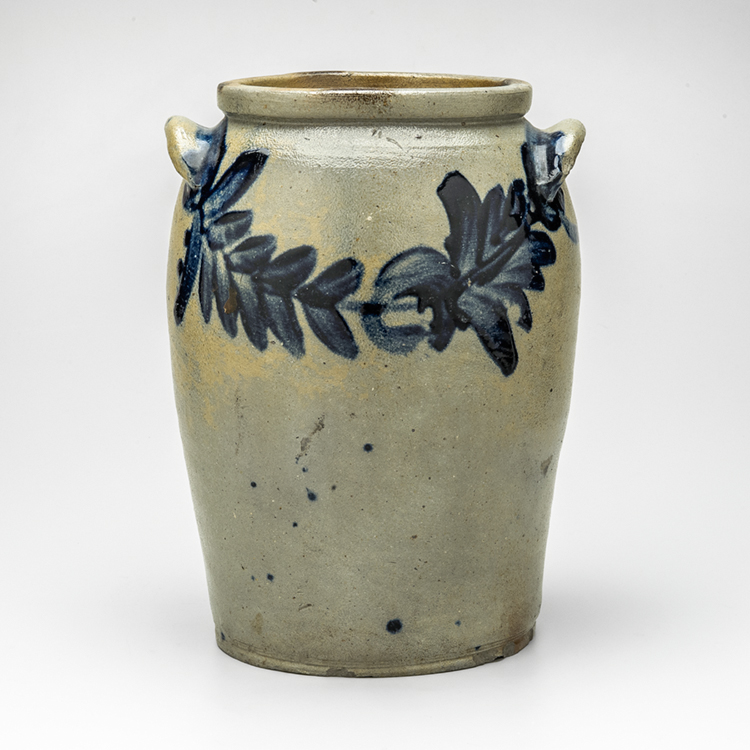
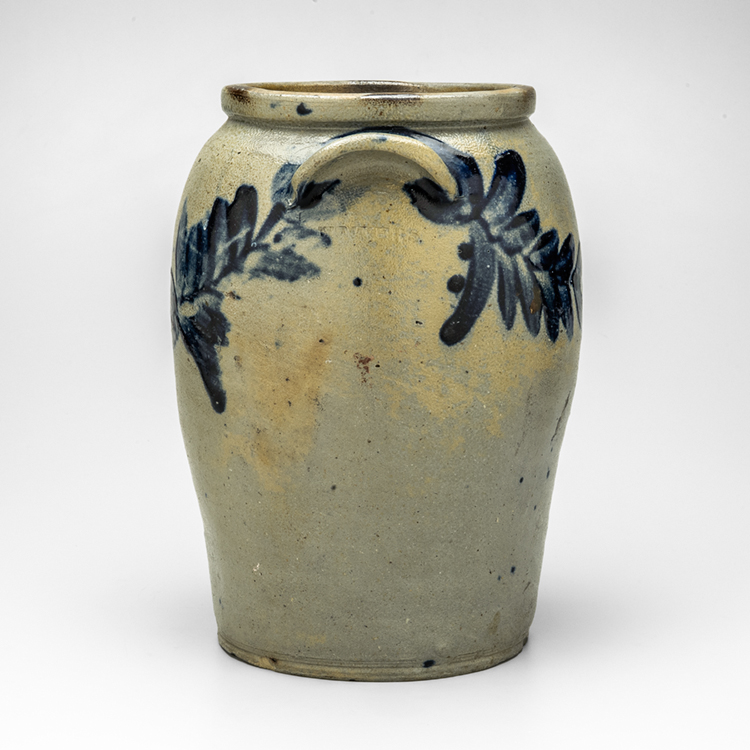
MAKER: Henry Remmey (1770-1865) descended from a famous New York line of potters. He moved to Baltimore in 1812 and began work at the Baltimore Stoneware Manufactory, owned and operated by the Myers family of Baltimore china merchants. The wares made in Baltimore by Remmey between 1812-1821 closely resemble forms made in New York with particular features such as high-neck collars, ovoid shapes, loop handles, and the cobalt blue decorations. In 1821, Henry Myers succeeded his relatives William and Jacob Myers in ownership of the Baltimore Stoneware Manufactory. The factory continued to be operated by the New York-trained potter Henry Remmey, best known for his elaborately decorated pieces with incised floral and bird decoration. This jar is probably typical of Remmey’s standard plain wares.
Zipp, Luke. “Henry Remmey & Son, Late of New York: A Rediscovery of a Master Potter’s Lost Years.” CERAMICS IN AMERICA (2004)143-156.