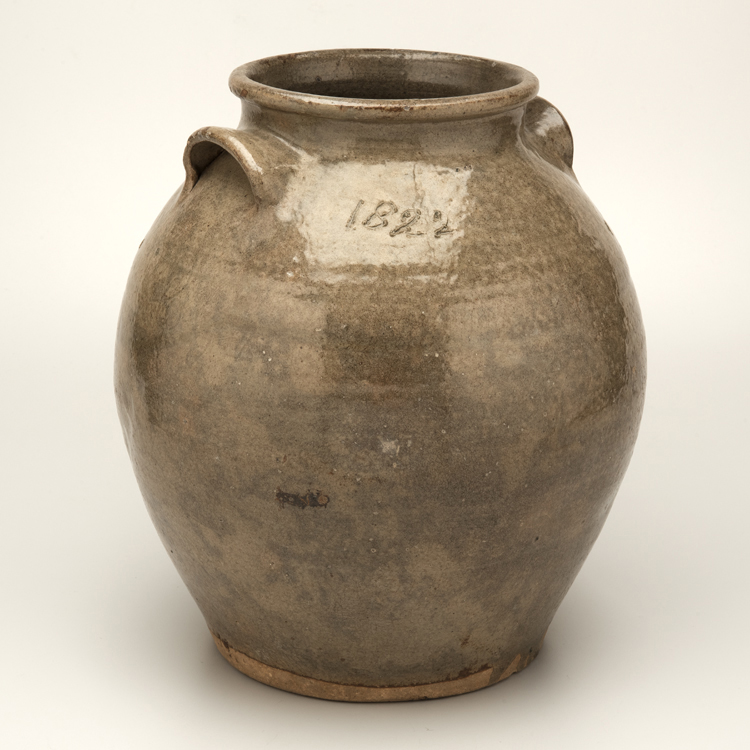
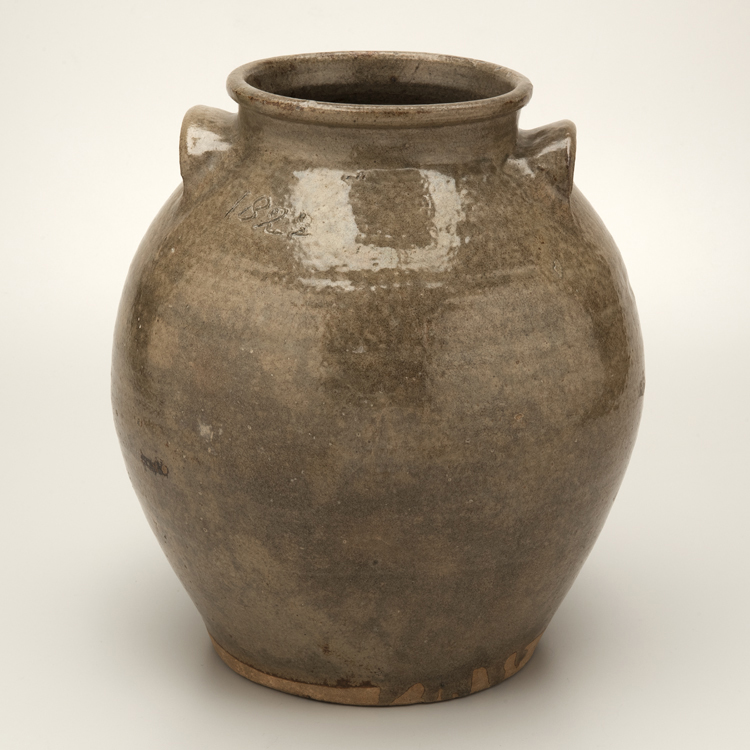
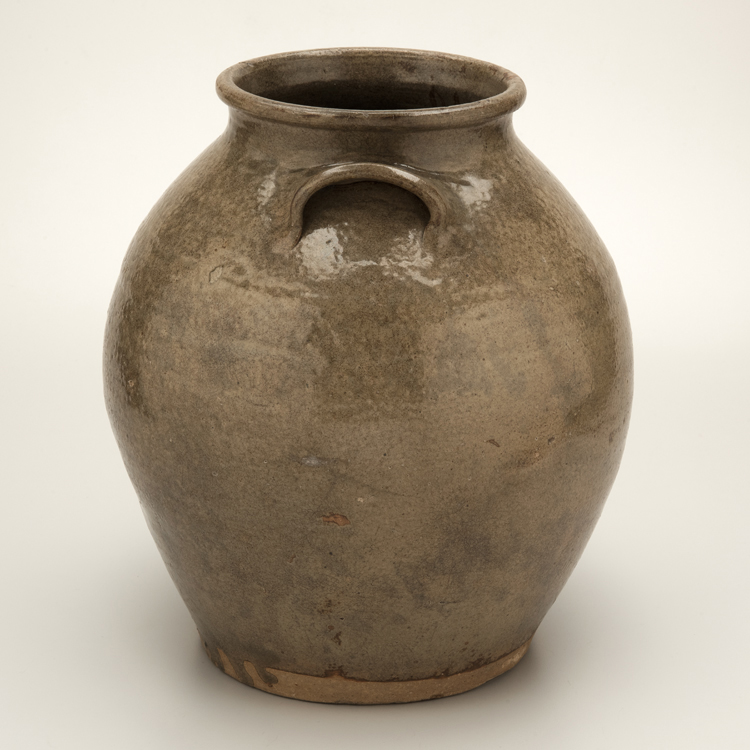
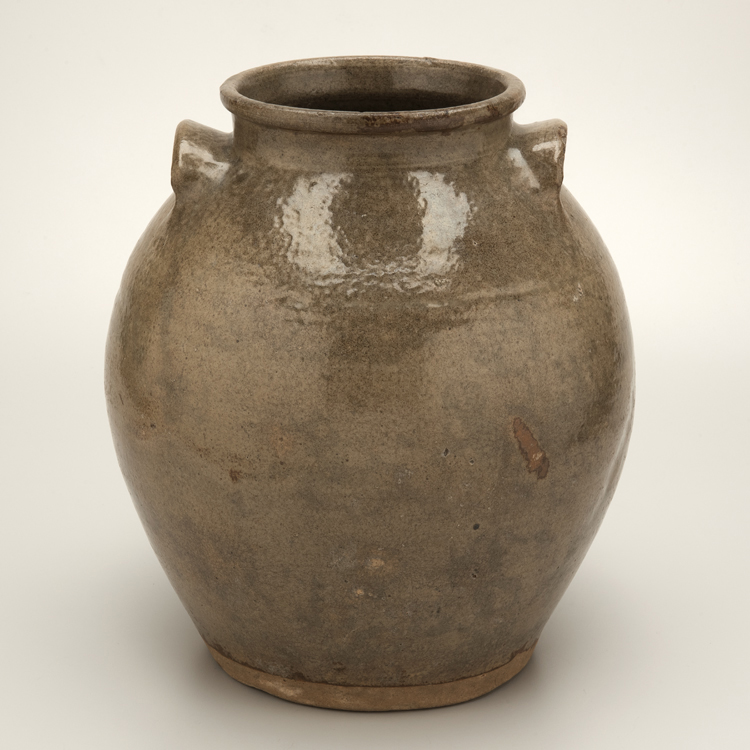
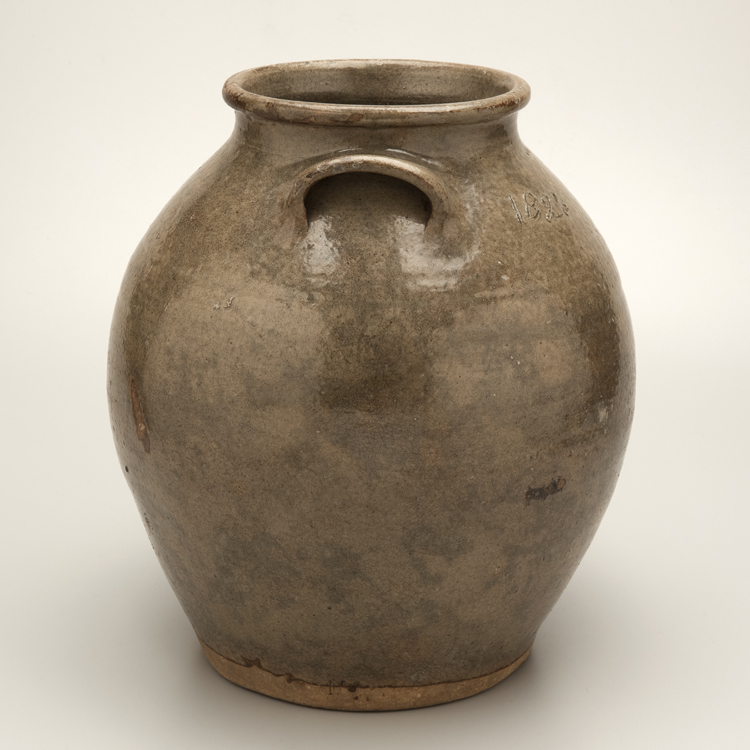
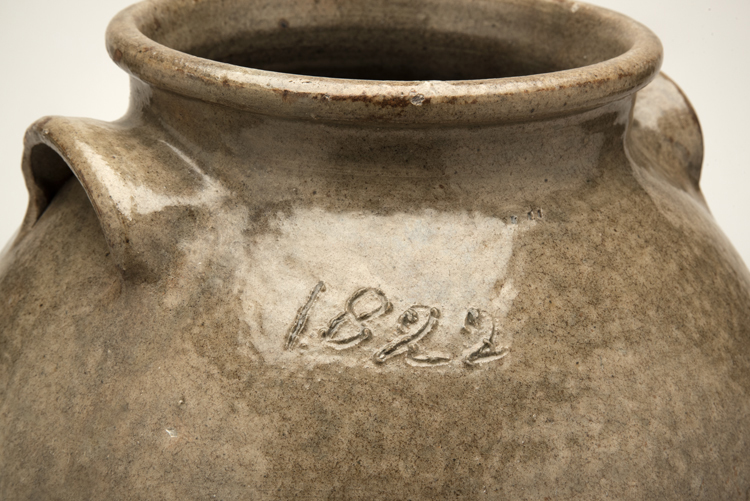
Jar
MAKER: The Pottersville site was first professionally excavated and listed on the National Register of Historic Places in 2011. The 2011 excavation revealed a 105 feet-long, tunnel-style kiln used at the site to fire the alkaline-glazed stoneware. In his 2013 dissertation archaeologist George Calfas discusses the kiln and what it suggested about production: “In the Edgefield District, pork was the main staple of the enslaved laborer diet. In order to pickle enough pork to feed approximately 12,000 laborers in a 6-week period of time, an excess of 10,000 6-gallon vessels were necessary for storage.” He also notes that at least two other kilns likely of this scale operated in the Edgefield District of South Carolina in the first half of the 19th-century. The implications of labor force and production, using primarily enslaved workers, are historically very significant. (266)
Baldwin, Cinda K. “Great and Noble Jar: Traditional Stoneware of South Carolina.” Athens, GA: UGA Press, 1993.
Calfas, George.” NIneteenth Century Stoneware Manufacturing at Pottersville, South Carolina.” Ph.D. Diss., Department of Anthropology, Univ. of Illinois, 2013.
Wingard, Philip. “From Baltimore to the South Carolina Backcountry: Thomas Chandler’s Influence on 19th-Century Stoneware.” CERAMICS IN AMERICA, 2013, 38-76.