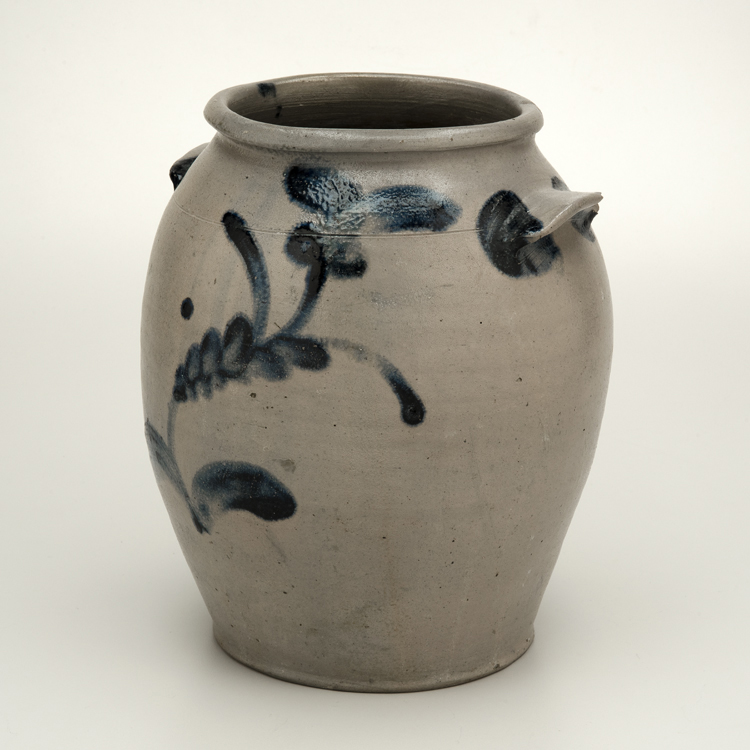
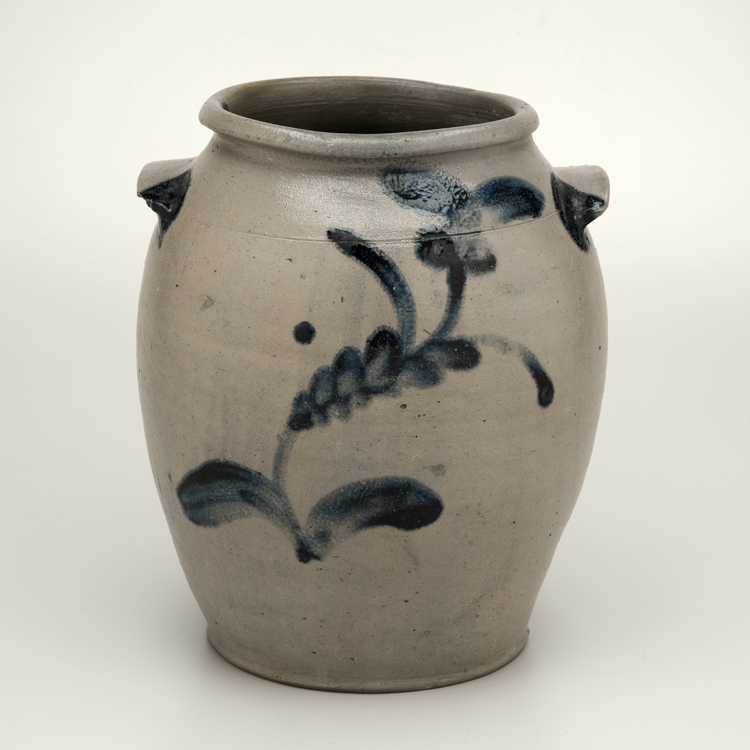
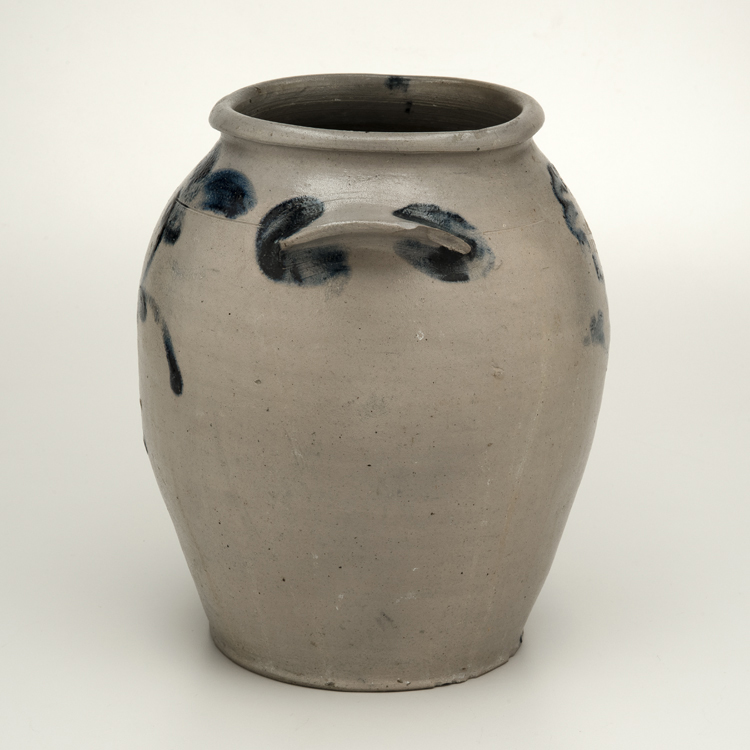
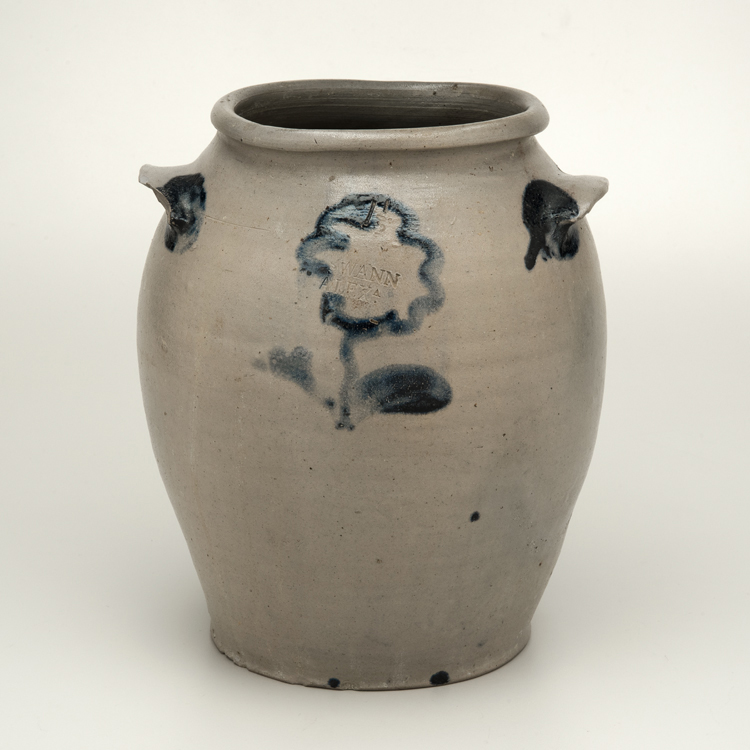
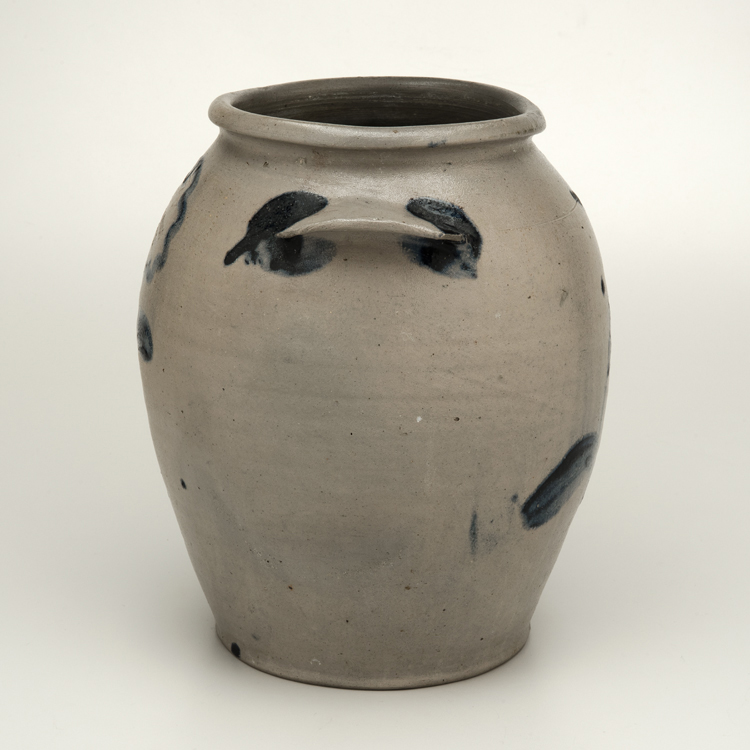
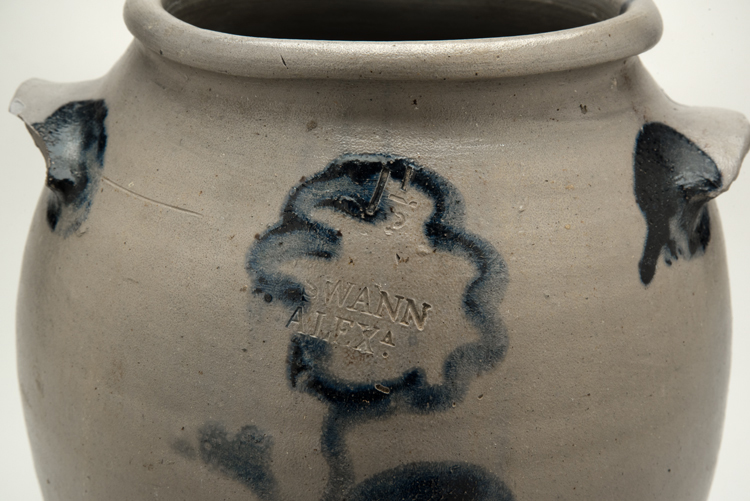
Jar
Salt glazing was a technique used by stoneware potters to create a glassy surface. When the pottery kiln reached over 2000 degrees Fahrenheit, salt was introduced into the kiln, creating a vapor. This vapor adhered to the silica in the clay, forming a glassy appearance on the pottery. Because of the high temperature at which the pottery was fired, the clay often became non-porous, or vitrified. This, combined with the salt glazing, meant that potters did not have to apply a glaze to the interior of the vessel. It could hold liquids and not seep, unlike earthenware storage vessels.
MAKER: John Swann (1789-after 1831) began his pottery career in 1803 when he was apprenticed as an orphan to Lewis Plum in Alexandria, Virginia. He purchased the Wilkes Street pottery in 1813, and because of financial difficulty, sold the business to Hugh Smith in 1821 and began making pottery under Smith’s management.
Magid, Barbara H. “‘Stone-ware of excellent quality, Alexandria manufacture’ Part I: The Pottery of John Swann.” CERAMICS IN AMERICA (2012) 111-145.