Jar
Salt glazing was a technique used by stoneware potters to create a glassy surface. When the pottery kiln reached over 2000 degrees Fahrenheit, salt was introduced into the kiln, creating a vapor. This vapor adhered to the silica in the clay, forming a glassy appearance on the pottery. Because of the high temperature at which the pottery was fired, the clay often became non-porous, or vitrified. This, combined with the salt glazing, meant that potters did not have to apply a glaze to the interior of the vessel. It could hold liquids and not seep, unlike earthenware storage vessels.
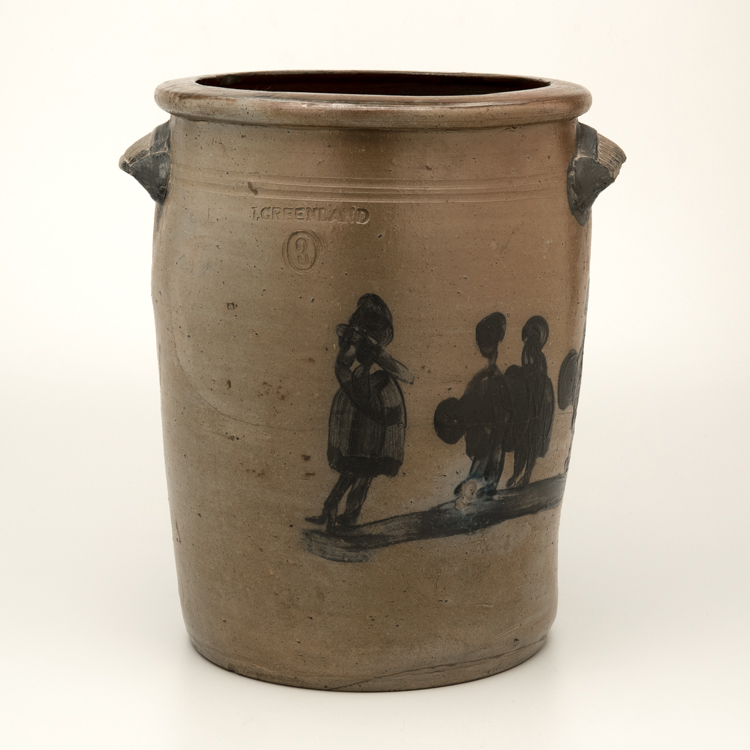
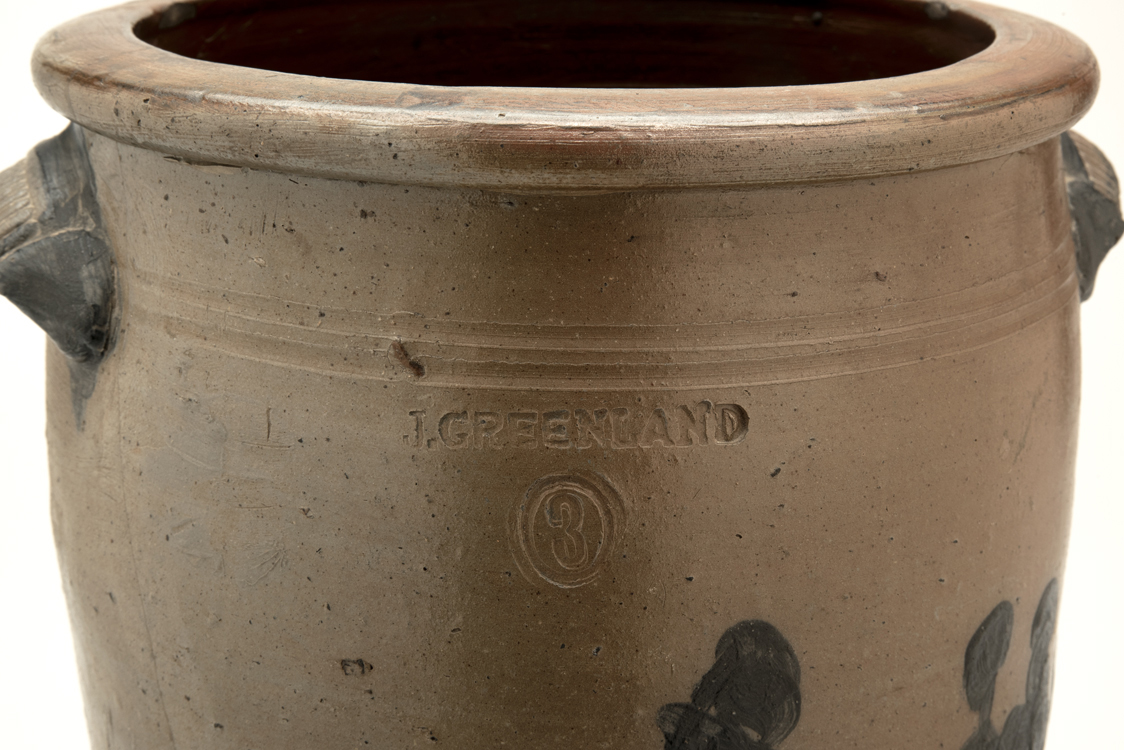
MAKER: Born in Morgantown, West Virginia, John Greenland (1806-1881) was the son of Abner Greenland, a well-known, early earthenware potter. Abner Greenland was born in Maryland, migrated to Morgantown, and married the sister of potter John W. Thompson, before moving across the Mason-Dixon line to Uniontown, Pennsylvania. John Greenland likely trained under his father, as he was listed as working with him in the 1820s. The Thompson and Greenland family were typical of American divisions during the Civil War. Morgantown was located in the western part of Virginia that seceded from the Commonwealth after the war began, choosing instead to fight for the Union and to form the new state of West Virginia. John Greenland and his cousin David Greenland Thompson continued operating the family potteries during the war while their relatives fought in the Union Army.
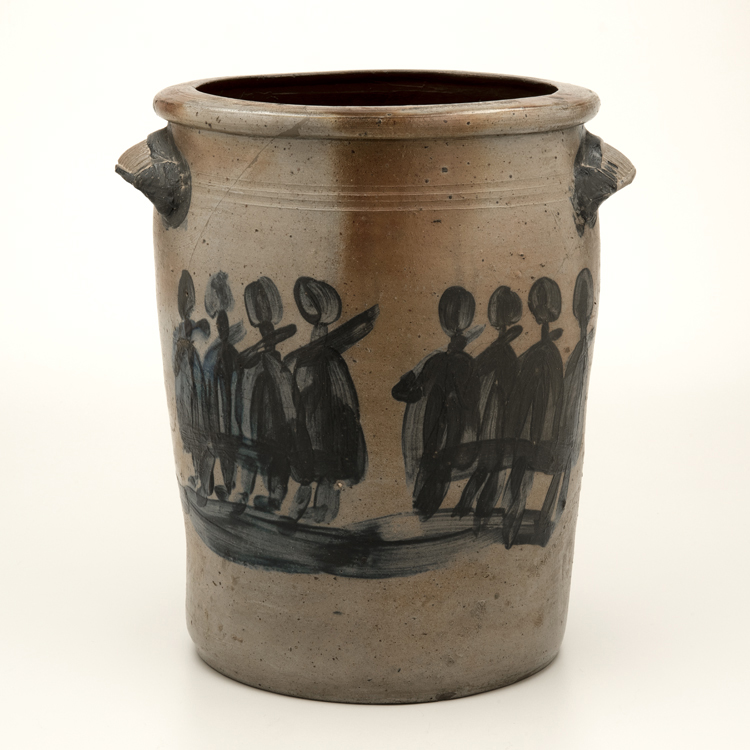
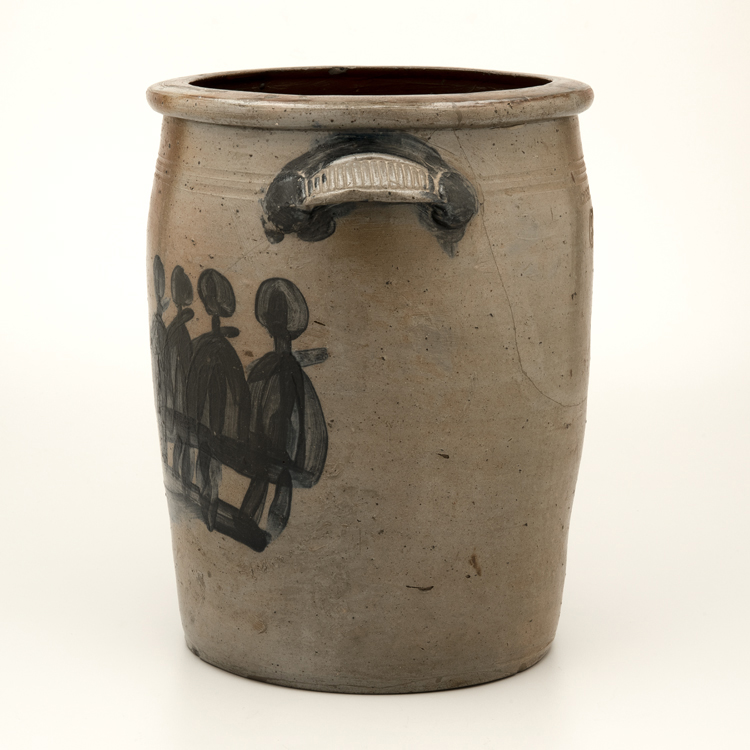
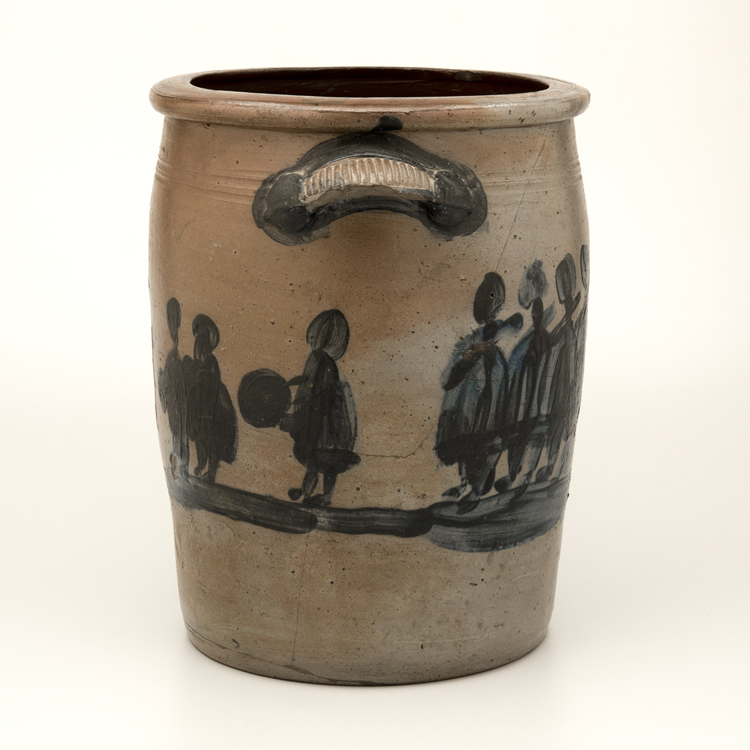
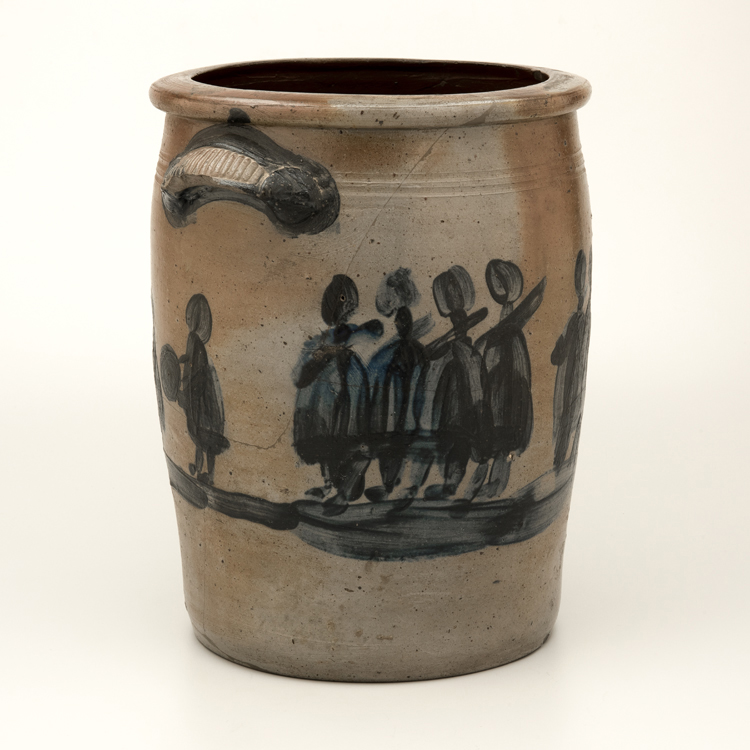
Although “people pots,” as they are affectionately known, are often attributed to the Uniontown and Connellsville area of Pennsylvania, these decorated pieces appear to have originated with the John W. Thompson family in Morgantown.
Duez, Richerd, Don Horvath, with Brenda Hornsby Heindl. “The Stoneware Years of the Thompson Potters of Morgantown, West Virginia, 1854-1890.” CERAMICS IN AMERICA (2011): 111-137.