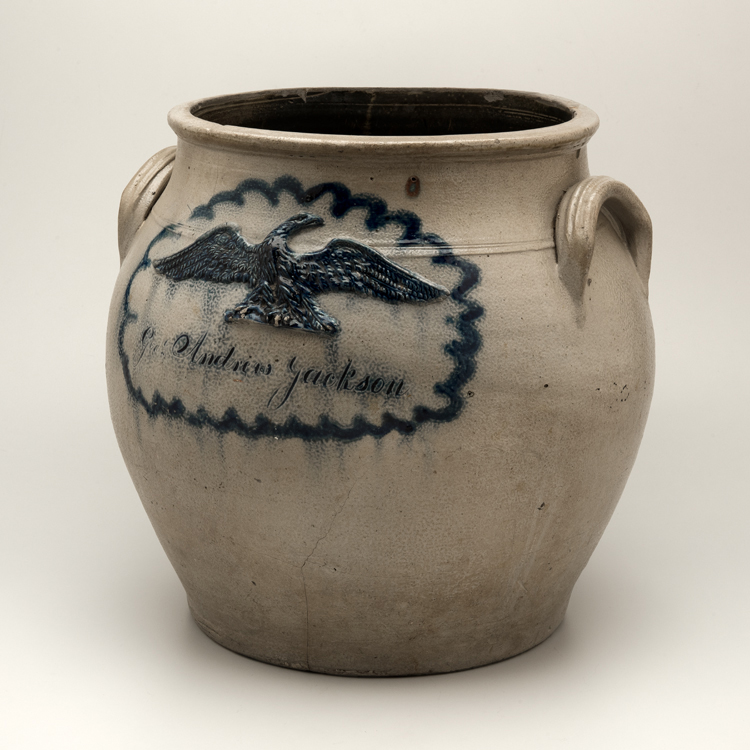
Jar
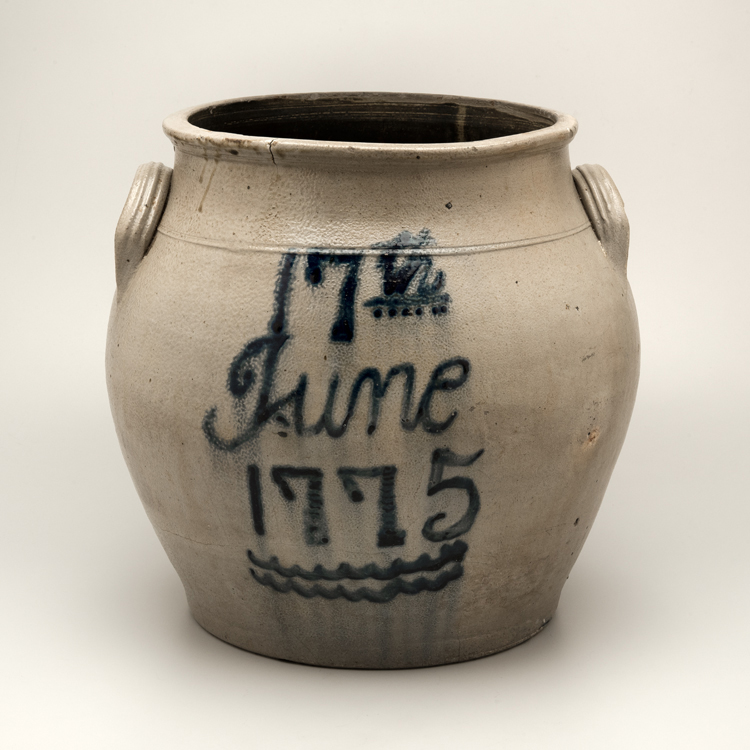
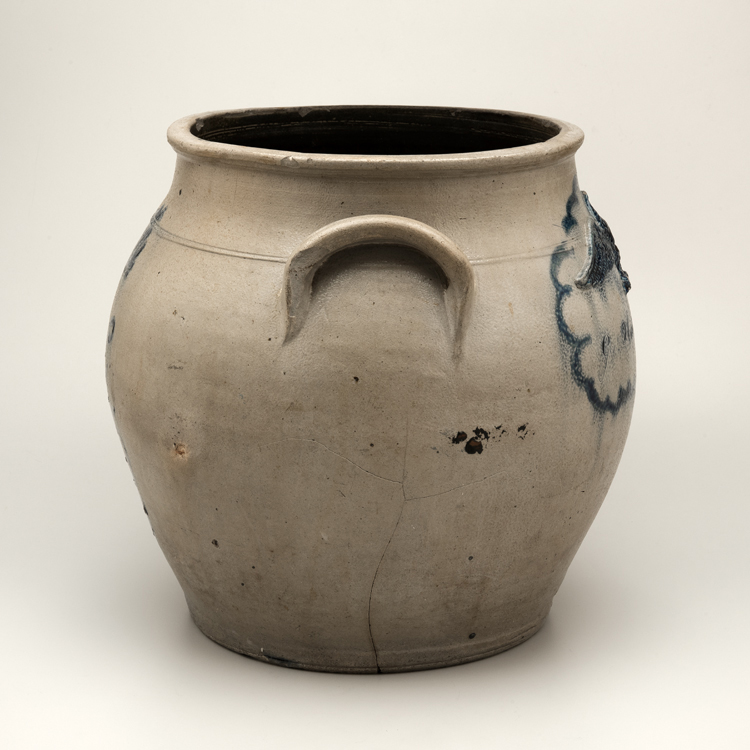
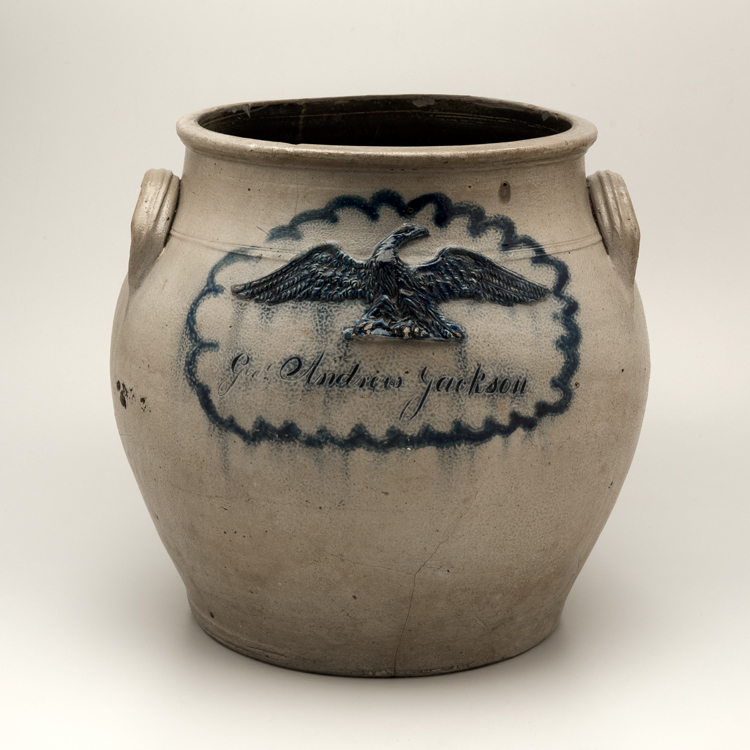
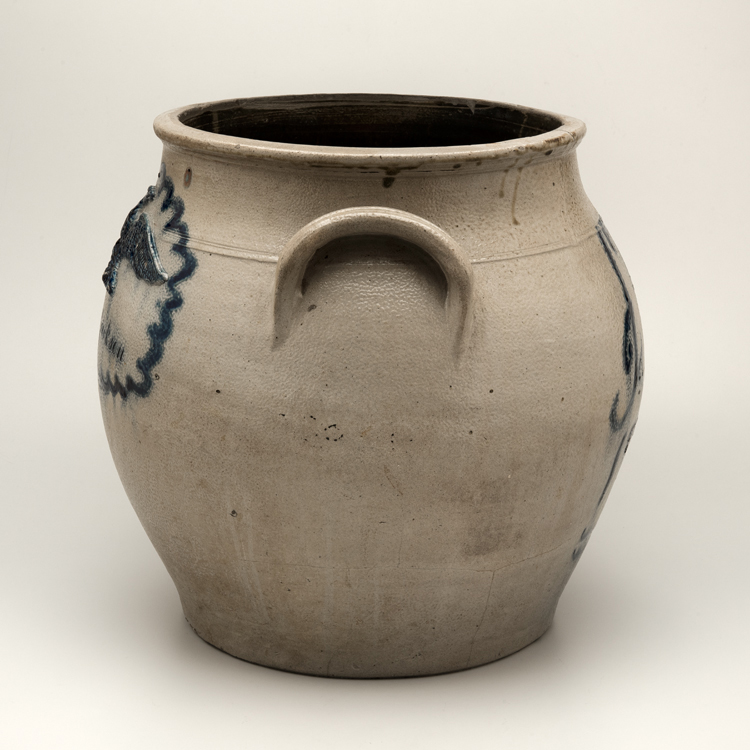
The most dramatic decoration on the jar was the sprig-molded eagle. Sprig molding involves taking a plaster, wood, or bisque clay mold that has a carved image in a negative perspective, placing a small amount of clay within the mold to make a positive, raised impression of the mold, and then releasing the clay, which is then applied to the vessel. The foot of the jar is tooled and the handles have ribbing across the top. An incised line along the shoulder of the vessel marked where the handle terminals were to be placed.
Salt glazing is a technique used by stoneware potters to create a glassy surface. When the pottery kiln reached over 2000 degrees Fahrenheit, salt was introduced into the kiln, creating a vapor. This vapor adhered to the silica in the clay, forming a glassy appearance on the pottery. Because of the high temperature at which the pottery was fired, the clay often became non-porous, or vitrified. This, combined with the salt glazing, meant that potters did not have to apply a glaze to the interior of the vessel. It could hold liquids and not seep, unlike earthenware storage vessels. Thus, many salt-glazed stoneware vessels were not glazed on the interior, particularly prior to 1850. This particular jar, however, was glazed on the interior with a brown glaze made from a mined clay that melts to a glaze. Though this kind of glaze was available in many parts of the country, it is often called “Albany slip” because it was first mined in the late eighteenth-century in Albany, New York.
MAKER: Barnabas Edmands (1778-1872) arrived in Charlestown, Massachusetts, in 1812. Though initially working as a brass founder, he eventually partnered with Frederic Carpenter in stoneware production and worked with him until Carpenter died in 1827. Carpenter is a documented potter, but there is little evidence to show that Barnabas Edmands actually made pottery. Rather, he likely oversaw the shop and hired potters to work for him. Following Carpenter’s death, Edmands likely partnered with Charles Collier. Edmands continued overseeing his stoneware factory until 1850 when he turned the operations over to his sons.
Zipp, Brandt. “A Pot for the President, Made at the Foot of Bunker Hill, Charlestown, Massachusetts, Stoneware.” February 18, 2010, Crocker Farm blog, Fahrenheit 2300. Online.