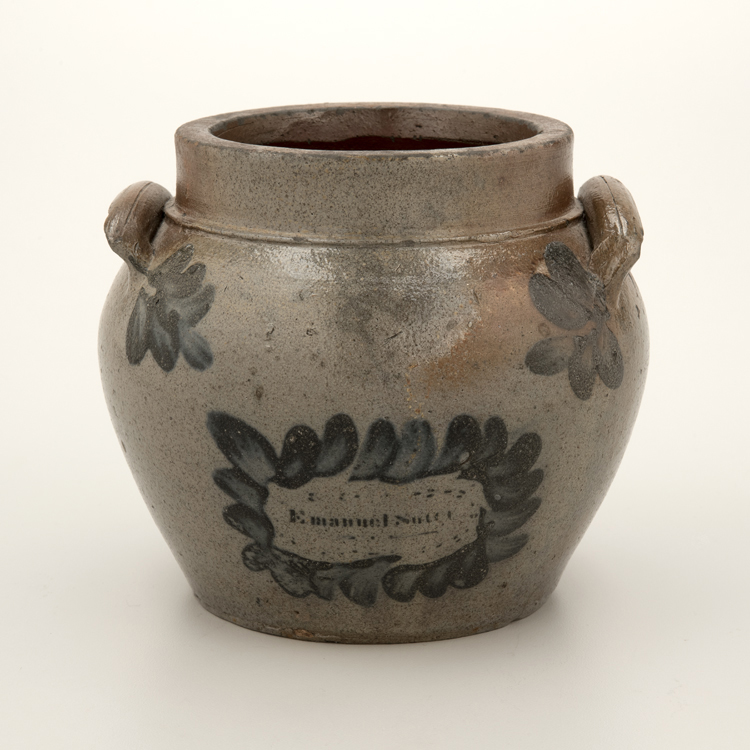
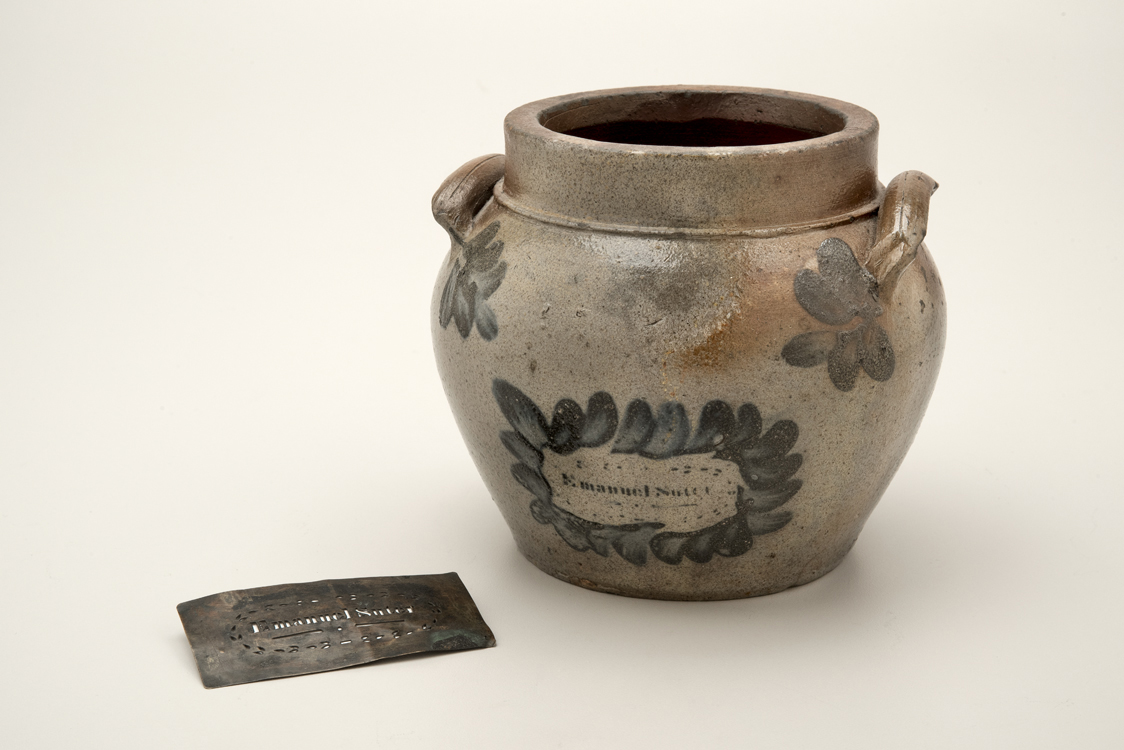
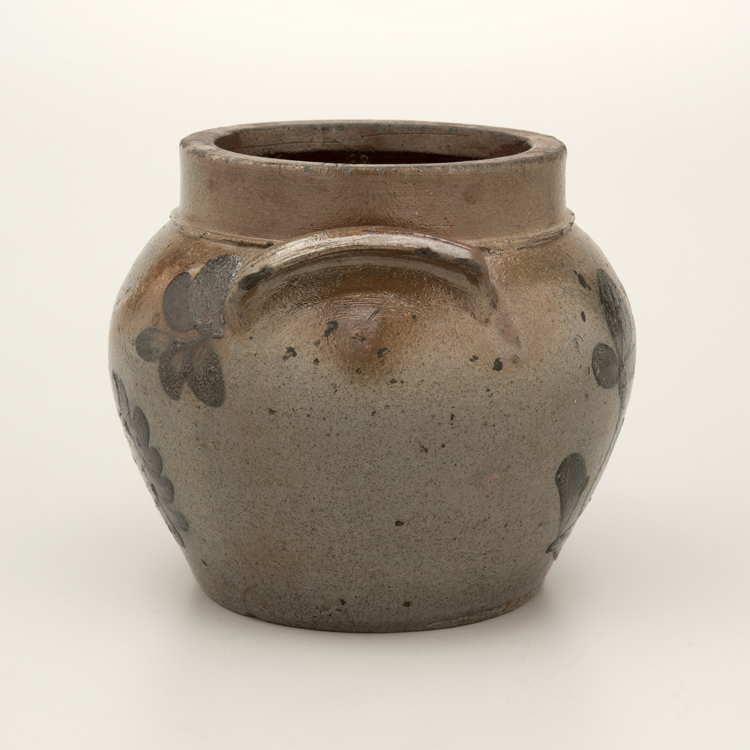
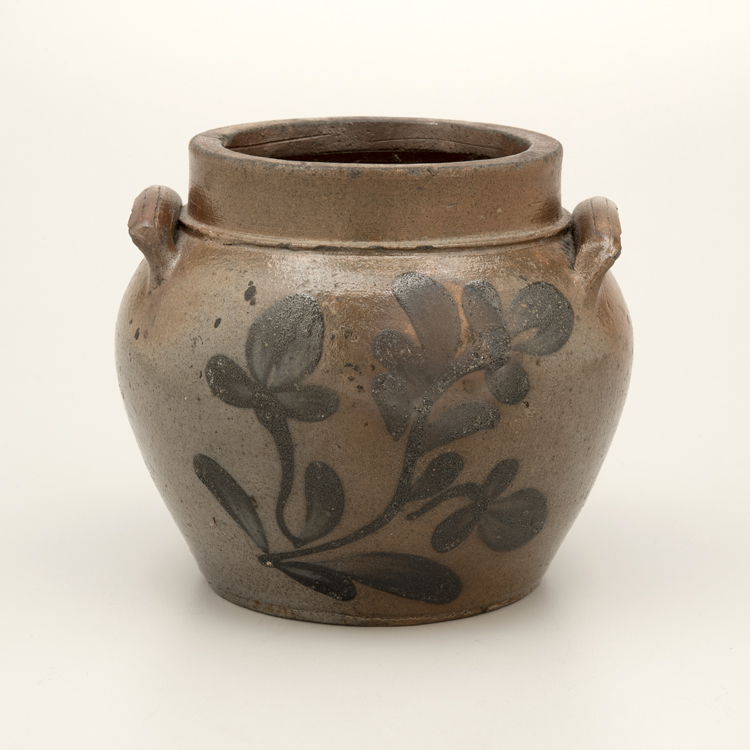
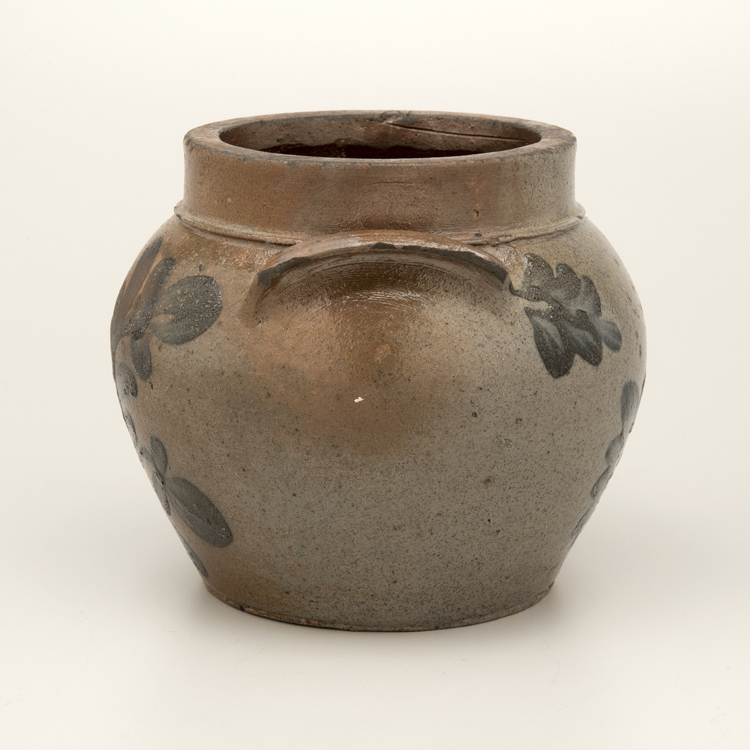
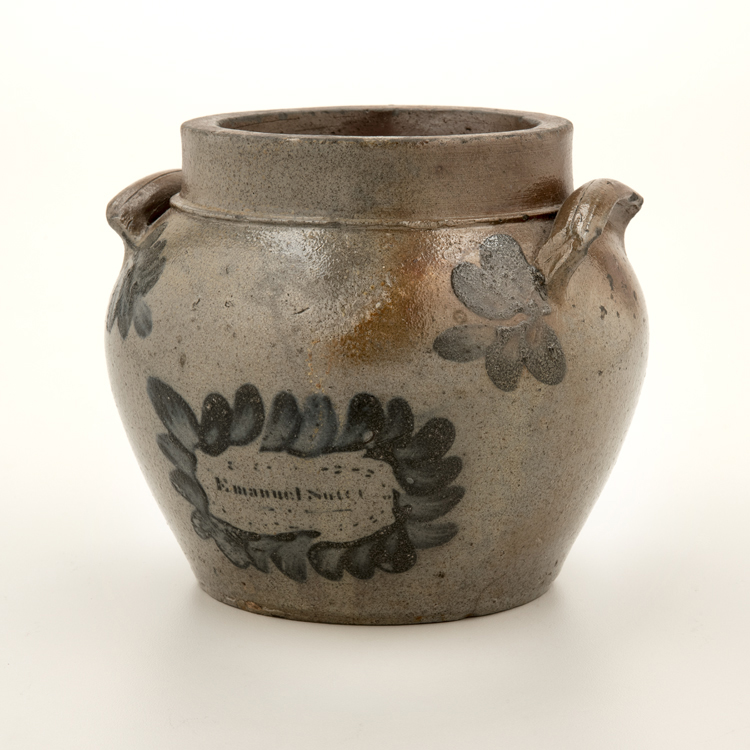
Jar
Salt glazing was a technique used by stoneware potters to create a glassy surface. When the pottery kiln reached over 2000 degrees Fahrenheit, salt was introduced into the kiln, creating a vapor. This vapor adhered to the silica in the clay, forming a glassy appearance on the pottery. Because of the high temperature at which the pottery was fired, the clay often became non-porous, or vitrified. This, combined with the salt glazing, meant that potters did not have to apply a glaze to the interior of the vessel. It could hold liquids and not seep, unlike earthenware storage vessels.
MAKER: The maker of this pot was Emanuel Suter (1833-1902), one of Rockingham County’s most prominent potters in the second half of the nineteenth-century. In 1855 his shop was located in West Rockingham, but he may have been working as early as 1851 with John D. Heatwole. A practicing Mennonite, Suter was a prolific and innovative potter.
Evans, Jeffrey S. and Scott Hamilton Suter, “A Great Deal of Stone & Earthen Ware.” Dayton, VA: Harrisonburg-Rockingham Historical Society, 2004.