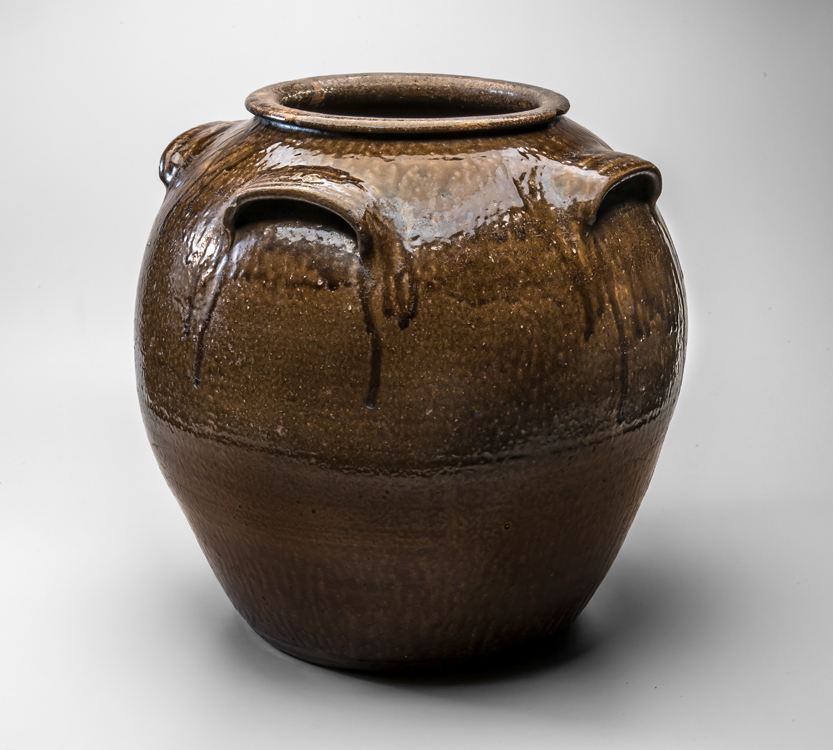
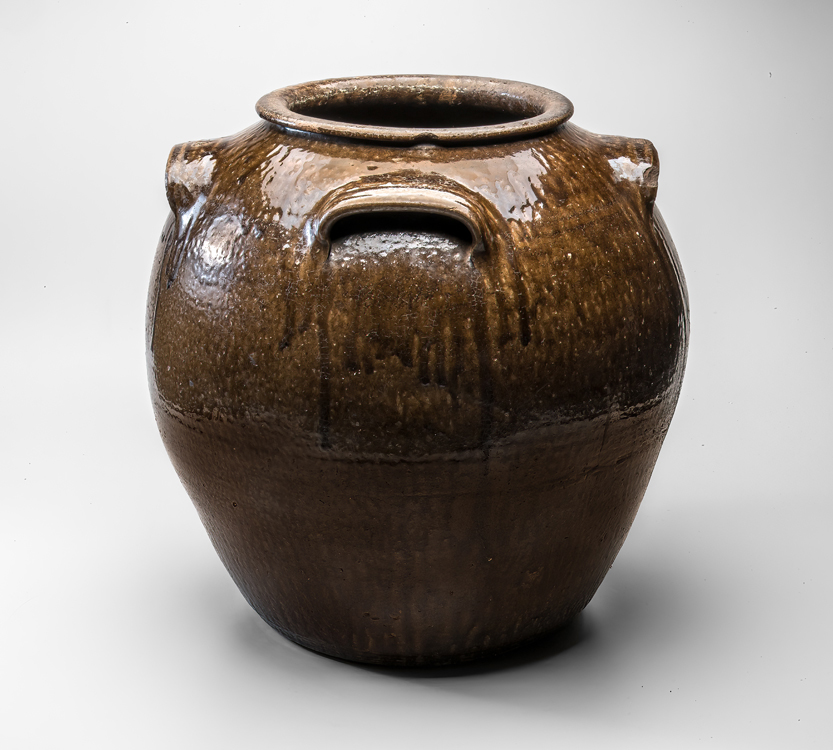
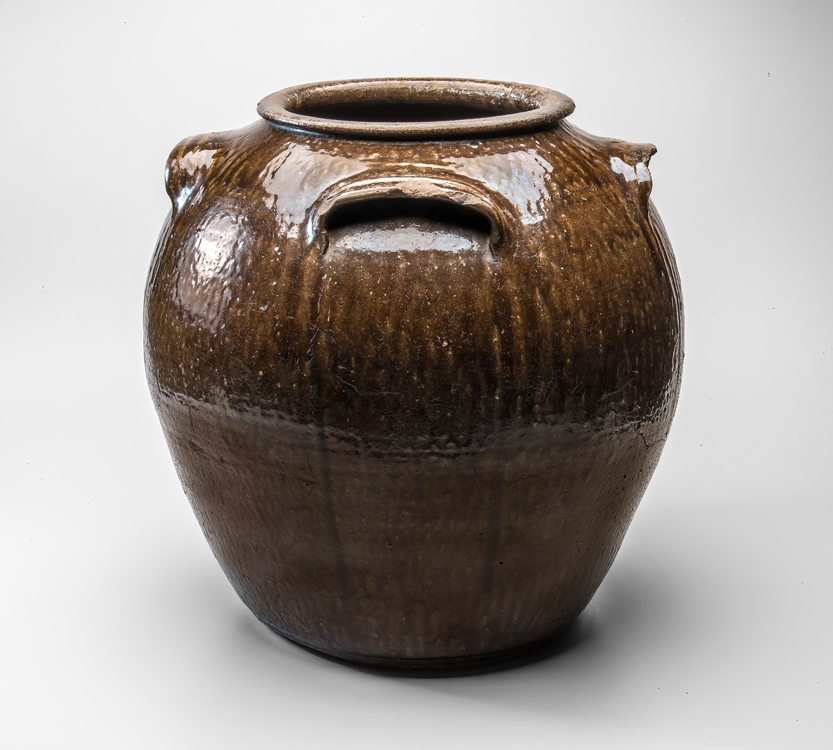
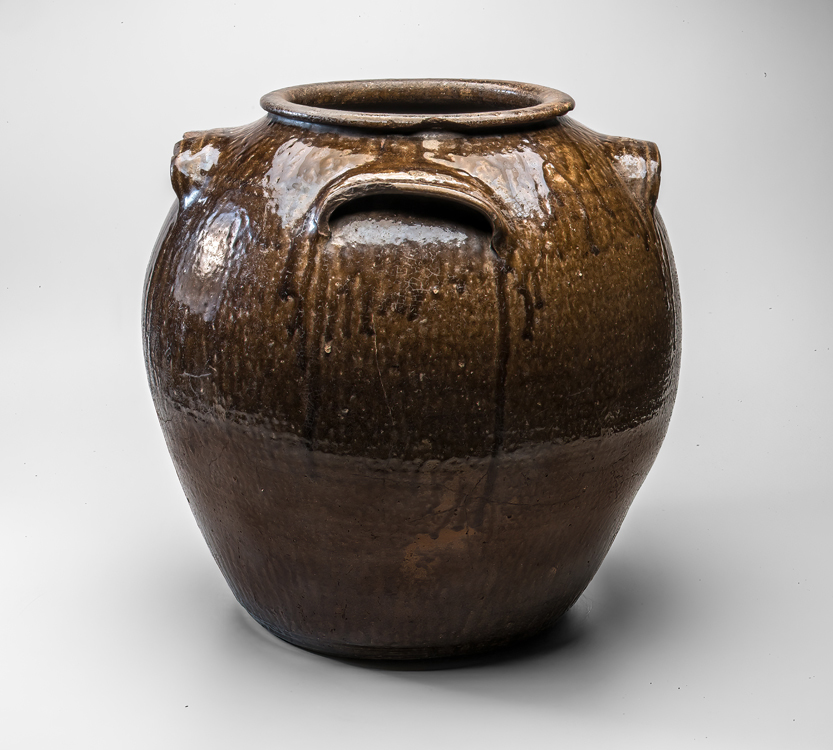
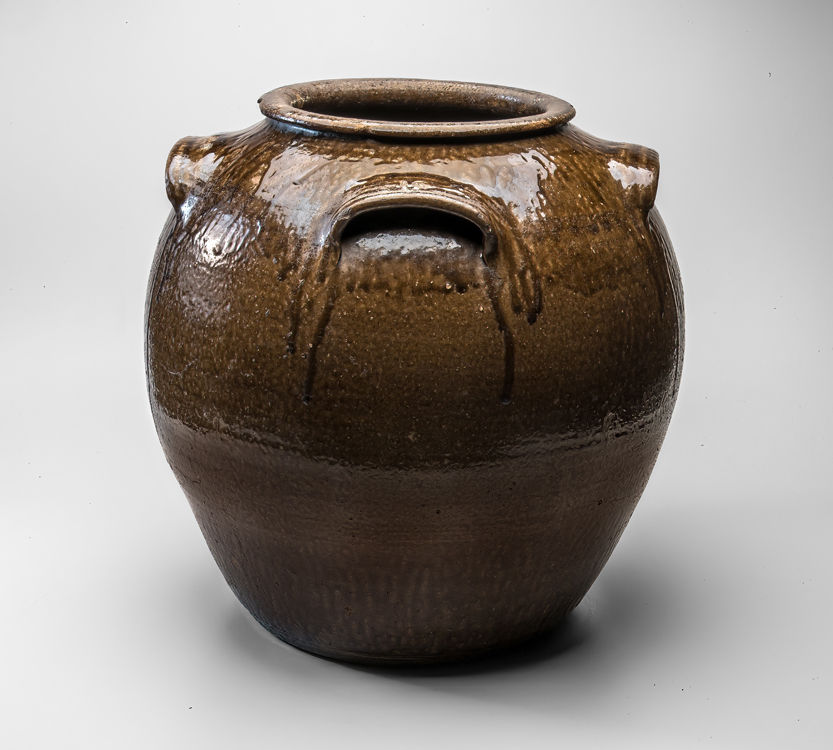
Jar
With the exception of the Catawba Valley of North Carolina, ash or alkaline glaze was apparently not used by early potters in the upper South. However, it was used extensively throughout the deep and gulf South as far west as Texas, following the westward migration of Edgefield, South Carolina alkaline glaze potters. It is interesting to note the similarity in shape between this piece and others produced in Edgefield, South Carolina about the same time. This suggests that there may have been some contact between the potters of these two areas.
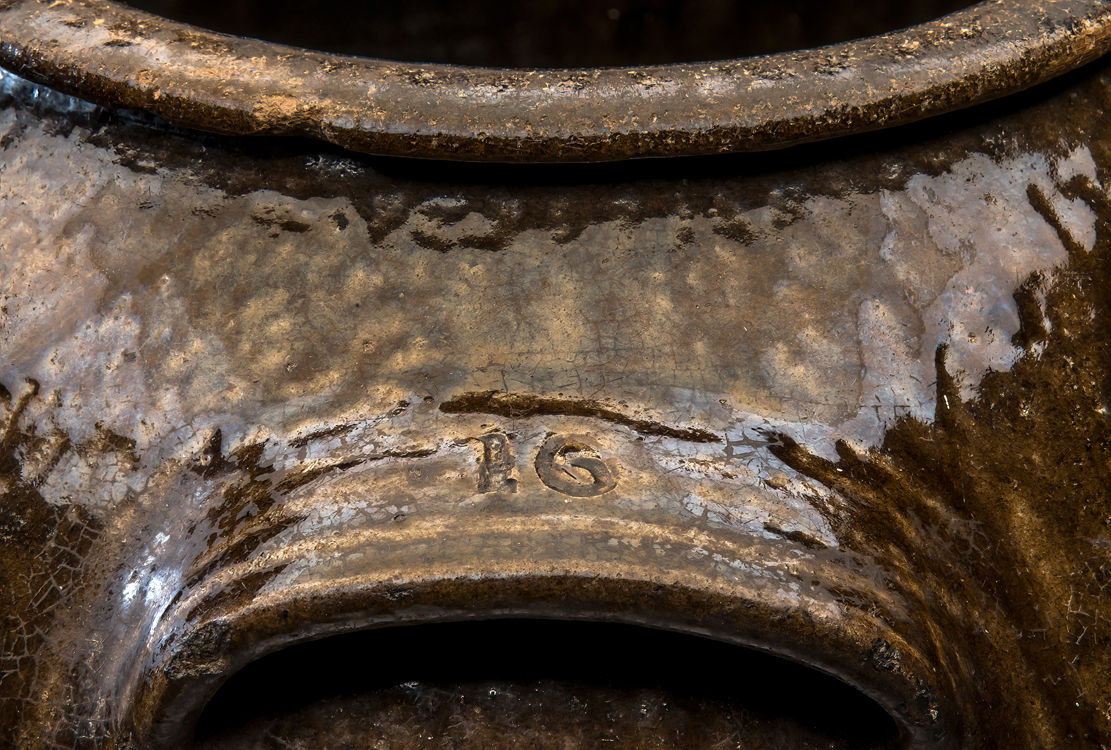
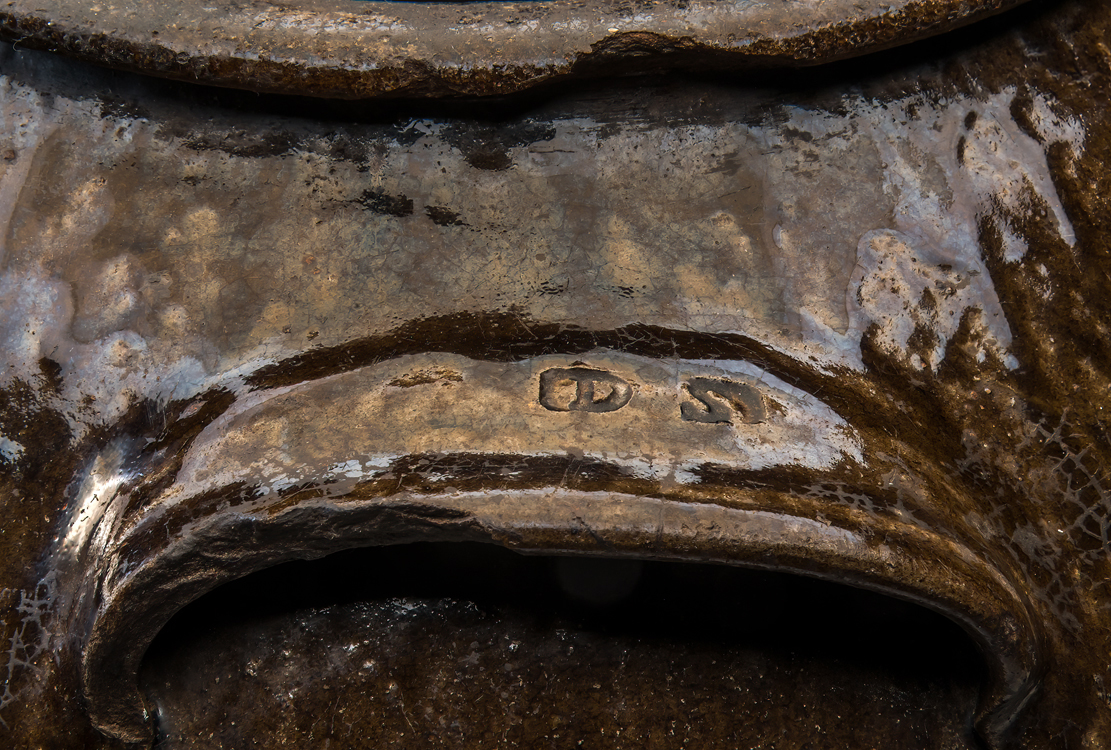
MAKER: Daniel Seagle’s family were early settlers in Lincoln County, North Carolina, arriving from Pennsylvania in the late eighteenth-century. Daniel Seagle (1805-1867) made both lead-glazed earthenware and alkaline-glazed stoneware, although very few of his earthenware pieces have survived. He likely trained under his father, Adam, who would have made lead-glazed earthenware. The kiln of Daniel Seagle was excavated in the winter of 1987-1988 by archaelogist Linda Carnes-McNaughton. The evidence from the kiln excavation gives a glimpse into the technical world of Seagle’s pottery making, as well as reveals the large cross-draft, or “groundhog,” kiln that Seagle used to fire his pottery.
Harpe, Jason and Brian Dedmond.”Valley Ablaze: Pottery Tradition in the Catawba Valley.” Conover, NC: Goosepen Studio & Press, 2012.
Nash, John. “”Daniel Seagle and James F. Seagle.” In POTTERS OF THE CATAWBA VALLEY, edited by Daisy Wade Bridges, vol IV of Journal of Studies: Ceramic Circle of Charlotte, 16. Charlotte, NC: Mint Museum, 1980.