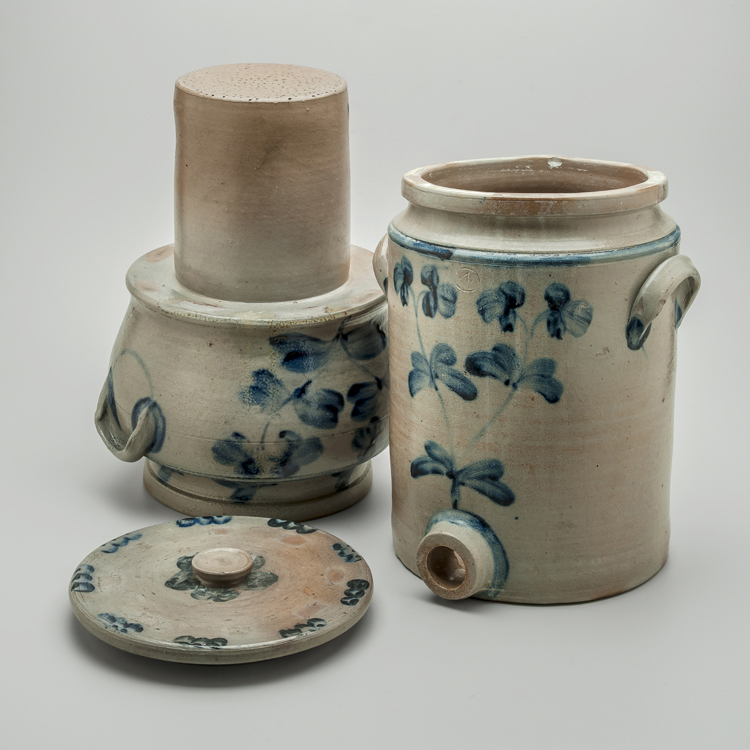
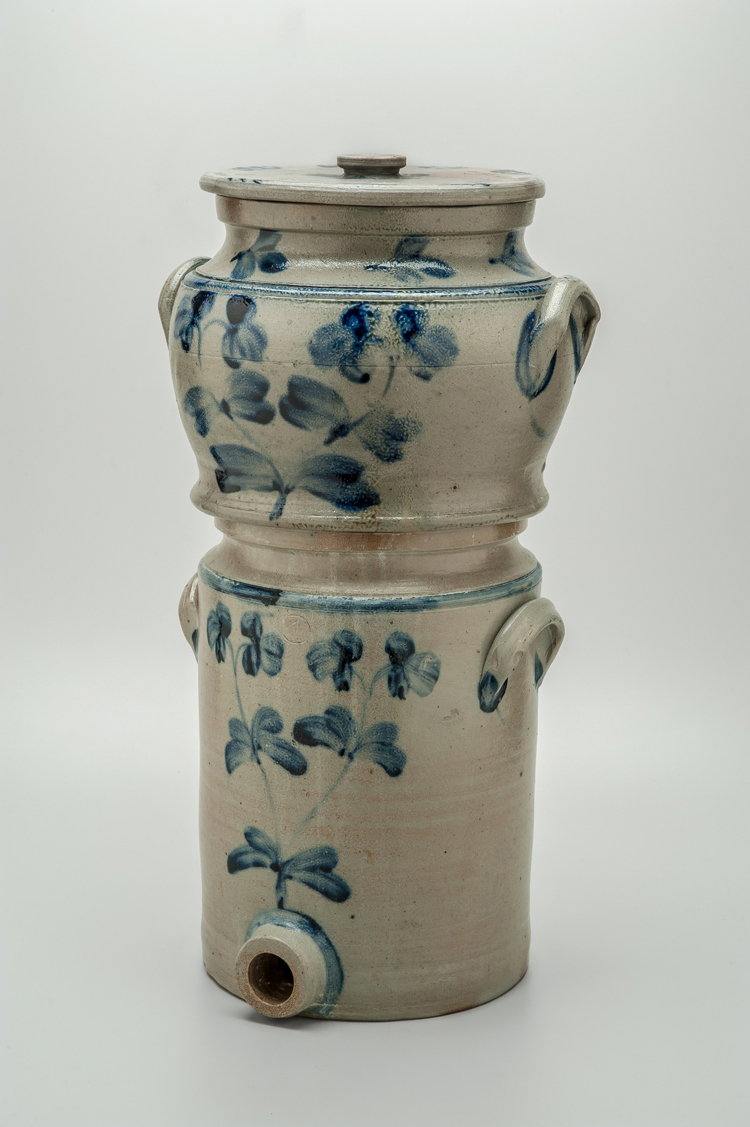
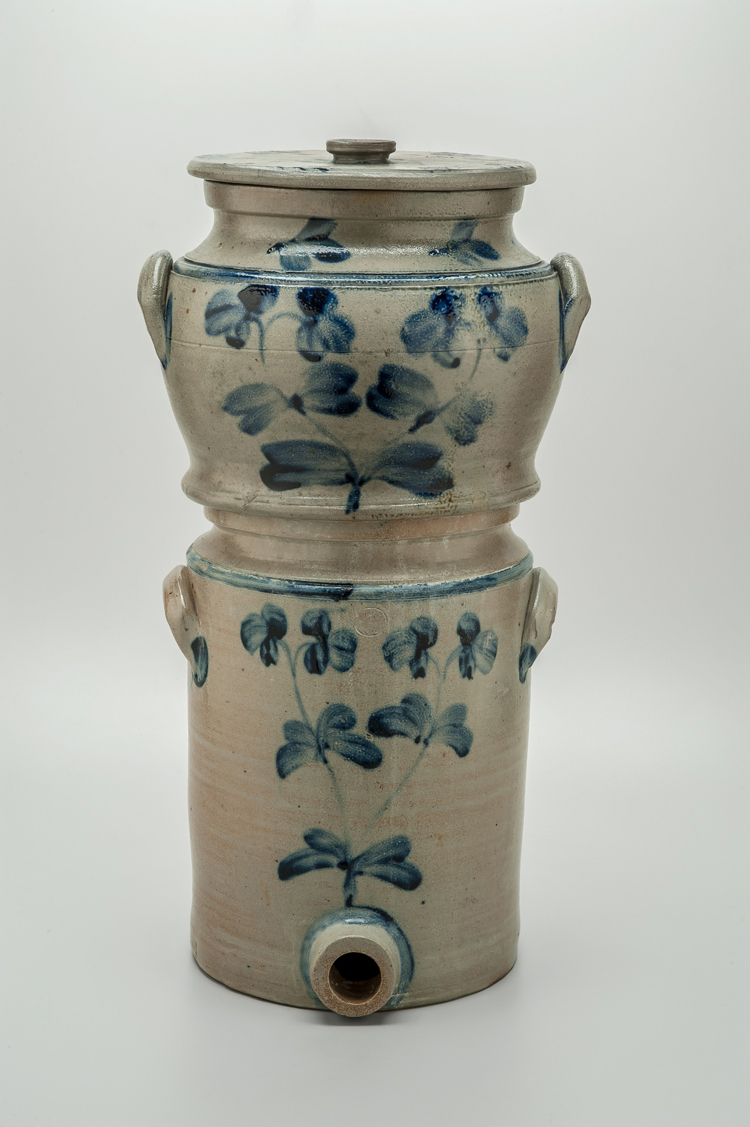
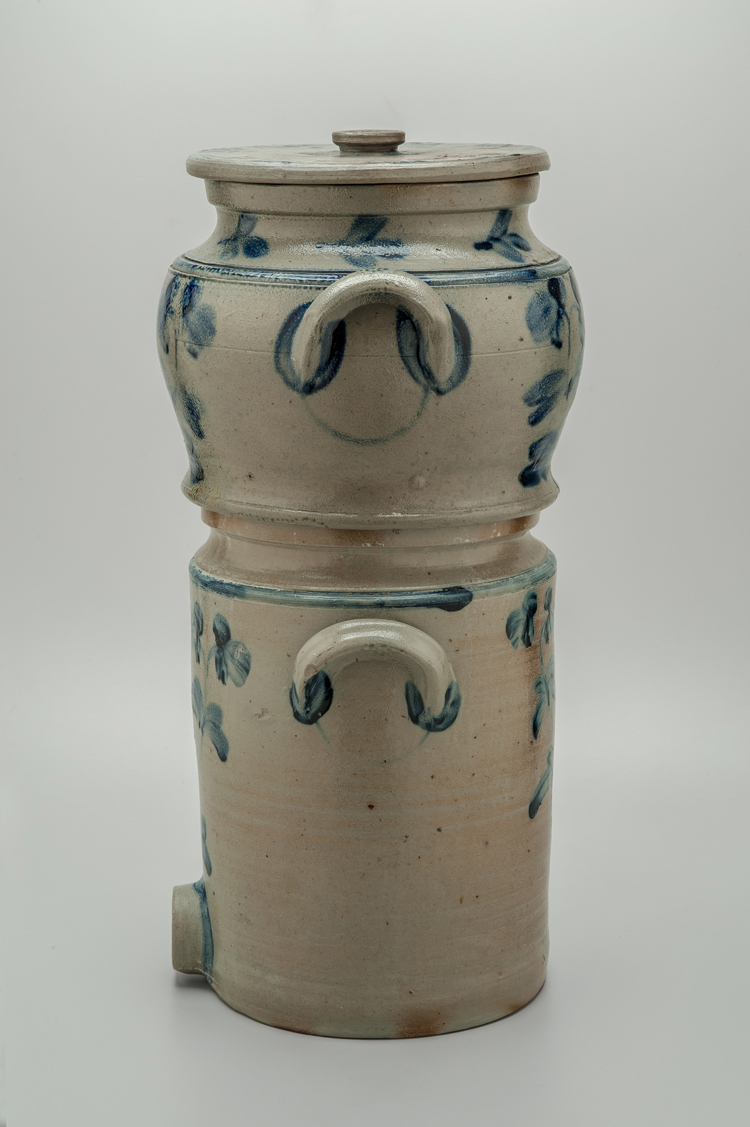
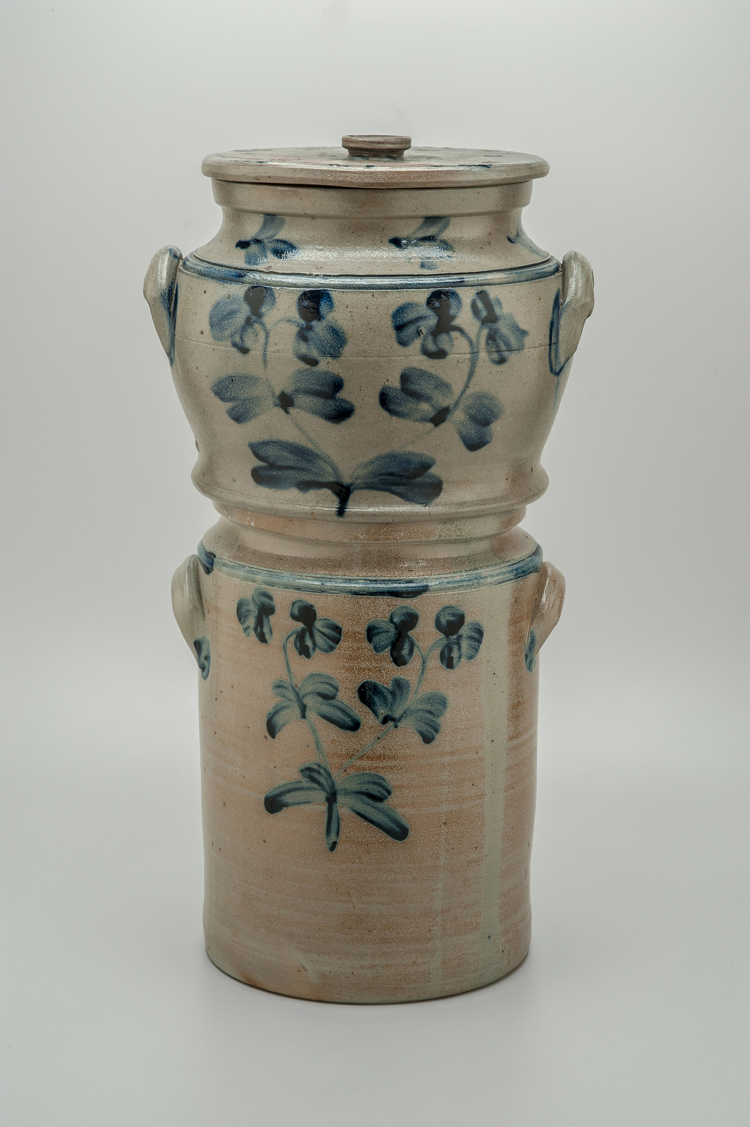
Filtering Water Cooler
Salt glazing is a technique used by stoneware potters to create a glassy surface. When the pottery kiln reached over 2000 degrees Fahrenheit, salt was introduced into the kiln, creating a vapor. This vapor adhered to the silica in the clay, forming a glassy appearance on the pottery. Because of the high temperature at which the pottery was fired, the clay often became non-porous, or vitrified. This, combined with the salt glazing, meant that potters did not have to apply a glaze to the interior of the vessel. It could hold liquids and not seep, unlike earthenware storage vessels.
Filtering water coolers began to be advertised in the mid-nineteenth century following a rise in improved hygiene and sanitation encouraged by etiquette books and public works projects
MAKER: The decoration on this piece, with numerous brushed cobalt blue three-petaled flower designs, is often associated with the pottery of Peter Herrmann (1825-1901). Herrmann migrated to Baltimore, Maryland in 1844 from Bremen, Germany. In 1855 he was identified as a potter in the city directory, though it is likely he was making pottery prior to that. He continued making pottery through 1899, two years prior to his death.
Kille, John E. “Distinguishing Marks and Flowering Designs: Baltimore’s Utilitarian Stoneware Industry.” CERAMICS IN AMERICA (2005) 93-132.