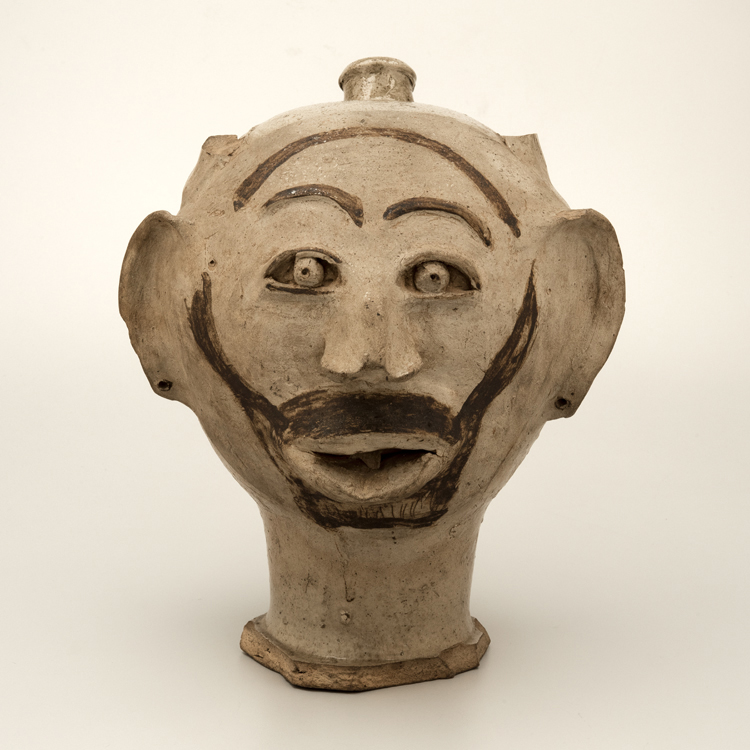
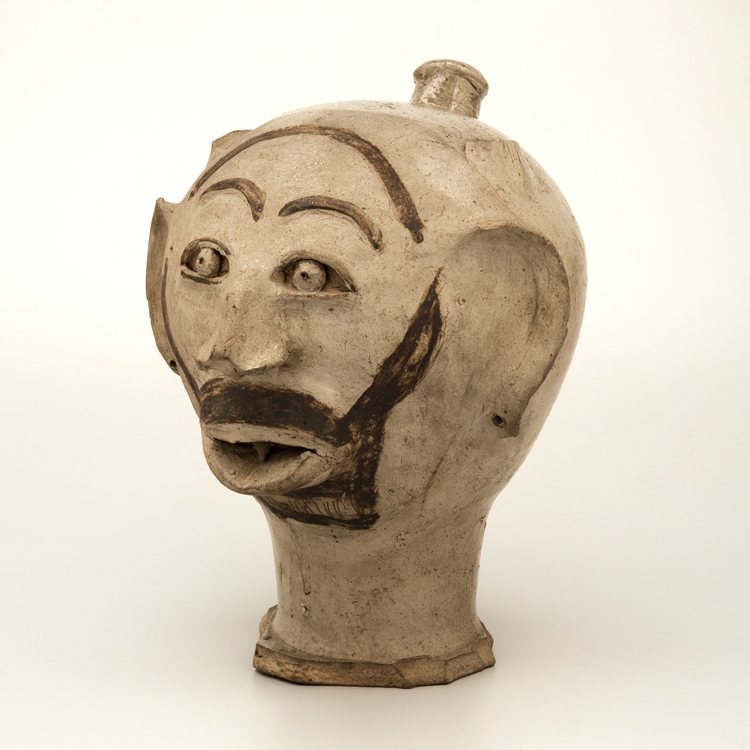
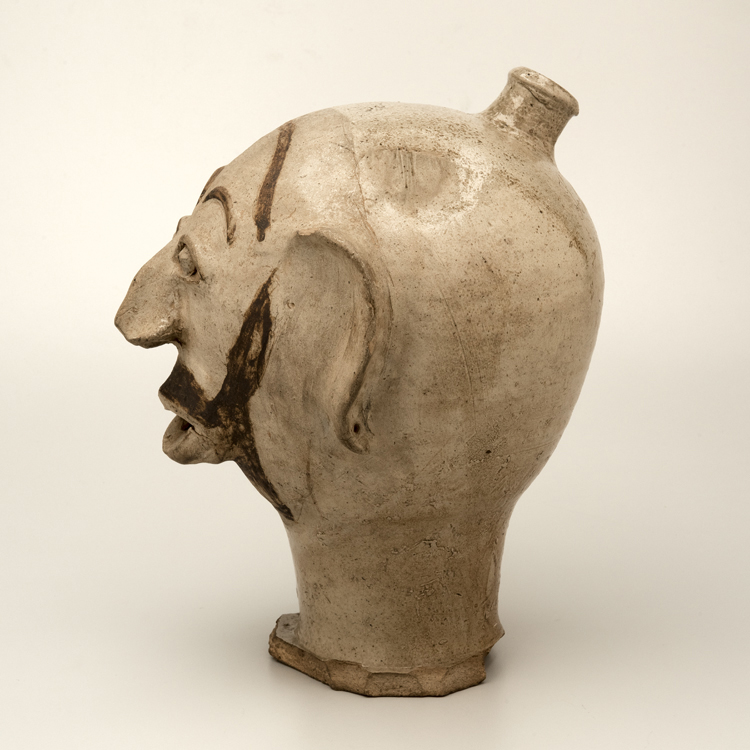
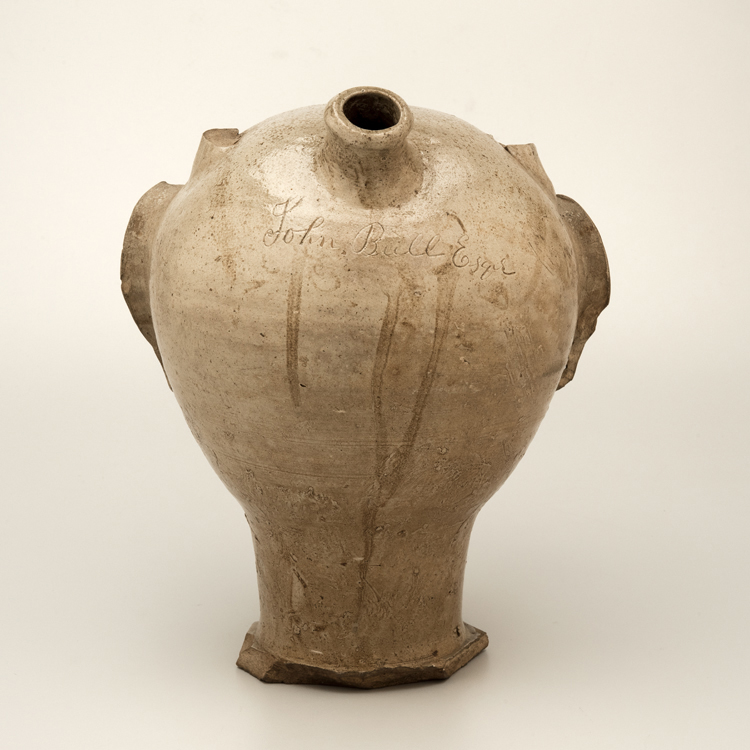
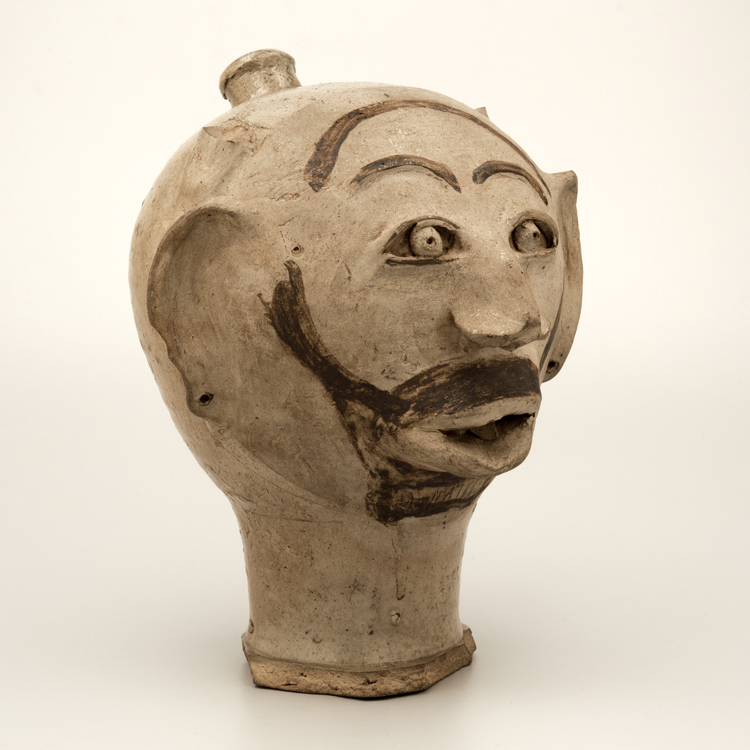
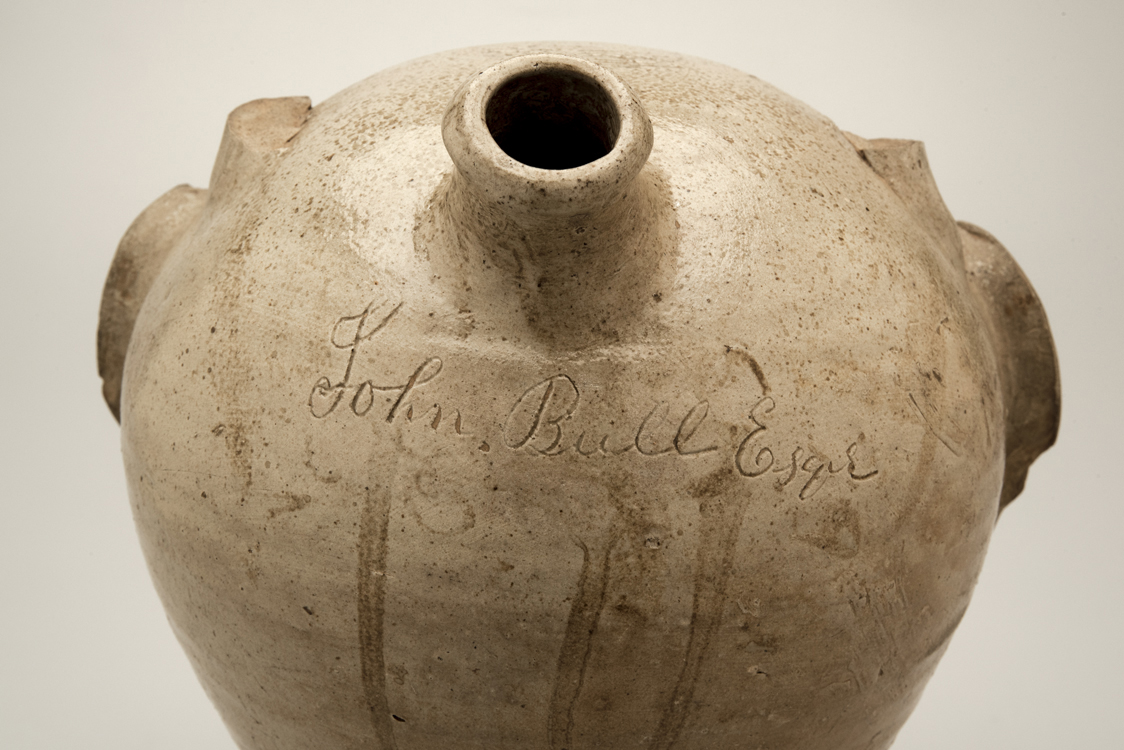
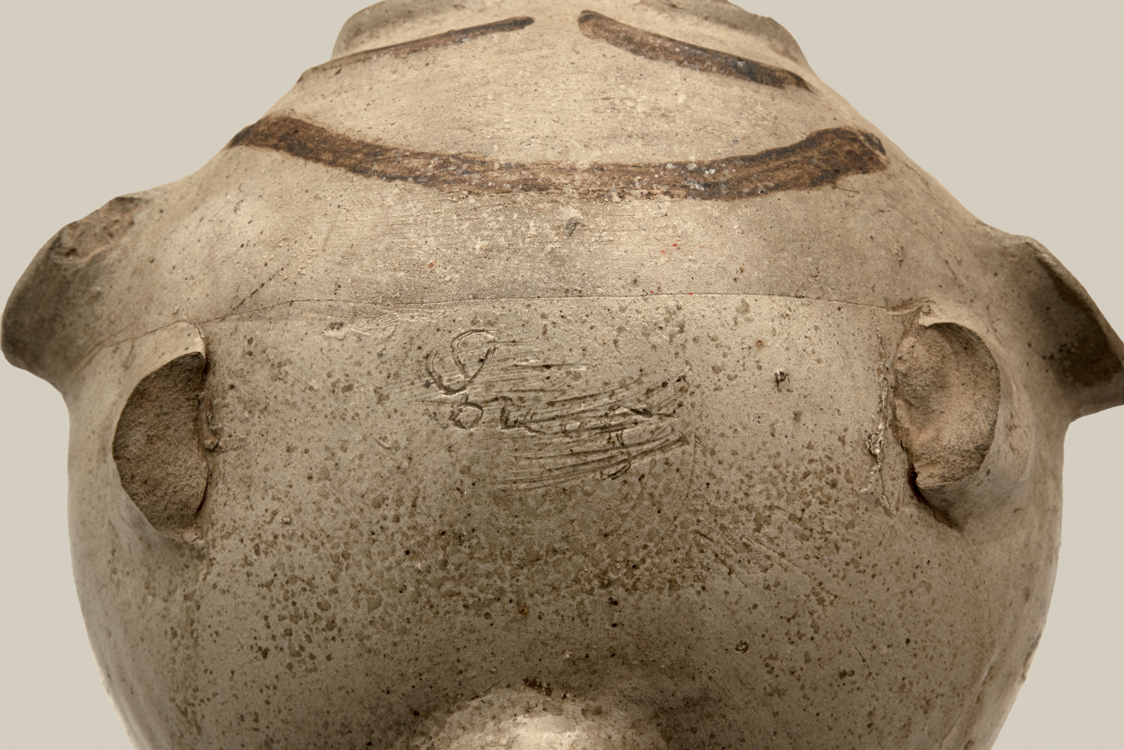
This wheel-thrown jug has facial features applied to the front surface. The ears, eye openings, mouth, and nose were applied with additional clay and modeled to make the various appendages. Dark slip was used to outline a beard and mustache, as well as define the eyes, eyebrows, and brow line. It is missing the pulled strap handle that would have looped over the top of the piece. The jug has an overall light-colored alkaline glaze. Alkaline glaze is a mix of clay and ash or lime that acted as a flux. Rather than having a neck and spout at the top of the jug, this form was thrown as a closed vessel, and then the neck and spout were thrown separately and added to the back side, after the clay had dried slightly. The foot is very narrow and tight, and has a somewhat wide, rounded edge that is now chipped. On the top of the vessel is a stratched-out inscription “Long,” and inscribed below the neck and spout are the words, “John Bull Esqr.” likely referring to the literary character John Bull, Esquire, who became a symbol of English culture in the eighteenth century.
Discovered in the Atlanta region, the exact history and origins of this piece remain uncertain; however, it relates very closely to a large group of alkaline-glazed face vessels made in the Edgefield District of South Carolina during the mid 19th century. The form and decoration of this vessel may provide an important link between the salt-glazed and cobalt-decorated face vessels made in Baltimore and Philadelphia by the Remmey family, an alkaline-glazed face jug stamped by Thomas Chandler of Baltimore and later Edgefield, the many slave-made face vessels known to have been made in Edgefield, and a very similarly shaped alkaline-glazed face vessel attributed to James Prothro, a potter who born in South Carolina but moved and worked in Georgia, Alabama, and Texas.