Crock
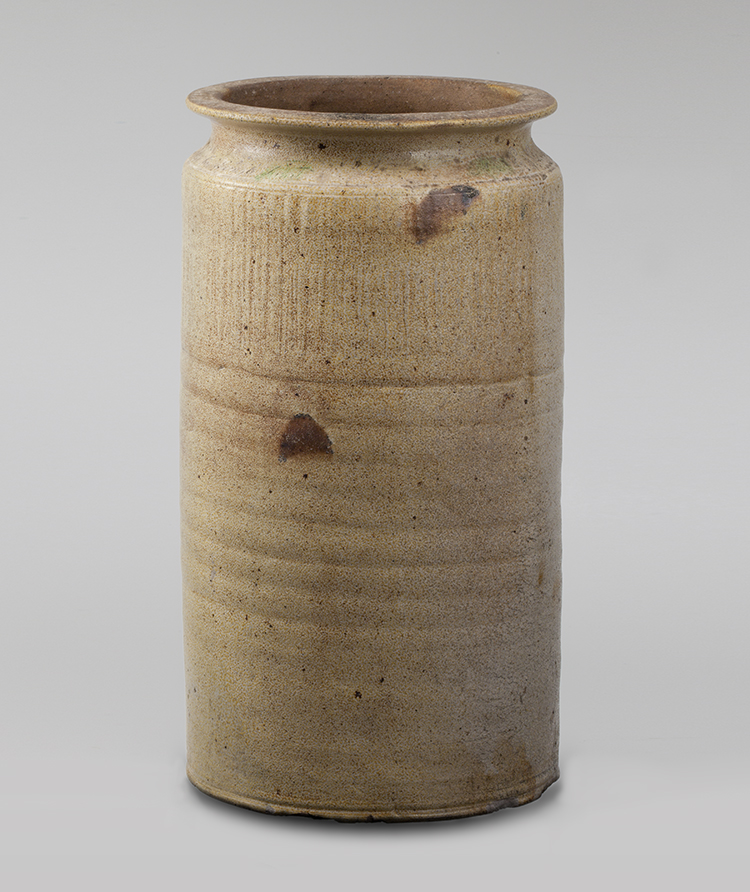
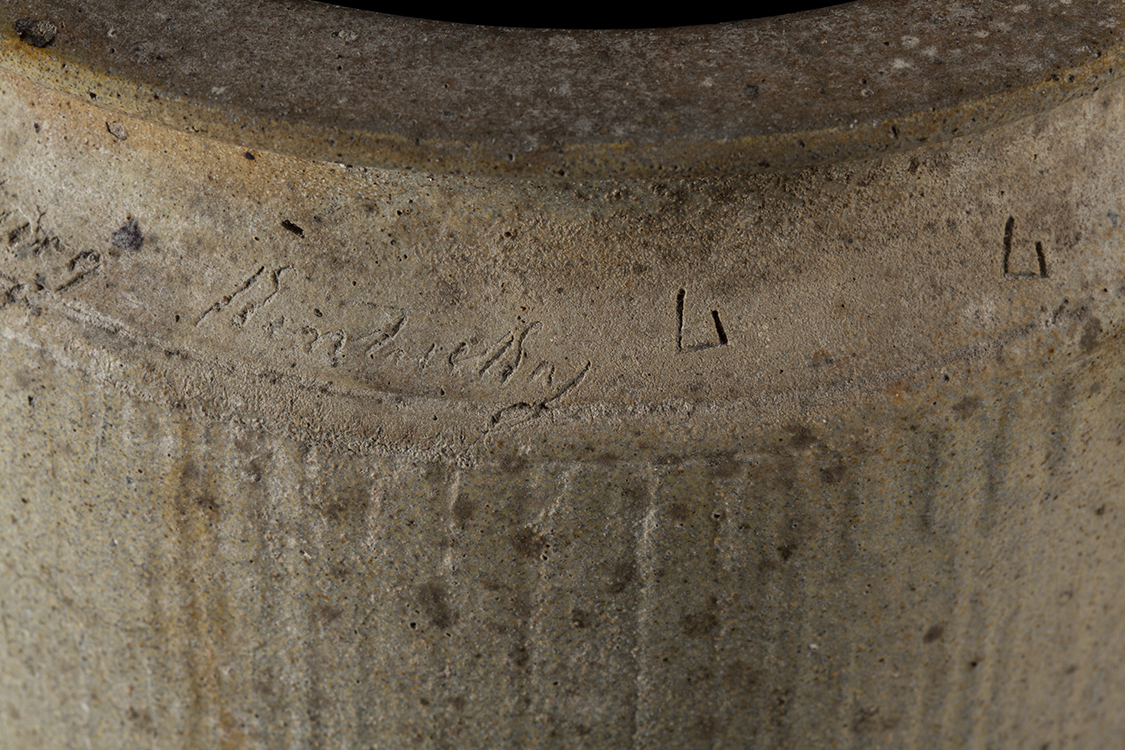
The vessel, though signed as for presentation, was still functional as a utilitarian vessel. The Swingle jar is 16 3/16 inches tall with a narrow opening and may have been intended for cream, illustrating the instructions of Lettice Bryan, author of the 1836 Kentucky Housewife, who noted that one should “have high, small necked jars, expressly for your cream.” The walls of the stoneware vessel would have kept the cream cooler over a longer period when stored in a cellar, springhouse, or dairy. The clay used for this piece fired in the kiln to a creamy yellow color under the salt glaze. Salt glazing is a technique used by stoneware potters to create the glassy surface. When the pottery kiln reached over 2000 degrees Fahrenheit, salt was introduced to the kiln, creating a vapor. This vapor adhered to the silica in the clay, forming a glass. From the high temperature, the clay is often non-porous, or vitrified. This, combined with the salt glazing, allowed the potters to not have to apply a glaze to the interior of the vessel. It could hold liquids and not seep, unlike earthenware storage vessels.
Evidence on the pottery reveals the nature of stacking used inside of the kiln in order to fire the vessels. In firing a salt-glazed stoneware kiln, kiln furniture is necessary as a buffer between the pieces of pottery in order to keep the glass created by the salt firing from adhering the vessels to one another. Kiln furniture was often made with the same clay as the vessels, sometimes with additional grog or sand mixed in, and then rolled in sand in order to further protect the vessels. George Swingle’s jar has four marks on the base of the vessel, showing that the piece was likely stacked on top of another piece with four bars of kiln furniture placed between one vessel and the other. There are no kiln furniture markings on the rim and few on the sides showing that the piece was likely at the top of the stack inside of the kiln.
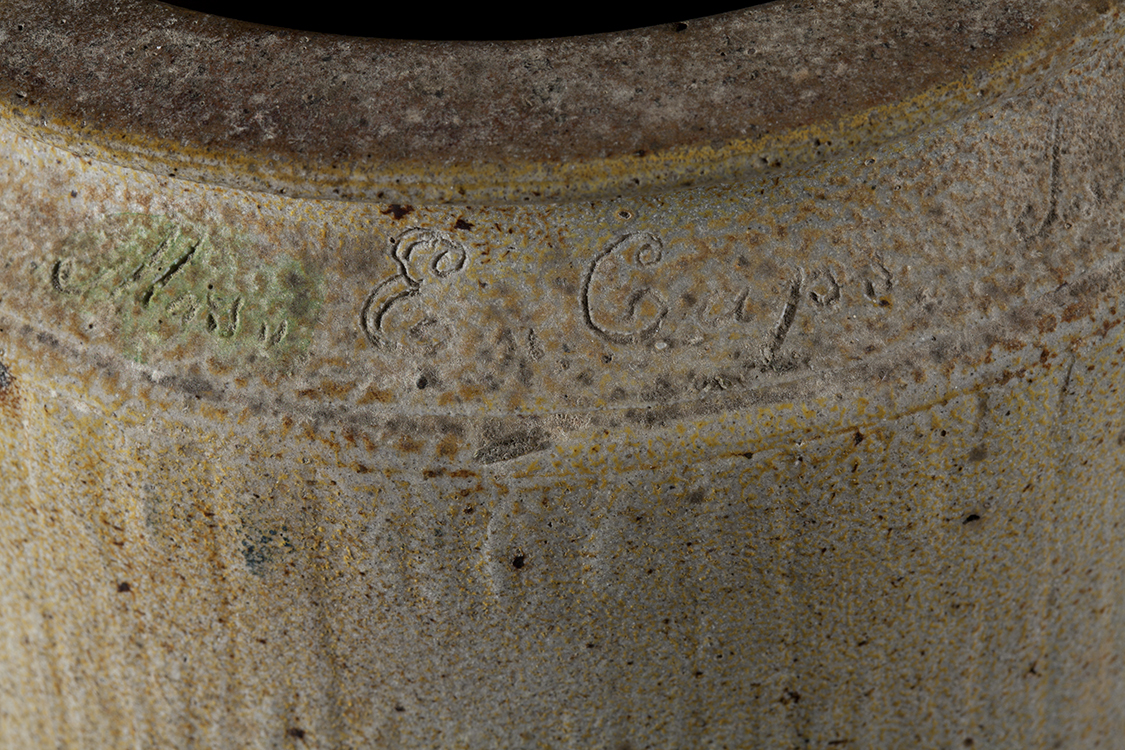
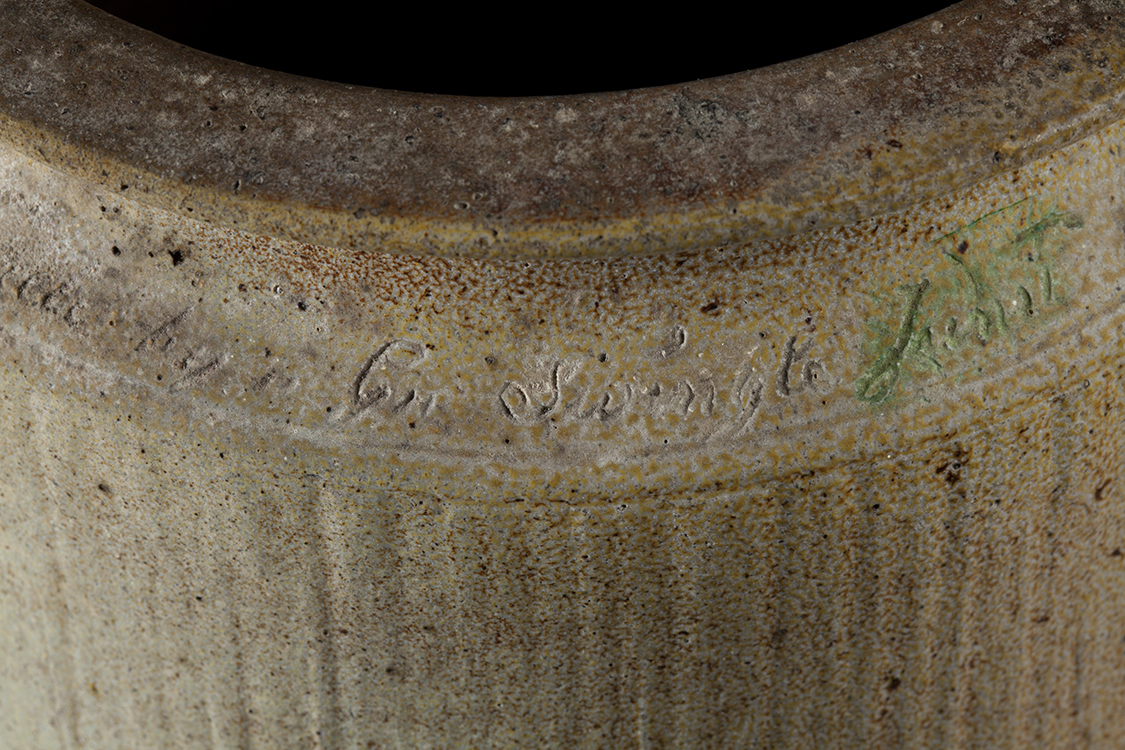
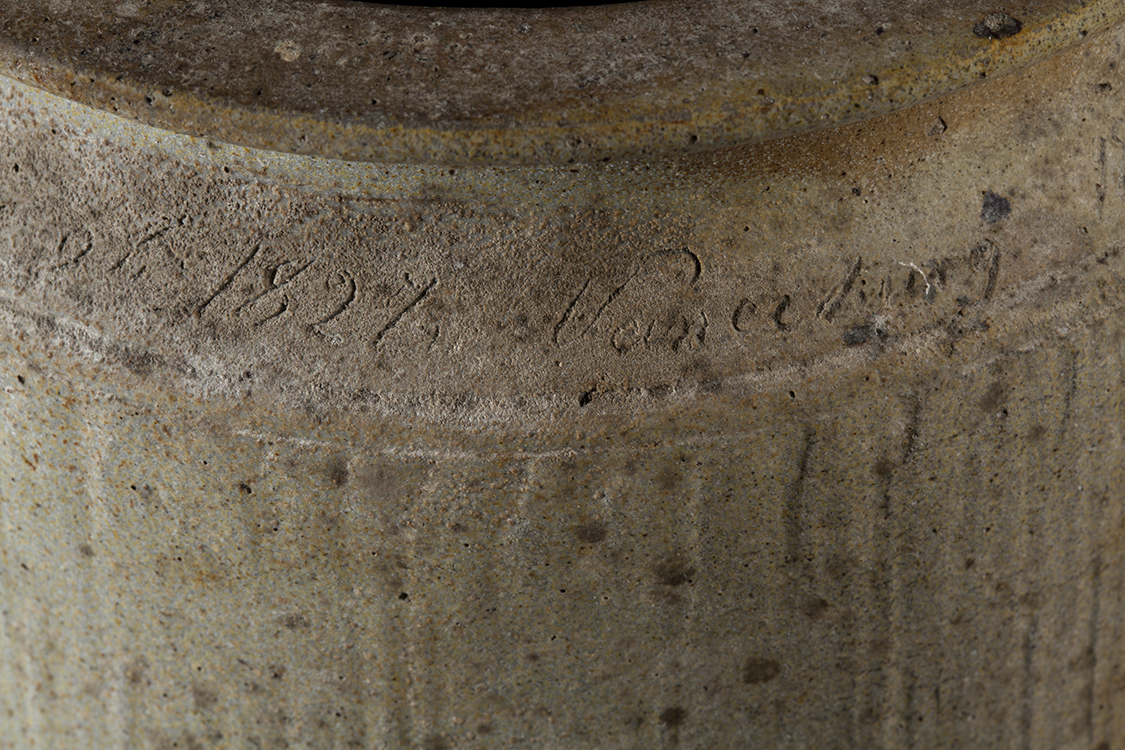
MAKER: This is the earliest known dated example of Kentucky pottery. The potter, George Swingle, Jr. (1782-1860), was born in Hagerstown, Maryland, where his parents Major George Swingle and Christine Householder were married in 1778. He moved with his family first to Tennessee and then to Lewis County, Kentucky, located on the Ohio River northeast of Louisville. George, Jr. was appointed the first postmaster of the town of Vanceburg and worked as both a potter and a carpenter. He is listed in the 1820 census with two people in his household engaged in manufactures. George never married and moved around 1850 with his nephew James H. Savage to Clinton County, Missouri, where he is listed in the 1850 census as a carpenter. He died in 1860.
In the 1820 Kentucky Census of Manufacture George Swingle is listed as a “Stone pottery” operator in Lewis County, Kentucky, “making use annually of 25 tons of clay at a cost of $62, with two employees, a clay mill and ‘Laythe,’ with capital of $260, wages of $225, and other expenses of $160, to make ‘Stone pots of all kinds,’ to $1200.”