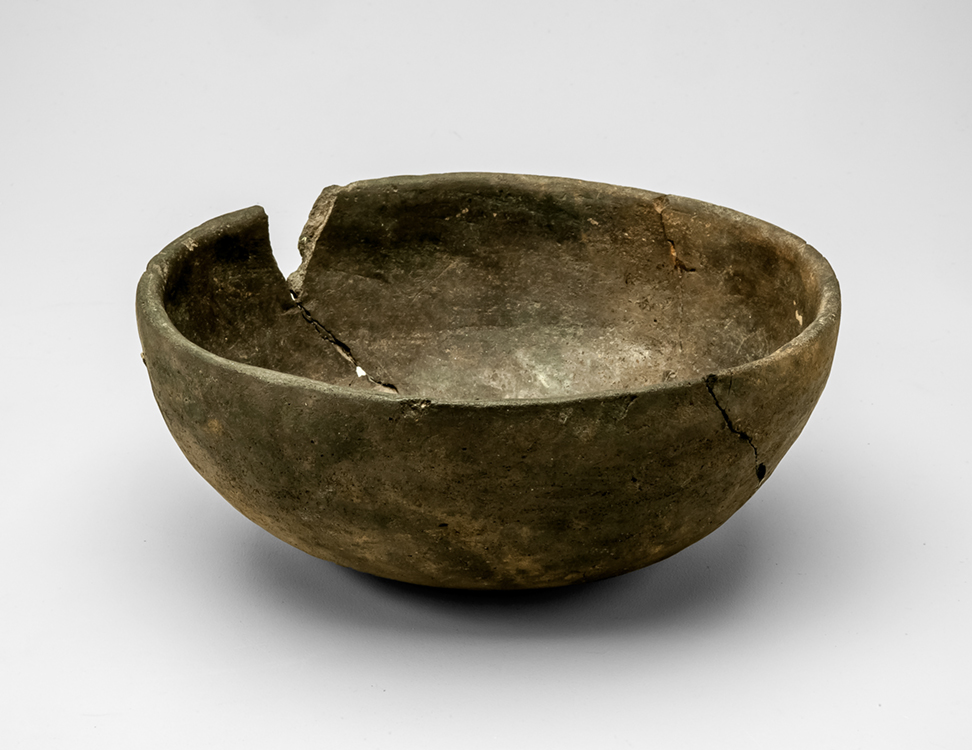
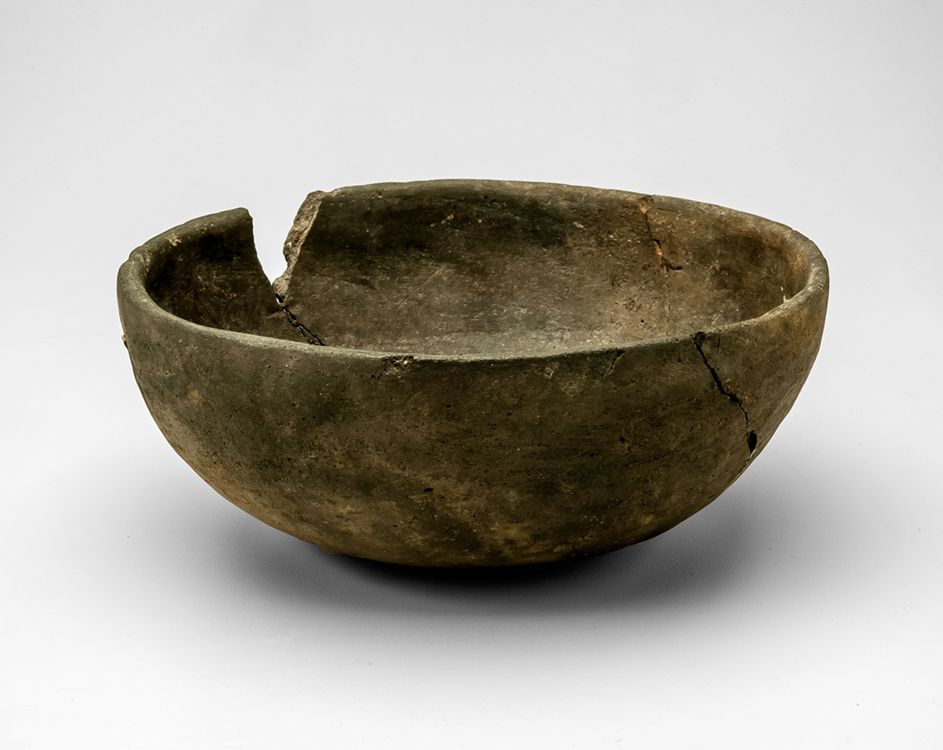
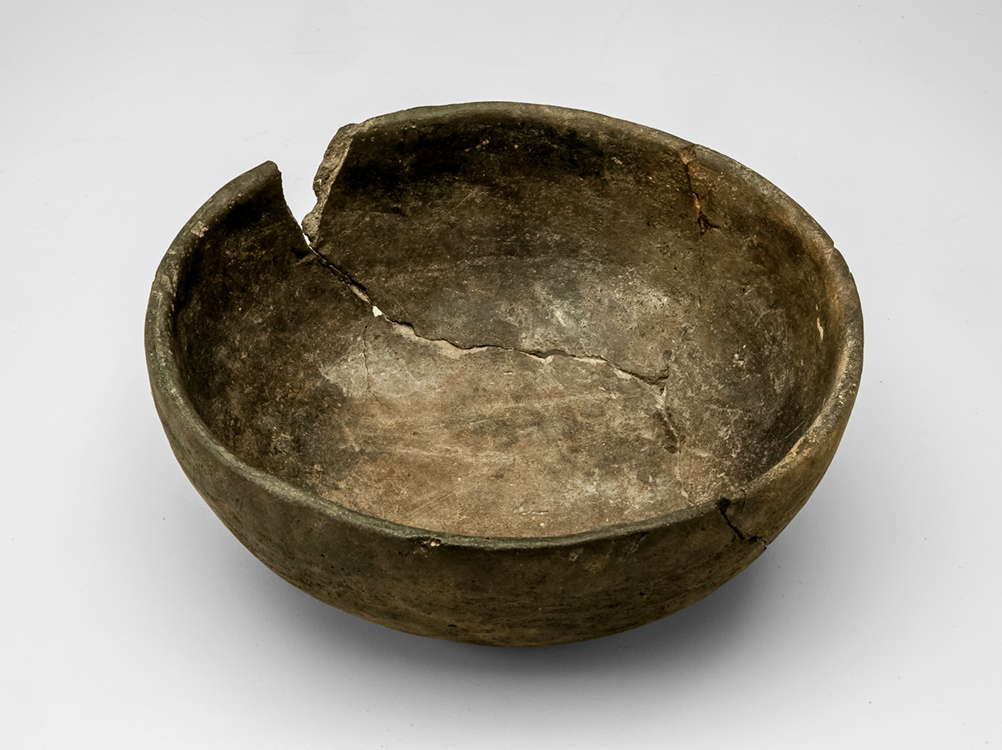
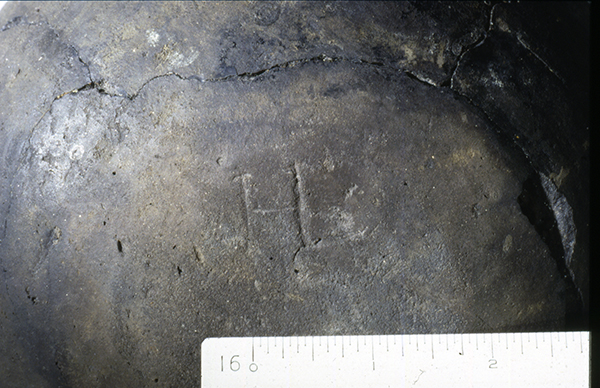
Colono-ware Bowl
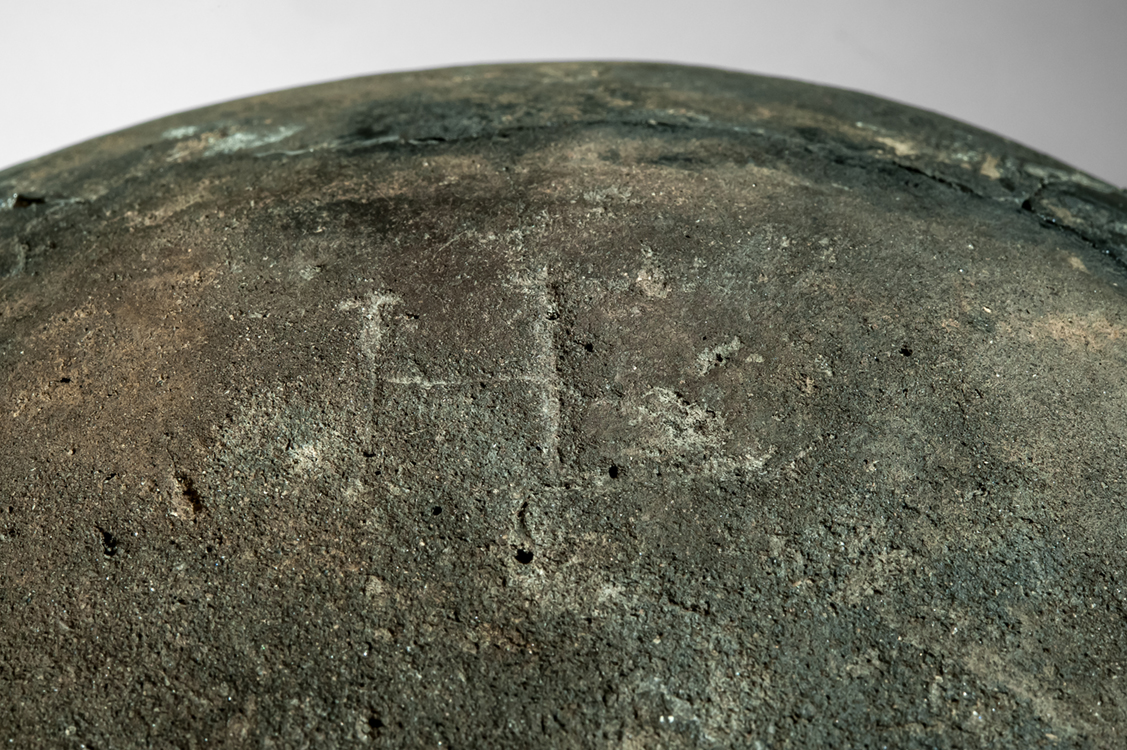
According to Leland Ferguson, “From the 1670’s through reconstruction, slaves and former slaves on South Carolina’s rice plantaions used traditionally-styled, handbuilt, earthenware jars and bowls–pottery termed Colono Ware by archaeologists. This particular Colono Ware bowl, found near Mepkin plantation and recently added to the MESDA collection, is typical of vessels used by slaves on low country plantations. Archaeologists have shown that while some of this pottery was brought to plantations from free Indian villages, most was made on plantations. Slaves apparently used these vessels for cooking and serving food and traditional West African medicines. Some bowls, especially those marked with crosses on the bottom, were likely used in the manufacture of Bakongo-style charms or ‘minkisi’. Other marks like the off-center ‘HL’ on the MESDA bowl, appear occasionally. This mark may designate ‘Henry Laurens,’ the 18th century owner of Mepkin and a prominent South Carolinian. Colono Ware provides a unique source of information about the every day lives of early African-Americans, and it is most informative when sherds and vessels are excavated in context by professionally trained archaeologists.”
Ferguson, Leland. Uncommon Ground: Archaeology and Early African America 1650-1800. Washington, DC: Smithsonian Institution, 1992.