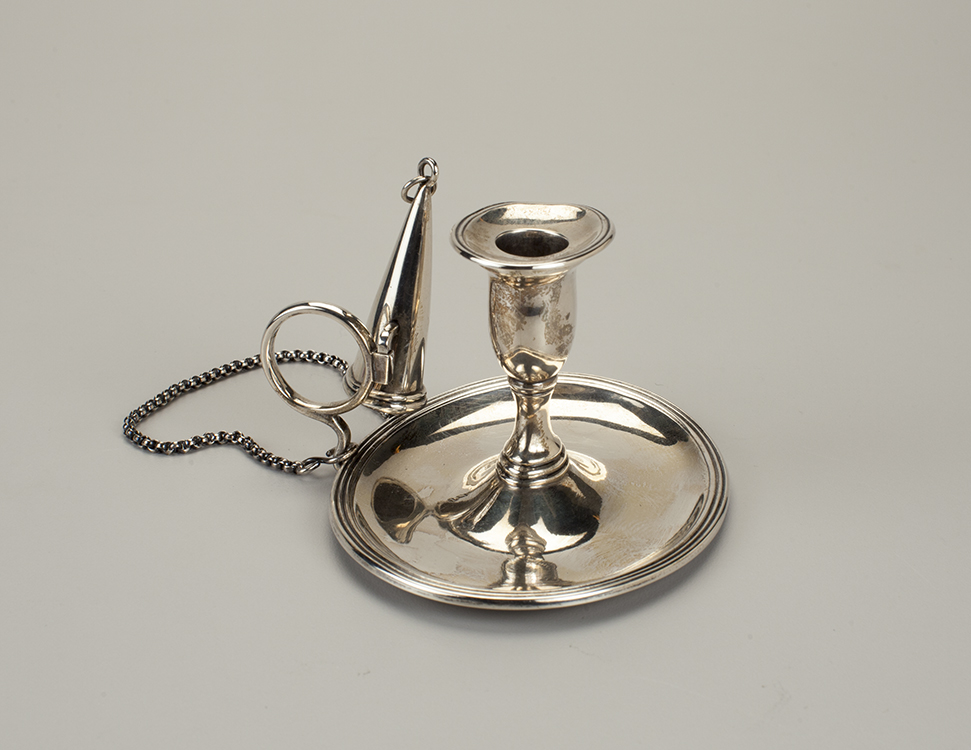
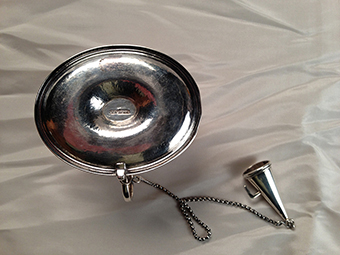
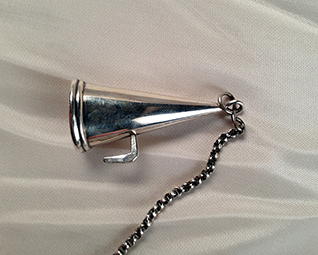
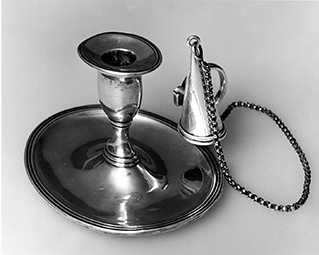
Chamberstick
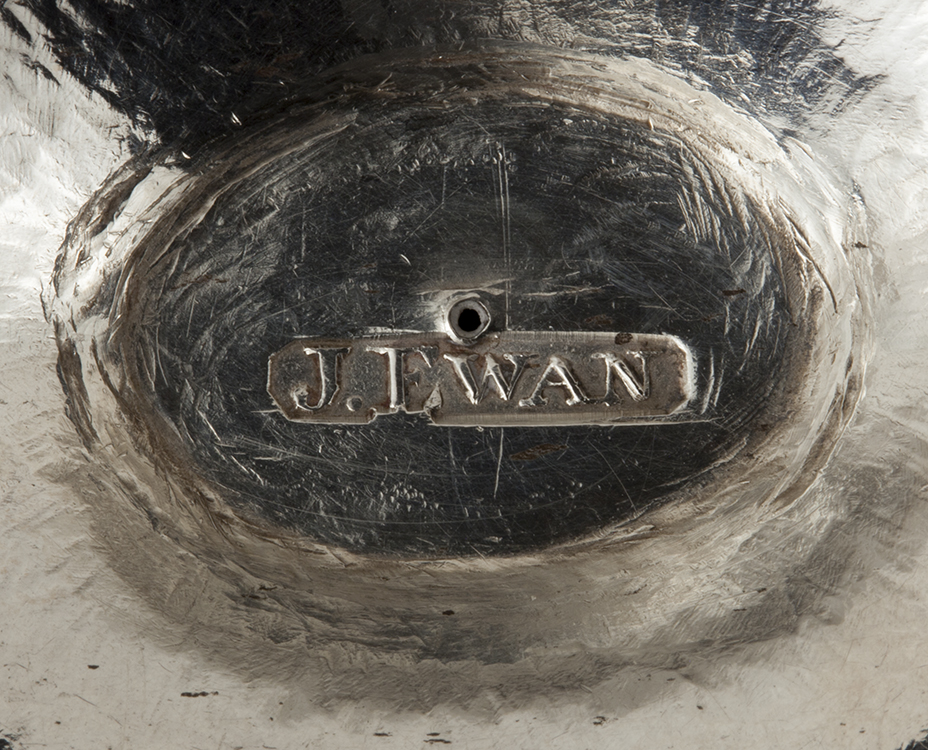
MARK: Struck on underside of base with intaglio “J.EWAN” mark in a rectangular reserve.
MAKER: From the amount of his silver still in existence, John Ewan (b.c.1786-1852) must have been one of the most prolific of the silversmiths working during the first half of the nineteenth century in Charleston, South Carolina. Although born in New York, there is a possibility that Ewan arrived in Charleston by way of the West Indies. This latter supposition is based on the fact that some silver with his mark has been found in Jamaica. The first knowledge that we have of Ewan’s presence in Charleston comes from an advertisement that appeared in 1823 stating the Ewan and Peter Mood Jr. (1796-1879) were in business together under the firm name of P. Mood & Co. Doubtlessly he was associated with Mood before they formed this partnership. Two years later Ewan was advertising under his own name at 203 King Street as a gold and silversmith, adding that he had jewelry for “Freemason’s Lodges and Knights Templars… .” In addition to being a silversmith, Ewan seems to have operated a rather extensive jewelry business, for he frequently stated in advertisments that he had just received a fine shipment of jewelry and watches. His shop was destroyed in a 1838 fire, but he seems to have saved much of his stock for he reopened at 38 Queen Street. See E. Milby Burton, “South Carolina Silversmiths 1690-1860” (Charleston, SC: Charleston Museum, 1967).
FORM: Few American-made silver candlesticks from the nineteenth century are known to have survived, and the chamberstick form is even more rare. The reasons for their limited numbers are two-fold: firstly, silver and brass candlesticks imported from England, France, and elsewhere were affordable alternatives available in almost every silversmith’s shop; and, secondly, candlesticks were portable, utilitarian household objects that were used daily and thus vulnerable to damage and theft.