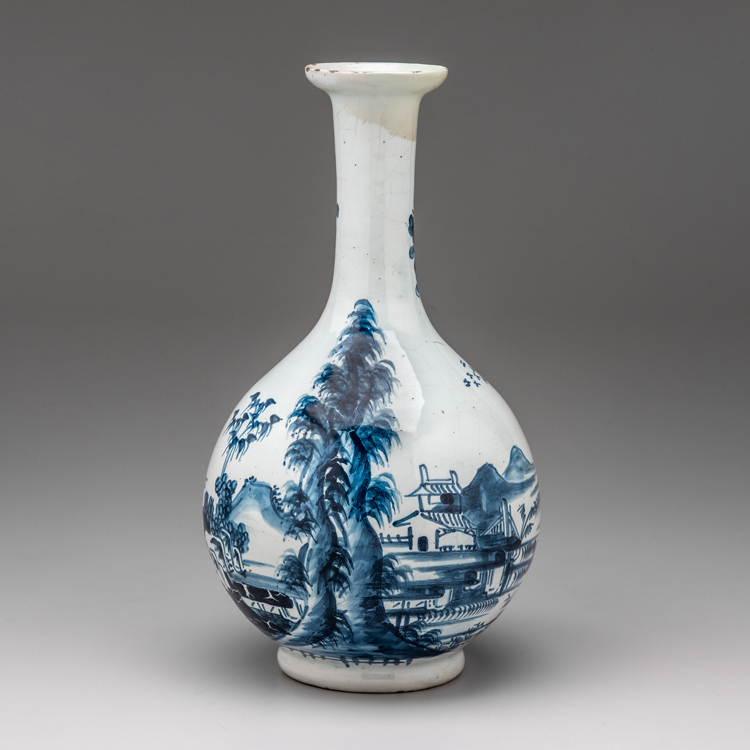
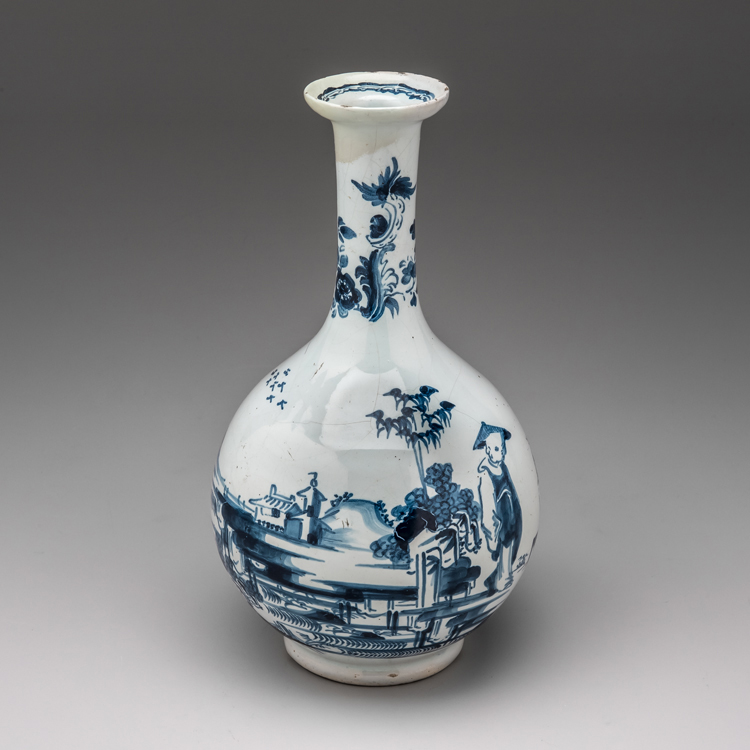
Bowl and Bottle
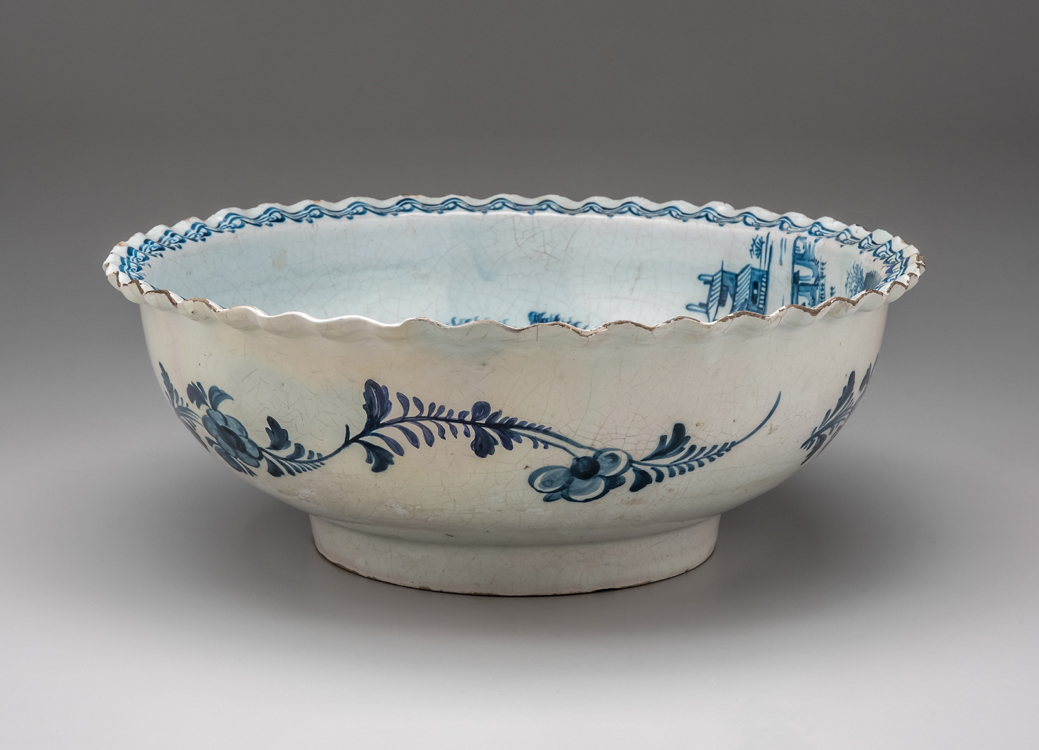
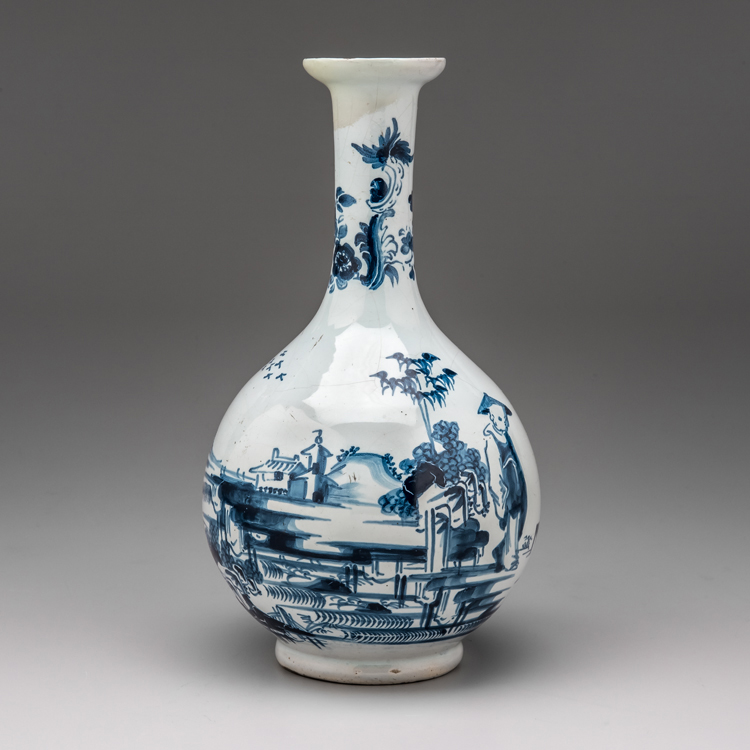
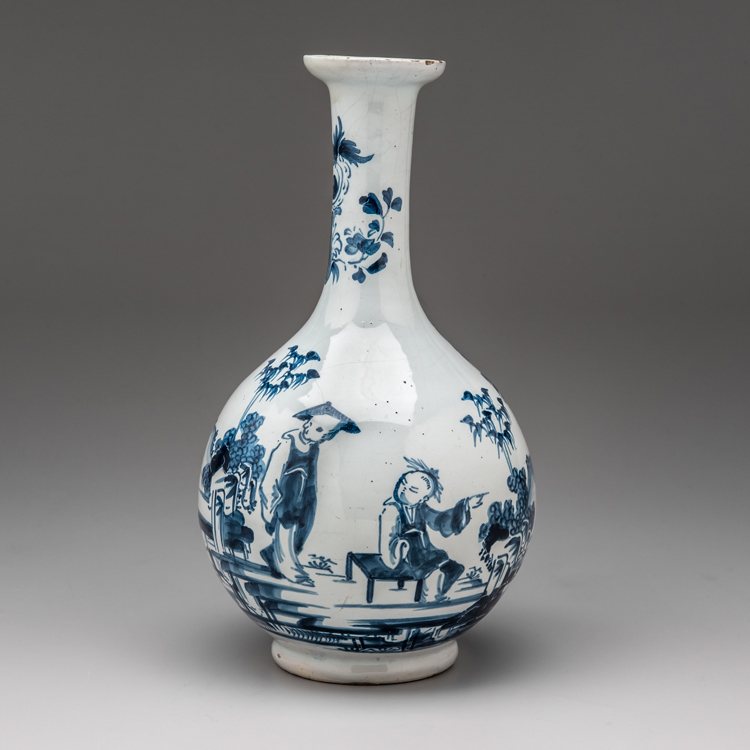
FORM: Generally speaking, the bottle was used as a water container until the latter part of the eighteenth century, when the jug or pitcher became popular. Bottles such as this were made for washing purposes, and were made en suite with wash basins, as here.
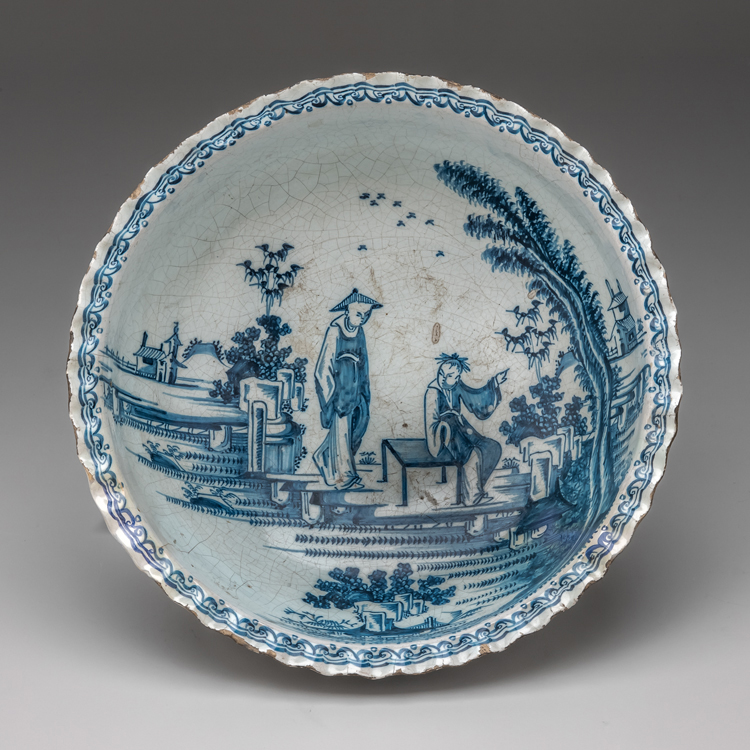
DESIGN: The Chinese porcelain brought to Europe in increasing quantities beginning in the late 17th century by the East India companies revolutionized the pottery industries. Though they could not copy the white, transluscent and strong material, they could imitate the design, though European artists modified Chinese motifs to suit western taste; for example, the “Chinaman in a landscape,” popular in the late 17th century, is apparently the invention of a European decorator. This scene, in which a Chinaman seated on a stool turns to another in a coolie hat and points to a garden with rocks, shrubs trees and houses appears to have been common. (For similar examples, see Frank Britton, English Delftware, no. 11.27, Archer, English Delftware, no. 159 and Gardner and Archer, English Delftware, pl. 117A.) The exotic themes meshed well with the emerging Rococo aesthetic, under which Chinoiserie developed into a style more whimsically elegant and willfully fantastic than anything produced in China, though the asymmetricality of Chinese art may have influenced the 18th-century Rococo. Peaking in the late 17th and again in the mid 18th centuries and mid 19th centuries, the style was eventually superseded by Japonaiserie.