Beaker
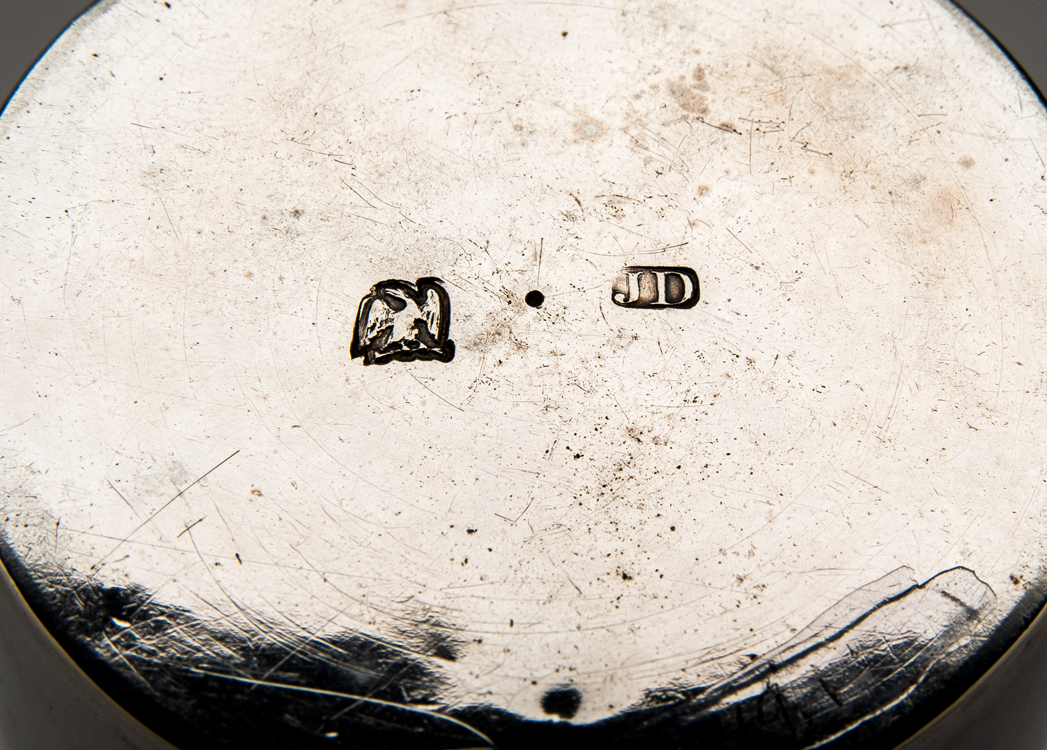
MARK: Struck on underside of bases with intaglio “JD” mark in an oval reserve and an intaglio spread-wing eagle in a conforming reserve, possibly the manufacturer mark for John McMullin (1765-1843) of Philadelphia. Eagle marks are found on silver made in cities throughout America during the Federal period and may have been used by large manufacturers selling their wares to be retailed by other silversmiths and jewelers. Alternatively, eagle marks could simply have served as an informal national mark, similar to the lion’s head, thistle, and harp used, respectively, by British, Scottish, and Irish guild halls. See Catherine B. Hollan, “Eagle Marks on American Silver” (McLean, VA: Hollan Press, 2015), 11-12, 69.
MAKER: James Duffel was born in Bucks Co., Pennsylvania about 1760 to Barnabus Duffel (1728-1782) and his wife Rebecca Saunders (1730-1775). When Duffel was between fourteen and sixteen years old his mother died and he was sent to live with family in Alexandria, Virginia where he probably apprenticed as a silversmith. On 5 December 1776 he enlisted in the Virginia Continental Line and served in a variety of regiments and companies until he was discharged in 1779. Duffell opened a silversmith and jeweler’s shop in Philadelphia in the early 1780’s but by 1790 had relocated to Georgetown, South Carolina where he had married Rebecca Leonard (1762-1838). He moved again a few years later, this time to New York City, but continued to travel between Georgetown and New York for the remainder of the decade. In 1802 Duffel advertised that he had opened a gold and silversmith shop in Fredericksburg, Virginia and offered a complete and varied list of goods. A final move for Duffel came in 1810 when he relocated his shop to Lynchburg, Virginia and he plied his trade until the early 1830s. James Duffel died 21 June 1836 in Lynchburg. His estate was valued at over $15,000. See Catherine B. Hollan, “Virginia Silversmiths, Jewelers, Watch- and Clockmakers, 1607–1860: Their Lives and Marks” (McLean, VA: Hollan Press, 2010).
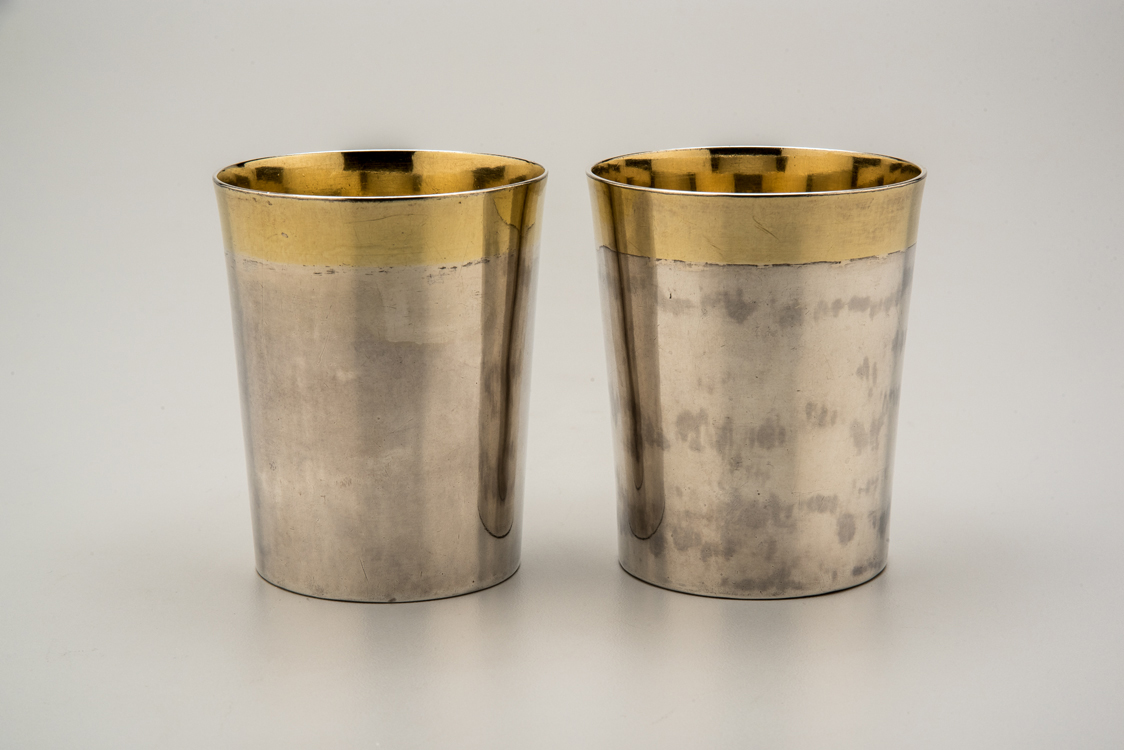
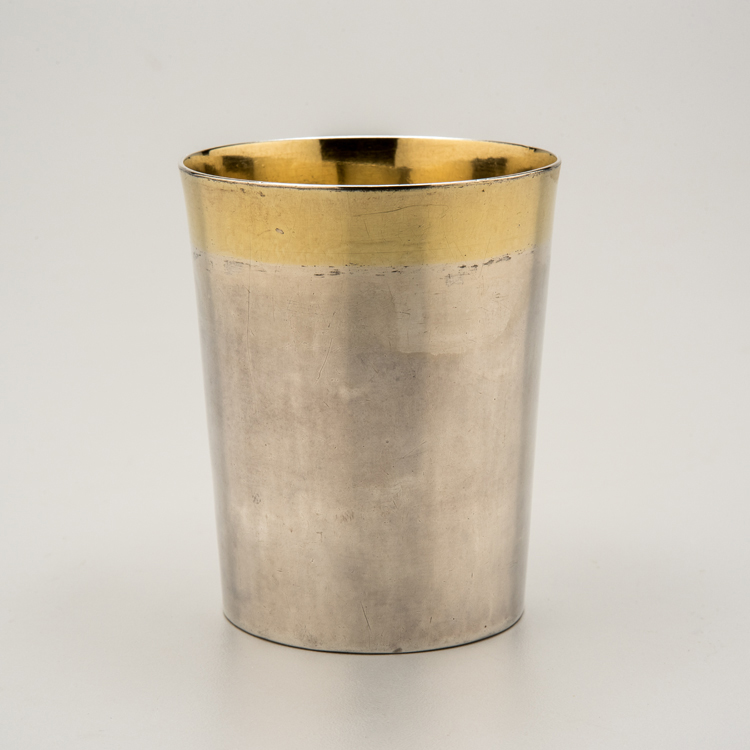
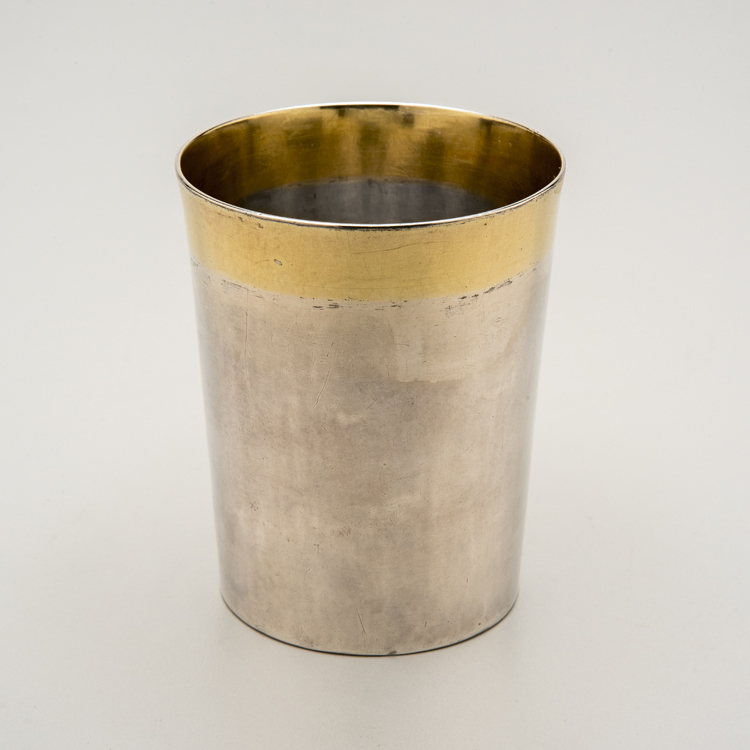
FORM: Small drinking cups were popular throughout the eighteenth and nineteenth centuries. Earlier examples usually have handles while nineteenth-century examples often did not. Like most silver hollowware created after the late eighteenth century, beakers were most often made from a rolled sheet of silver and seamed vertically up the side, in contrast to earlier examples that were raised (hammered up) from a disc.