Ann (Coachman) Glover
A gravestone inscribed “Sacred to the memory of Ann Glover, amiable consort of Charles Glover who departed this life on the 28th of October 1791 in the 25th years of her age, and of Sarah their daughter who died the 1st of August 1791 being in her third 3d year” is found in the cemetery of Goose Creek Church, St. James Parish, Goose Creek, South Carolina.
Many members of the Glover family in Charleston were merchants.
ARTIST: Thomas Coram (1757-1811) emigrated from Bristol, England, to the colonies in 1769. He went into the mercantile business and joined with twelve other merchants and thirteen planters in an association “to discontinue the Importation of European and East-India Goods and Negroes into this Province.” After 1770 he became an engraver. In 1784 he advertised as a drawing master. An ardent supporter of the American Revolution, Coram engraved bills of credit for the State of South Carolina during the war. Coram was the first Charleston artist to use historical subjects; his most ambitious engraving is a three-part print called “The Battle of Fort Moultrie,” published in the 1780s. According to the city directories, Coram listed his profession as “engraver” until 1802. Thereafter he was listed as “painter and engraver.” He was instructed in oil painting by Henry Benbridge (1743-1812), another artist in Charleston. Coram is known for his portraits, as well as several small but intricate local landscapes. He was a benefactor of the Charleston Orphanage, to which he gave numerous works and money. Coram was buried in the cemetery of St. Philips Church in Charleston.
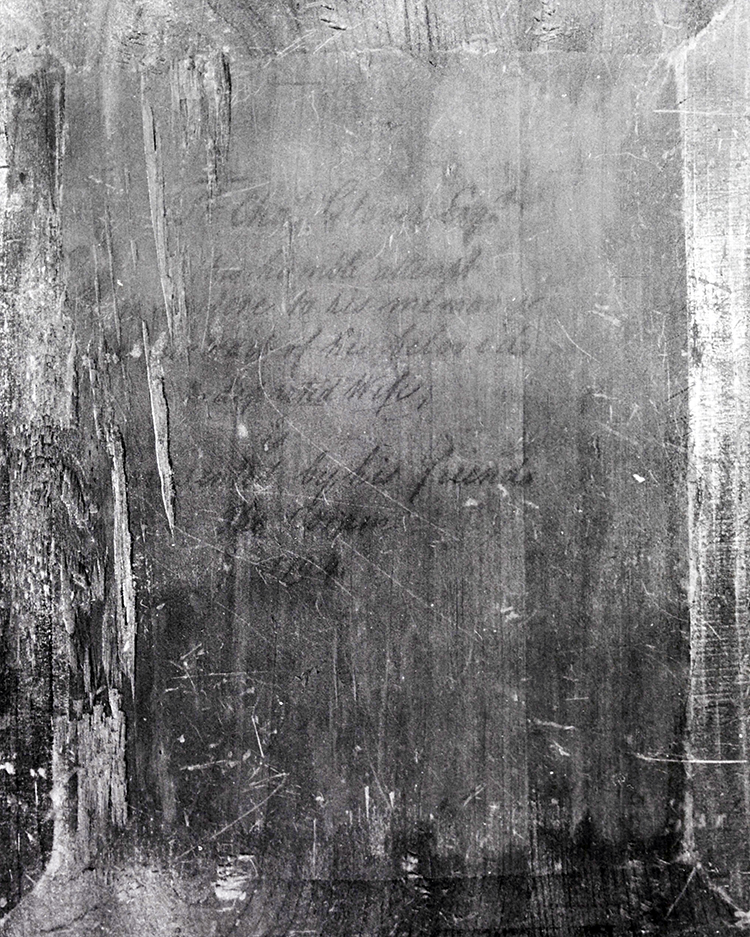
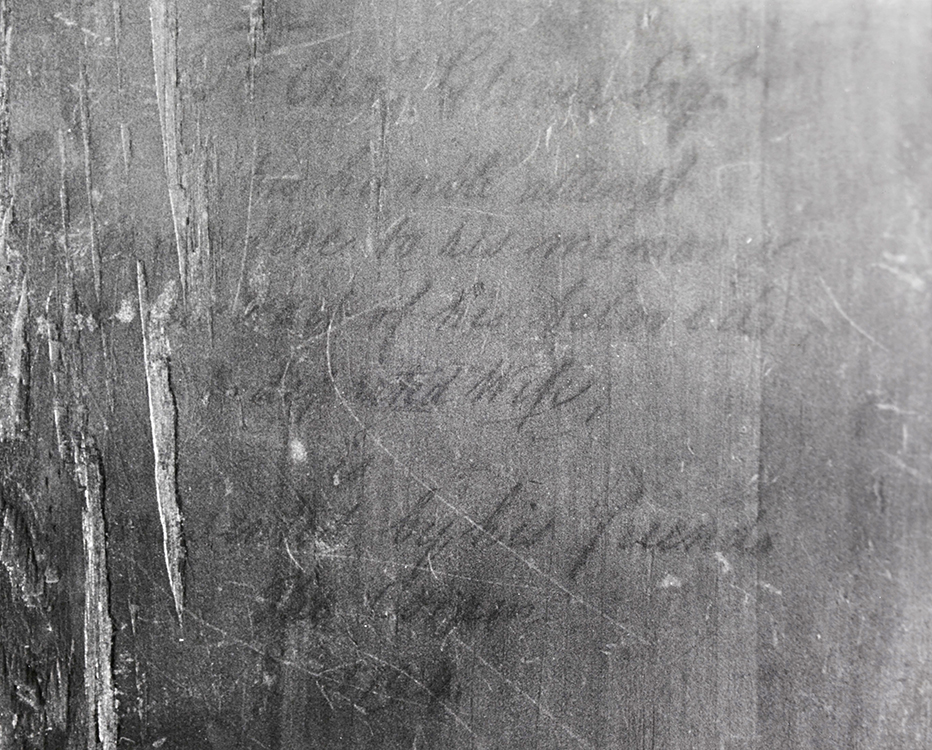
INSCRIPTION: On reverse of panel: “To Chas Glover Esq., this humble attempt/to bestowe to his memory/this (the) portrait of his beloved/departed Wife,/is/presented by his friends Tho. Coram/1794.” On the oval frame: “Champ Killy” (Kelly, Filly, Tilly) in the upper right spandrel
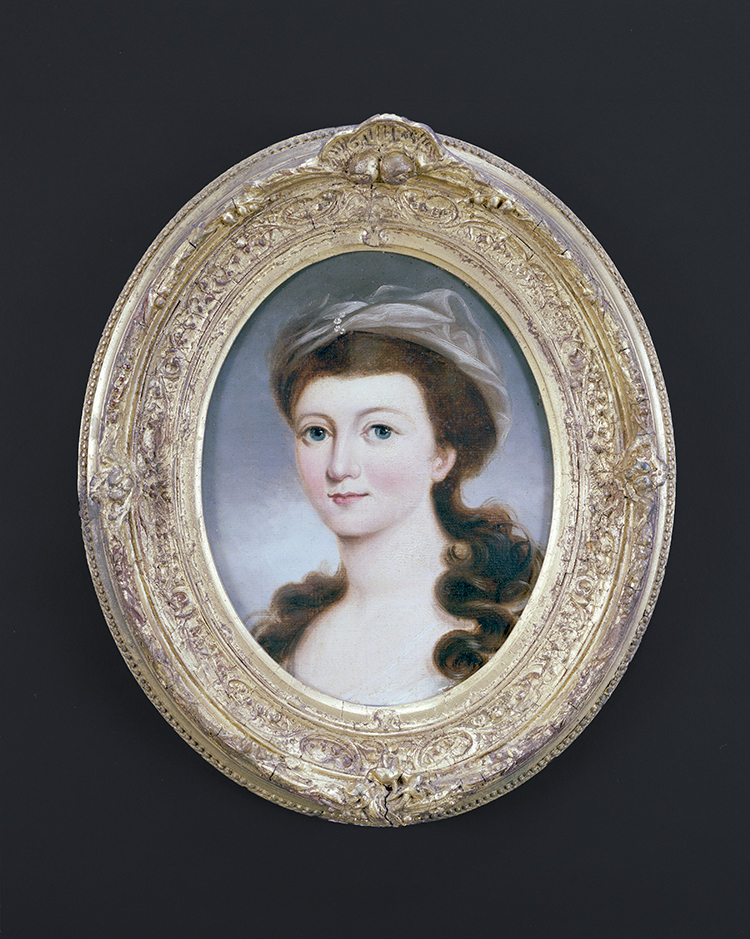
FRAME: Painting appears to be in its original white pine frame.
RELATED OBJECTS: The MESDA collection is also home to a portrait of Christopher and Susan Cart (MESDA acc. 2672). The collection also contains two examples of Coram’s engraving work: a masonic Certificate (MESDA acc. 3540) and a £50 South Carolina Currency note (MESDA acc. 4603).
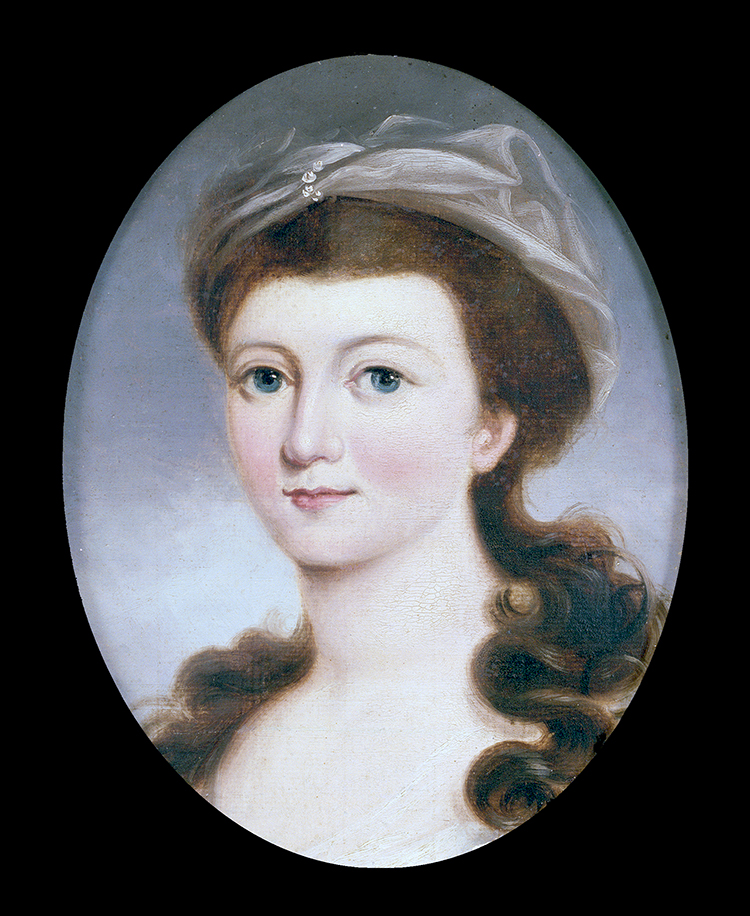
DESCRIPTION: Painting, oil on paper mounted on wood panel. It is framed in an oval frame which is signed. The painting has an inscription on the reverse of the panel. The painting pictures a woman wearing a headdress with her hair faling loosely upon her shoulders. Her dress comes to a wide V-shape above her breast.